GeoLog

EGU

Outstanding Student and PhD-candidate Presentation (OSPP) top tips from winners and judges!
Outstanding Student and PhD-candidate Presentation (OSPP) top tips from winners and judges!
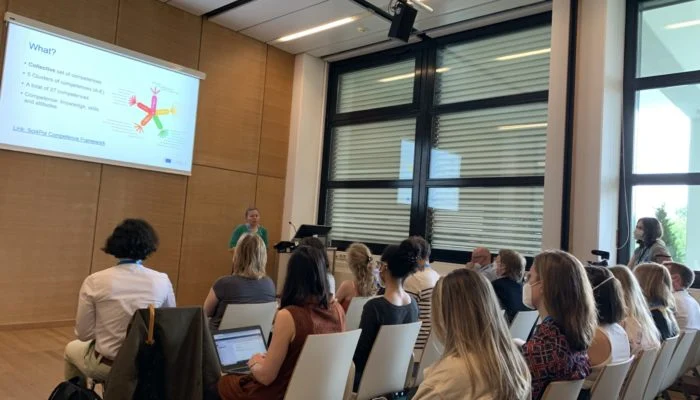
Every year at the General Assembly hundreds of students present their research with a lot of time and effort going into preparing these presentations. With the aim to further improve the overall quality of poster presentations and more importantly, to encourage Early Career Scientists to present their work in the form of a poster, the OSP Awards (as they were formerly known), were born. Since the ...[Read More]

GeoPolicy: Your guide to science for policy at EGU23!

GeoPolicy: Your guide to science for policy at EGU23!

As the largest geoscience meeting in Europe with 14,000 onsite and 3,000 virtual participants expected this year, the EGU General Assembly has a huge range of scientific sessions that enable participations to gain a greater understanding about specific topics both within and outside of their research area. But more than this, there are also plenty of non-scientific sessions that participants can a ...[Read More]

EGU23: A hybrid General Assembly with too many benefits to ignore!

EGU23: A hybrid General Assembly with too many benefits to ignore!

Are you planning to attend the upcoming EGU General Assembly – either on-site in Vienna, Austria or remotely as a virtual participant? This year, EGU has decided to take time for science, and encourages you to do the same. For us, this means offering our attendees the “best of both worlds,” through a carefully and creatively curated hybrid conference. For you, we hope this means a ton of benefits ...[Read More]

Winners announced: Here are the best EGU Blog Posts of 2022!

Winners announced: Here are the best EGU Blog Posts of 2022!

As future-focused as we like to be at EGU, we sometimes pause to look back at the year gone by – just a brief glimpse to appreciate all the good work of 2022! As always, we had so many inspiring and thought-provoking blog posts published this year across the EGU’s official blog GeoLog and division blogs. Thank you to each of you for your writing contribution! To continue our annual appreciation fo ...[Read More]

Imaggeo On Monday: Fingerprint in the cotton

Imaggeo On Monday: Fingerprint in the cotton

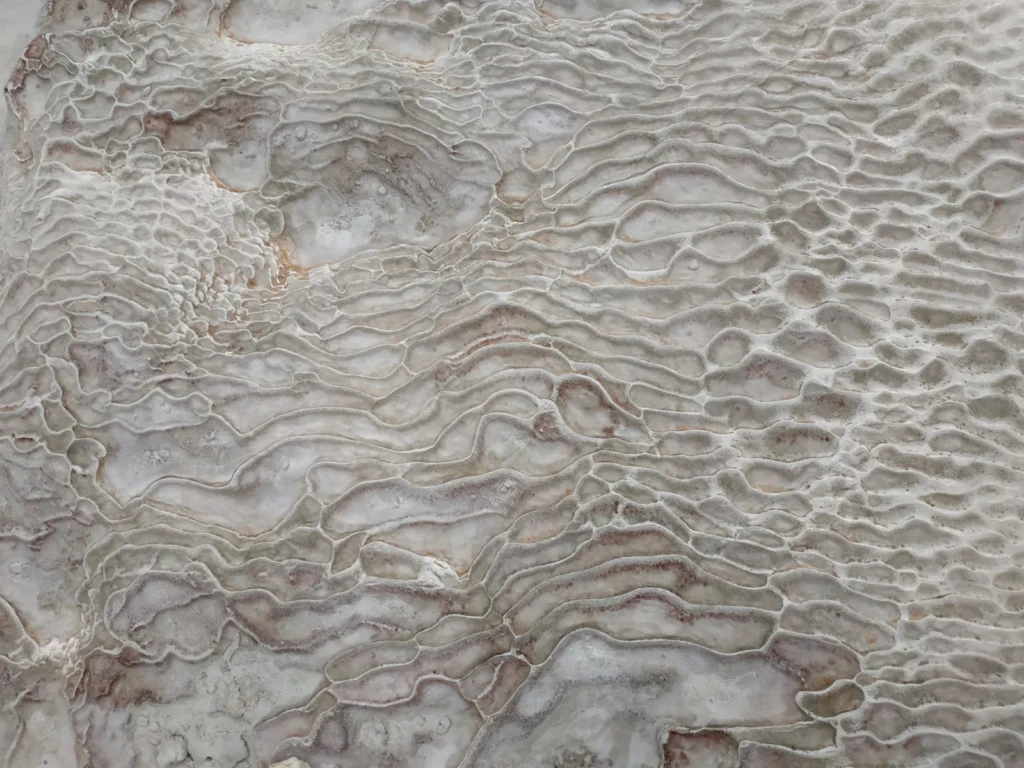
This photo is taken at the Pamukkale (meaning “cotton castle” in Turkish), a natural site near Denizli, Turkey. This location is world famous for terraces made of snow-white travertine, a sedimentary rock deposited by water from the hot springs, and a stunning turquoise water color. Close look at the surface texture reveals an extraordinary pattern created by the thermal water slowly f ...[Read More]

Imaggeo On Monday: Wannabe cubic calcite

Imaggeo On Monday: Wannabe cubic calcite

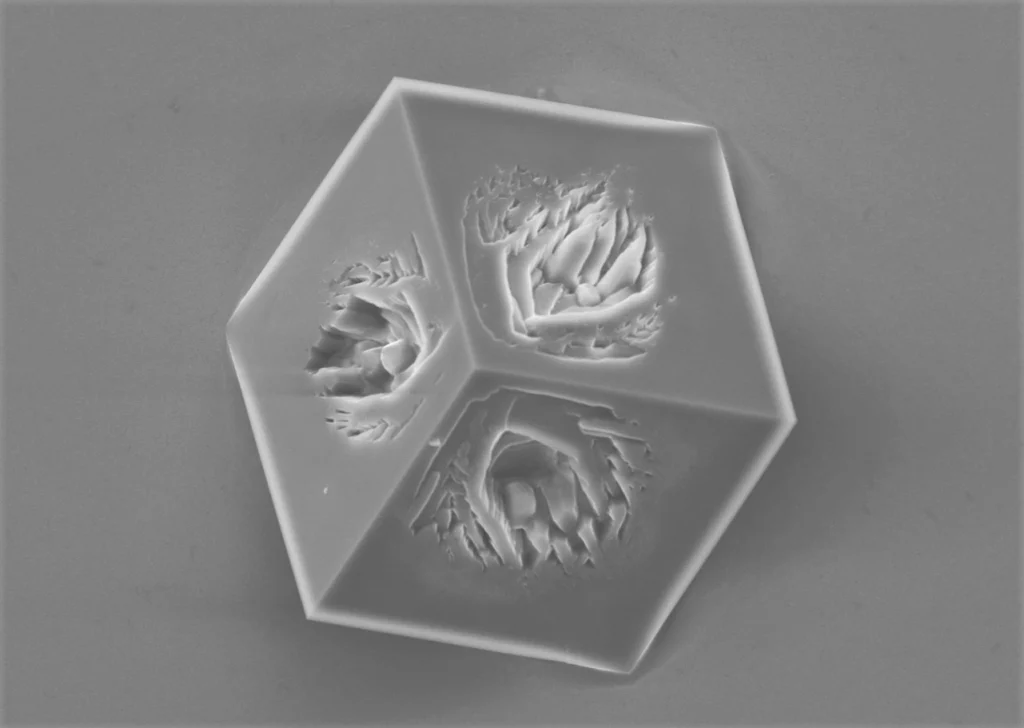
This imperfect cube of calcite was formed on the gold surface during the electrochemically assisted scaling process. Once negative electrochemical potential is applied to the gold surface, the oxygen dissolved in water undergoes reduction, yielding hydroxide anions. These anions accumulate at the gold-solution interface, forming a high pH layer. As calcite becomes less soluble with the increasing ...[Read More]

Imaggeo On Monday: Blue cements in Jurassic rocks?

Imaggeo On Monday: Blue cements in Jurassic rocks?

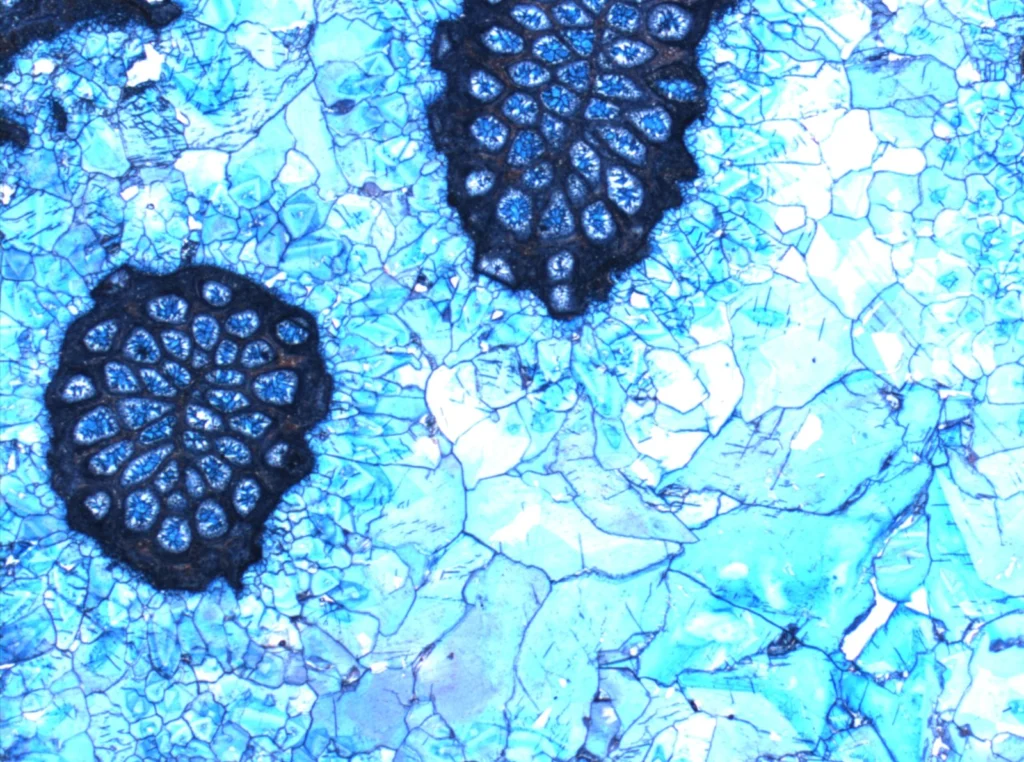
Staining of thin sections and rock slabs is a method of identification that has long helped researchers to distinguish certain minerals which often otherwise appeared very similar. Modern studies have now largely replaced this method of identification with more analytical techniques that usually provide a higher degree of certainty, such as analysis with a microprobe or Scanning Electron Microscop ...[Read More]

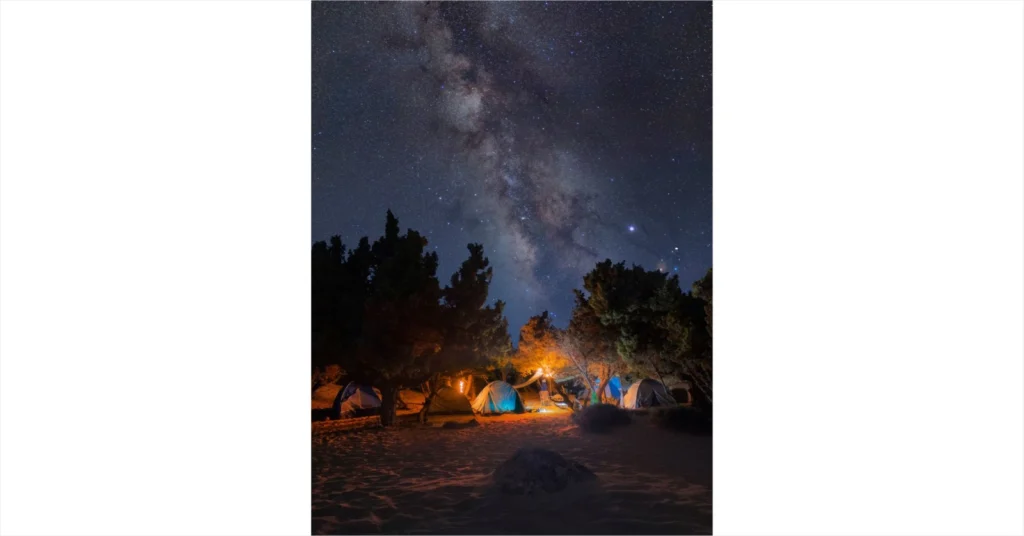
Imaggeo On Monday: One with the Cosmos

Imaggeo On Monday: One with the Cosmos

Camping under the stars is an experience that allows people to connect with the cosmos in a unique and profound way. As they set up their tents and gaze up at the night sky, they are reminded of the vastness and beauty of the universe. They can see the stars, the planets and other celestial objects, and feel a sense of awe and wonder. They are reminded that they are just a small part of something ...[Read More]

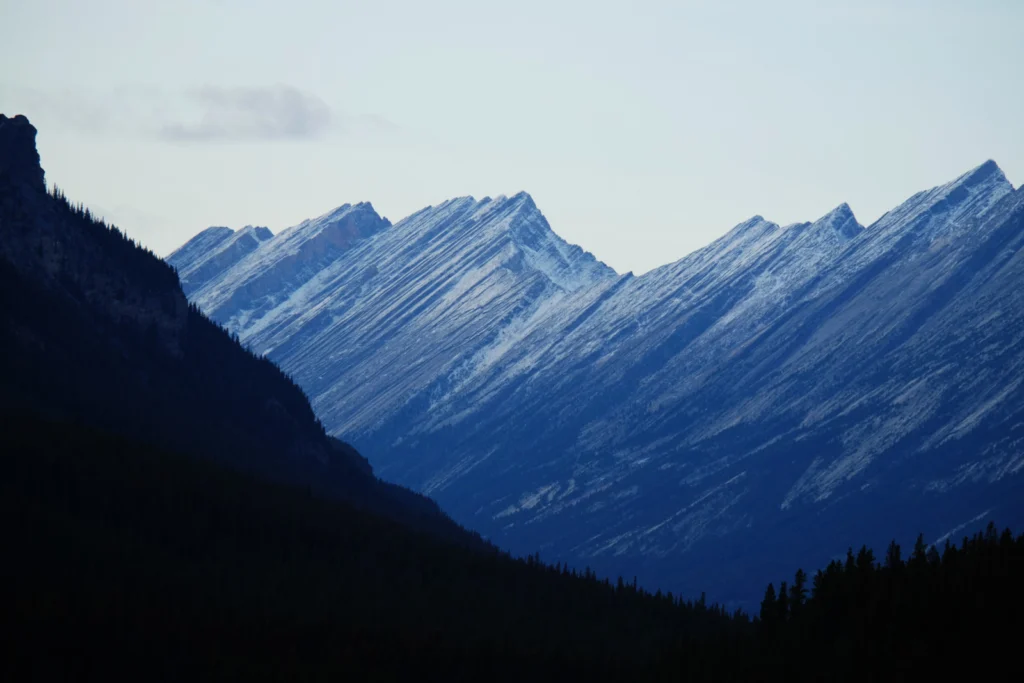
Imaggeo On Monday: Pantone of Blue Mountains, light scattering.

Imaggeo On Monday: Pantone of Blue Mountains, light scattering.

The light’s interaction with matter enables scientists to observe greenhouse gases from space, but also creates the shifting blue tones throughout the mountains that hikers travel long distances to admire! The blue shades are created by an effect called Raleigh scattering, where very small atmospheric particles between the viewer (or camera) and the mountains cause the shorter wavelength lig ...[Read More]

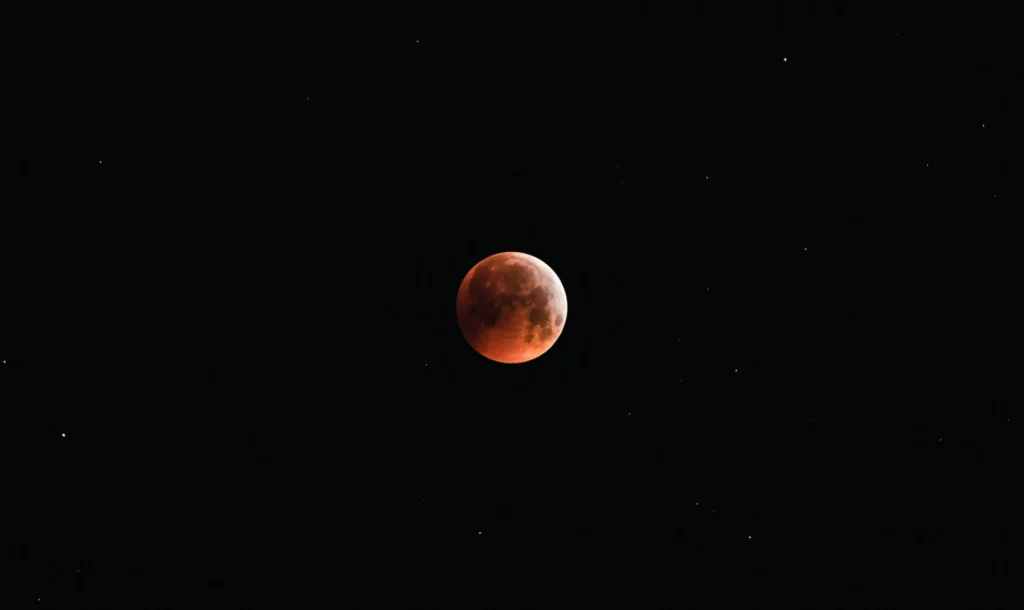
Imaggeo On Monday: Blood moon over Germany

Imaggeo On Monday: Blood moon over Germany

A blood moon occurs during a total lunar eclipse. The sunlight falling through the air layers of the Earth’s atmosphere is refracted inwards, whereby especially the short-wave blue components are weakened by scattering. The long-wave red components, on the other hand, still reach the moon, which leads to the red colouring.   Photo by Simon Fuhrmann shared on imaggeo.egu.eu.   Imagg ...[Read More]