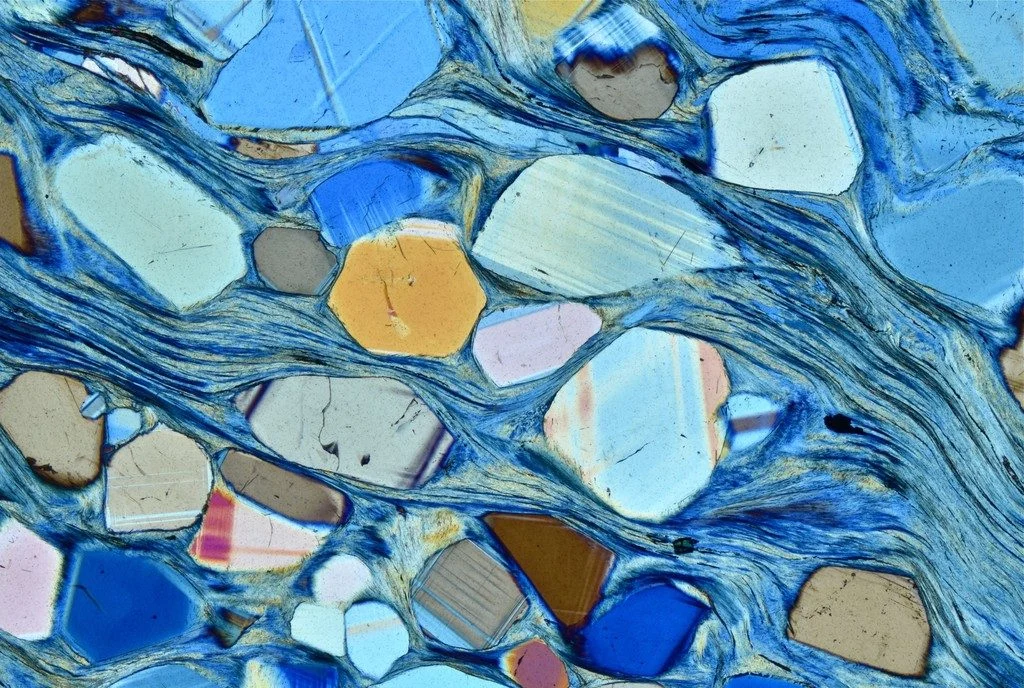
Polarized light photomicrograph of a thin section of a charoite-bearing schist. Charoite is a rare silicate found only at one location in Yakutia, Russia. For its beautiful and uncommon purple color it is used as a semi-precious stone in jewelry. Under the microscope charoite-bearing rocks give an overall feeling of movement, with charoite forming fibrous mats that swirl and fold as a result of de ...[Read More]
Earth Magnetism and Rock Physics
April GeoRoundUp: the best of the Earth sciences from the 2018 General Assembly
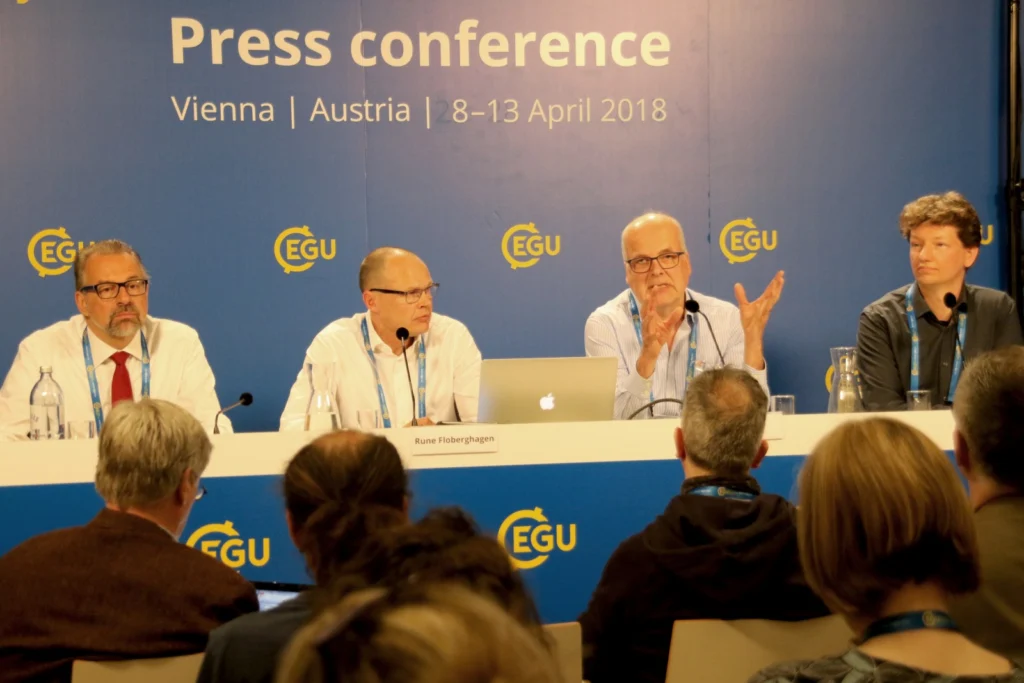
The 2018 General Assembly took place in Vienna last month, drawing more than 15,000 participants from 106 countries. This month’s GeoRoundUp will focus on some of the unique and interesting stories that came out of research presented at the Assembly. Mystery solved The World War II battleship Tirpitz was the largest vessel in the German navy, stationed primarily off the Norwegian coastline as a fo ...[Read More]
Imaggeo on Mondays: Chilean relics of Earth’s past
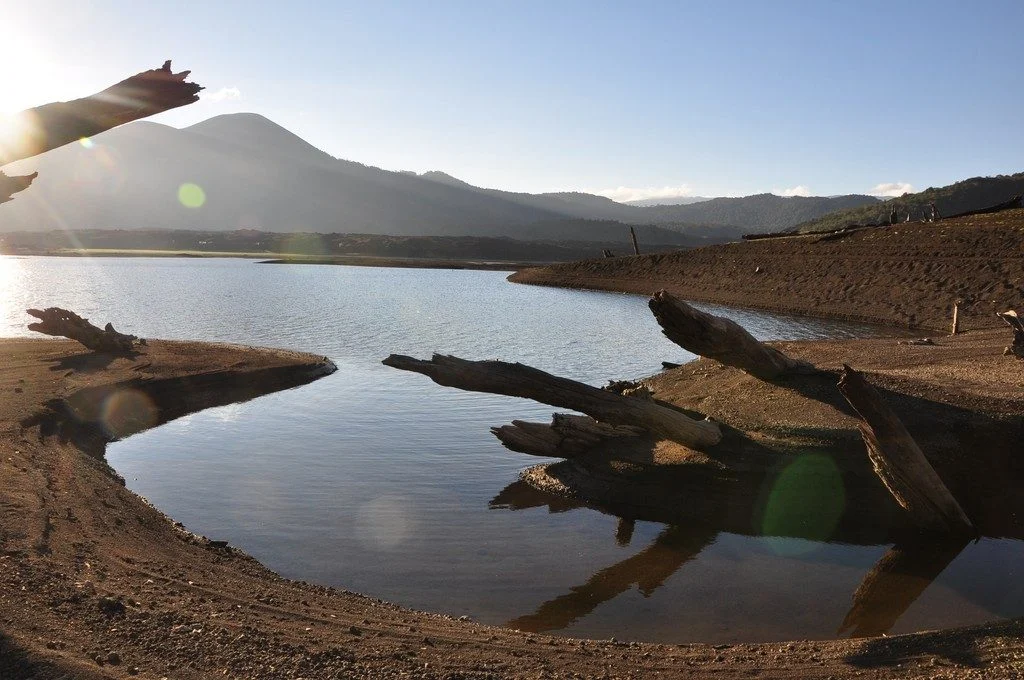
As Earth’s environment changes, it leaves behind clues used by scientists to paint portraits of the past: scorched timber, water-weathered shores, hardened lava flows. Chile’s Conguillío National Park is teeming with these kind of geologic artifacts; some are only a few years old while others have existed for more than 30 million years. The photographer Anita Di Chiara, a researcher at Lancaster U ...[Read More]
GeoTalk: Stephanie Zihms, Early Career Scientist Representative
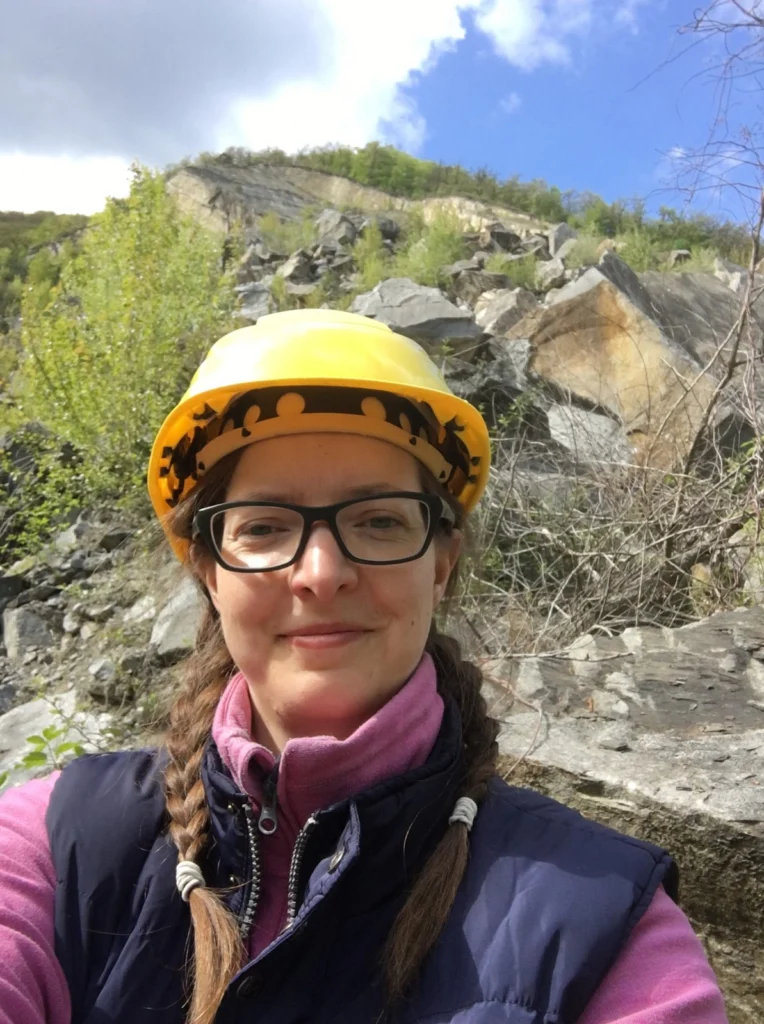
In addition to the usual GeoTalk interviews, where we highlight the work and achievements of early career researchers, this month we’ll also introduce one of the Division early career scientist representatives (ECS). They are responsible for ensuring that the voice of EGU ECS membership is heard. From organising short courses during the General Assembly, through to running and attending regular EC ...[Read More]
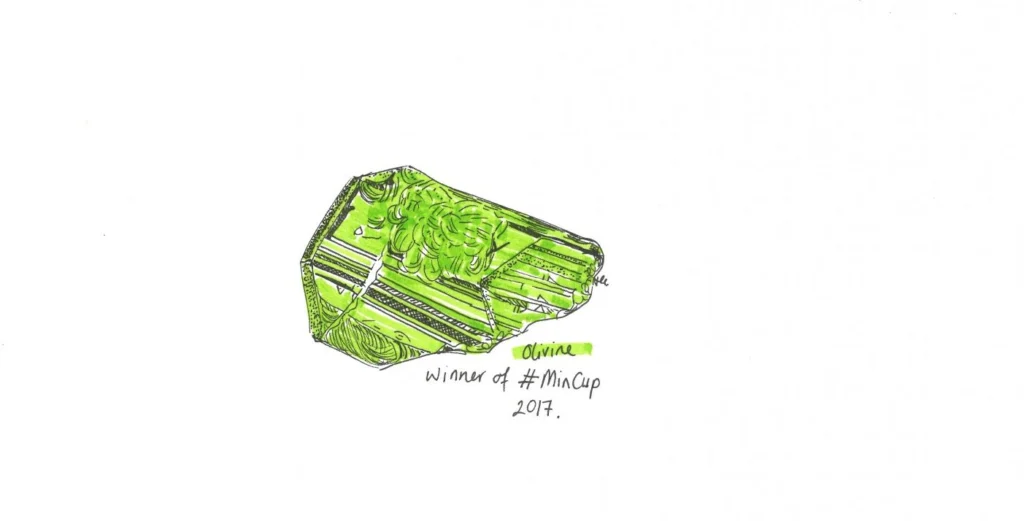
MinCup: Elevating humble minerals to new heights
Throughout October and November, the world of (Earth science) Twitter was taken by storm: Day after day, Eddie Dempsey (a lecturer at the University of Hull, and @Tectonictweets for those of you more familair with his Twitter handle) pitted minerals against each other, in a knock out style popular contest. The aim? To see which mineral would eventually be crowned the best of 2017. Who knew fiery ( ...[Read More]
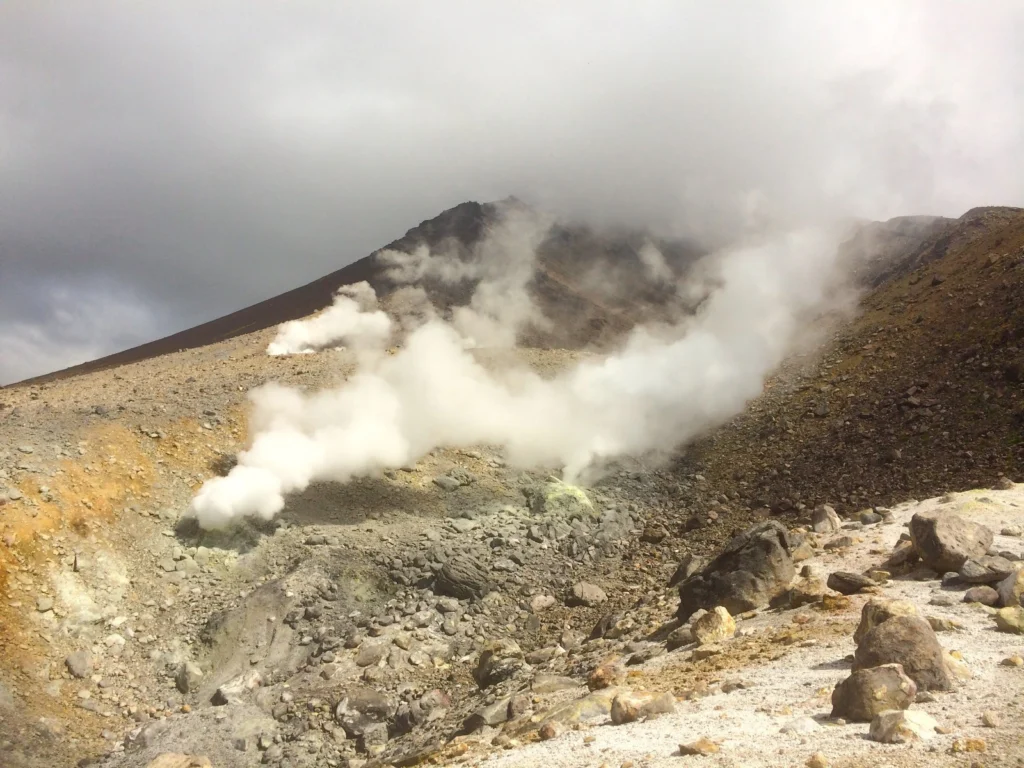
Imaggeo on Mondays: Smoking mountain top
Japan’s northernmost, second largest and least developed island, Hokkaido, is famous for its unspoilt nature. Harsh, cold and snowy winters make way for pleasant summers, which allow tourists and locals to enjoy a variety of outdoor activities, year-round, in the island’s six protected areas. The largest of the natural parks is Daisetsuzan: known for it’s wilderness and volcanoes. It is formed by ...[Read More]
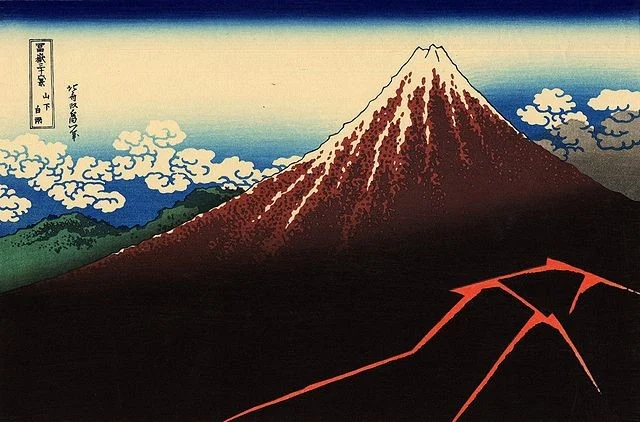
GeoSciences Column: Don’t throw out that diary – medieval journals reveal the secret of lightning
When 17th century Japanese princess Shinanomiya Tsuneko took note of an afternoon storm in her diary one humid Kyoto summer, she could not have imagined her observations would one day help resolve a longstanding scientific conundrum. Statistical analysis of her journals has revealed a link between lightning strikes and the solar wind – proving that your teenage diary could contain good scien ...[Read More]
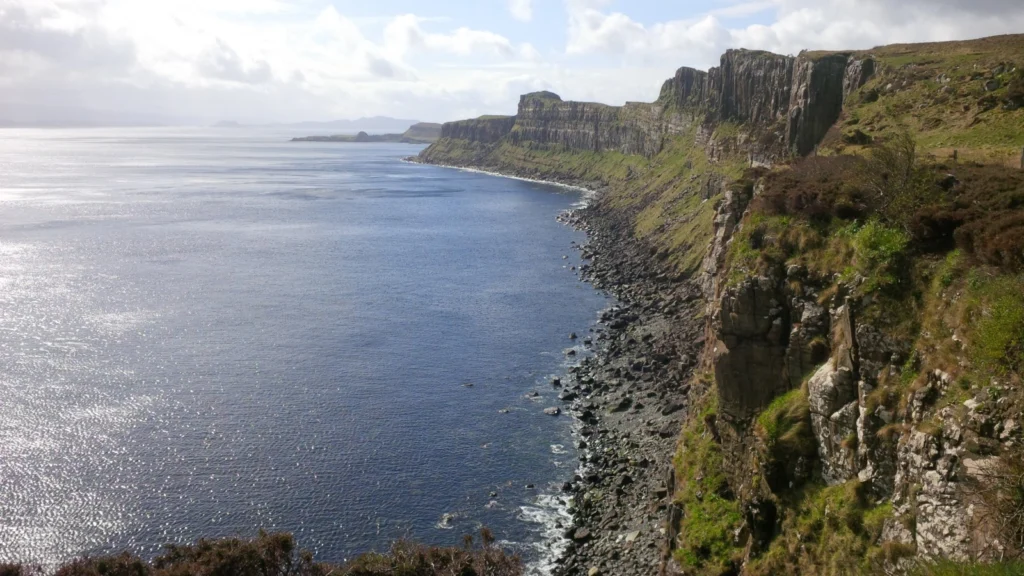
Imaggeo on Mondays: A spectacular view of moss-covered rocks
Geology has shaped the rugged landscape of the Isle of Skye – the largest island of Scotland’s Inner Hebrides archipelago. From the very old Precambrian rocks (approximately 2.8 billion years old) in the south of the island, through to the mighty glaciers which covered much of Scotland as recently as 14,700 years ago, the modestly-sized island provides a snap-shot through Earth’s dynamic his ...[Read More]
Five top tips to apply for small grants
Stephanie Zihms, the ECS Representative for the EMRP Division (and incoming Union Level Representative) has applied for a range of small scale grants (<£15,000, ca. 16,965€). At this year’s General Assembly, she was one of two speakers at the ‘How to write a research grant’ short course, where she shared insights from her successes and failures. In today’s post she tells us about the top five ...[Read More]
Imaggeo on Mondays: Magnetic interaction
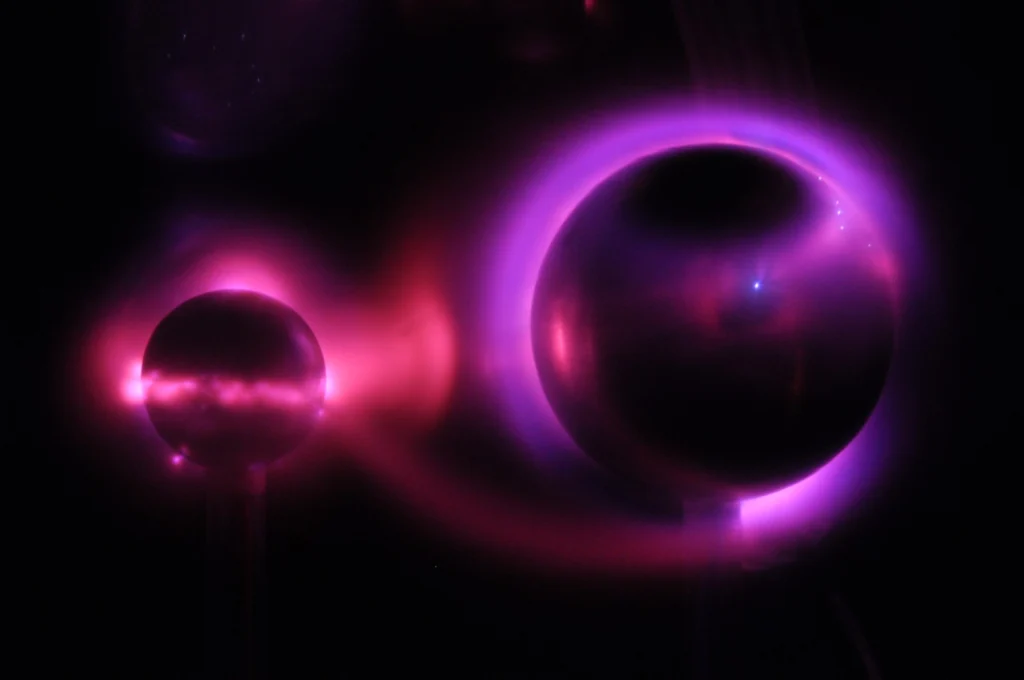
Space weather is a ubiquitous, but little known, natural hazard. Though not as tangible as a volcanic eruption, storm or tsunami wave, space weather has the potenital to cause huge economic losses across the globe. In Europe alone, the interaction of solar wind with our planet’s magnetosphere, ionosphere and thermosphere, could lead to disrutions to space-based telecommunications, broadcasti ...[Read More]