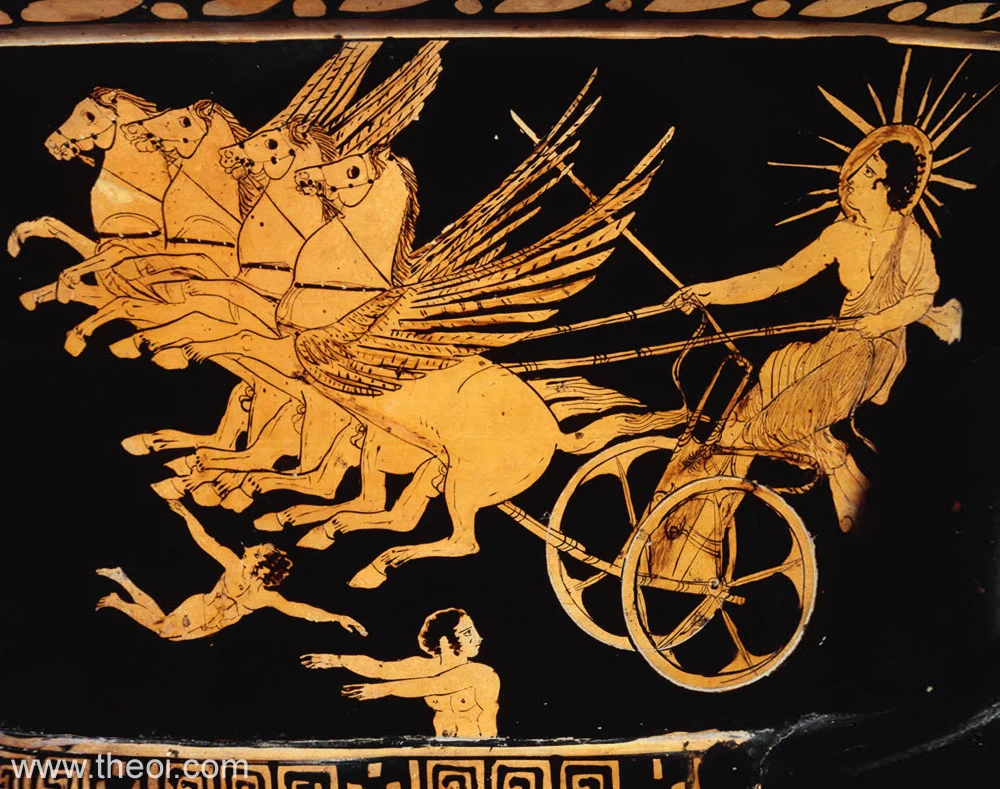
In the May issue of the Life of a Scientist we have the pleasure to talk to Prof. Ilya Usoskin from the Univeristy of Oulu, Finland. Among numerous things, he is the head of the Oulu Cosmic Ray station and receipent of this year’s Julius Bartels EGU Medal; a decision that was based: “on his contributions …[Read More]
Solar-Terrestrial Sciences
Report from the 2018 EGU General Assembly
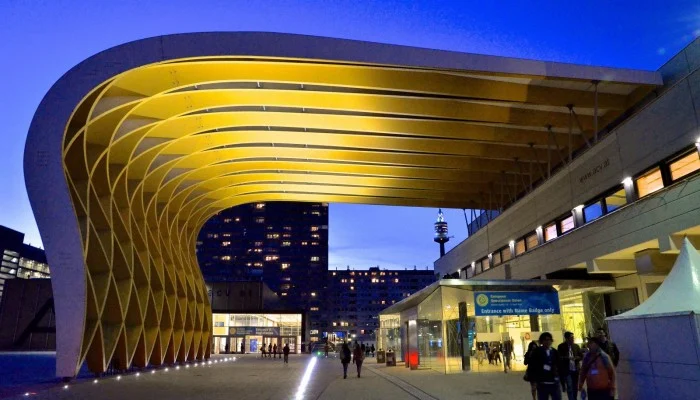
Last week the 2018 General Assembly were held in Vienna. Gathering 15 075 scientists from 106 countries, this is the most important EGU event throughout the year. Summarizing what happened during the week is an impossible task, as a meeting like this is way more than the 666 individual sessions convened and the 11 128 …[Read More]
Cosmic rays – messengers from space
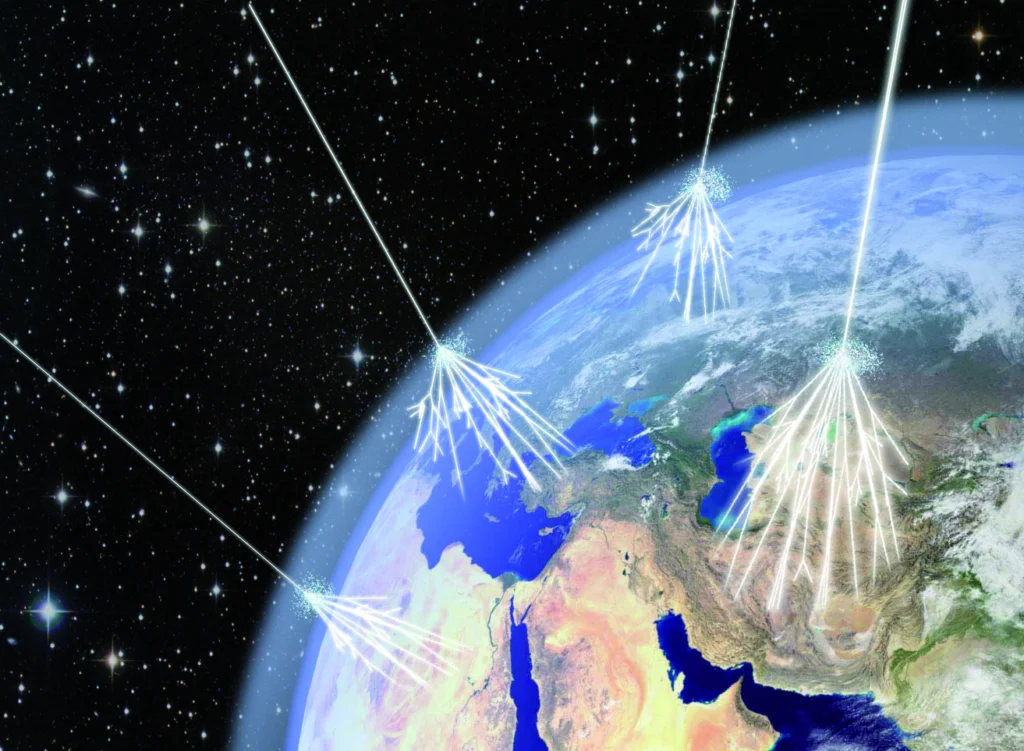
Cosmic rays (CRs), are not actually rays, but highly energetic charged particles of extraterrestrial origin. The life cycle of a cosmic ray particle starts with its birth at some point in the Universe, its travel at nearly the speed of light and finally with its death ( e.g. at a detector). These highly energetic particles …[Read More]
Social media response to geomagnetic activity
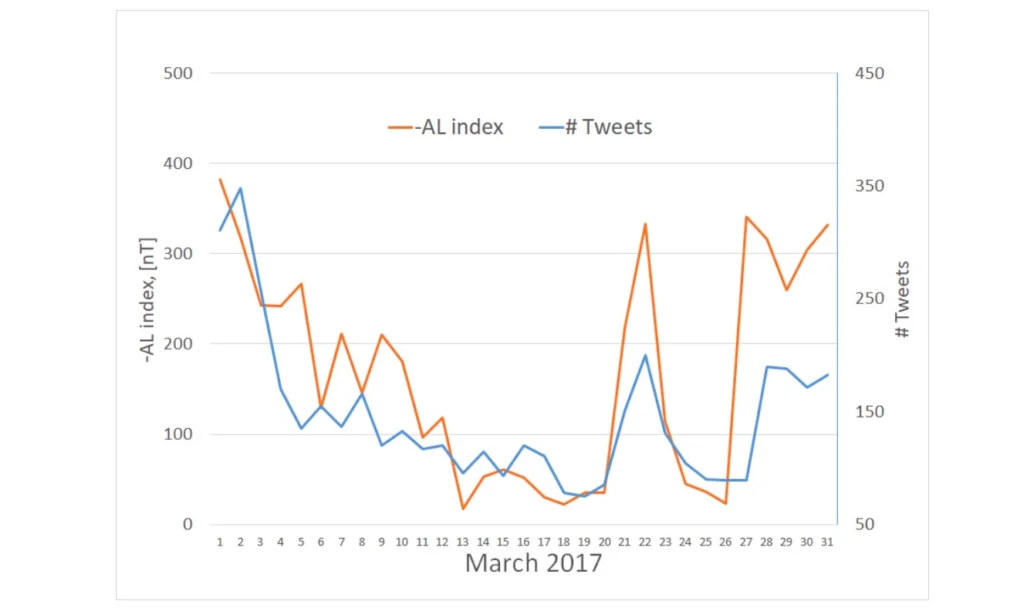
Social media platforms offer every person with internet access the possibility to share content of various kind. The recent increase in social media use globally give birth to new tools and insights, from a different perspective. The size of, and the global nature of the user driven social media, makes one expect it to include …[Read More]
How do we study the magnetosphere?
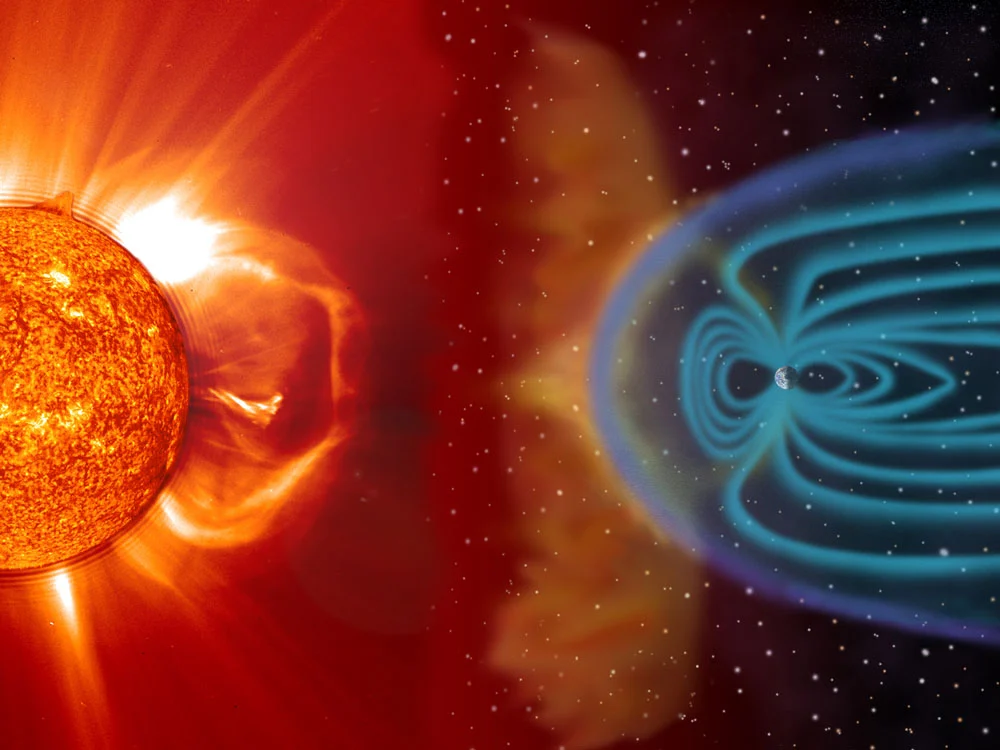
Our closest star, the Sun, is constantly emitting hot gas in all directions as its upper atmosphere, the corona, expands. This is known as the Solar Wind, also carrying with it an embedded magnetic field, the Interplanetary Magnetic Field (IMF). The IMF originates at the Sun and forms an enormous spiral throughout the solar system …[Read More]
Dr. Helen Mason – Solar space missions: a life with the Sun
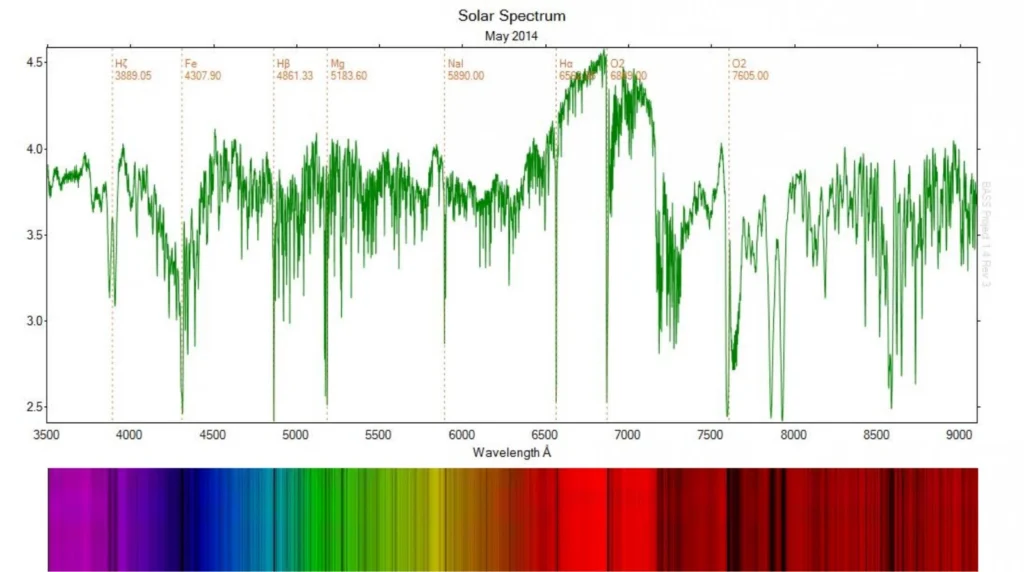
In the December issue of Life of a Scientist we have an interview of Dr. Helen Mason. She was working at the Department of Applied Mathematics and Theoretical Physics at the University of Cambridge, UK until recently when she retired. Her research interests include UV and X-Ray spectrum of the Sun. She has also devoted …[Read More]
EGU for Early Career Scientists
Are you a student, or have obtained a MSc or PhD degree within the past 7 years? If yes, you are an Early Career Scientist! In the EGU we take great care of the young scientists, and offer a wide range of opportunities, mostly associated with the General Assembly. My name is Jone Peter Reistad …[Read More]
Eyes on the Sun
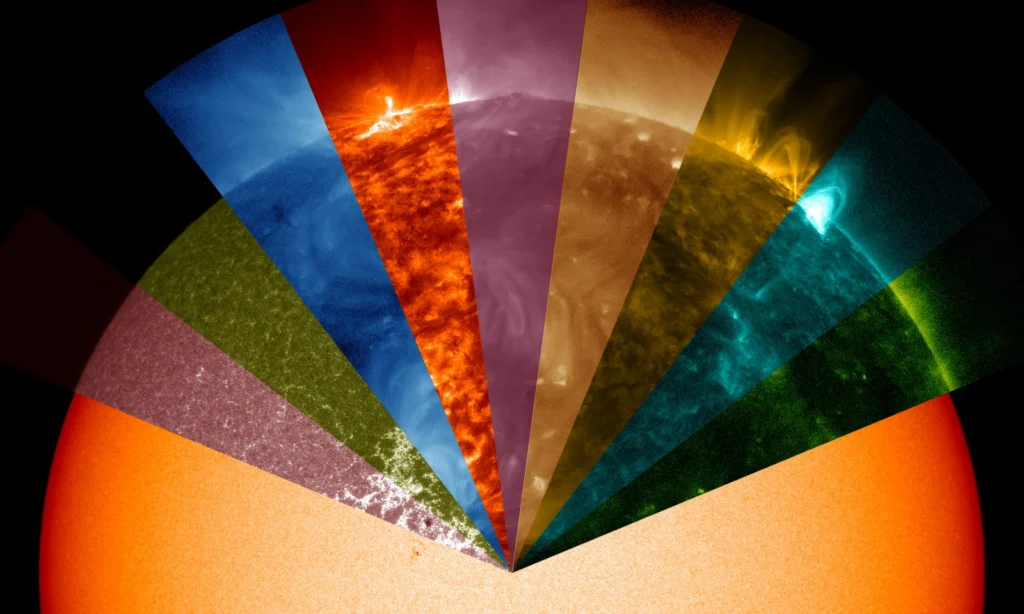
The Sun is a complex, dynamic ball of plasma which influences our lives. Studying the Sun is challenging because each of its layers have different composition, physics and wavelengths of emssion. Moving outwards from the photosphere (visible surface of the Sun), we have the chromosphere and the corona (hottest outermost layer). The solar plasma is …[Read More]
Miho Janvier – The Quest for Solar Storms
In this month’s (first ever for our blog) Life of a Scientist interview, we are very happy to talk to Dr Miho Janvier, a Researcher at the Institut d’Astrophysique Spatiale in Orsay (France), whose work has shed some light on the understanding of solar eruptions and coronal mass ejections (or solar storms) from their birth in …[Read More]
The 2017 solar eclipse and scientific discoveries
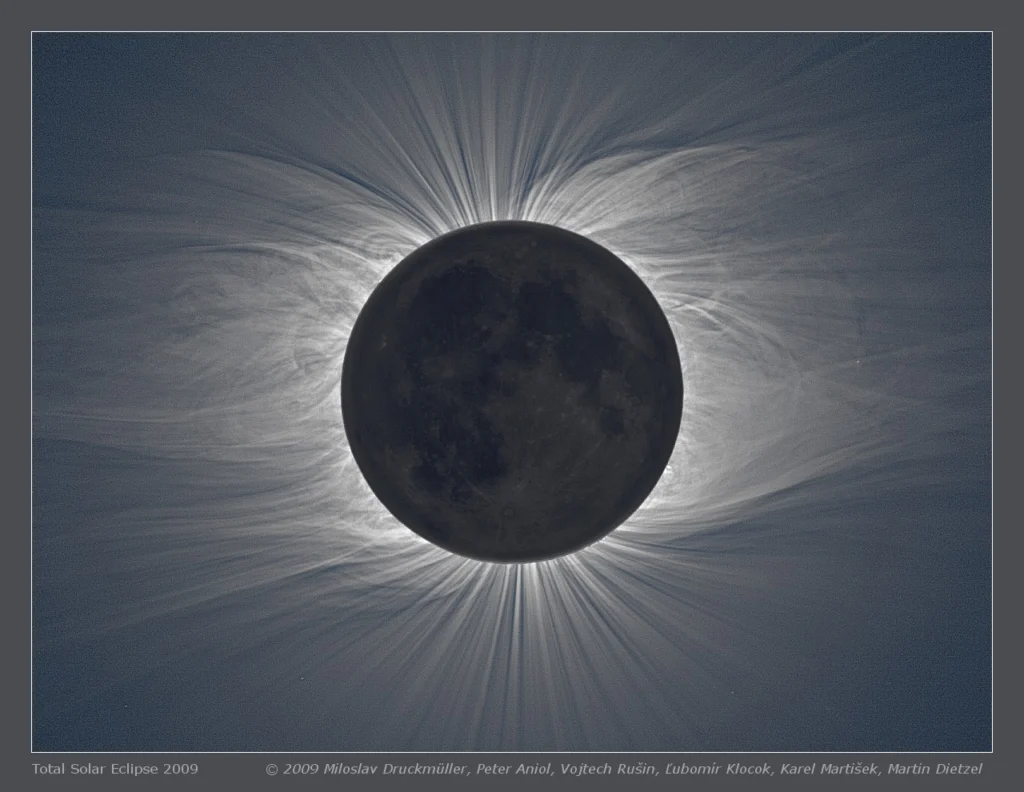
The next solar eclipse is upon us. On August 21 the moon will pass between the Sun and an observer’s point of view in America and block out daylight, creating an eerie gloom in the sky. The transit of the moon between the Earth and Sun occurs about every 18 months, but for your particular city it …[Read More]