The journey to my first EGU General Assembly (GA) 2026 (EGU26) was memorable even before the conference began. What should have been a straightforward train ride to Vienna turned into an unexpected adventure when we were asked to get off at a small station and wait several hours for alternative transport. Surrounded by travellers, luggage, and a fair amount of confusion, it felt as though the EGU26 adventure had already begun before we had even reached Vienna. Fortunately, we eventually made it to Vienna, ready for the week ahead.
My first impression was simply how huge the conference was. Walking through the conference centre for the first time, I was astonished by the scale of the event and the diversity of researchers attending. Scientists from across the geosciences had come together to share ideas, discuss science, and learn from one another, creating an atmosphere unlike anything I had experienced before. One thing that stayed with me throughout the week was seeing researchers whose work I had only known through journal articles. It was exciting to see authors whose work I had been reading discuss their research firsthand. I still remember sitting through some talks thinking, I know this name from a paper I read a few weeks ago.
My first impression was simply how huge the conference was.
They were standing at posters, giving talks, answering questions, and discussing science over coffee. Seeing this transformed my view of research from something that existed on paper into a real, active, and collaborative community.
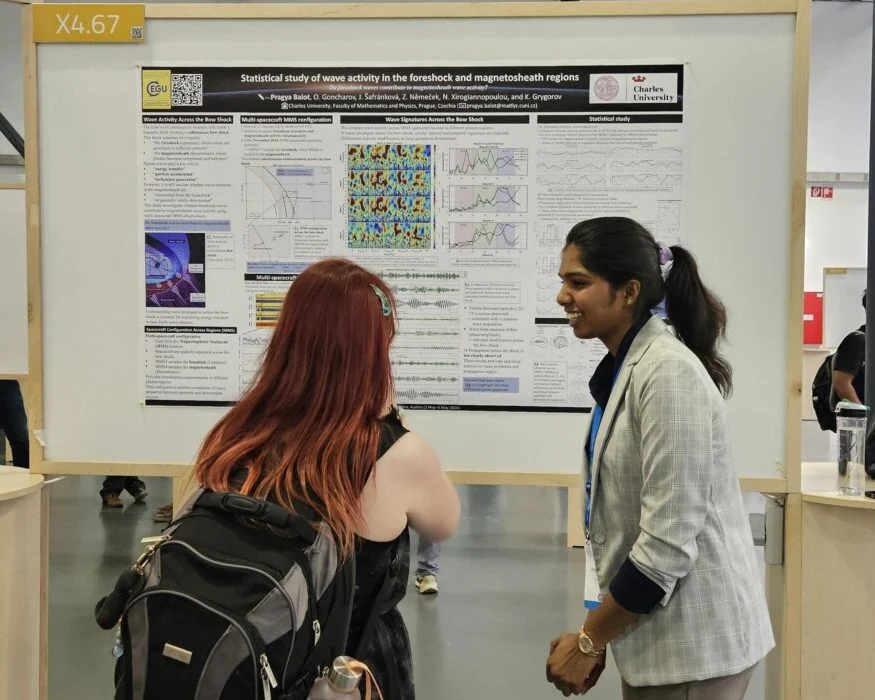
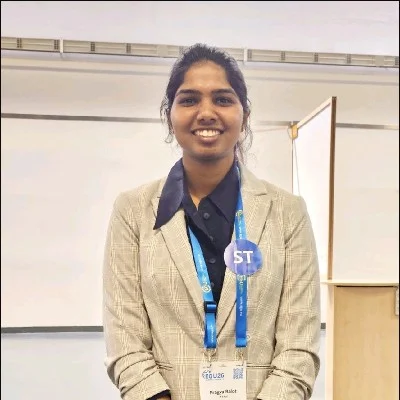
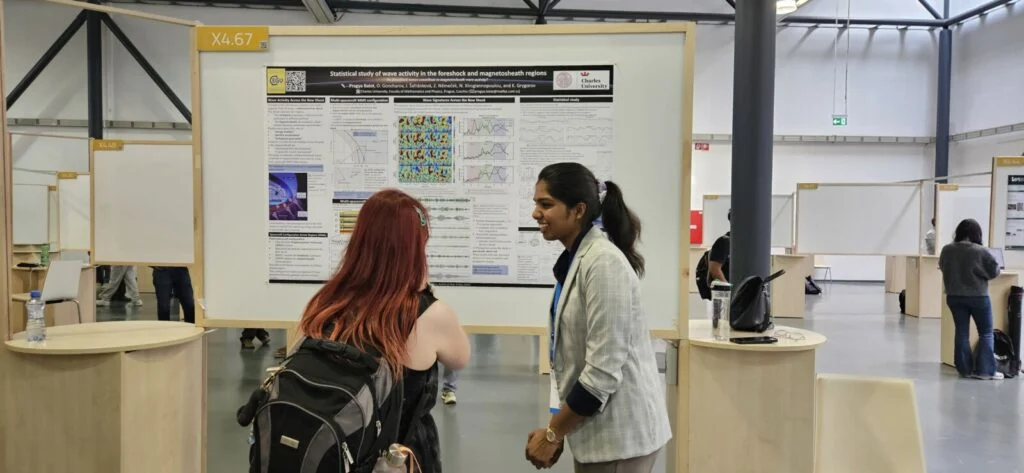
Discussing my poster at EGU 2026
I attended many talks on waves and space plasma physics, which are closely related to my research interests. Listening to both observational and simulation studies helped me better understand how different researchers approach similar scientific questions. Several presentations sparked new ideas and gave me a broader perspective on the kinds of questions I might explore in the future.
One of the most important parts of the week was presenting my own poster on a statistical study of wave activity in the magnetosheath and foreshock regions. As someone who had only recently started working in this field, I found it a valuable opportunity to share my research with the wider community. I was particularly interested in hearing feedback, exchanging ideas, and learning how others approached similar scientific questions.
I was particularly interested in hearing feedback, exchanging ideas, and learning how others approached similar scientific questions.
After the first few discussions, I became more comfortable talking about my work and exchanging ideas with others. Scientists stopped by my poster, asked thoughtful questions, and engaged in interesting discussions about the results and their implications. I particularly appreciated how genuinely curious people were and how open they were to exchanging ideas. Some suggested possible directions for future work, while others offered insights to strengthen the project. What made these discussions especially meaningful was realising how interested people were in understanding my work and sharing ideas that could help move it forward. By the end of the session, I had gained valuable feedback, several new ideas to explore, and a clearer understanding of how I could further develop my research.
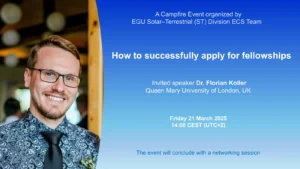
Beyond the scientific sessions, I attended several Solar-Terrestrial Sciences (ST) Division Early-Career Scientist (ECS) activities, including networking events for first-time attendees and ECS. Hearing about the experiences of fellow PhD students, ECS, and senior members of the community gave me a broader view of the different paths within our field. Some of the most memorable conversations I had during the week happened at these events, where discussions naturally moved from research projects to career experiences, plans, and the challenges of pursuing a PhD. Listening to these experiences gave me a greater appreciation of the variety of opportunities within the field and the supportive nature of the scientific community.
Listening to these experiences gave me a greater appreciation of the variety of opportunities within the field and the supportive nature of the scientific community.
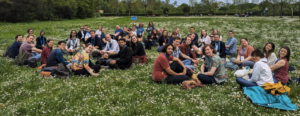
The ST ECS Picnic/Meet the experts activity was another highlight of the week. I enjoyed the opportunity to step away from the conference halls and interact with community members in a more relaxed setting. Conversations often moved beyond specific research topics and into broader discussions about ideas, experiences, and future projects. It was interesting to see how many creative discussions and potential collaborations could emerge in such an informal environment. Unfortunately, I was unable to attend the ST ECS Dinner activity this year. Having heard so many positive things about it from colleagues, I definitely look forward to experiencing it at a future EGU.
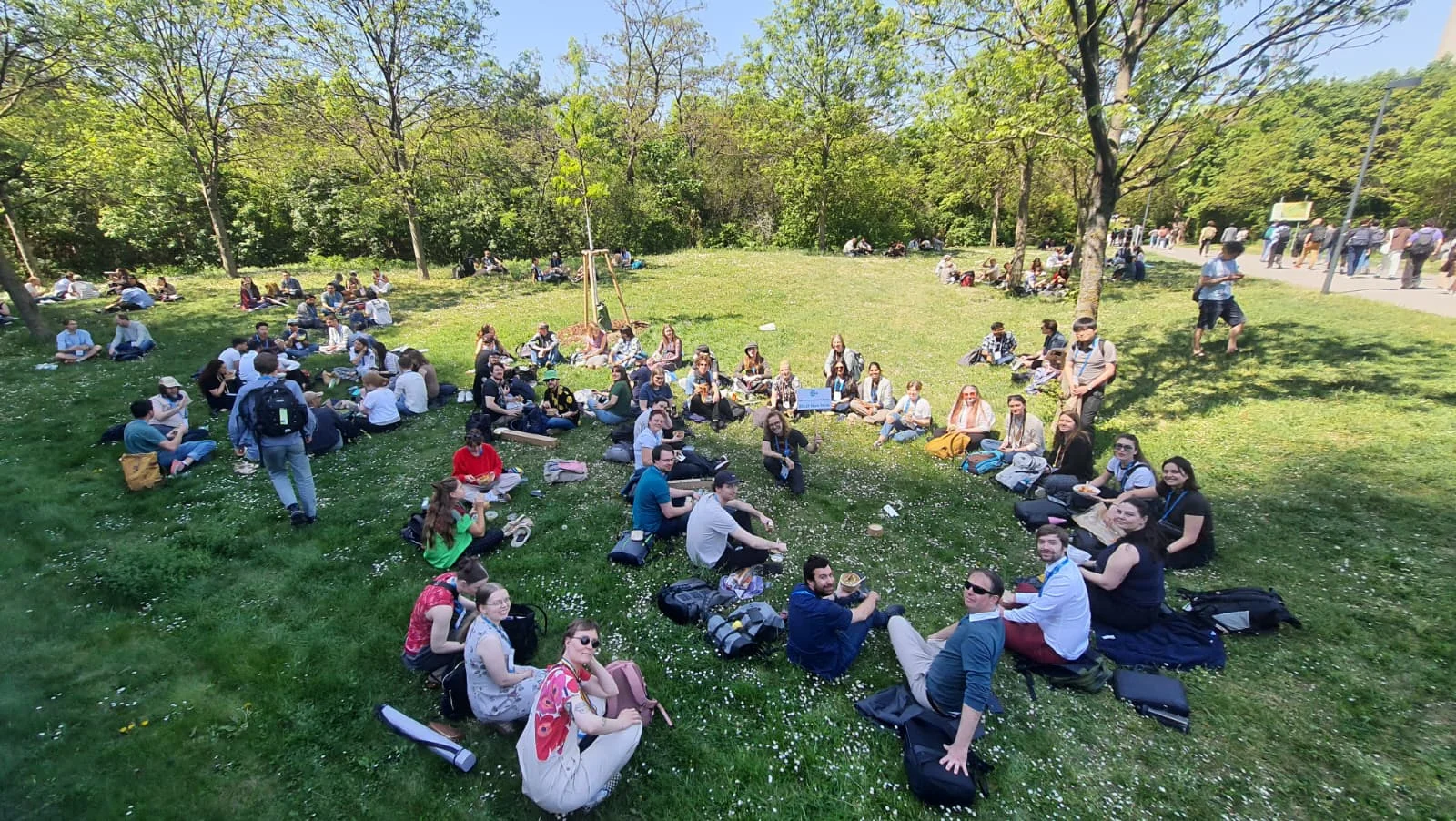 At the ST-ECS Picnic
A particularly special moment during the week was witnessing the recognition of our professors and mentors, Prof. Jana Šafránková and Prof. Zdeněk Němeček, who received the 2026 Hannes Alfvén Medal. As a student from their group, it was a proud moment to see their contributions recognised by the wider community. Seeing their work celebrated was inspiring and made me appreciate even more the opportunity to be part of a group that has contributed so significantly to our understanding of space plasma physics.
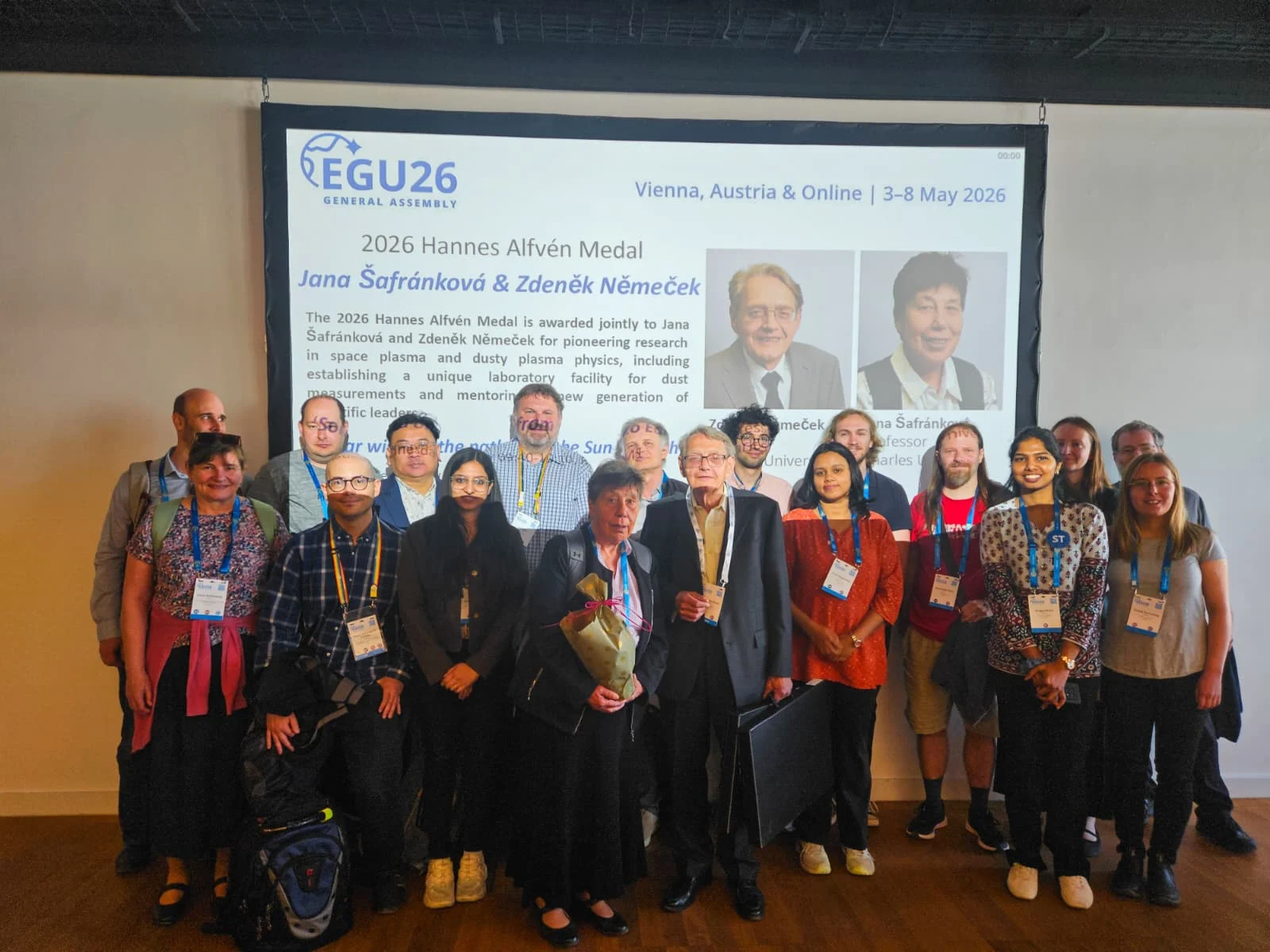 Our research group, with Prof. Jana Šafránková and Prof. Zdeněk Němeček, at the Hannes Alfvén Medal award talk
Looking back, what impressed me most was not only the scientific interactions but also the collaborative nature of our field. Events like EGU GA bring together people with different expertise, backgrounds, and ideas, creating opportunities for feedback, discussion, and future collaborations. These experiences showed me how scientific ideas develop through curiosity, questions, and the exchange of knowledge.
As a first-year PhD student, EGU26 was far more than my first conference. It was my first real introduction to the international scientific community and an opportunity to experience firsthand how research extends beyond papers and presentations. Throughout the week, I learned from talks, discussions, and the experiences shared by others, and I had the chance to present my own work and receive valuable feedback.
EGU26 was far more than my first conference. It was my first real introduction to the international scientific community and an opportunity to experience firsthand how research extends beyond papers and presentations.
I left EGU with new ideas for my research, a broader understanding of the field, and a deeper appreciation for the community that drives it forward. For a newcomer to the field, attending EGU26 was not only a memorable experience but also an inspiring start to my PhD journey.