The EGU Ocean Sciences division blog is looking for new volunteer editors. So far, the team consists of two early career scientists, Jacqueline and Maurie — both working in ocean biogeochemistry — and we would love to grow. As an editor, you will keep an eye out for interesting new articles and datasets to write about, write short blog posts about ocean related news, and approach other scientists ...[Read More]
Hydrological Sciences
Reclaiming scientific publishing: Our duty to make science freely accessible to all
When we (Camille Thomas and Romain Vaucher speaking) entered academia as graduate students in France and Switzerland, we were enthusiastic about the vast amount of research available with a simple click on our university computers. However, we also quickly felt disheartened by the significant amount of research work we couldn’t access when wrapping up our theses from home. Luckily, pirates existed ...[Read More]
Tectonics and Structural Geology
Join the team! The TS division is looking for new volunteers
Hello there! Welcome to the TS-Blog! I’m Pauline, editor in chief. If you’re reading this, you’re probably already intrigued by our announcement and might wonder: What is it like being a blog editor? Or simply: What if the next editor of a post was… ME? Well, let me tell you more about being an editor. Because our editor team is looking for new members to bring in their pe ...[Read More]
Biogeosciences
The beauty of Soil!
The Life Beneath Our Feet Where would we be without healthy soil? A lot of our research live would be in turmoil I’m here today to spread some soil appreciation, Which may require some thought transformation. Soil Is the base of our beautiful landscapes, Often where we go for some restorative escapes, Some key reasons to save soils from destruction They support 95% of global food production, And a ...[Read More]
Geodesy
Listening to reflections: What GNSS signals can tell us about a changing environment
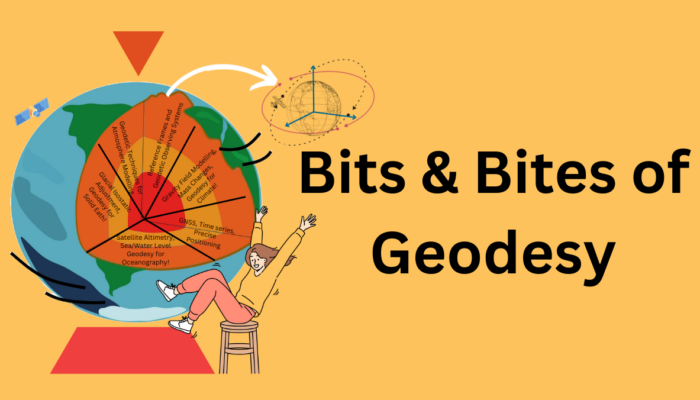
Global Navigation Satellite Systems (GNSS) are best known for positioning, navigation, and monitoring Earth surface motions with high precision (see two of our previous posts on GNSS here and here). But did you know that the same satellite signals can also provide information about snow, soil moisture, or sea level, without installing any additional instruments? This idea lies at the heart of GNSS ...[Read More]
Atmospheric Sciences
Are we valuing poster sessions enough?
Do not get me wrong, EGUs General Assembly is a great conference and it’s a real pleasure to explore all the science on display, reconnect with colleagues from other institutes, cities and disciplines. But, wandering the venue and seeing all the empty poster walls left a sad feeling. It’s not only singular gaps in an otherwise packed hall, it’s whole empty corridors and not only Monday morning or ...[Read More]
Geodesy
EGU Campfire Geodesy – Share Your Research – 19th Edition
We are excited to announce the 19th edition of Geodesy Campfire – Share Your Research in April. The Geodesy EGU Campfire Events “Share Your Research” give (early career) researchers the chance to talk about their work. We have two exciting talks by our guest speakers, Yuting Cheng and Hamed Izadgoshasb. Below, you can find the details of the topics awaiting us. We will have time to network after t ...[Read More]
Geodynamics
The AI Revolution in Mining: Overhyped, Understood and Absolutely Unavoidable
Artificial Intelligence has dominated the world across various sectors. However, it is yet to be decided whether the use of AI in Mineral Exploration (and more broadly in Geosciences) will diminish the expertise and know-how of Geologists or instead provide a valuable tool for the years ahead. In this week’s blog, Dr. Nicholas Vafeas shares his perspective on AI technology in the mining industry a ...[Read More]
Climate: Past, Present & Future
Weaker but more frequent: how sea breezes are changing in a warming climate
For the 500 million people living along the Mediterranean coast, the sea breeze is an essential component of the regional climate. They are more than a pleasant coastal wind, as they are critical for easing summer heat stress, dispersing pollutants, and triggering convection (the rapid upward movement of warm, moist air), sometimes leading to severe storms, among many others. But the Mediterranean ...[Read More]
Cryospheric Sciences
What Lies Beneath an Ice Shelf
Beneath Antarctica’s largest ice shelf lies a hidden ocean—dark, cold, and almost impossible to reach. Scientists drilled through hundreds of metres of ice to access it, revealing a world that plays a crucial role in how ice shelves melt. Years later, we had the chance to explore this unseen environment—not in the field, but through the data that the expedition left behind. Antarctica’s ice shelf ...[Read More]