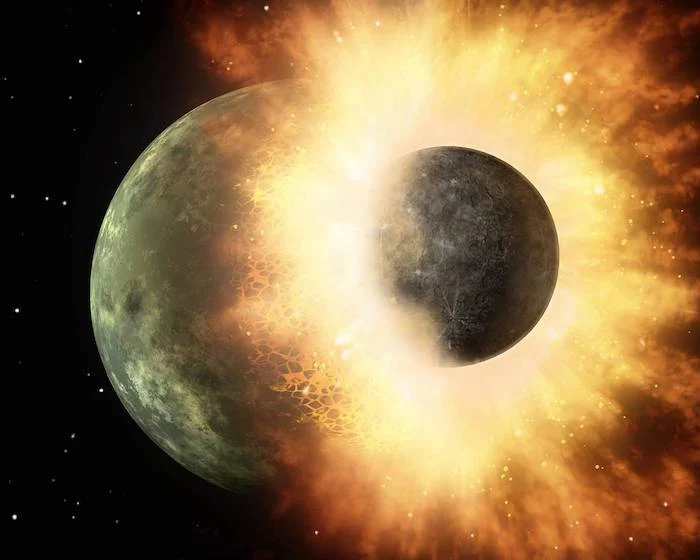
Why does the Moon have a very small core and Mercury one that makes up roughly 85% of the planet’s radius? Why are humans doing research in geoscience and not some evolved version of dinosaurs? In this week’s blog post, Harry Ballantyne, PhD student at the Department of Space and Planetary Sciences at the University …[Read More]
What happens when two worlds collide?