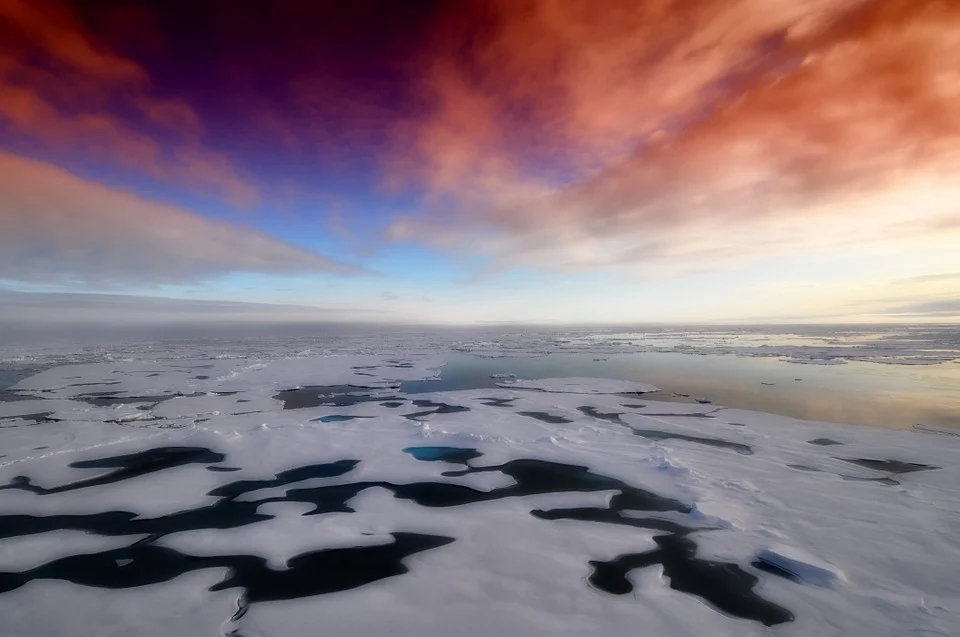

The Arctic Ocean surface is darkening as its sea-ice cover is shrinking. The exact processes driving the ongoing sea-ice loss are far from being totally understood. In this post, we will investigate the different causes of the recent retreat of the Arctic sea-ice cover, using the most updated literature… Arctic sea ice is disappearing Due to its geographical position centered around the Nort ...[Read More]
Image of the Week — Cavity leads to complexity
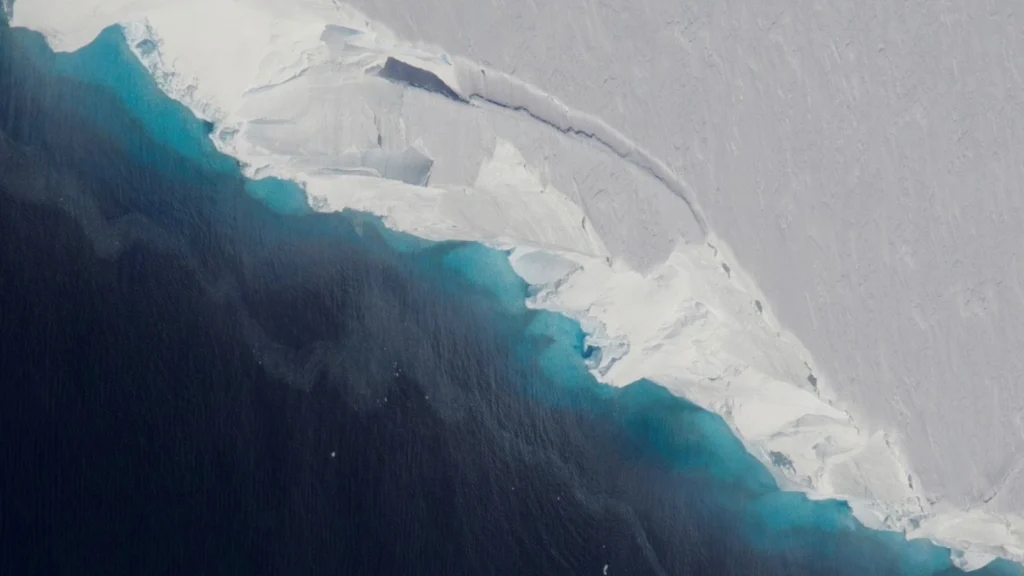
A 10km-long, 4-km-wide and 350m-high cavity has recently been discovered under one of the fastest-flowing glaciers in Antarctica using different airborne and satellite techniques (see this press release and this study). This enormous cavity previously contained 14 billion tons of ice and formed between 2011 and 2016. This indicates that the bottom of the big glaciers on Earth can melt faster tha ...[Read More]
Image of the Week – Delaying the flood with glacial geoengineering
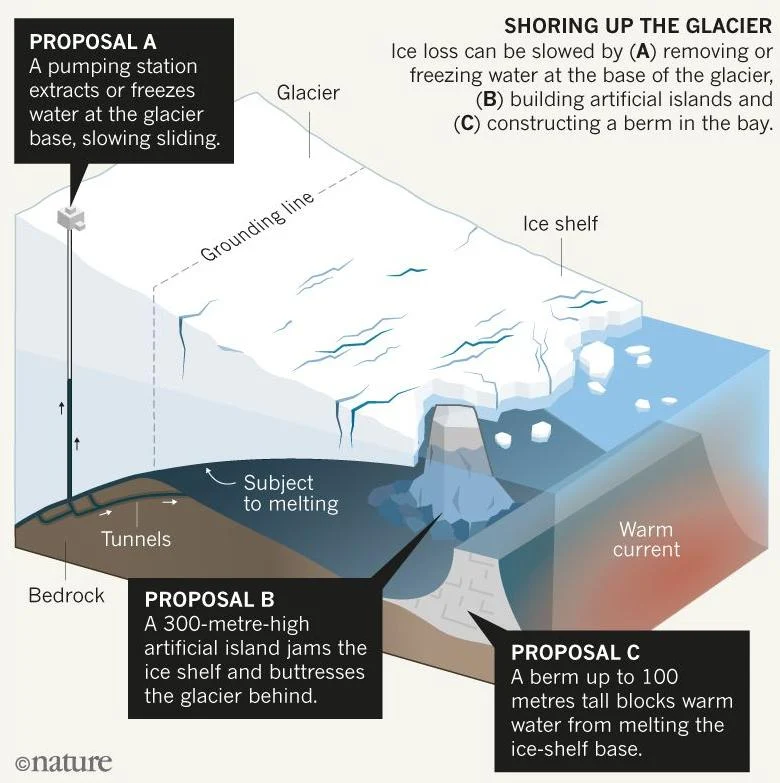
As the climate is currently warming, many countries and cities are preparing to cope with one of its major impacts, namely sea-level rise. Up to now, the mitigation of climate change has mainly focused on the reduction of greenhouse gas emissions. Large-scale geoengineering has also been proposed to remove carbon from the atmosphere or inject aerosols into the stratosphere to limit the rise in tem ...[Read More]
Image of the Week – Climate feedbacks demystified in polar regions
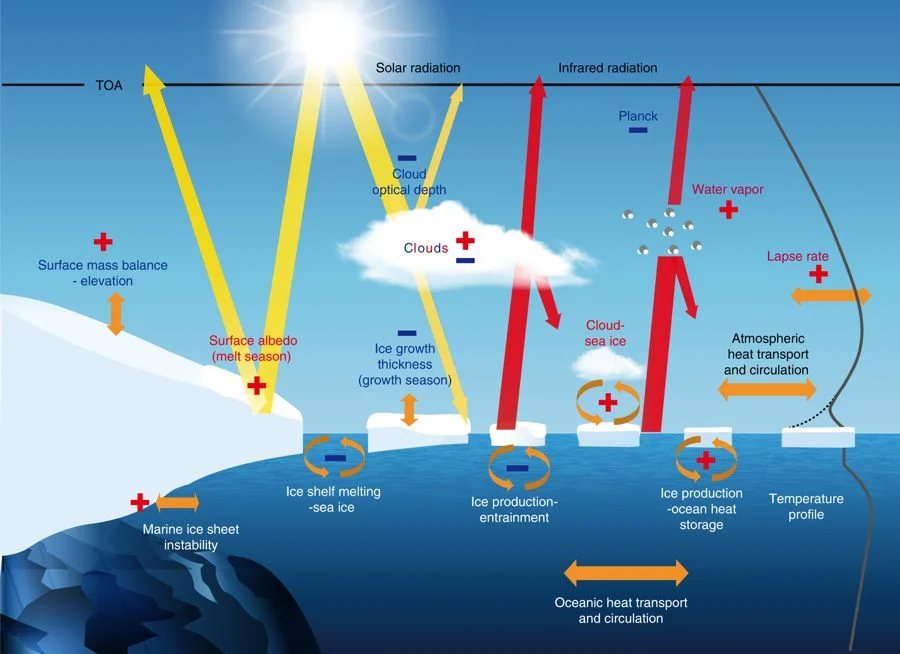
Over the recent decades, the Arctic has warmed twice as fast as the whole globe. This stronger warming, called “Arctic Amplification“, especially occurs in the Arctic because ice, ocean and atmosphere interact strongly, sometimes amplifying the warming, sometimes reducing it. These interactions are called “feedbacks” and are illustrated in our Image of the Week. Let’s ...[Read More]
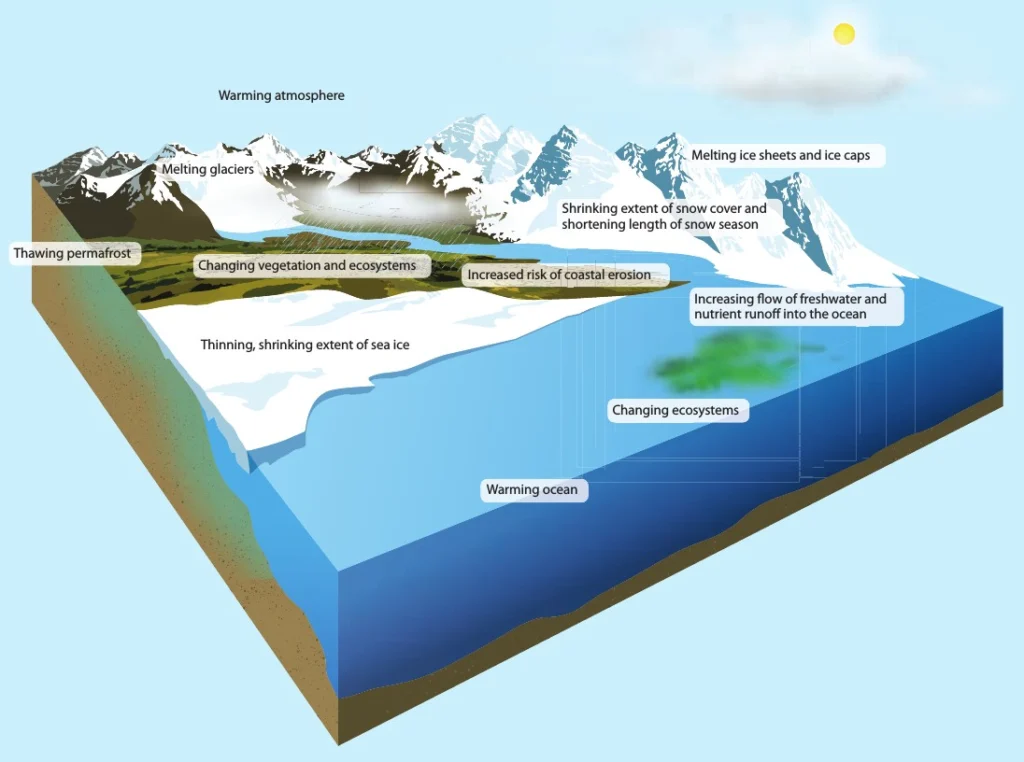
Image of the Week – Arctic changes in a warming climate
The Arctic is changing rapidly and nothing indicates a slowdown of these changes in the current context. The Snow, Water, Ice and Permafrost in the Arctic (SWIPA) report published by the Arctic Monitoring and Assessment Program (AMAP) describes the present situation and the future evolution of the Arctic, the local and global implications, and mitigation and adaptation measures. The report is base ...[Read More]
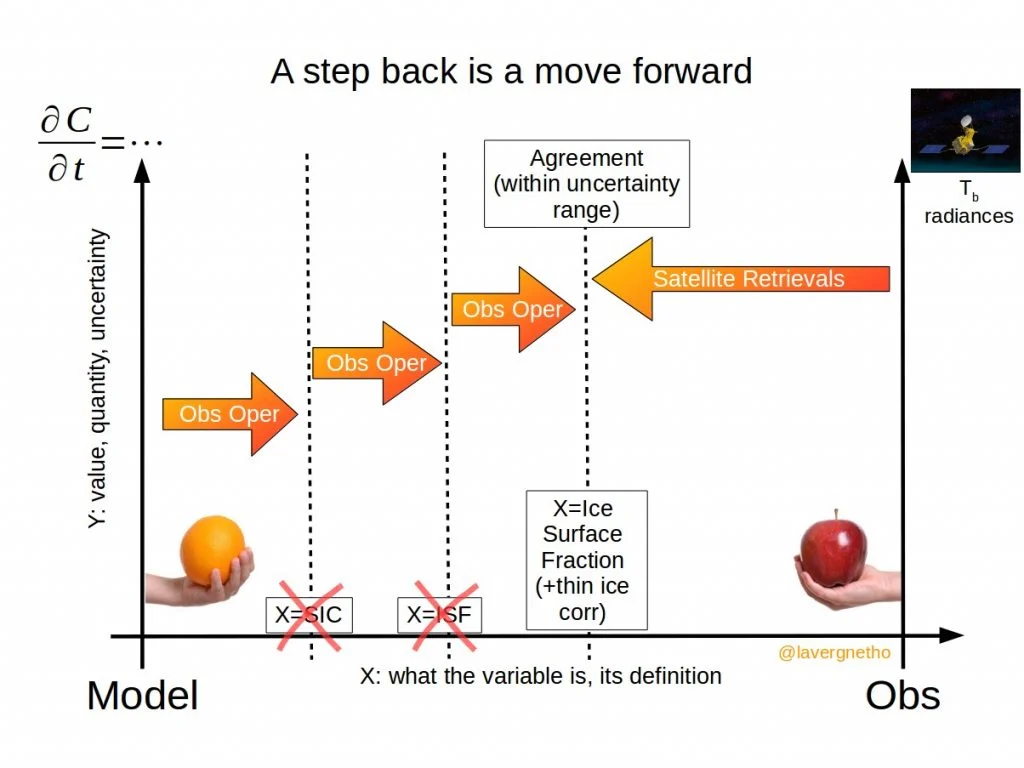
Image of the Week – Of comparing oranges and apples in the sea-ice context
In the last fifty years, models and observations have enabled us to better understand sea-ice processes. On the one hand, global climate models have been developed, accounting for the sea-ice component in the climate system. On the other hand, satellite instruments have been developed to monitor the “real” sea-ice evolution. These satellite observations are often used to evaluate climate models. H ...[Read More]
Image of the Week – A new way to compute ice dynamic changes
Up to now, ice sheet mass changes due to ice dynamics have been computed from satellite observations that suffer from sparse coverage in time and space. A new method allows us to compute these changes on much wider temporal and spatial scales. But how does this method work? Let us discover the different steps by having a look at Enderby Land in East Antarctica, for which ice velocities are shown i ...[Read More]
Image of the Week – Ice lollies falling from the sky
You have more than probably eaten many lollipops as a kid (and you might still enjoy them). The good thing is that you do not necessarily need to go to the candy shop to get them but you can simply wait for them to fall from the sky and eat them for free. Disclaimer: this kind of lollies might be slightly different from what you expect… Are lollies really falling from the sky? Eight years ag ...[Read More]
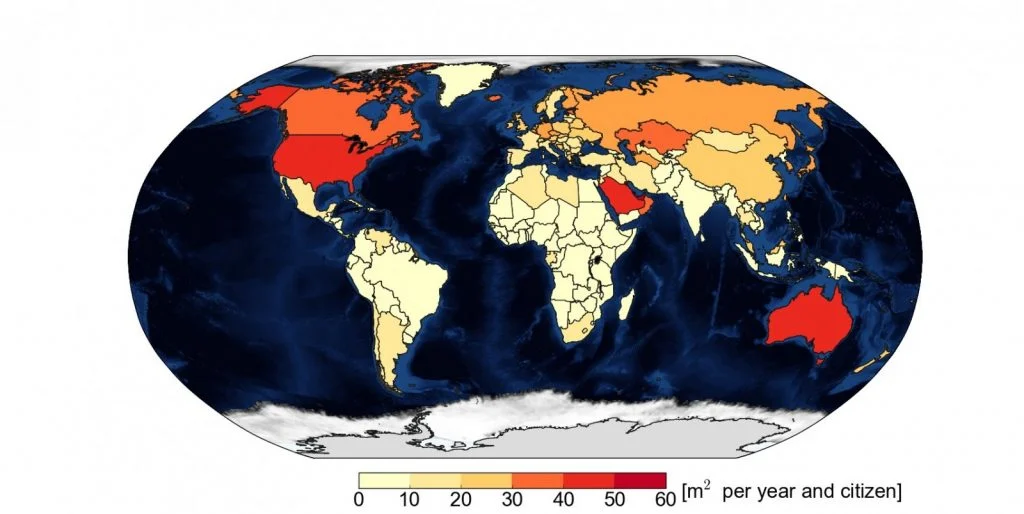
Image of the Week – For each tonne of CO2 emitted, Arctic sea ice shrinks by 3m² in summer
Declining sea ice in the Arctic is definitely one of the most iconic consequences of climate change. In a study recently published in Science, Dirk Notz and Julienne Stroeve find a linear relationship between carbon dioxide (CO2) emissions and loss of Arctic sea-ice area in summer. Our image of this week is based on these results and shows the area of September Arctic sea ice lost per inhabitant d ...[Read More]
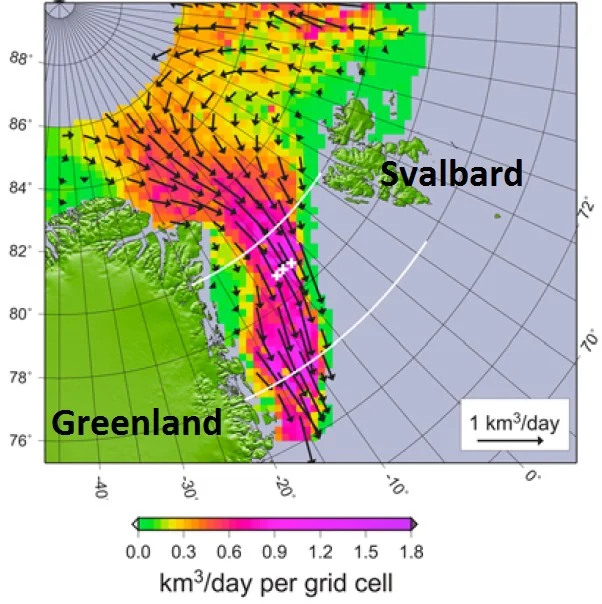
Image of the Week – Satellite Measurements of Arctic Sea Ice
Sea ice is an important part of the Earth’s climate system. When sea ice forms, it releases heat and salt. When sea ice melts, it takes up heat and adds freshwater to the salty ocean water. It is also important for the exchange of energy between the atmosphere and the ocean surface, and for the ocean currents that transport warm and cold water from the equator to the poles and back. The main route ...[Read More]