
CR
Cryospheric Sciences

David Docquier

David Docquier is a post-doctoral researcher at the Royal Meteorological Institute of Belgium (https://climdyn.meteo.be/). His study focuses on the cause-effect relationships between recent summer sea-ice lows in both polar regions and their potential interacting agents. His work is funded by the Belgian Science Policy Office (BELSPO) via the RESIST project (find the project here: https://resist-impuls.github.io/).

You thought it was over? Here’s more on the 2023 Antarctic sea-ice extent record low
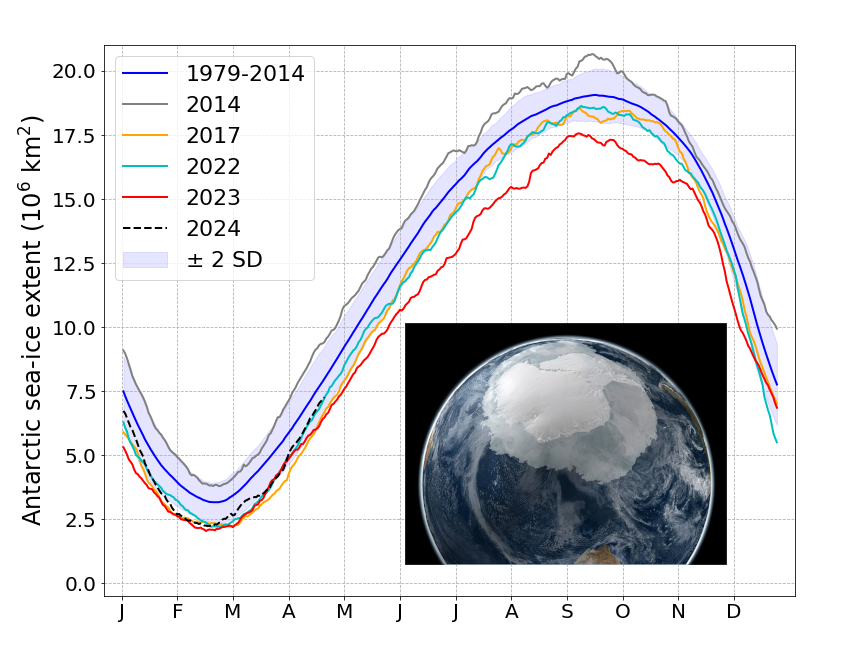
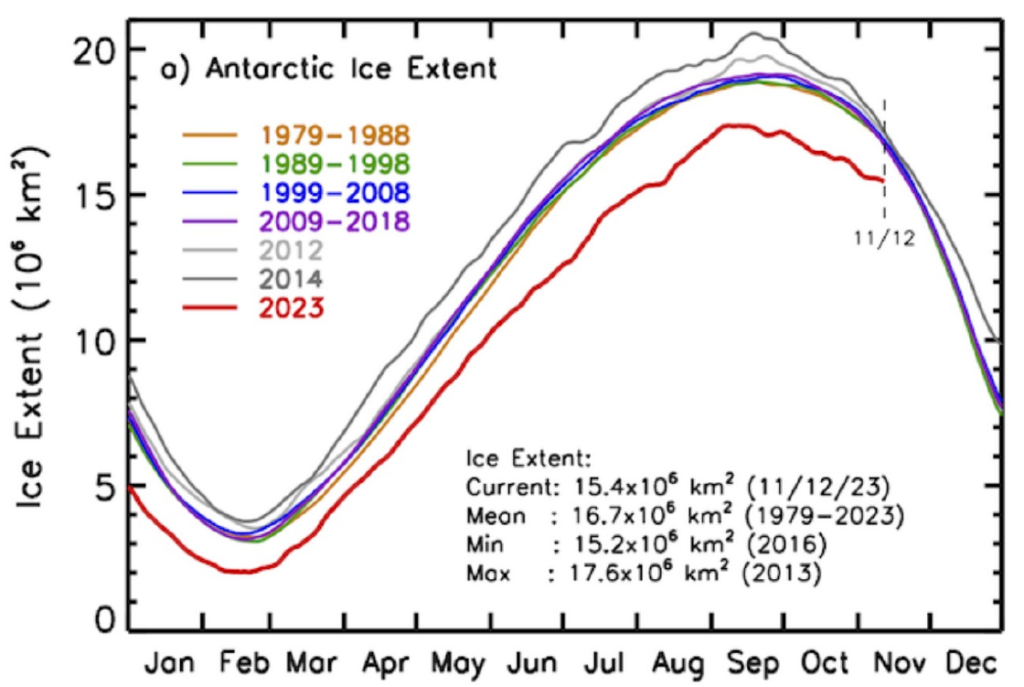
A figure showing several lines for several years of sea ice extent. They look like a wave with the minimum around february each year and the maximum around october.

  In November last year (see this post), we promised to provide you an update of what happened with Antarctic sea ice during the year 2023 – a year of an exceptionally low extent. In this post, we try our best to discuss the conditions that lead to (part of) the recent loss in Antarctic sea ice, including atmospheric and ocean processes. How sea ice usually works… One of the ways scientists h ...[Read More]

An exceptional year: What’s up with Antarctic sea ice?

An exceptional year: What’s up with Antarctic sea ice?

In our blog, we have written a lot about Arctic sea ice (see this post, this post and this post for recent examples). Much less has been written about Antarctic sea ice, i.e. its southern counterpart. That is not surprising as Arctic sea ice has experienced major losses since the late 1970s (beginning of satellite observations), while not much had happened to Antarctic sea ice (despite a small exp ...[Read More]

How over-consumption leads to reduced sea ice: Visualization through artwork

How over-consumption leads to reduced sea ice: Visualization through artwork

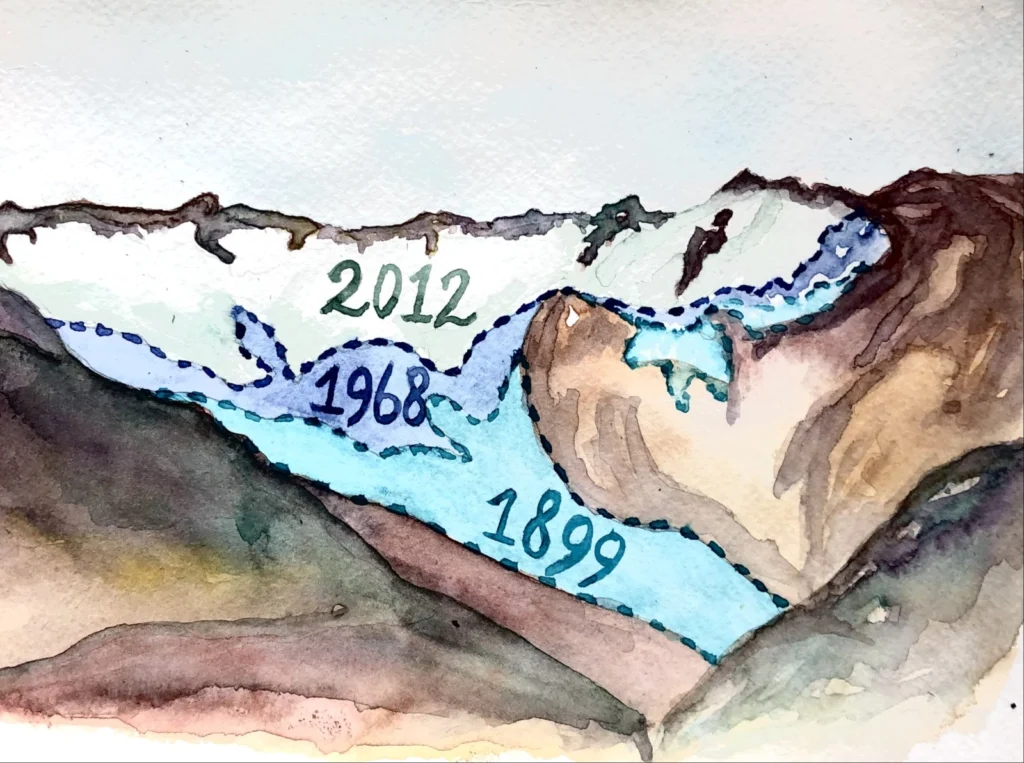
Do you think that it is sometimes challenging to understand science (as a reader or listener) or to explain it (as a scientist)? Then, art may be a good solution to the problem. Between April and June 2023, Zacharie Bodson (artist) and I (climate scientist) are participating in the Seas and Oceans exhibition to explain the links between changes in Arctic sea ice and over-consumption. Read here abo ...[Read More]

For Dummies: How Arctic sea ice and the AMOC interact

For Dummies: How Arctic sea ice and the AMOC interact

In this post, I will talk about two famous characters of the climate system; I will define them and see how they have changed in the current context of climate change. I will also show you how these two characters interact, one influencing the other, and vice versa. Finally, let’s see how the future looks like for them and the consequences for the global climate. I hope you will enjoy this story. ...[Read More]

Did you know the differences between Arctic and Antarctic sea ice?

Did you know the differences between Arctic and Antarctic sea ice?

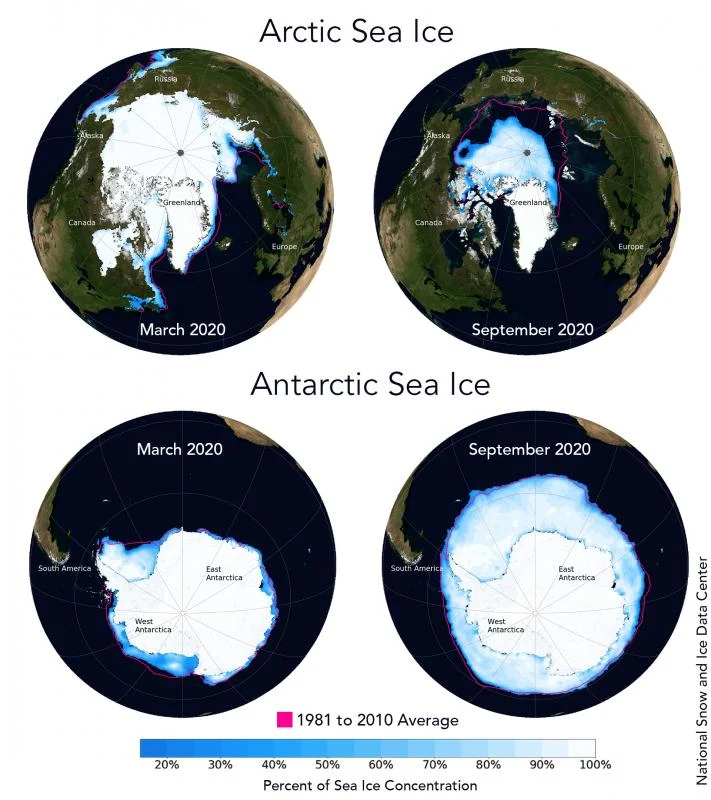
If you look at the maps in Figure 1, you will quickly see that sea ice is present in both polar regions (Arctic at the top, Antarctic at the bottom). Despite this apparent similarity, some differences exist between Arctic (in the Northern Hemisphere) and Antarctic (in the Southern Hemisphere) sea ice. We provide a brief explanation of two key differences in this post. Geography The first main diff ...[Read More]

Ice-hot news: A cryo-summary of the new IPCC assessment report!

Ice-hot news: A cryo-summary of the new IPCC assessment report!

We have waited eight years for it, and it is finally out: the 6th Assessment Report of the Intergovernmental Panel on Climate Change (a.k.a. « IPCC AR6 »)! And it is more than 10,000 pages long across Working Groups! Fortunately, a synthesis report integrating the findings of all three working groups should be released in Autumn 2022. However, we, at the EGU Cryosphere Blog, thought it might be us ...[Read More]

Will the Arctic be ice free earlier than previously thought?

Will the Arctic be ice free earlier than previously thought?

There is no doubt that the Arctic is currently losing its sea ice as our climate is warming. And this process will carry on as temperatures continue climbing. But the rate at which sea ice will melt in the future and the exact date when the Arctic will be free of sea ice is not known due to several factors (which will be briefly discussed in this post). Torben Koenigk and I have selected climate m ...[Read More]

Image of the Week – Did you know that Arctic sea ice is melting from the bottom?

Image of the Week – Did you know that Arctic sea ice is melting from the bottom?

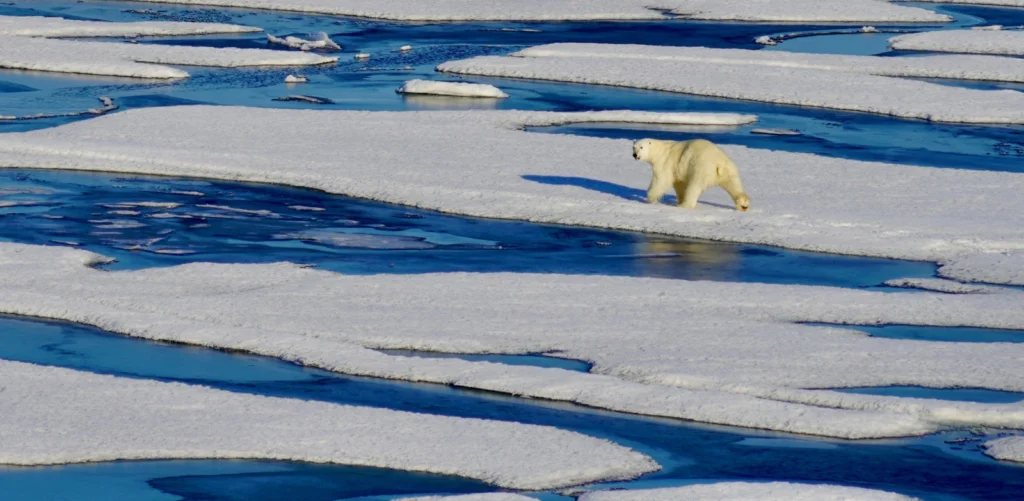
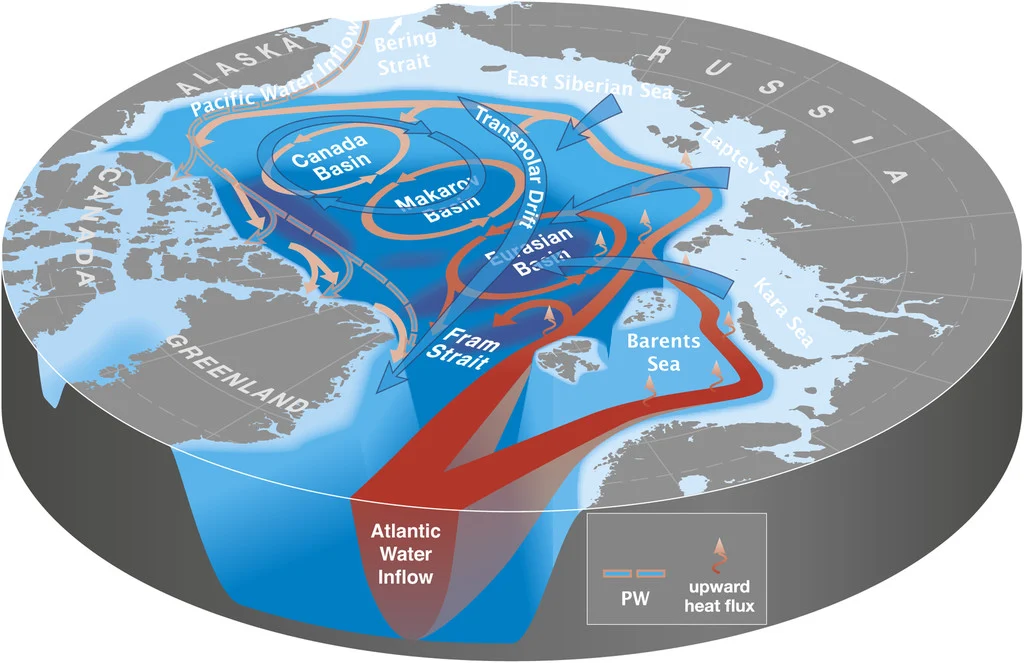
The current retreat of Arctic sea ice is a major sign of ongoing climate changes. And it could almost disappear during summer in a few decades from now, depending on the amount of greenhouse gases we will emit into the atmosphere. In this context, understanding what are the exact causes of this sea-ice loss is important. One of these causes is the amount of heat transported by the ocean (which dep ...[Read More]

The future of Arctic sea ice

The future of Arctic sea ice

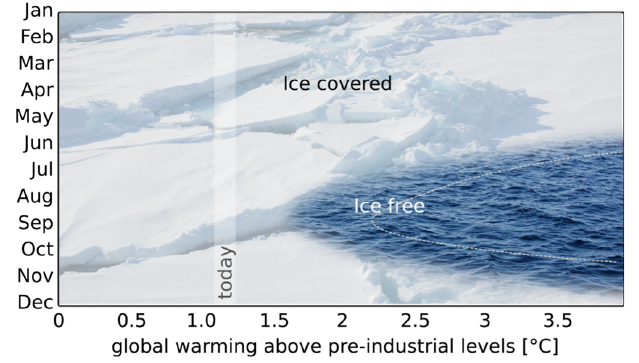
The illustration above shows a sketch of the evolution of Arctic sea ice for different levels of warming and the different months of the year, based on the simple extrapolation of observations. A new study, in which I was involved, uses the latest available global climate models and shows that the Arctic Ocean could become practically ice free at the end of the summer for the first time before 205 ...[Read More]

What’s up on Thwaites Glacier?

What’s up on Thwaites Glacier?

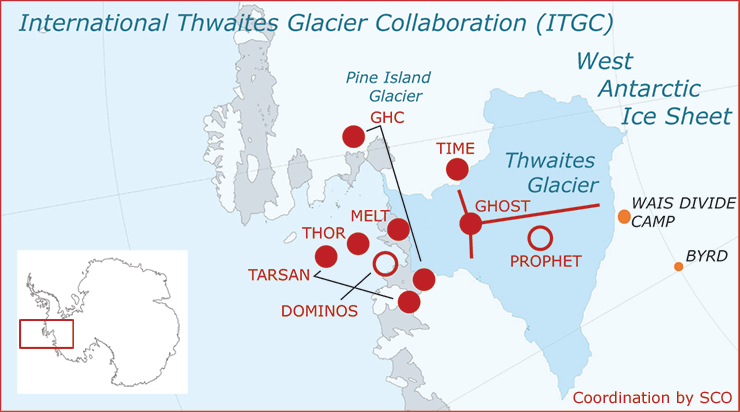
With the West Antarctic Ice Sheet currently losing ice at a fast pace, leading to sea-level rise, it is very important to better understand the processes by which this ice melting occurs. In this context, Thwaites Glacier is a very good case study of an accelerating glacier, which contributes substantially to sea-level rise, and for which a huge scientific collaboration effort has recently been se ...[Read More]