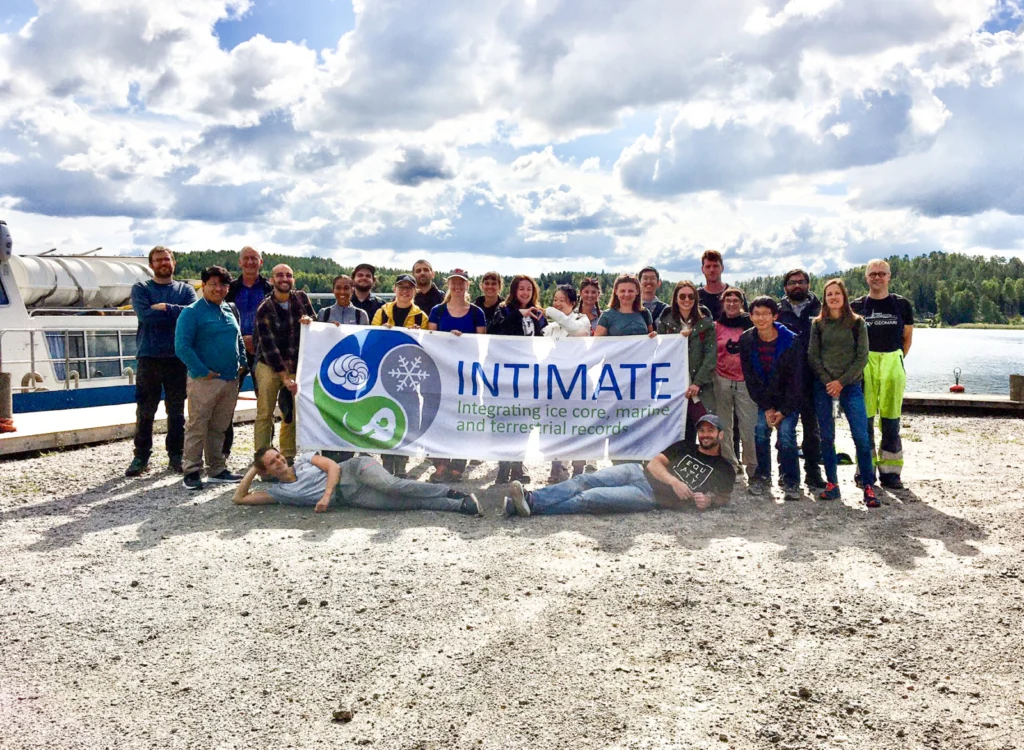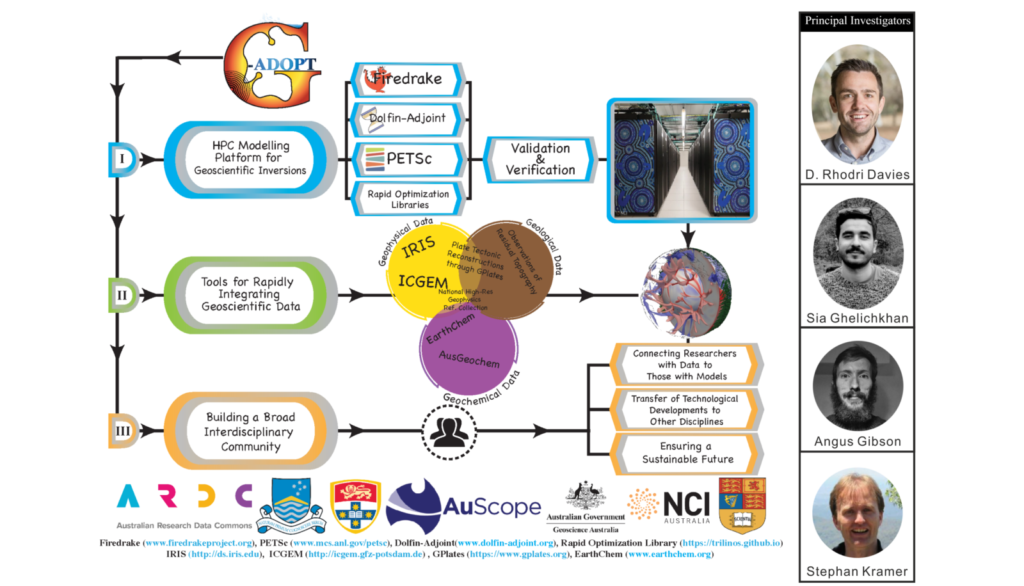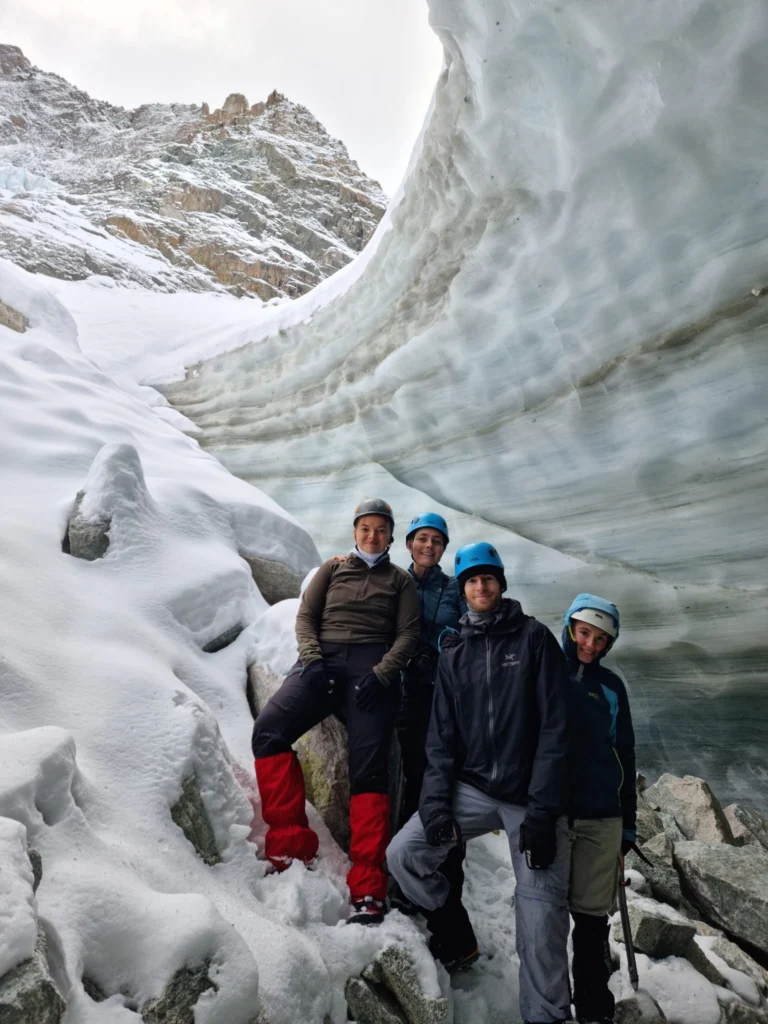
Imagine it is your first time going on a field trip. After spending hours in the lecture theatre, you are excited to get outside and see those environmental processes that so far you have only seen in graphs and figures. You get off the bus, and the first thing your professor says is: “people less comfortable with climbing on the rocks can just take the notes”, while looking at you and your femal ...[Read More]
Latest posts
GeoLog
Imaggeo On Monday: Scary sea ice drilling in the antarctic darkness!
This picture was taken from the N.B. Palmer ice breaker during the PIPERS expedition in the austral winter of 2017. Two researchers and a marine technician were drilling cores in the sea ice of the Ross Sea. The ice was too thin and started to crack (see the fault in the background), so the team had to drill from the basket. Photo by Célia Julia Sapart, description from imaggeo.egu.eu. Imag ...[Read More]
GeoLog
GeoRoundup: the highlights of EGU Journals published during October!
Each month we feature specific Divisions of EGU and during the monthly GeoRoundup we put the journals that publish science from those Divisions at the top of the Highlights roundup. For October, the Divisions we are featuring are: Natural Hazards (NH), Seismology (SM) and Geochemistry, Mineralogy, Petrology and Volcanology (GMPV). They are served by the journals: Geoscientific Model Development (G ...[Read More]
GeoLog
Why do we keep dismissing drought?
“If you see me, then weep” Like the foreboding inscription witnessed by Dante as he passed through the gates of Hell, the inscription chiselled into the so-called “hunger stone” marks the passing of a threshold into suffering. As the hunger stone emerges from the dwindling waters of the Elbe River, Czechia, it reveals a history of desiccation. Where spiritual torment is pro ...[Read More]
Geodynamics
The Sassy Scientist – Clean Your Toilet
As academics, a lot of our time is invested in activities that are not seemingly related to our research. Teaching, organising seminars, writing EGU blog posts, reviewing papers. While I don’t deny the time consumingness of it, reviewing papers is a necessary and useful activity, at least as long as the publishing system works the way it currently does (that’s a topic for another post) ...[Read More]
Cryospheric Sciences
Hidden beneath the surface – what can we learn from an ice sheet’s internal stratigraphy?
Hidden beneath the surface of ice sheets lies an intricate structure carrying a unique fingerprint of past ice flow and climate conditions. Disentangling the drivers of an ice sheet’s enigmatic stratigraphy could theoretically unravel the ice sheet’s past evolution and provide a much clearer picture of things to come in the future. One way to detect this mysterious stratigraphy is to use ice-penet ...[Read More]
Nonlinear Processes in Geosciences
How climate change can possibly increase the intensity of tornadoes in Europe
On October 23 2022, a tornado outbreak occurred in France, causing extensive damages. Tornadoes in France are a relatively rare phenomenon, even more so in the second half of October. This weather phenomenon is linked to intense thunderstorms, and it is difficult to predict because it is very localized. Will global warming make this weather more frequent or intense? A thundercloud that grows visib ...[Read More]
GeoLog
When race and natural hazards intersect: three geoscientists share their experiences
Around the world, the month of October is observed as Black History Month and includes the International Day for Disaster Reduction. While both these observances are significant in their own right, it gave EGU the opportunity to hear from geoscientists of Black, Indigenous, and People of Colour (BIPOC) communities about the many ways that race and natural hazards are linked: does one affect the ot ...[Read More]
Biogeosciences
The sedaDNA scientific society, a collaborative network of international researchers working with sedimentary ancient DNA
Emergence of the field of molecular paleoecology Sequencing DNA of organisms that died a long time ago sounds like the synopsis of the movie Jurassic Park (1993). Let’s make it clear right now, dinosaur DNA has never been collected by humans. To date, the oldest DNA recovered is more than one million years old and comes from mammoths. In addition to the DNA recovered from fossils, aquatic and terr ...[Read More]
Geodynamics
Unravelling the geological past of the Sierra del Nevado, in South Andes, Argentina
Have you ever wondered to learn more about the geological setting of the Nevado volcano in Central-West Argentina? In this week’s blog, we have Georgina Rubiano Lorenzoni, a Ph.D. Geologist student from the Universidad Nacional de La Pampa in Argentina, who will guide us through her thesis aims, which are the identification and investigation of the petrogenesis and geochronology of the mountain ra ...[Read More]