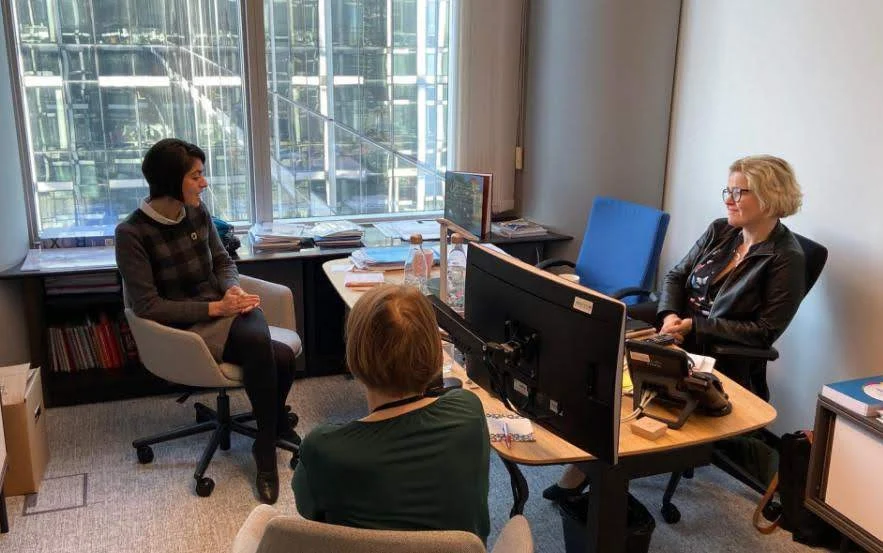
It’s time for another proper introduction of the blog team! As you will probably know, things have been a bit silent on the blog front lately. This is because all the blog editors were very busy and also: it’s hard to upload 52 times a year. You come up with some great blog ideas! (if you do: e-mail us, please!). Luckily, we used the EGU General Assembly to find some fresh blood for th ...[Read More]
If you didn't find what you was looking for try searching again.
Stratigraphy, Sedimentology and Palaeontology
DeepDust ICDP workshop in Norman, Oklahoma, USA discussed drilling the equatorial terrestrial Permian
From microbiology to geophysics – more than 50 international participants of the first DeepDust Workshop covered a wide range of topics. In Oklahoma researchers exchanged views on a possible international drilling project to study the continental geology of the Permian. During a change from the cold to a warm period, large ice masses melted. This may provide interesting insights into current and f ...[Read More]
Natural Hazards
Our audience on stage: new NhET blog column
The diffusion of social media such as Facebook, Twitter, etc. in addition to traditional blogging led to a diversification in the impact of science communication. However, as Eryn Brown and Chris Woolston wrote in Nature last January, blogs continue to be effective platforms for disseminating research into the world and increase the discovery of science. This is the reason why we believe our natur ...[Read More]
Stratigraphy, Sedimentology and Palaeontology
EGU goes greener, let’s go greener to EGU
For those in a rush, here is the conclusion already: EGU is doing great efforts to become more environmentally friendly, but the huge issue of any conference lies in one aspect: participants flying there… Could we, participants, rush into the train next year? I would not have realized all the evolutions of this year’s EGU2019 General Assembly if they had not been told to me. And that w ...[Read More]
Cryospheric Sciences
Image of the Week – Kicking the ice’s butt(ressing)
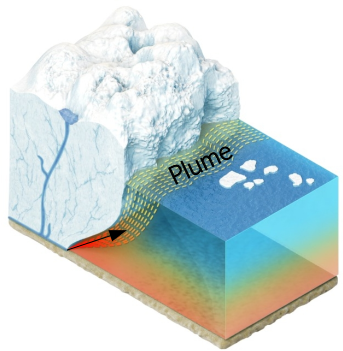
Changes in the ice shelves surrounding the Antarctic continent are responsible for most of its current contribution to sea-level rise. Although they are already afloat and do not contribute to sea level directly, ice shelves play a key role through the buttressing effect. But which ice shelf regions are most important for this? The role of ice-shelf buttressing In architecture, the term “buttress” ...[Read More]
GeoLog
Back for the first time: measuring change at Narrabeen–Collaroy Beach
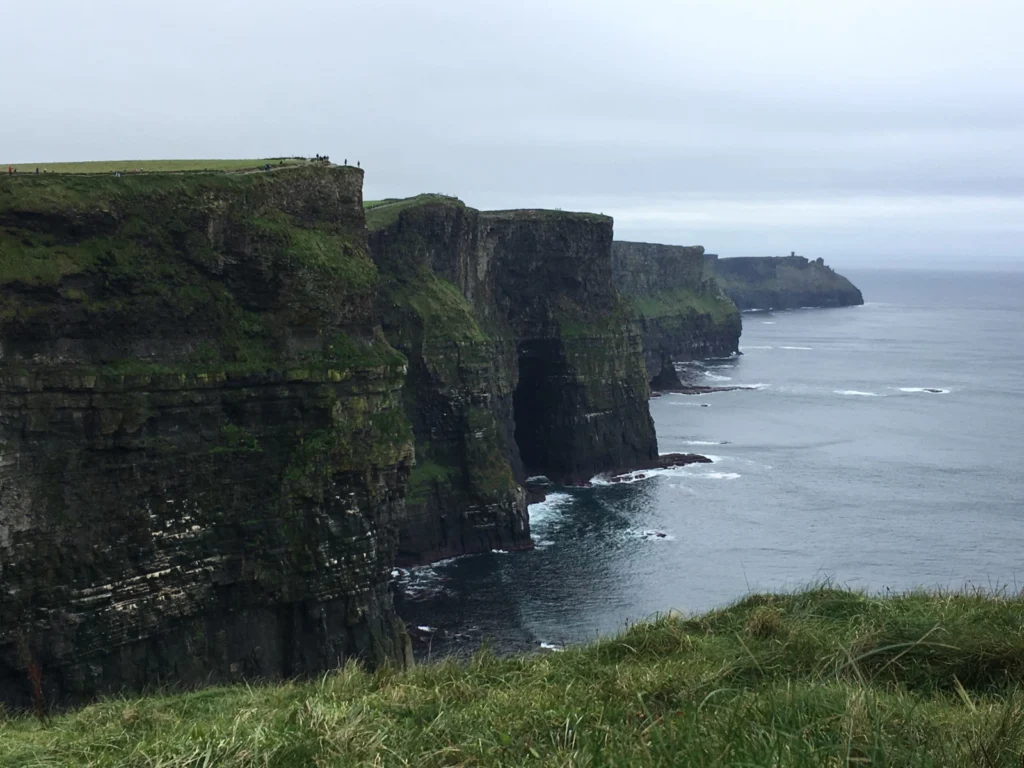
Narrabeen–Collaroy Beach in New South Wales, Australia, just north of Sydney, is home to one of the longest-running shoreline-measurement programmes in the world. With colleagues at the University of New South Wales (UNSW) Sydney, Eli Lazarus, an associate professor in geomorphology at the University of Southampton, UK, has been analysing over 40 years of data from Narrabeen–Collaroy to better und ...[Read More]
Hydrological Sciences
Talking hydrology: an interview with Jana von Freyberg on her work in the Rietholzbach catchment
This is the first post of “Talking hydrology”, an interview-based series of posts in the HS Blog that present the experience and personal views of hydrologists and people interested in talking about hydrology. The “Talking hydrology” series is edited by the team of the HS blog together with Leonie Kiewiet (University of Zurich, Switzerland). Here, we will talk about experimental hydrol ...[Read More]
GeoLog
April GeoRoundUp: the best of the Earth sciences from the 2019 General Assembly
The EGU General Assembly 2019 took place in Vienna last month, drawing more than 16,000 participants from 113 countries. This month’s GeoRoundUp will focus on some of the unique and interesting stories that came out of research presented at the Assembly! Major Stories Glacial disappearing act in the European Alps New research from a team of scientists estimated the future of all glaciers within th ...[Read More]
Hydrological Sciences
EGU is a bit like a music festival: first time experience of an ECS in hydrology
EGU is a bit like a music festival. Maybe not as crowded as the Donauinselfest, but you’ll definitively experience some of this type of event classic features: dilly-dallying a lot about what to see next, losing your friends and setting up more or less detailed meeting points, buying overpriced food and beverages. And if in the right place at the right time, you might even see some actual “rock st ...[Read More]
GeoLog
GeoPolicy: What inspires you to be a scientist?
What inspires you to be a scientist? For me, the motivation comes from a strong desire to make the world a better place, to use our skills and knowledge as scientists to help society and shape the future. Increasing our collaboration and involvement is an excellent way to expand our influence, but for early career scientists (ECS) like me, it can be a challenging task. EGU has an incredible opport ...[Read More]