In 1965, JT Wilson published “A New Class of Faults and their Bearing on Continental Drift” (https://doi.org/10.1038/207343a0). This is one of the papers that led to a paradigm shift in Earth Sciences and would become one of the bases of plate tectonics. The concept of the transform fault, introduced in this paper in a very smart way, is fundamental in tectonics textbooks nowadays. Indeed many of ...[Read More]
GeoLog
Imaggeo On Monday: Emoji from meteorites; impact spherule
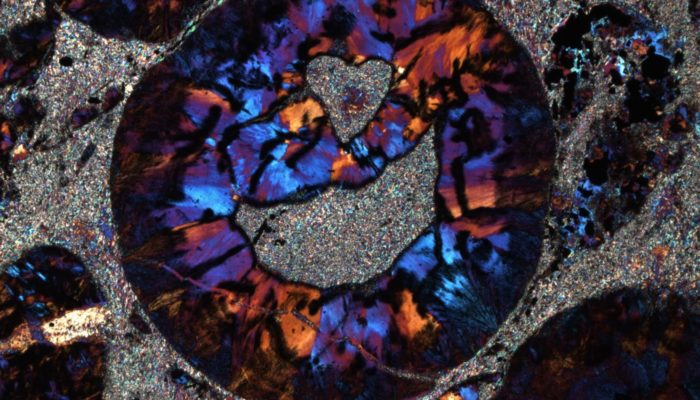
This is a crossed polarized light photomicrograph of an impact spherule; a small mineralisation made when a meteorite hits the Earth and melts the rock at the point of impact, from Barberton Greenstone Belt, in South Africa. These spherules are the only remnants of Early Earth’s meteorite impact history, from between of 3.2 and 3.5 billion years ago. In this photo you can see the K-feldspar ...[Read More]
Natural Hazards
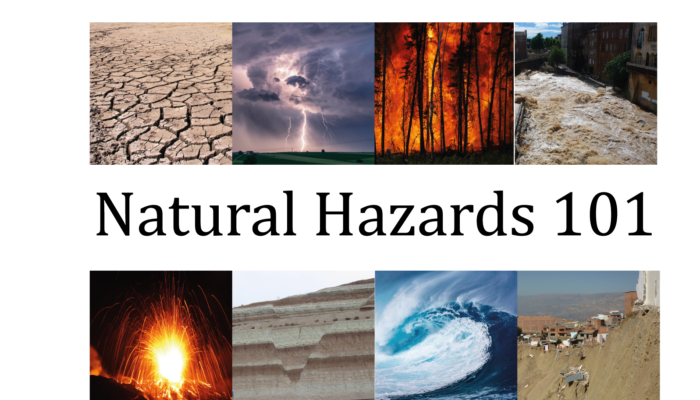
Natural Hazards 101 – What is a – natural – hazard?
We often talk about different natural hazards, how researchers investigate them and solutions to mitigate their effects on society, infrastructures and the environment. However, we have never really stopped for a moment to define a hazard, a natural hazard and much of the terminology in the field that can sometimes be evasive and not so straightforward to understand. Thus, we start this series of ...[Read More]
Geodynamics
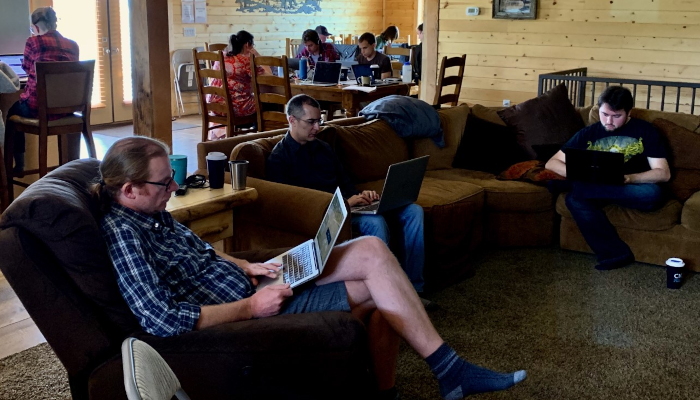
Locking people up to program — or: “What is a hackathon?”
This week the seventh yearly hackathon of the geodynamics code ASPECT is taking place. But what actually is a hackathon, why is it useful and how did it get started in the first place? This week, Wolfgang Bangerth, one of the founders of ASPECT, explores all these questions for us. Due to the intensity of a hackathon, he wrote this article before the start of the hackathon. It’s really not p ...[Read More]
Nonlinear Processes in Geosciences
Is climate change making the weather more extreme?
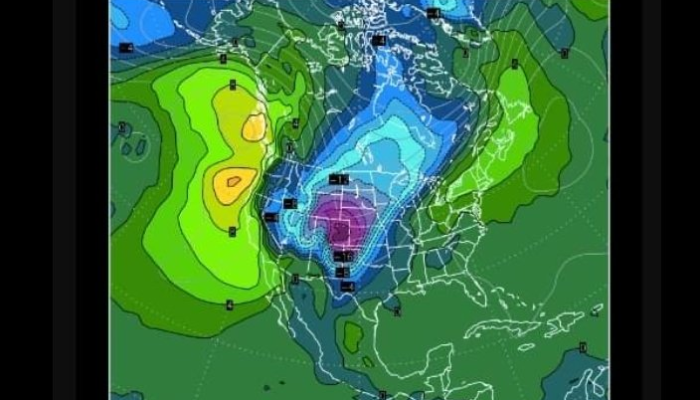
Denver, Sept. 06: it is midday and Jonathan and Maria are sunbathing at City Park. They feel uncomfortable as the temperature has already reached 36°C. While they decide to go back home, their favoured weather app displays an unbelievable snowstorm watch for Tuesday Sept. 08. The forecast turns out to be rather accurate as all Colorado experiences one of the earliest snowstorms on record in Septem ...[Read More]
GeoLog
GeoTalk: Nadine Gabriel, creator of #AreYouSiO2? and Assistant Curator of Fossil Mammals.
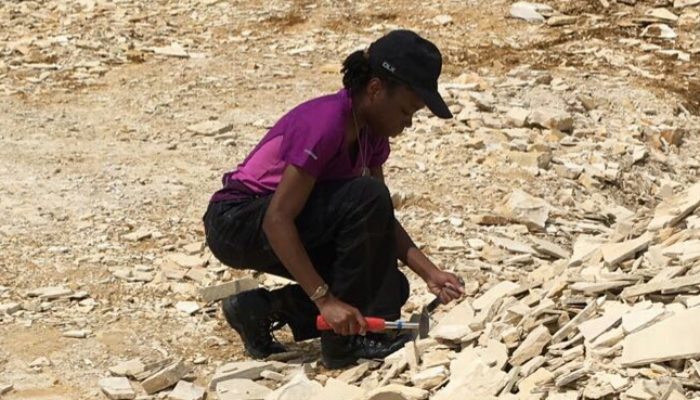
Hi Nadine, thanks for speaking with us today, can you tell us a little bit about your background and how you got to where you are now? Thank you for inviting me! I’m a geologist and the Assistant Curator of Fossil Mammals at the Natural History Museum, London. I studied MSci Geology at University College London and I absolutely enjoyed the subject. It was really interesting to learn about the geol ...[Read More]
Cryospheric Sciences
Climatic drivers of permafrost mounds in North American peatlands
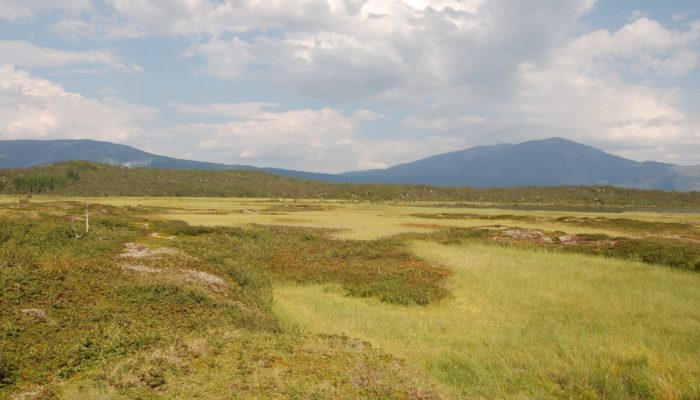
Permafrost, or perennially frozen, peatlands are among the world’s largest terrestrial carbon stores and are particularly threatened by warming climates. Understanding how modern climate controls the distribution of permafrost peatlands is crucial for making confident predictions of their past and future extents. What are permafrost peatlands? Peatlands are wetlands that develop where cold, wet co ...[Read More]
Geodynamics
The Sassy Scientist – Picturing The Perfect Petting Zoo
Kamal is happy, trotting around academia with a laptop in one hand, a cup of coffee in the other, and a faint grin on his face as he contemplates how to tackle the next big questions in geodynamics. Amazed that others do not consider academia as a radiant beacon on the horizon of potential career pathways, he is curious: If you were not a scientist, what would you be? Dear Kamal, I suppose I would ...[Read More]
Climate: Past, Present & Future
Climate models and Bach’s unfinished fugue
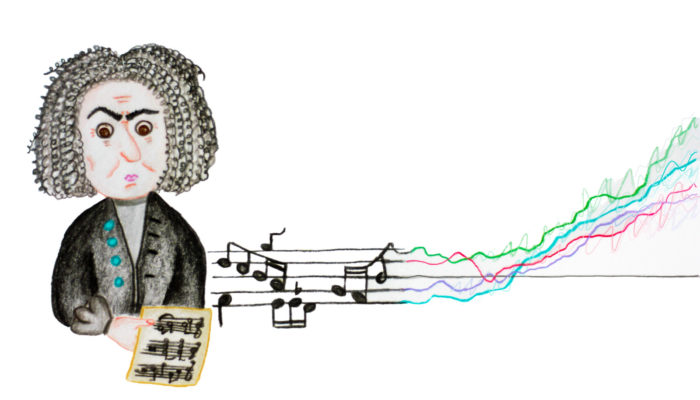
Johann Sebastian Bach’s last work – Contrapunctus XIV – is an unfinished musical composition. For many years, scholars considered that this piece was left unfinished because of Bach’s deteriorating health in his final years and eventual death. However, researchers recently found evidence that Bach might have left this piece intentionally unfinished, as he thought that there was still room for impr ...[Read More]
Geodynamics
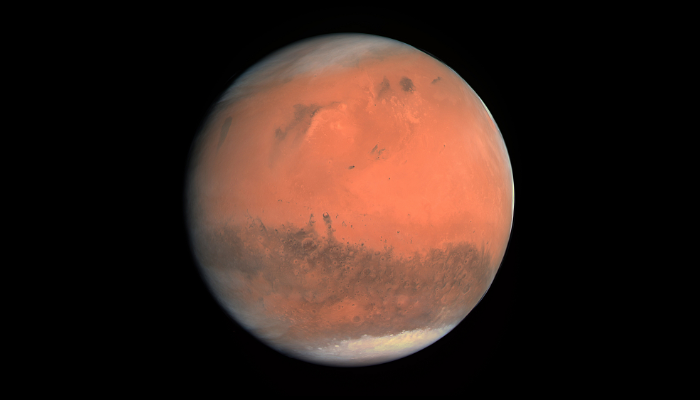
The two faces of Mars
In this week’s blog post, we will learn more about the past of our neighbouring planet Mars. Kar Wai Cheng, PhD student at the Institute of Geophysics at ETH Zurich, is talking about the Martian dichotomy and how it could have formed. Humans have recognized Mars for a very long time. One of the earliest records of Mars is seen on a skymap in the tomb of an ancient Egyptian astronomer. By tha ...[Read More]