
The General Assembly is around the corner, and we would like to advertise the events the early-career scientist (ECS) Team of our Division have been preparing to create networking opportunities for ECSs. Joint picnic for ST/PS/AS/EMRP ECSs (in-person only) When? Monday 24 April, 12:30–13:45 CEST Where? Meeting near the main entrance of the Austrian Center Vienna (ACV), before …[Read More]
Latest posts
GeoLog
How to EGU23: The EGU Code of Conduct
Can you hear that? That’s the countdown to Europe’s largest geoscience conference – now a little over a week away! EGU’s General Assembly #EGU23 is taking place between 23 and 28 April 2023, both onsite in Vienna and virtually. As we ready our calendars to make the most of the conference week, we’d like to …[Read More]
Geodynamics
Democratising Climate Information

How can we ensure a greener and more equitable future for everyone in the forthcoming years? In this week’s blog, Professor Monica Sanders from Georgetown University and Tulane University shares her thoughts on how and why we need to democratise climate information towards the general public and primarily to the divested communities that are being …[Read More]
Hydrological Sciences
A lot of hydrology at EGU23, again!
EGU General Assembly 2023 is coming soon, 23–28 April 2023, with more than 16,000 presentations (orals, posters, and PICOs) that will be delivered and viewed both onsite in Vienna (Austria Center Vienna) and virtually (through Gather.Town). Great news this year: The poster sessions are back, and all formats (orals, posters and PICOs) will have a …[Read More]
GeoLog
Help us make a greener EGU23 in just 5 steps!
For several years, EGU has committed – both in terms of resources and research – to help create a cleaner and greener environment. As our biggest event of the year (EGU23) soon approaches, nearly 14,000 people are expected to travel to Vienna for the week-long conference. An event of this scale can impact the environment …[Read More]
Natural Hazards
Learning more about geohazard: Talking with EGU_NH 2023 Sergey Soloviev Medalist
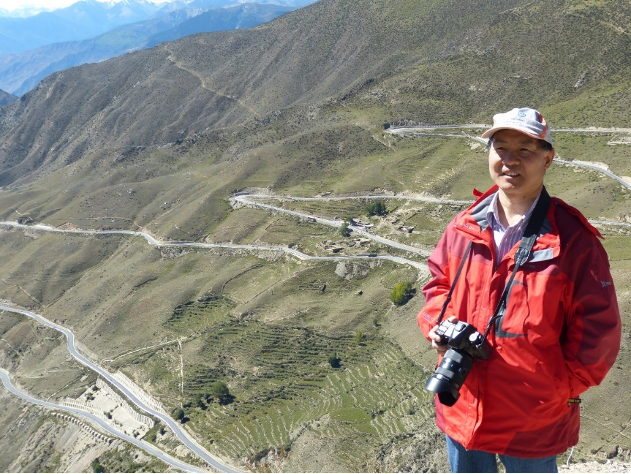
It is my pleasure to interview the 2023 EGU Sergey Soloviev Medalist Dr Peng Cui, Professor at the Institute of Geographical Sciences and Resources、Institute of Mountain Hazards and Environment, Chinese Academy of Sciences (CAS), known for his work and commitment to understanding geohazards, especially earthquake-induced hazards. He has dedicated his life to understanding how to …[Read More]
GeoLog
ECS at EGU23: networking events and more!
The EGU23 General Assembly have a plethora of events built for – and by – Early Career Scientists (ECS), from how to navigate Europe’s largest geoscience conference to developing your network and exploring your career choices. Below are some of the big things to look out for: First-time attendee Networking (on-site only) Tue, 25 Apr, …[Read More]
Cryospheric Sciences
Did you know that cracks play a large role in the Arctic sea ice production?
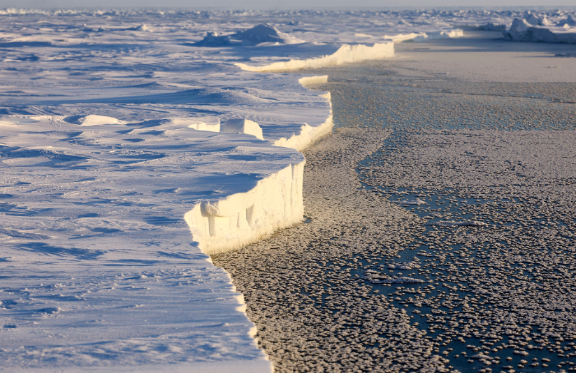
What do you need to form sea ice? Well, you can start with some sea water, an ocean will do, and cold air above it. Once a layer of ice starts forming, break it to make some cracks. You would have not thought of that? Yet, our recent study suggests cracks in the ice contribute …[Read More]
GeoLog
GeoPolicy: Your guide to science for policy at EGU23!
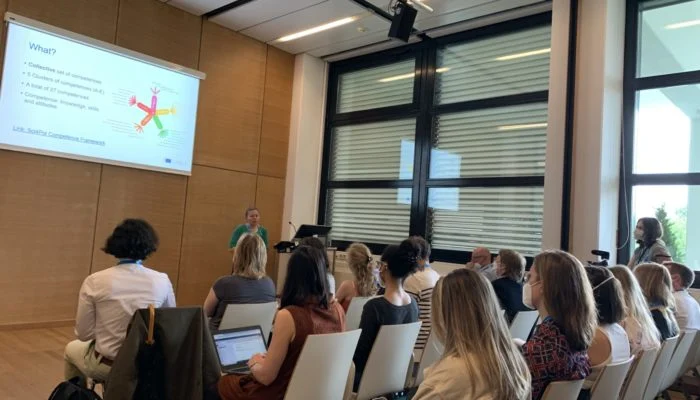
As the largest geoscience meeting in Europe with 14,000 onsite and 3,000 virtual participants expected this year, the EGU General Assembly has a huge range of scientific sessions that enable participations to gain a greater understanding about specific topics both within and outside of their research area. But more than this, there are also plenty …[Read More]
Nonlinear Processes in Geosciences
ECS SpotLight: Changes in the climate dynamics have already modified characteristics and impacts of storms in France: the case study of storm Alex 2020

Extratropical cyclones play a key role in modulating the precipitation and wind in mid-latitudes and can be responsible for extreme wet and windy events. With global warming, the dynamics and thermodynamics associated with these atmospheric systems are being affected. However, due to the complexity of modelling the climate system, a challenge arises when evaluating the …[Read More]