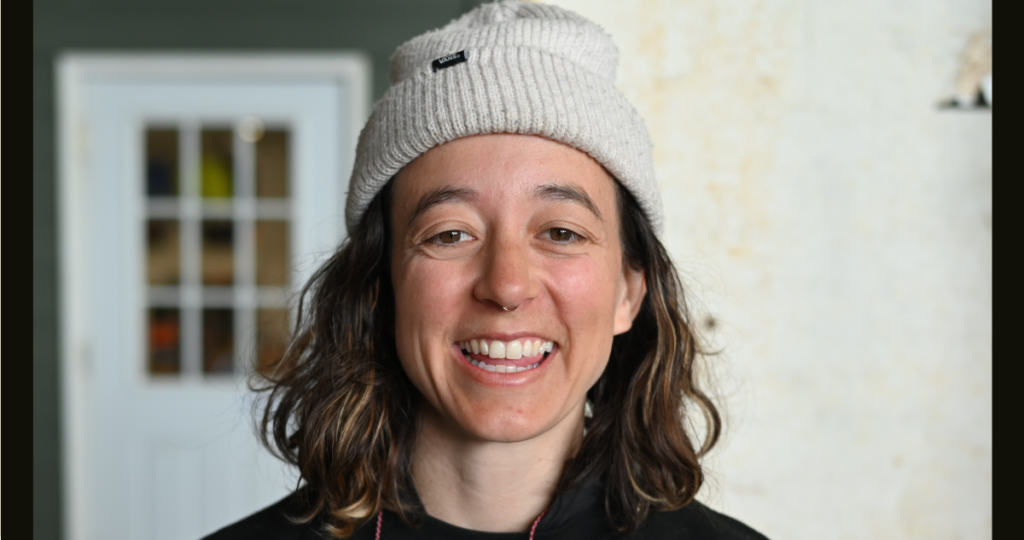
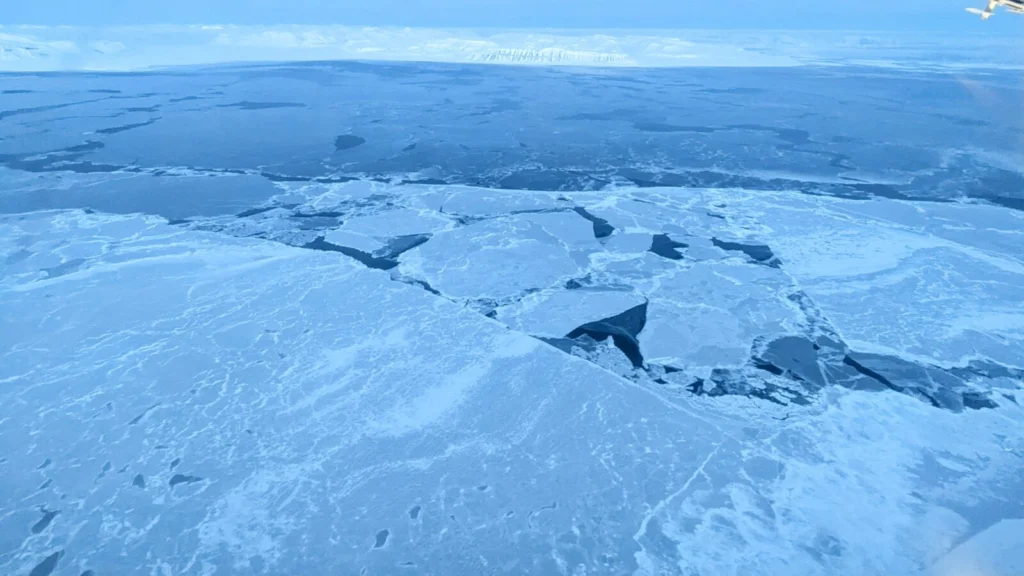
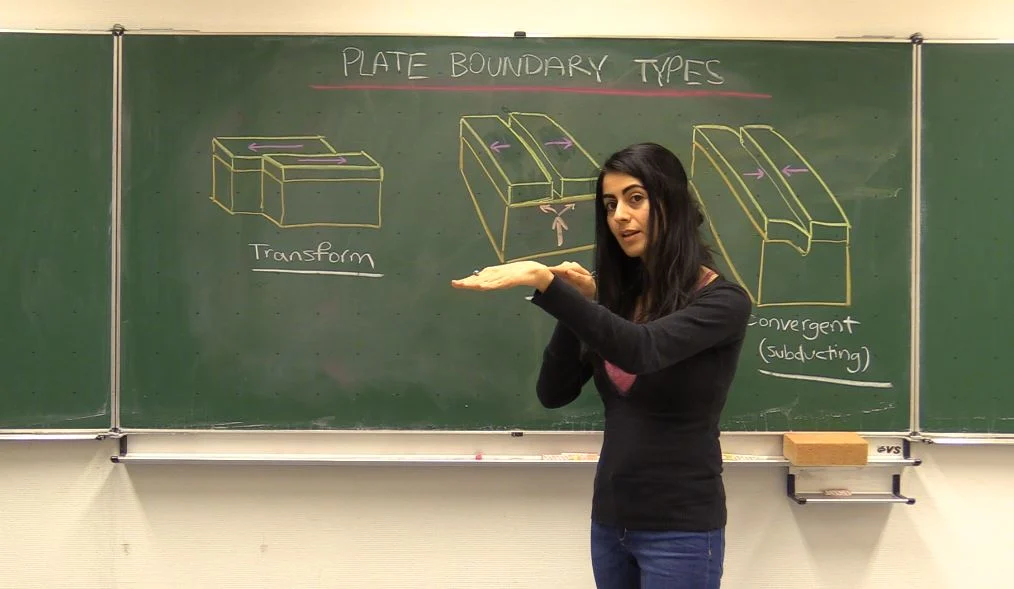
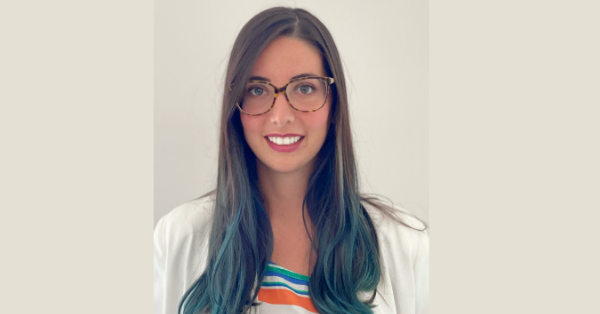
Welcome to GeoTalk, Elizabeth! Could you introduce yourself and your background? I’m a genderfluid glaciologist living between previously glaciated, currently glaciated, and flood-prone landscapes. I am a postdoctoral researcher at Utrecht University in the Netherlands. I did my bachelor’s in physics at the University of California, Los Angeles, and my Ph.D. in glacial geophysics at Co ...[Read More]
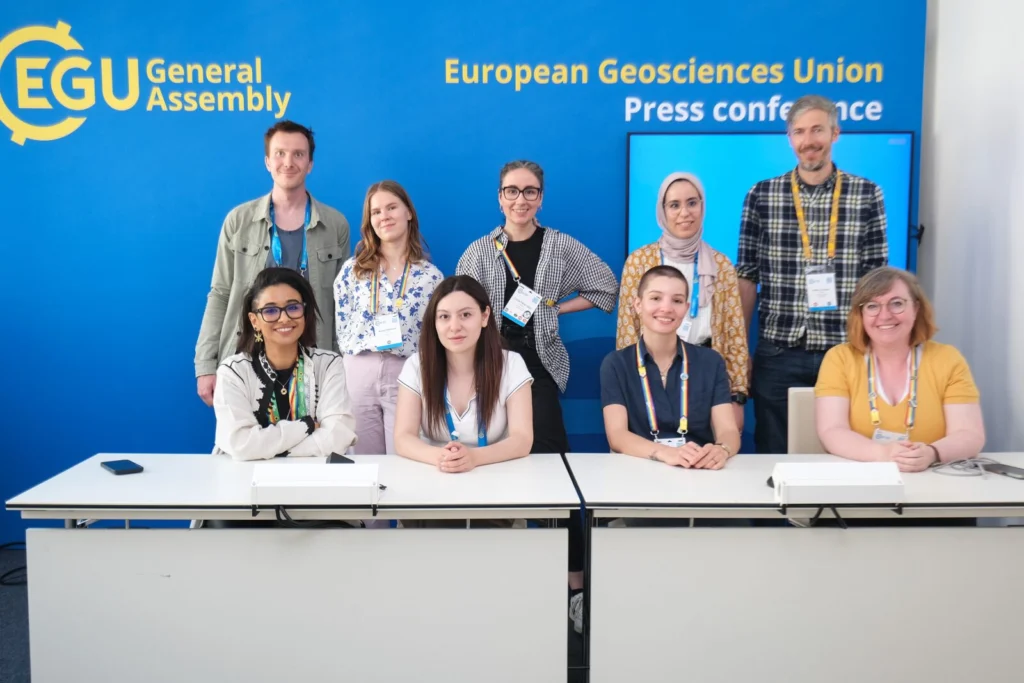
Behind the scenes: the EGU25 Press Centre
Every year, the European Geosciences Union (EGU) General Assembly transforms Vienna into a bustling hub of scientific discovery. Tens of thousands of scientists from around the world gather to present their latest research, but how do these discoveries reach the public? That’s where the EGU press centre comes in—a space where science meets storytelling, and complex research is translated into stor ...[Read More]
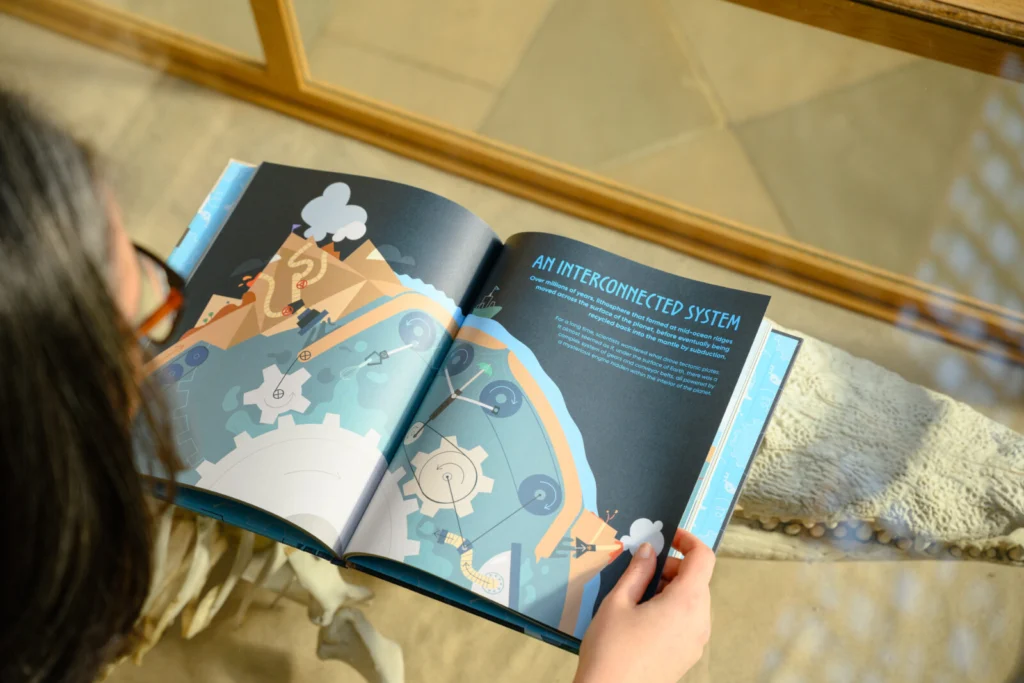
A Geoscientist’s Colorful Journey from Research to Children’s Books
In today’s blog we’re having a chat with our very own Dr Lucia Perez-Diaz. As Lucia put it at the start of this year’s General Assembly, us scientists get to wear many “hats”, and she lives up to that statement. Besides a brilliant geoscientist, she is an incredible artist – also featured as last year’s artist in residence – and a budding press assistant! But more importantly, she is the author of ...[Read More]
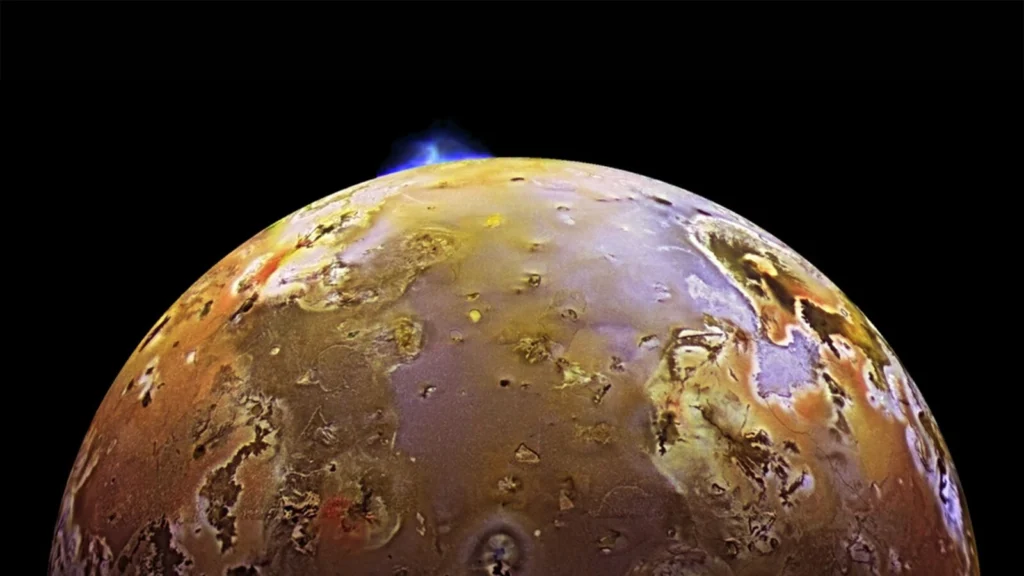
Io: a spongy world consumed by molten rock
Jupiter’s moon Io is the most volcanically active world in our solar system, with hundreds of volcanoes that constantly erupt on its ever renewing surface. Although Io always points the same side toward Jupiter in its orbit around the gas giant, two other Galilean moons, Europa and Ganymede, pull Io’s orbit into an irregularly elliptical one. Thus, in its widely varying distances from ...[Read More]
Raising the (melt)stakes! How robotic innovation reveals new findings on melting glaciers
In the age of climate change, glaciers across the Arctic are melting, consequently reducing regional freshwater supplies and contributing to the ongoing rise in global sea levels. But how fast do they melt? And is it possible to predict that? A new study on the Xeitl Sit’ (LeConte) glacier in Alaska aims to answer these questions. The research group from Oregon State University, Harvard University ...[Read More]
How to make your geoscience communication publishable: Find out at EGU25
A long time ago, when I walked into the Ministry of Education building in Dushanbe (Tajikistan) to inquire about offering an earthquake education workshop in a public school, I had no research agenda, let alone thinking about publishing it one day. All I wanted was to do something useful: sharing earthquake science with school children. Recognizing the value of geoscience communication, my graduat ...[Read More]
GeoCinema: coming soon to the EGU25 General Assembly!
After a big success last year, GeoCinema is back for EGU25! As many of you know, doing science is very rarely just about the research, but also involves sharing that research in several forms and formats. For many talented researchers this means using films. Either working with a film-maker or creating something themselves, several of our EGU25 attendees submitted wonderful films this year, from s ...[Read More]
Are you ready to vote for your favourite Division blog of 2024?
Our EGU blogging team has had a fantastic 2024 posting across our official blog, GeoLog and the division blogs. Most of our readers appreciate EGU’s blogs for their informative yet accessible style, and for our bloggers ability to take complex geoscience content and make it fun and relevant to the reader. If this sounds like something you’d like to get involved in, we encourage you to get in touch ...[Read More]
The Up-Goer Five challenge: Can you explain your science using only the thousand most common English words?
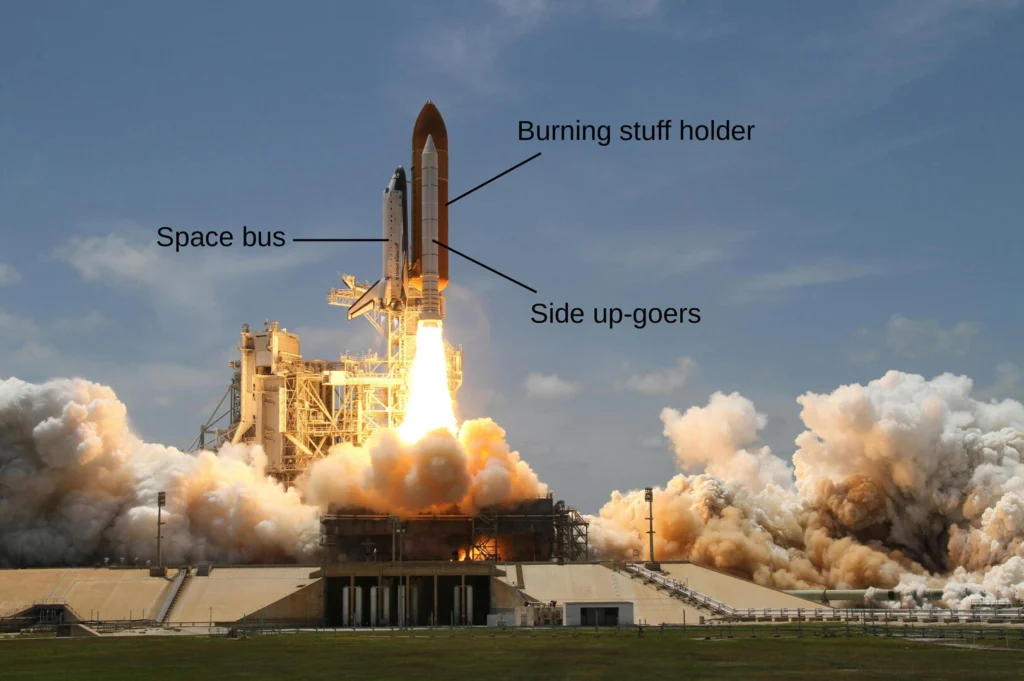
Science plays an important role in understanding and shaping the world we live in. It is the foundation for new knowledge and technologies. But due to its complexity, science is often hard to grasp especially for the broader public. To build public trust in science, it is important to make scientific findings accessible to everyone. Therefore, they need to be communicated in ways that everyone can ...[Read More]
GeoTalk: meet Maria Vittoria, risk communicator & Early Career Scientist Representative for Natural Hazards
Hello Mavi! Welcome to GeoTalk. Before we start, could tell our readers a little about yourself and your background? Hey Simon! Thanks for the warm welcome. I’m Maria Vittoria, but you can call me Mavi. I’m a curious soul from southern Italy, a physicist by passion, and a dreamer at heart. My journey has taken me from Italy to the UK and back, studying the tiniest particles to the vast ...[Read More]