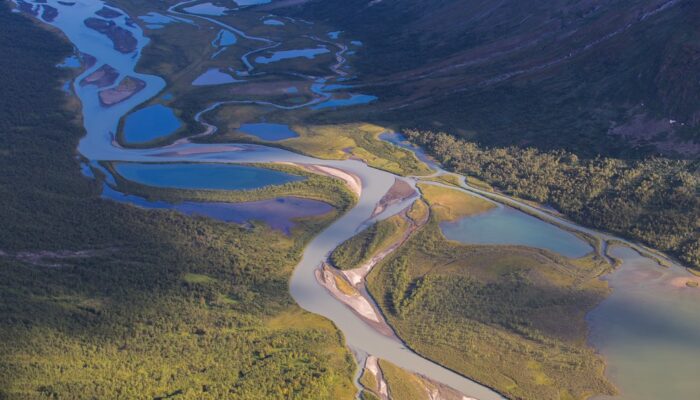
The Rapaälven making its way through the Rapadalen valley in Northern Sweden. After over a week of hiking through pure wilderness I reached the summit of Skierffe together with three friends. We were just blown away by the view and completely in awe for the beautiful shape of the rivers course… little lakes in between river channels of different sizes as well as dense vegetation forming a ha ...[Read More]
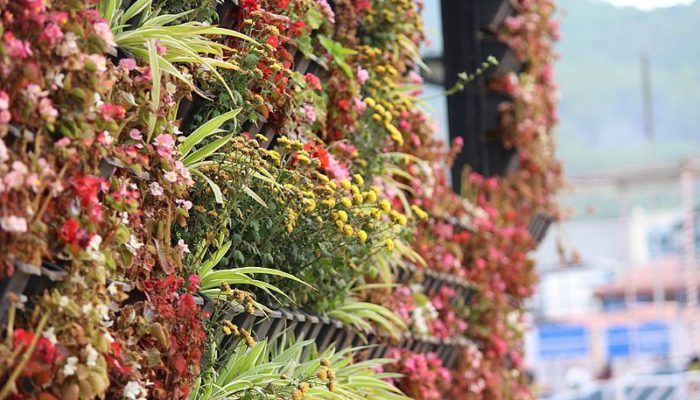
Cities of the future
Over half the world’s population lives in cities. Many a metropolis rises high above carpets of concrete and tarmac, vibrant, bustling, and prosperous. But this urban environment comes with many a problem. From poor air quality to hazardous temperatures, there are several dangers present in urban environments. Scientists speaking at the European Geosciences Union General Assembly in Vienna earlier ...[Read More]
Call for new EGU network blogs!
Here is your chance to join the EGU blog network! Since 2013, the Union’s network blogs have enjoyed thought-provoking and engaging contributions on a range of topics: from the workings of the inner Earth and palaeontology, through to geomorphology and air quality. The network aims to foster a diverse community of geoscience bloggers, sharing accurate information about geoscientific research in a ...[Read More]
Imaggeo on Mondays: how short-term storms can impact our landscapes
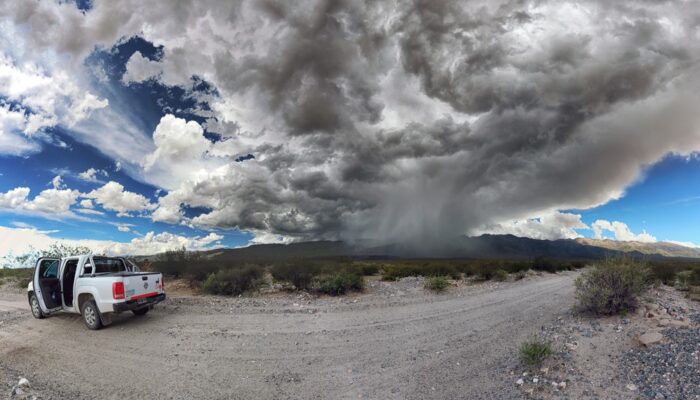
In the Sierra de Aconquija, a mountain range in the southern Central Andes of Argentina, strong storms often come and go at a moment’s notice, but they can have a long-lasting impact on the Earth’s surface. The thunderstorm cell featured in this photo formed in less than half an hour, giving all those nearby only a few minutes to take cover. Mitch D’Arcy, a geomorphologist and postdoctoral researc ...[Read More]
Conversations on a century of geoscience in Europe: Part 1
When you think about the last century of geoscience, what comes to mind? Perhaps Alfred Wegener’s theory of continental drift? Or Inge Lehmann’s discovery of Earth’s solid inner core? Over the last 100 years, geoscientists have made incredible contributions to our understanding of the Earth, the solar system, and beyond. The science community has explored uncharted territory, challenged previously ...[Read More]
Imaggeo on Mondays: The salt mine carving into the Carpathians
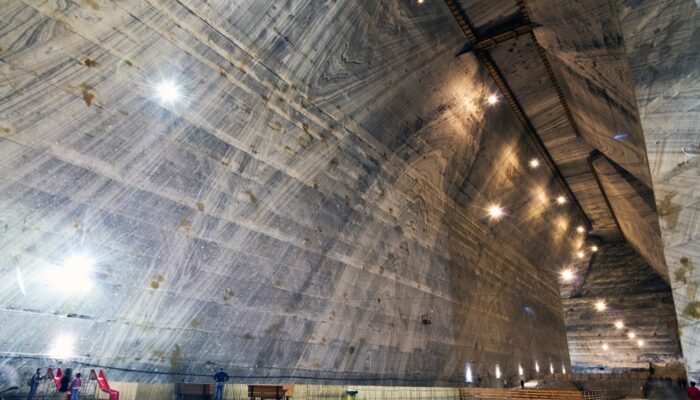
The image gives us a glimpse into the Slănic Salt Mine in central Romania, about 100 kilometres north of the capital city Bucharest. The region was actively mined for almost 30 years, from 1943 to 1970. The Slănic Salt Mine is the largest salt mine in Europe, and the facility consists of 14 large chambers, each more than 50 metres high. The cavities of the mine, more than 200 metres deep, carve in ...[Read More]
Imaggeo on Mondays: Inside the whale’s mouth
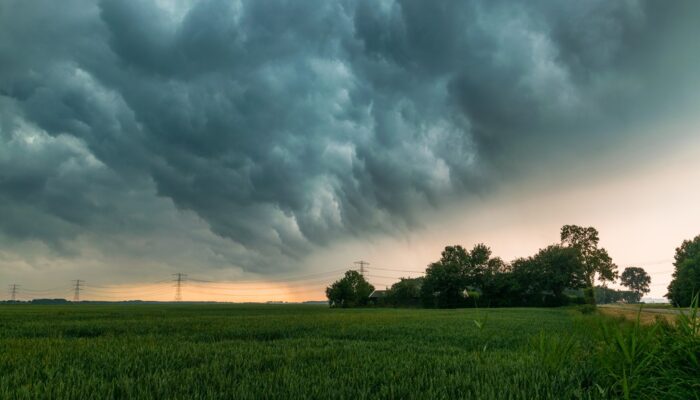
Often there are moments in our lives when we are reminded of the strength and magnitude of our environment, whether that’s trekking through a mountain range or gazing at the horizon from the ocean shore. Yet arguably there are few things that can make you feel as small as a particularly powerful summer storm. “The atmosphere is undoubtedly one of the most dynamic components in the Earth System. No ...[Read More]
GeoTalk: Bárbara Ferreira – reflections on a science communication career with EGU
GeoTalk interviews usually feature the work of early career researchers, but this month we deviate from the standard format to speak to Bárbara Ferreira, EGU’s Media and Communications Manager. Bárbara has been an integral part of the EGU since September 2011, from coordinating science communication between the Union, journalists and the public at large, to overseeing many of EGU’s outreach activi ...[Read More]
The ReSToRE summer school on the sustainable development of Earth resources: reflecting back
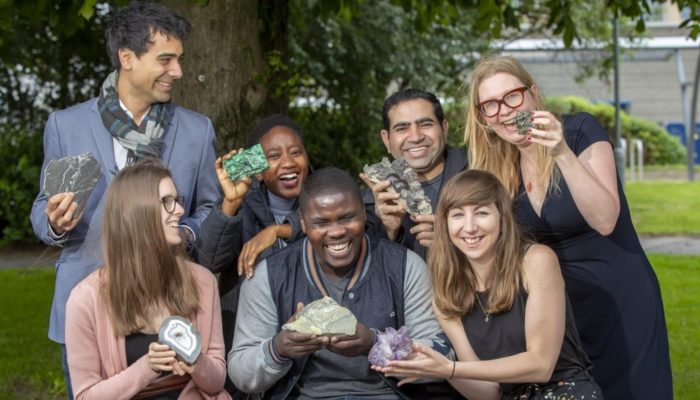
How can we source and use Earth resources in an ethical and responsible way? And how can we bring different actors and communities together to achieve sustainable resource development? These are just some of the questions that early career researchers from around the world came together to discuss during the inaugural Researching Social Theories, Resources, and the Environment International Summer ...[Read More]
Imaggeo on Mondays: The ephemeral salt crystals
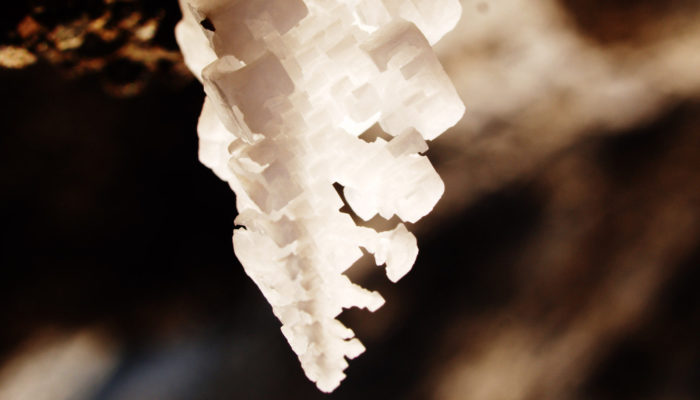
Rock salt stalactites (Speleothems) are the indicators of entrance in a salt cave. These crystal stalactites precipitate from brine only at the entrance in the salt caves, as that is the only place where the physical and chemical properties of the air and the brine dripping from the ceiling allow these crystals to grow and be preserved. And they are extremely fragile – if there is just a sma ...[Read More]