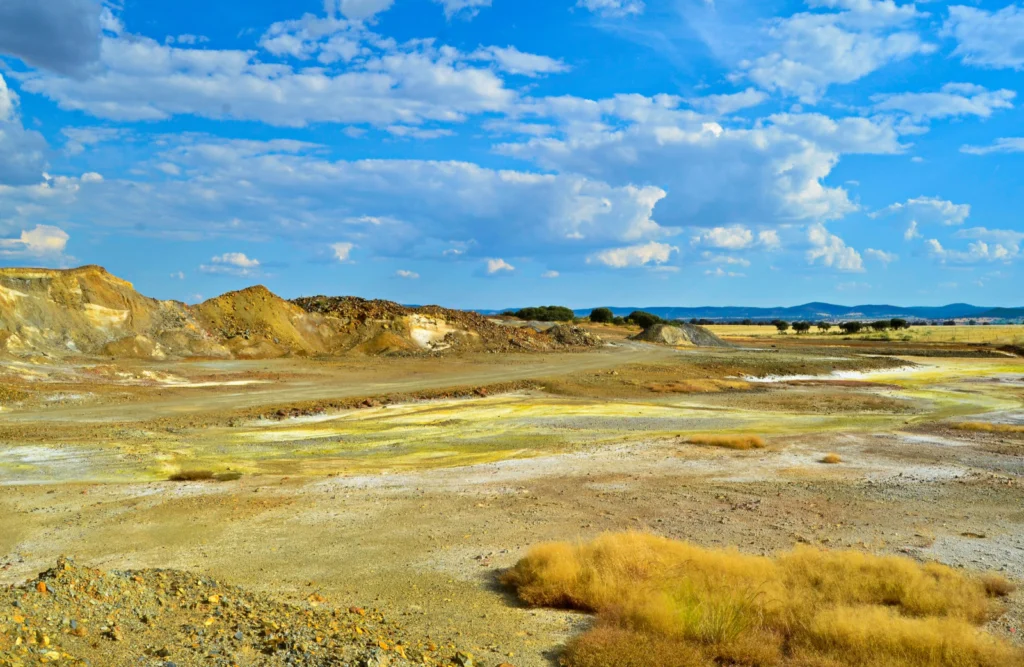
Acid drainage coming from the gangue piles of a metal sulfide mine. The resilient vegetation consists of isolated patches of Spergularia rubra and Molineriella laevis. Description by Juan Antonio Campos, after the description on imaggeo.egu.eu. Imaggeo is the EGU’s online open access geosciences image repository. All geoscientists (and others) can submit their photographs and videos to this …[Read More]
Regular Features
GeoPolicy: How a professional YouTuber inspired a science-policy debate in Europe
I recently had the opportunity to talk with Joachim Allgaier, Professor for Communication and Digital Society at the Fulda University of Applied Sciences in Germany, about how video platforms such as YouTube support science communication and influence political decisions. This month’s GeoPolicy blog post explores some of the benefits of having an accessible online …[Read More]
Imaggeo On Monday: A steady silent witness
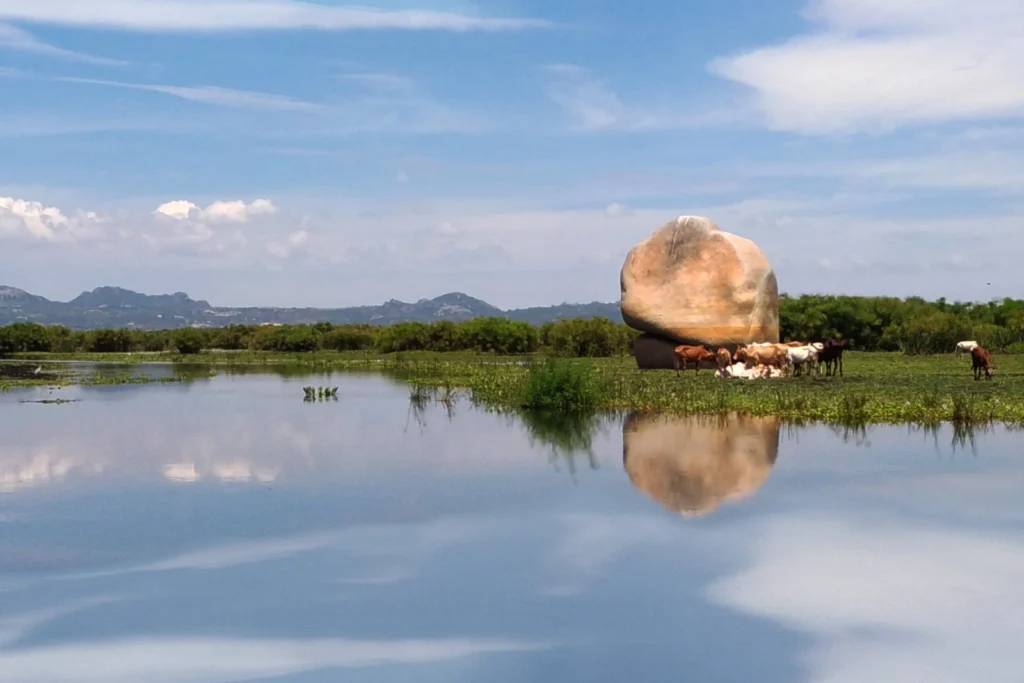
I took this picture during a sunny field work day in the Mara Wetland, Tanzania. The granitic inselberg appeared to me as a huge silent witness not only of siltation and inundation of the wetland but also of the human actions. Slash-and-burn is widely used to deforest lands and riparian vegetation for new crops and …[Read More]
GeoRoundup: the highlights of EGU Journals published during February!
Each month we feature specific Divisions of EGU and during the monthly GeoRoundup we will be putting the journals that publish science from those Divisions at the top of the Highlights roundup. For February, the Divisions we are featuring are: Hydrological Sciences (HS) and Stratigraphy, Sedimentology and Palaeontology(SSP). They are served by the journals: Geoscientific …[Read More]
Imaggeo On Monday: Stands of Time
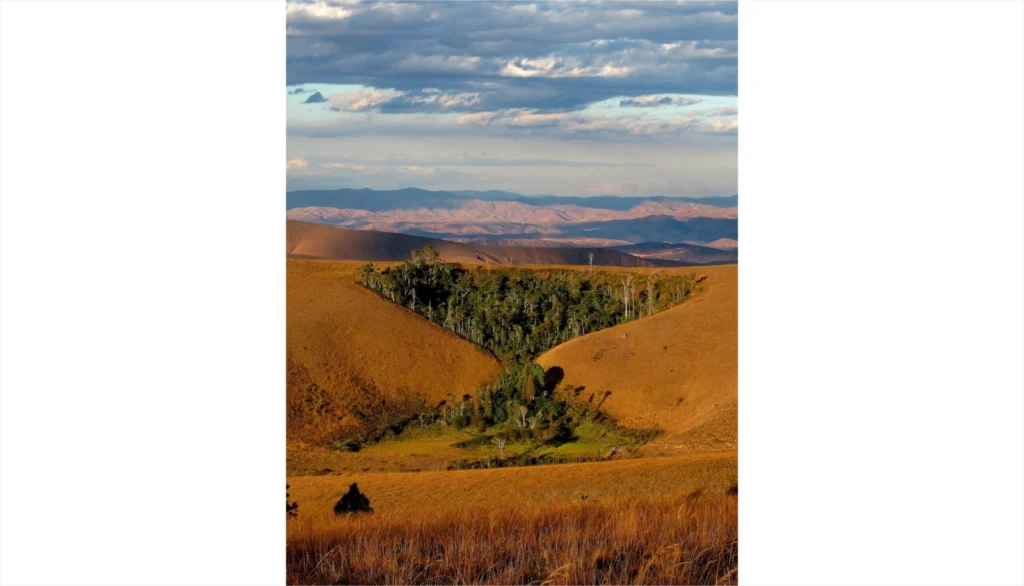
Within the heart of the Malagasy Hauts-Plateaux, the rolling grasslands are pitted by deep incisions locally referred to as lavaka (‘hole’ in Malagasy). These mass failure features provide vast quantities of terrestrial matter to local freshwater arteries, accounting for over 80% of the annual sediment load of the Betsiboka River. The collapse of the overlying …[Read More]
GeoTalk: meet Alicia Fantasia, researcher in ancient Earth climates & ECS representative for SSP Division
Hello Alicia, thank you for agreeing to this interview! Before we dig in, could you tell us a little about yourself and your research? Hi Simon, many thanks for giving the nice opportunity to present my research activities. I am Alicia Fantasia and I was born in Switzerland. I have always been passionate about the …[Read More]
Imaggeo On Monday: The Heart of a Stone
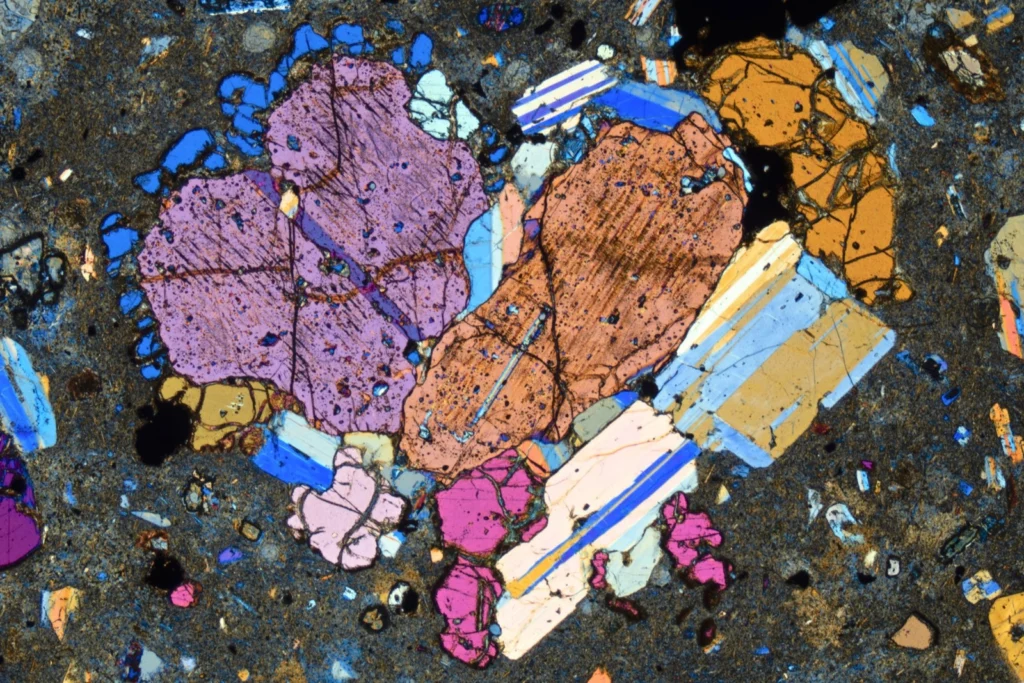
Heart-shaped glomerocryst (aggregate of phenocrysts) made of plagioclase and pyroxene in a cordierite-bearing dacitic lava from Lipari (Eolie Islands). I study the crustal xenoliths of these lavas to understand the processes accompanying high-temperature metamorphism and crustal melting. But I came across this spectacular glomerocryst and couldn’t help but take a picture! Polarized light photomicrograph. Crossed …[Read More]
The Top Five EGU Education Initiatives We Think You Should Know About
The EGU Education Committee has opened a call for new members to join. Positions on the committee are open to anyone with an interest in and passion for improving learning at the interface between geoscience and educators, so long as they are an EGU member. In particular, the Committee is keen to include the voices …[Read More]
Imaggeo On Monday: Salt marsh in El Rocío (Huelva, SW Spain)
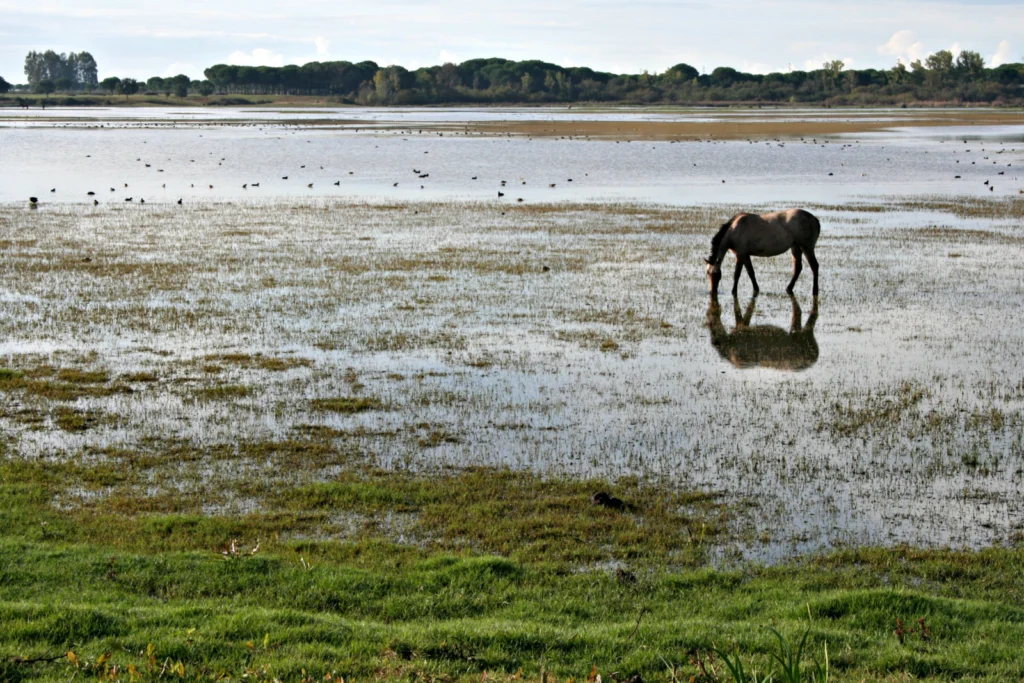
The coast line of Huelva is furrowed by wetlands and sprinkled with salt flats. These areas are a sanctuary for wildlife and are visited by migrating birds travelling between Europe and Africa. In these wetlands grow the salt cedar, the Phoenician juniper, the mastic tree, the Montpellier cistus, the rockrose, the kermes oak, rosemary, cordgrass, …[Read More]
GeoPolicy: Don’t Look Up – could better science advice have saved the planet?
Note: Spoilers Ahead! If you haven’t already seen it, go and watch Don’t Look Up – and then come back to this blog to find out what the scientists in the film could have done to better connect and communicate with the policymakers involved! Don’t Look Up gives us a terrifying example of what could …[Read More]