In a bold leap toward mapping Earth’s final frontier, the seafloor, The International SeaKeepers Society (SeaKeepers), a global non-profit organisation, is proud to support a historic advancement in this effort. As part of the global Nippon Foundation-GEBCO Seabed 2030 Project, SeaKeepers has been mobilising private yachts through its DISCOVERY Fleet since 2021 to collect vital seafloor data. Sinc ...[Read More]
Can seabed mapping help restore our blue planet?
Some humans are racing to map the moon, Mars, and the stars, yet the very ground beneath our oceans remains largely unknown. What does it say about us, that we can chart the craters of distant planets before we bother to understand the seafloor that feeds us, cools us, and regulates our climate? In an age of climate breakdown, ecological collapse, and blue economy buzzwords, the seabed has become ...[Read More]
Surf’s up and so are marine heatwaves! How AI is forewarning the Mediterranean’s ocean sizzle
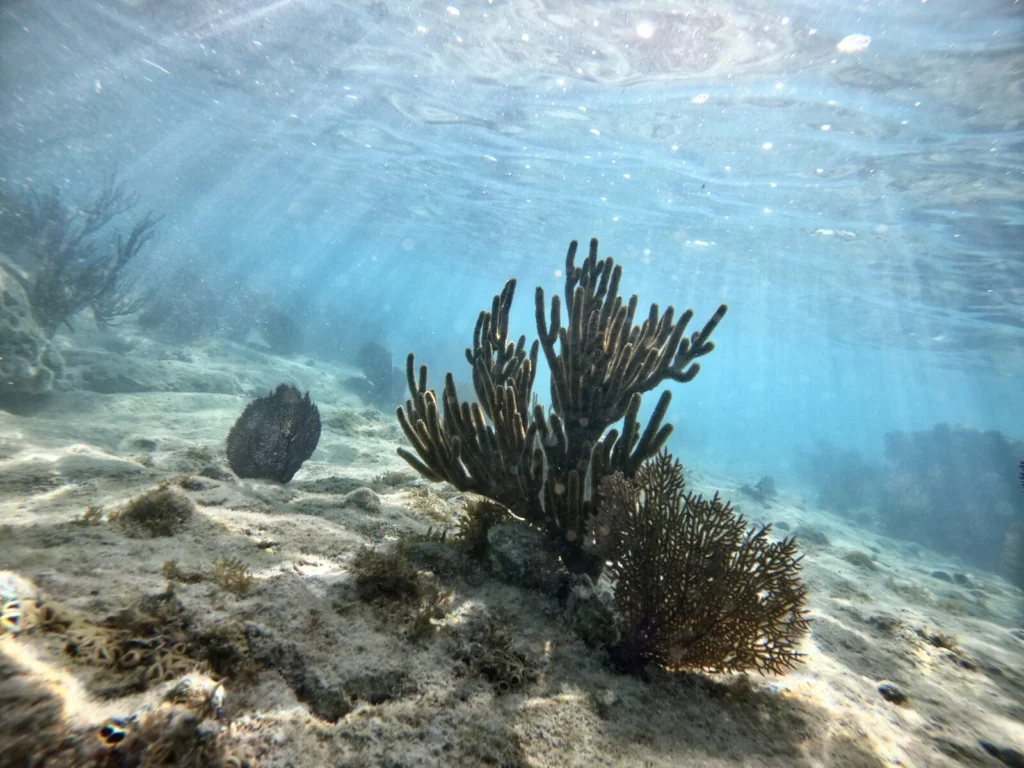
Imagine you’re standing on a rocky Mediterranean shore, early morning sun warming the air, the sea is calm and glassy. But away from sight and beneath that serene surface, there is a silent storm brewing. Marine heatwaves are sweeping across the basin, warming the water in ways that disrupt ecosystems, hit fisheries, and threaten everything from coral reefs to coastal livelihoods. That’s whe ...[Read More]
Urban resilience in the age of energy interdependence: Lessons from the 2025 Iberian blackout
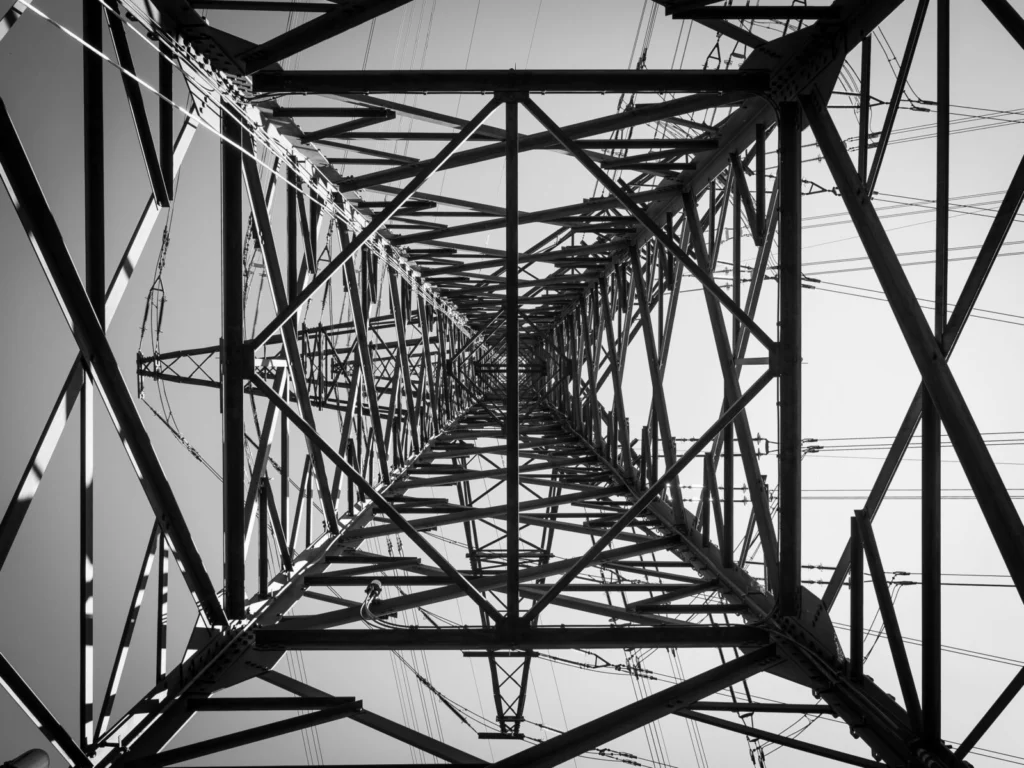
On April 28, 2025, the Iberian Peninsula experienced an unprecedented power outage that plunged Spain and Portugal into darkness for hours. This large-scale blackout disrupted daily life for millions and exposed the vulnerabilities inherent in contemporary energy infrastructures. It also highlighted the critical importance of cross-border energy cooperation in mitigating such crises. In a striking ...[Read More]
“Are you aug?” A strategic foresight into human enhancement, climate adaptation, and access disparities
The Geneva Science and Diplomacy Anticipator (GESDA) placed human augmentation on a 5–10 year timeline, identifying it as a key area where technological advancement could soon reshape societies. Their GESDA radar platform tracks over 500 emerging science breakthroughs including enhanced cognition, programmable biology, and climate-resilient bioengineering. The foresight is clear: we are entering a ...[Read More]
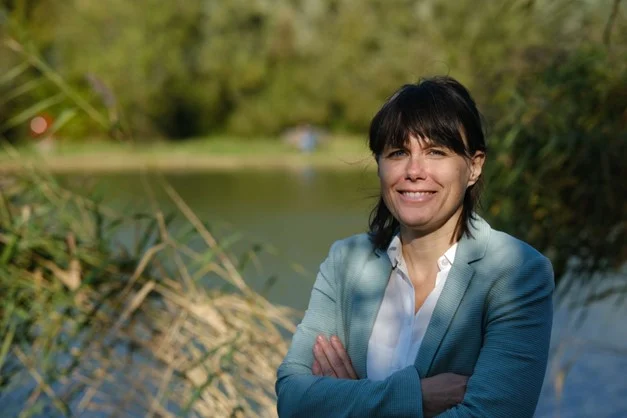
GeoTalk: Meet Annegret Larsen, Biogeomorphologist and Quaternary Scientist passionate about rewilding and a member of EGU’s Biodiversity Task Force.
Annegret, welcome to GeoTalk! You’re a researcher who focuses on abiotic-biotic environmental interactions. Can you tell us how the implications of your research extend to sustainable management practices? The United Nations, European Union, and national governments require us to restore landscapes to a ‘natural’ state. However, European landscapes have been shaped by human activity for thousands ...[Read More]
Beyond the blame game: Bridging Climate science and policy Action
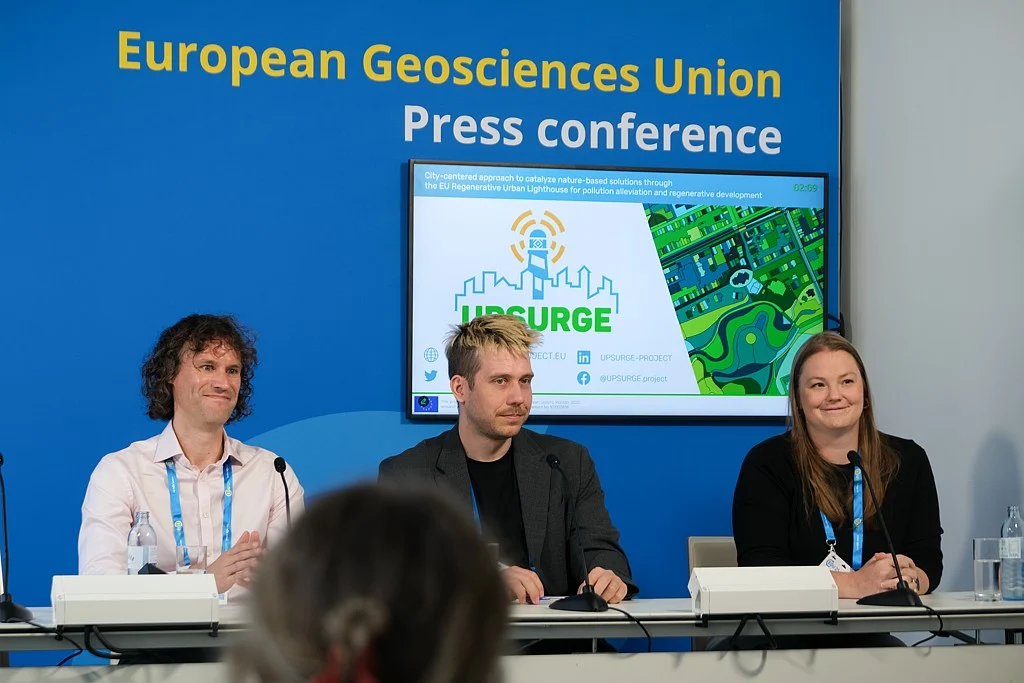
Findings supporting the urgency of climate change are coming ever-so-fast. Yet, so it seems that various economic, political, and ideological groups are stepping up their denial game. The complexity of the current state was reflected during the EGU25 press conference “Hot takes & policy quakes: When geoscience meets social science.” The speakers, Florian Ulrich Jehn [a], Chris Smit ...[Read More]
A Geoscientist’s Colorful Journey from Research to Children’s Books
In today’s blog we’re having a chat with our very own Dr Lucia Perez-Diaz. As Lucia put it at the start of this year’s General Assembly, us scientists get to wear many “hats”, and she lives up to that statement. Besides a brilliant geoscientist, she is an incredible artist – also featured as last year’s artist in residence – and a budding press assistant! But more importantly, she is the author of ...[Read More]
AI: the good, the bad, and the forgotten
AI is here, and when I say here, I mean e-v-e-r-y-w-h-e-r-e. For all you know, this blog may have been written by an algorithm (it wasn’t — I’m not a robot, promise. Or am I?). In what feels like the blink of an eye, AI has gone from a curiosity to a fully-fledged co-pilot in science (and out of science). It’s generating satellite imagery, helping compute paleo-climate predictions, or writing your ...[Read More]
Io: a spongy world consumed by molten rock
Jupiter’s moon Io is the most volcanically active world in our solar system, with hundreds of volcanoes that constantly erupt on its ever renewing surface. Although Io always points the same side toward Jupiter in its orbit around the gas giant, two other Galilean moons, Europa and Ganymede, pull Io’s orbit into an irregularly elliptical one. Thus, in its widely varying distances from ...[Read More]