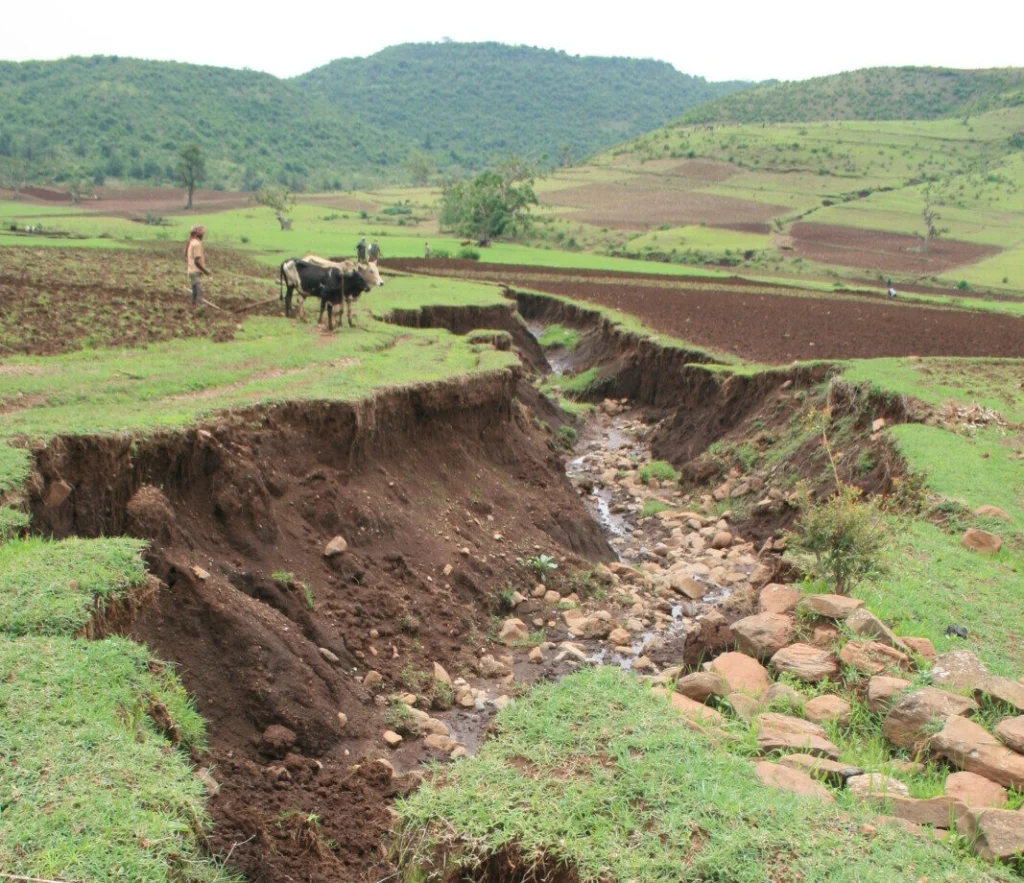
From 1525, when the first human trafficking ship departed Africa, to September 22, 1862, when the Emancipation Proclamation was issued, more than 300 years passed. This was enough time for the exploitation of humans and the earth to leave a permanent mark, one so profound it is now visible in the geological record. Not only did the age of chattel slavery during the Modern era shape the land and th ...[Read More]
The existential modelling crisis – and how to overcome it
Recently, we had a big name in fire ecology visiting our institute. He had come, among other things, to look for records of a certain fire-adapted shrub in my university’s herbarium. While myself and a colleague helped him go through the stacks of pressed and archived specimens, I asked him why there were so little contributions to the herbarium in recent years. His response was: “People sto ...[Read More]
GeoTalk: meet Lorne Farovitch, researcher of climate impacts on deaf communities!
Hello Lorne – welcome to GeoTalk! Could you introduce yourself and your background to our readers? I’m Dr. Lorne Farovitch, a deaf transdisciplinary biomedical researcher and multilingual signer, fluent in more than five sign languages. I’m passionate about advancing health equity for deaf communities worldwide through community-driven research! As the founder and Executive Director of the Global ...[Read More]
The 1950 Assam-Tibet earthquake: A singular Himalayan earthquake on its 75th Anniversary
August 15, 1950, marked India’s fourth year of Independence. The young nation’s mood was optimistic. People all over India were celebrating the country’s newfound freedom. Known as the land of the rising Sun, the jubilant people of the northeastern part of the country were about to conclude the celebrations and retire for the day. In the northeast corner, surrounded by the Himalayan mountains, the ...[Read More]