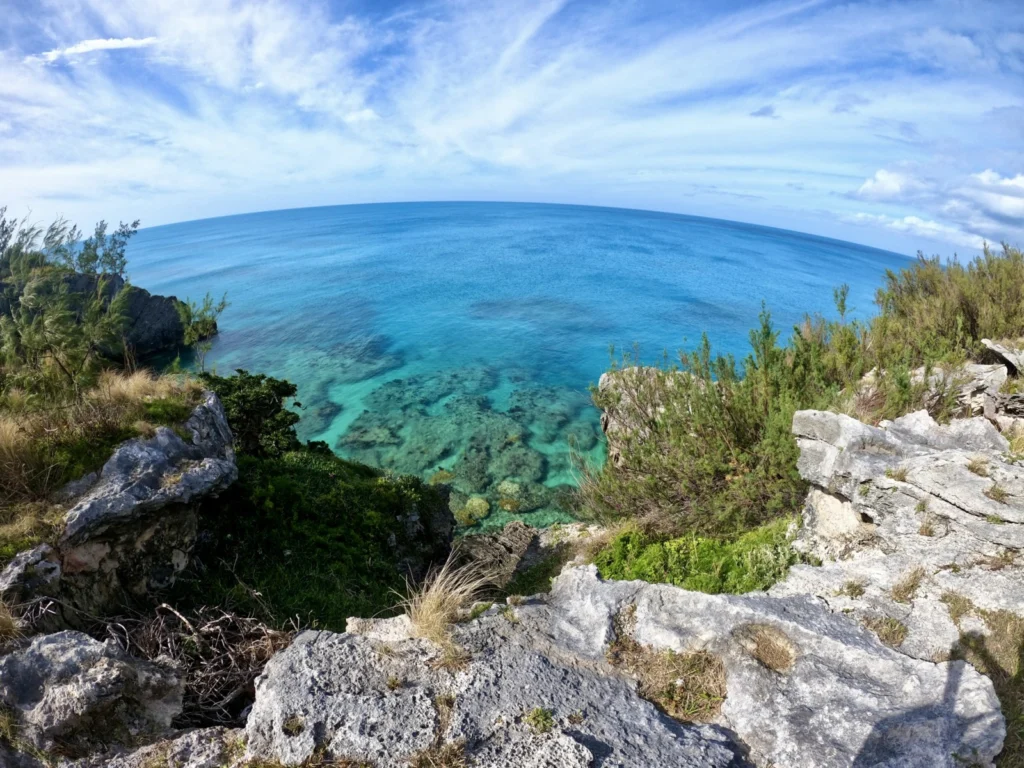
North View from Railway Trail at St Georges island in Bermuda. Photo taken with a GoPro and a wide-angle lens 16-34mm, while walking on my way for groceries at St Georges from the Bermuda Institute of Ocean Sciences. Description by Josue G Millan, after the description on imaggeo.egu.eu. Imaggeo is the EGU’s online open access geosciences image repository. All geoscientists (and others) can ...[Read More]
GeoPolicy: Climate solutions at the center of focus this Earth Day
Earlier this month, Climate Change 2022: Mitigation of Climate Change was published by the IPCC Working Group III as the third instalment of the IPCC’s Sixth Assessment Report (AR6). It emphasises that “rapid and deep” greenhouse gas emission reductions are needed across all sectors to have any chance of keeping the world below 1.5°C of warming above pre-industrial levels. However, it also outline ...[Read More]
GeoTalk: meet Federico Amato, environmental data miner & ECS representative for ESSI Division
Hello Federico, thank you for agreeing to talk with us! Could you introduce yourself? Hello Simon, thanks for inviting me for this talk! As you can probably guess from my name, I am Italian. I completed my studies in Italy obtaining a master’s degree in Engineering and a PhD in Innovation and Sustainable Development Engineering. Then, three and a half years ago I moved to Switzerland for a Postdoc ...[Read More]
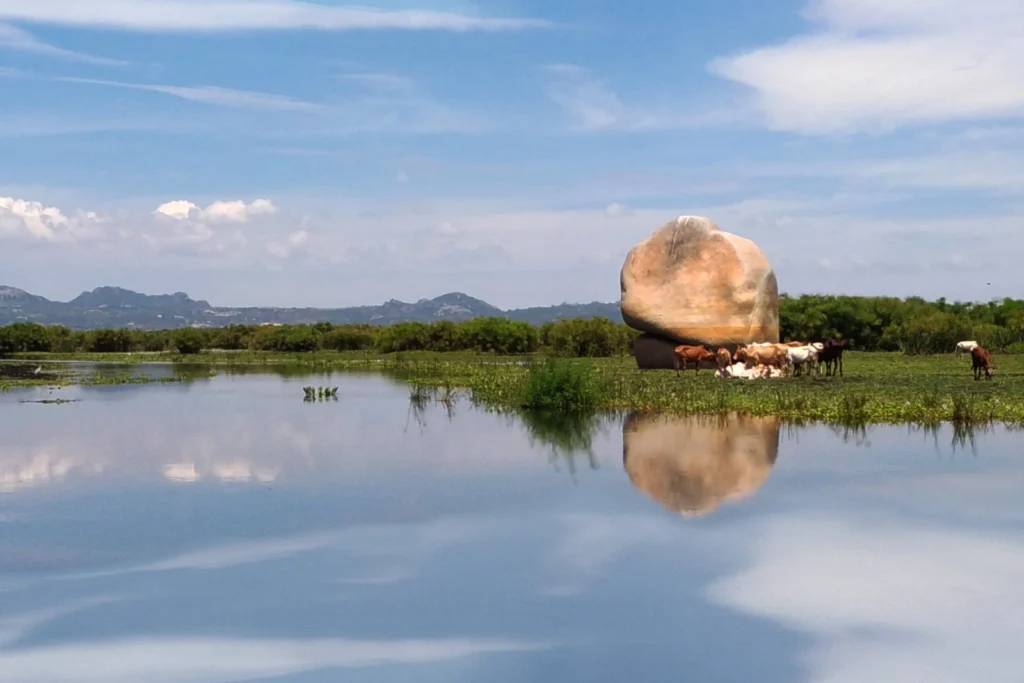
Imaggeo On Monday: A steady silent witness
I took this picture during a sunny field work day in the Mara Wetland, Tanzania. The granitic inselberg appeared to me as a huge silent witness not only of siltation and inundation of the wetland but also of the human actions. Slash-and-burn is widely used to deforest lands and riparian vegetation for new crops and grazing fields along the Mara River. The induced habitat degradation is jeopardizin ...[Read More]
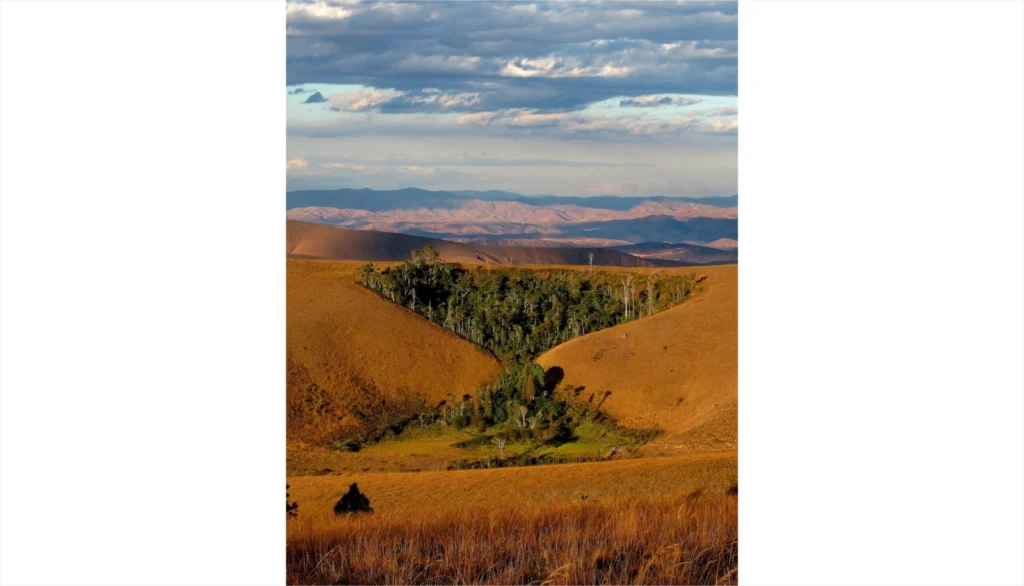
Imaggeo On Monday: Stands of Time
Within the heart of the Malagasy Hauts-Plateaux, the rolling grasslands are pitted by deep incisions locally referred to as lavaka (‘hole’ in Malagasy). These mass failure features provide vast quantities of terrestrial matter to local freshwater arteries, accounting for over 80% of the annual sediment load of the Betsiboka River. The collapse of the overlying laterite exposes a comparatively nutr ...[Read More]
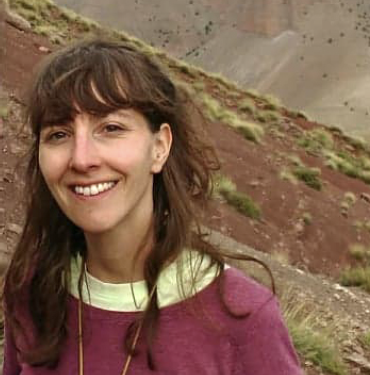
GeoTalk: meet Alicia Fantasia, researcher in ancient Earth climates & ECS representative for SSP Division
Hello Alicia, thank you for agreeing to this interview! Before we dig in, could you tell us a little about yourself and your research? Hi Simon, many thanks for giving the nice opportunity to present my research activities. I am Alicia Fantasia and I was born in Switzerland. I have always been passionate about the Earth system, I am sensitive to current climate change issues, and … fascinated by d ...[Read More]
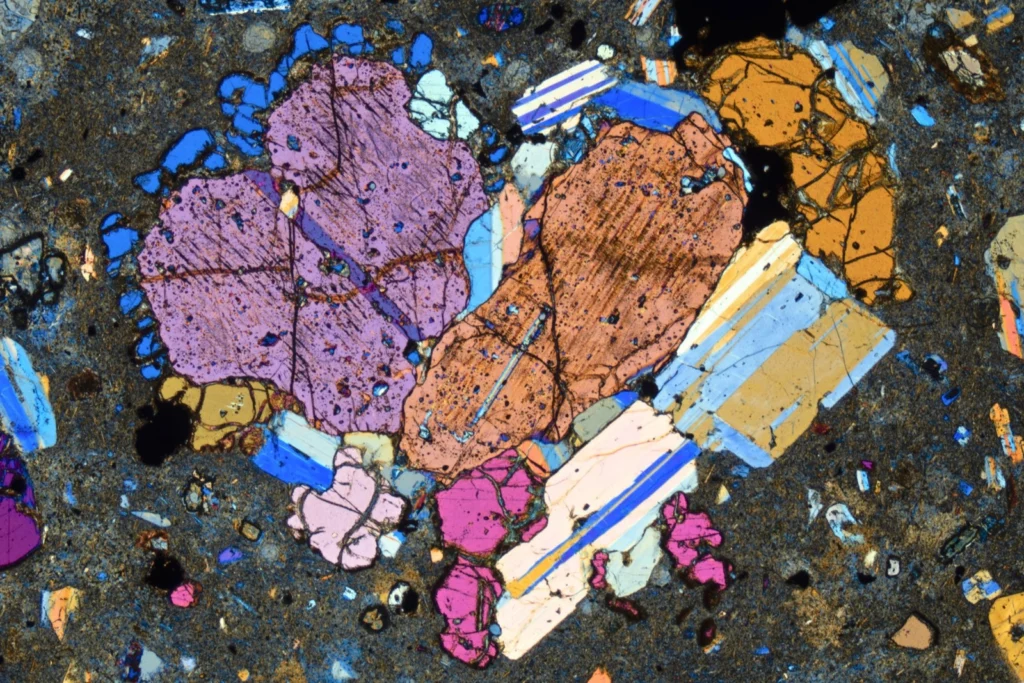
Imaggeo On Monday: The Heart of a Stone
Heart-shaped glomerocryst (aggregate of phenocrysts) made of plagioclase and pyroxene in a cordierite-bearing dacitic lava from Lipari (Eolie Islands). I study the crustal xenoliths of these lavas to understand the processes accompanying high-temperature metamorphism and crustal melting. But I came across this spectacular glomerocryst and couldn’t help but take a picture! Polarized light pho ...[Read More]
Imaggeo On Monday: Salt marsh in El Rocío (Huelva, SW Spain)
The coast line of Huelva is furrowed by wetlands and sprinkled with salt flats. These areas are a sanctuary for wildlife and are visited by migrating birds travelling between Europe and Africa. In these wetlands grow the salt cedar, the Phoenician juniper, the mastic tree, the Montpellier cistus, the rockrose, the kermes oak, rosemary, cordgrass, reeds and bulrushes. The picture shows part of the ...[Read More]
GeoPolicy: Don’t Look Up – could better science advice have saved the planet?
Note: Spoilers Ahead! If you haven’t already seen it, go and watch Don’t Look Up – and then come back to this blog to find out what the scientists in the film could have done to better connect and communicate with the policymakers involved! Don’t Look Up gives us a terrifying example of what could happen when policymakers ignore the science. The film tells the story of two astronomers, PhD candida ...[Read More]
Imaggeo On Monday: Intriguing artwork by heat-loving microbes
The geothermal area Sol de Mañana is part of the Altiplano–Puna volcanic complex shared between Bolivia and Chile. The area is characterized by volcanic activity and the sulphur springs host mud lakes and steam pools. The different colours stem from thermophilic, hyperthermophilic and acidophilic bacteria that colonize areas of varying temperatures. Description by Julia Miloczki, after the ...[Read More]