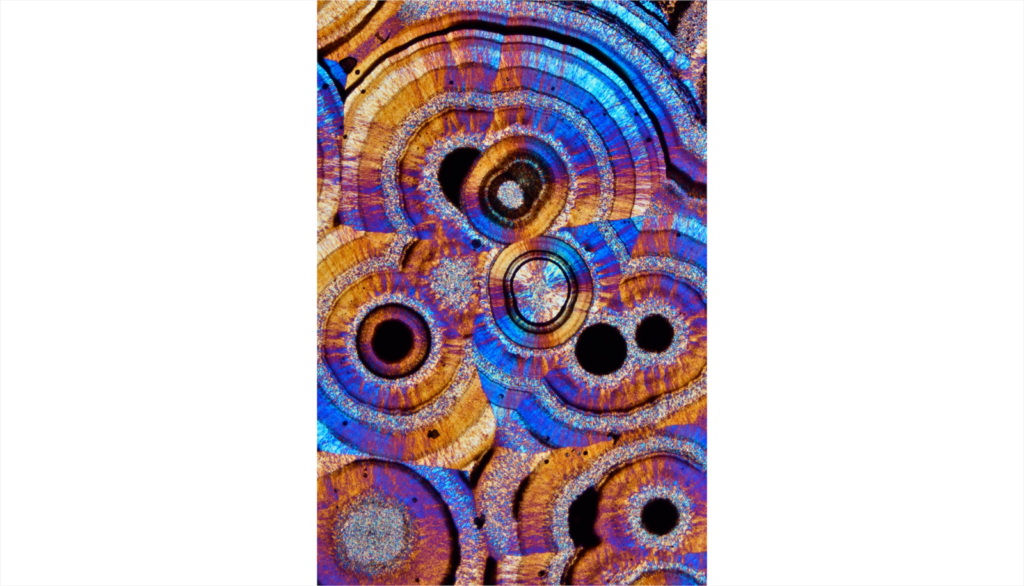
“Crazy Lace” is an agate collected in Mexico, which offers great opportunities for aesthetic photomicrography. Here we see the common arrangement of fibers of chalcedony (microcrystalline quartz) in parallel bands alternating with black thin layers of Fe oxides. Polarized light photomicrograph, crossed polarizers and red tint plate. width 5.4 mm. Sample kindly provided by Denise …[Read More]
EGU Scientific Divisions
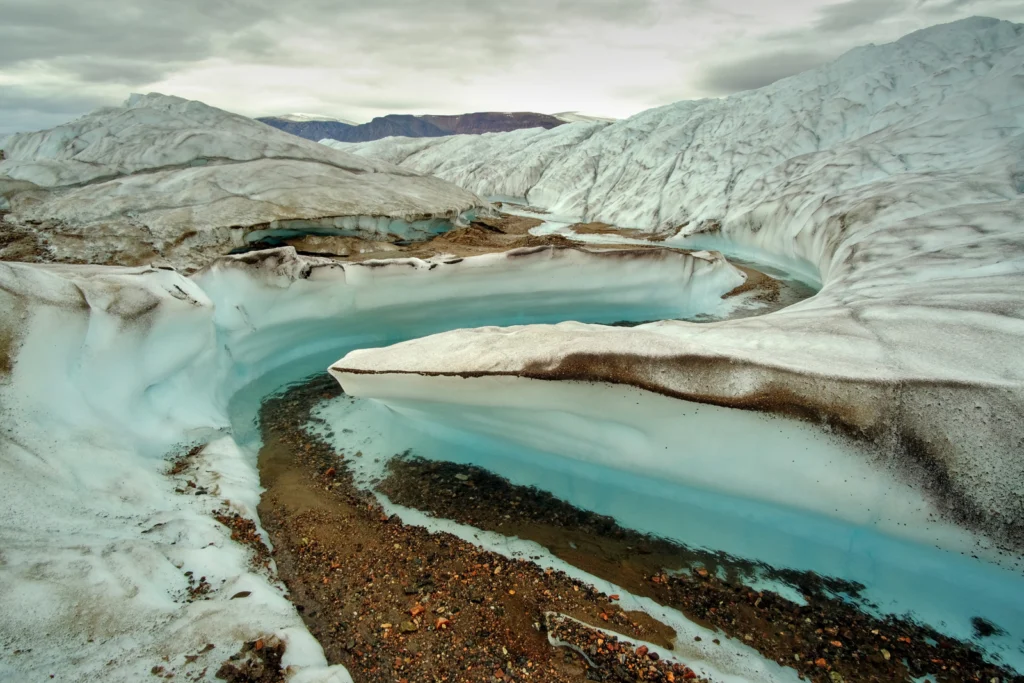
Imaggeo On Monday: A meander in the meltwater valley
At the edge of the Greenland Ice Sheet, surface melt releases old layers of dust, that have travelled thousands of years into the ice. Under sunny weather, the dust heats up with radiation, melts the ice underneath, and thus accumulates in tiny potholes and meltwater creeks. However, this photo was taken after a rainy day. …[Read More]
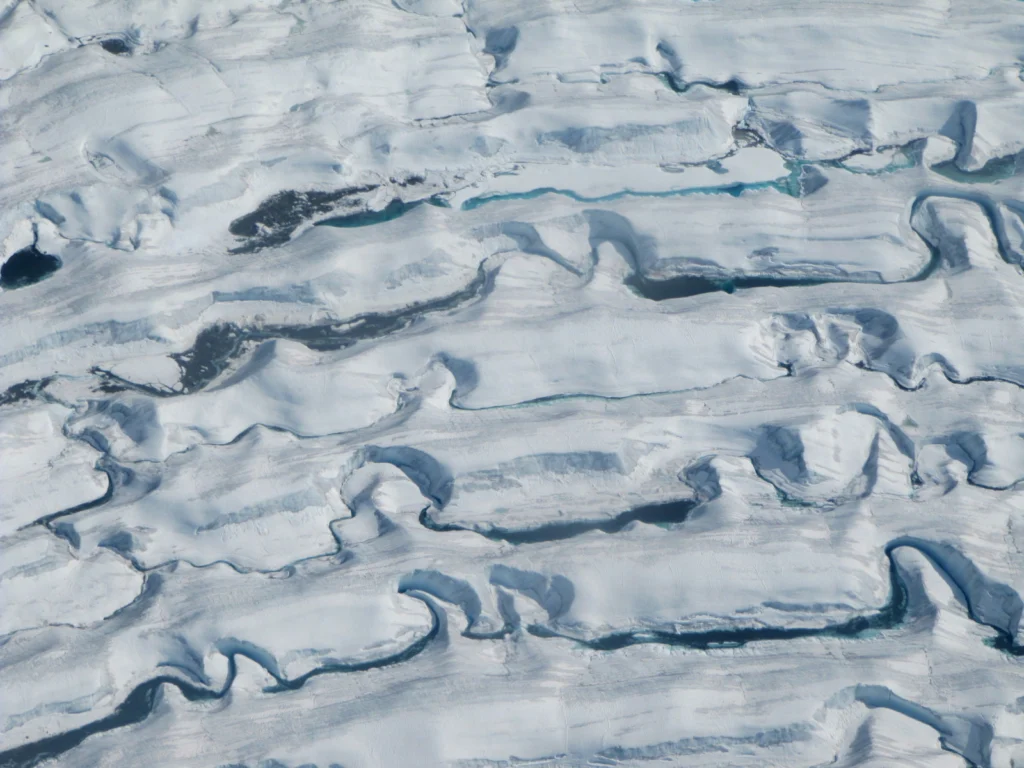
Imaggeo On Monday: Contorted Streams on the Gates Glacier
Annual ridges and troughs (called wave ogives) are formed as the ice of the Gates Glacier (in Alaska’s Wrangell Mountains) flows through a steep icefall. Down-glacier, as the ice melts, the rushing meltwater is funnelled into streams, carving ice canyons as it flows, but ultimately directed by these topographic constraints. Description by Allen Pope, …[Read More]
GeoTalk: Meet Larissa van der Laan, glaciologist and science-artist!
Hi Larissa, thankyou for spending time with us today! To break the ice, could you tell us a little about yourself and your research? Ha, I see what you did there. I’m Larissa, she/her, 29, and a PhD candidate at the Institute of Hydrology and Water Resources Management in Hannover, Germany. I’ve been fascinated by …[Read More]
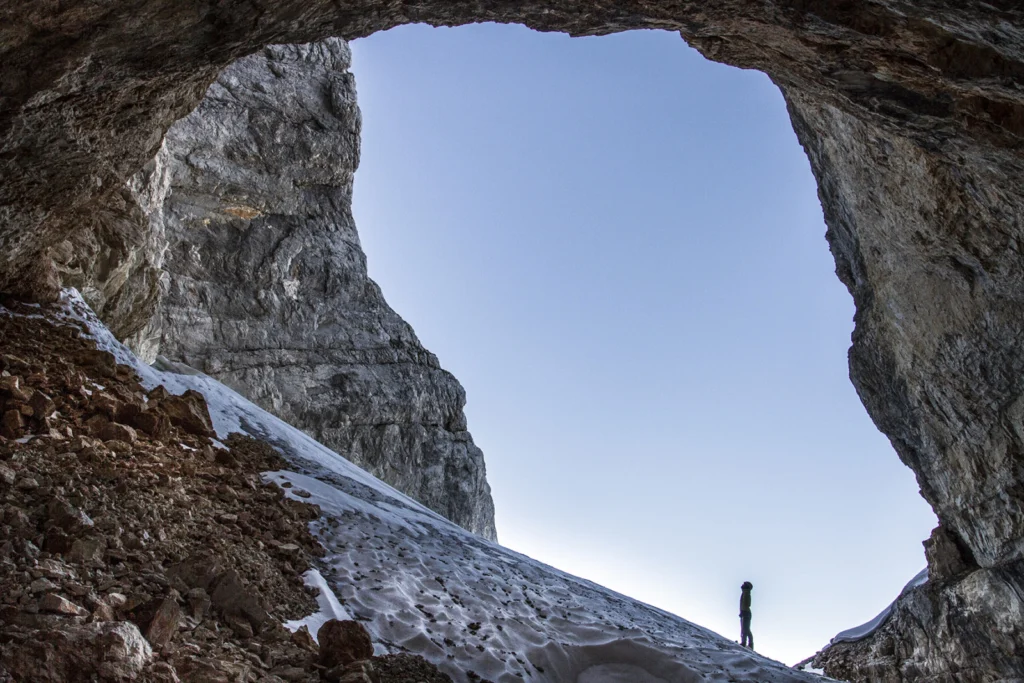
Imaggeo On Monday: Ice caves in high altitude karstic areas
High altitude karstic environments often preserve permanent ice deposits within caves, representing a lesser-known portion of the cryosphere. Despite being not so widespread and easily reachable as mountain glaciers and ice caps, ice-caves preserve a great deal of information about past environmental changes and paleoclimatic evolution. Since one of their main characteristics is to have …[Read More]
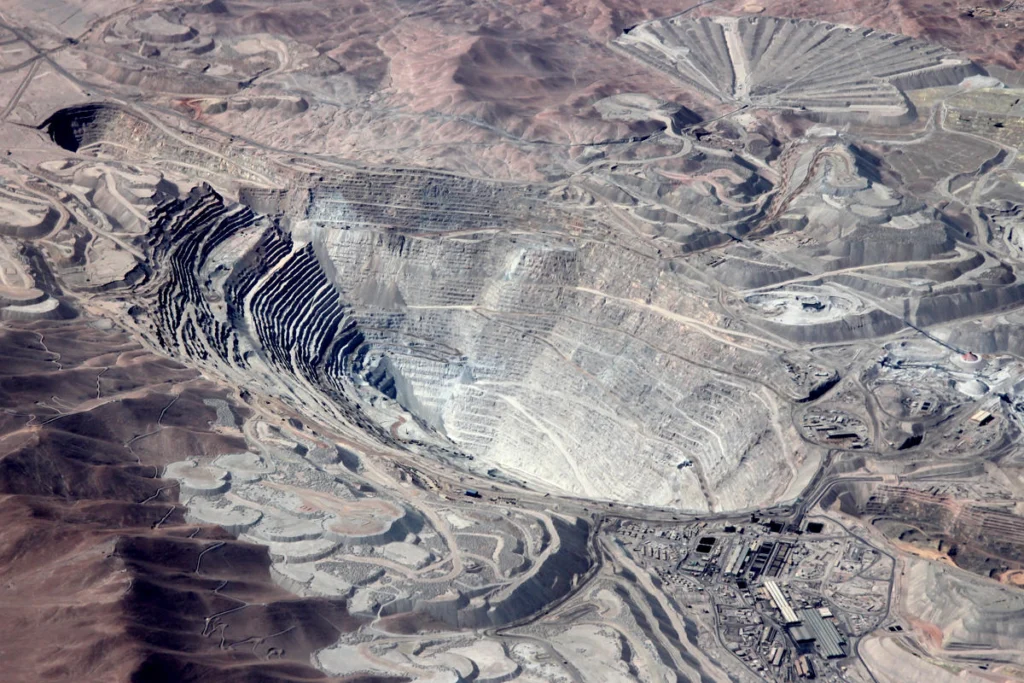
Imaggeo On Monday: Chuquicamata copper mine, Chile
Aerial view of the Chuquicamata copper mine in Northern Chile. This is the largest open pit copper mine in the world by volume (at the time of sharing). At this location the copper and molybdenum is extracted from a porphyry deposit that was formed beneath a volcano in the Andean subduction zone. Description by …[Read More]
Are we equipped to meet the Glasgow Climate Pact?
November 2021 once again put climate change in the spotlight for Europe and the world. Close to 200 countries came together this month for the UN’s annual climate summit, COP26, and after much deliberation, adopted the Glasgow Climate Pact. Some key commitments had countries pledging to limit their emissions by 2030; forming the first-ever alliance …[Read More]
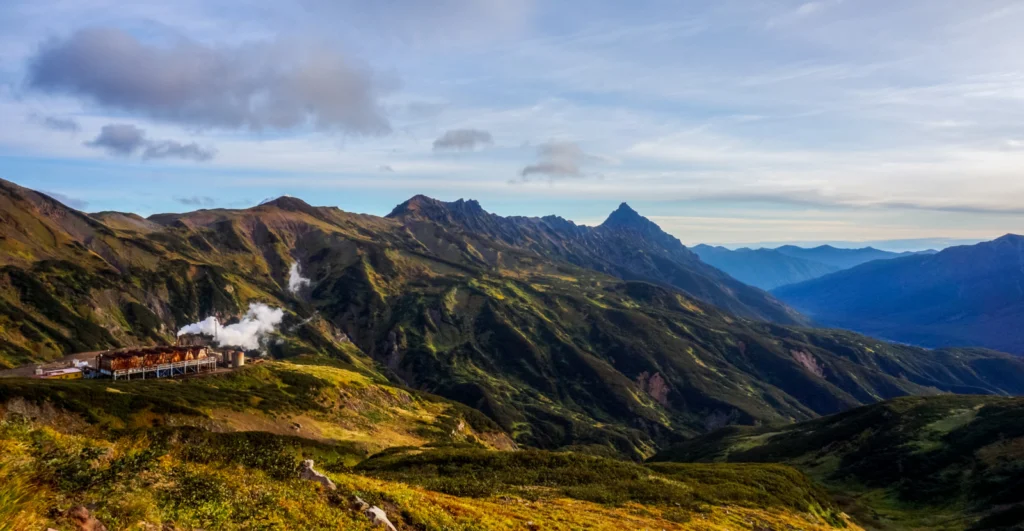
Imaggeo On Monday: Green Energy of Kamchatka
The Mutnovsky Geothermal Power Plant is the largest geothermal power plant in Russia (the time of writing). It is located near to volcanic mountain Mutnovsky at altitude of 800 m and has a capacity of 50 MW. The Mutnovsky Geothermal Power Plant has resolved the problem of raising the stability of the power supply for …[Read More]
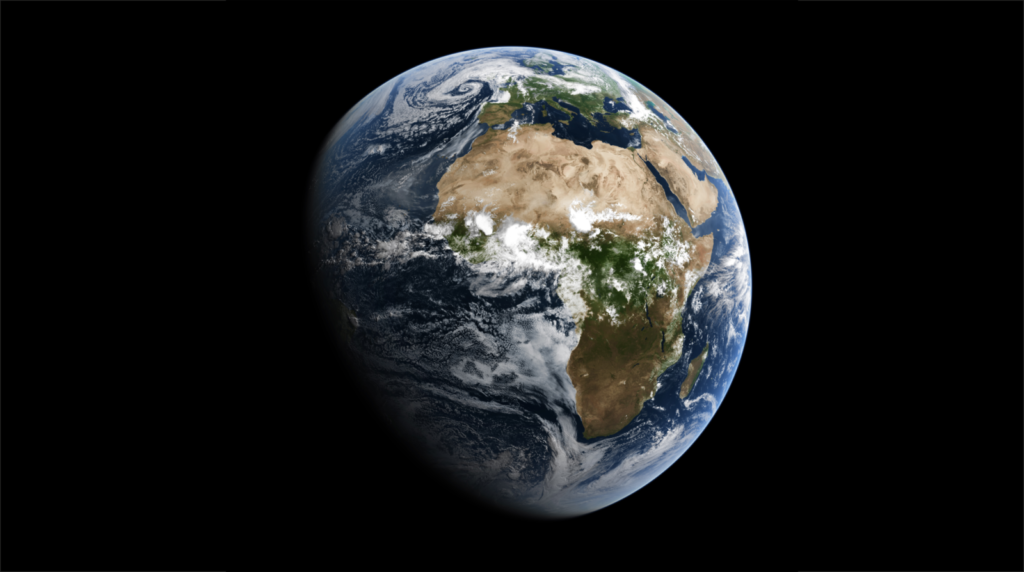
Imaggeo On Monday: Summer on the Northern Hemisphere
The image shows a northern hemispheric summer day of the year 2012. One can see an impressive north Atlantic cyclone, a cloud free Mediterranean Sea, Saharan dust north of the Canary Islands, and cumulus fields near the coast of Namibia and Angola. The image was taken at June 28, 2012 09:00 UTC from the MSG …[Read More]
The place of Biodiversity in EU Policy
Biodiversity is an essential component of life on Earth and of human society, and is now a primary focus area of the European Union with the EU’s Biodiversity Strategy for 2030 launched in 2020 as part of the European Green Deal. The Biodiversity Strategy has some extremely ambitious targets that will require new legislation and …[Read More]