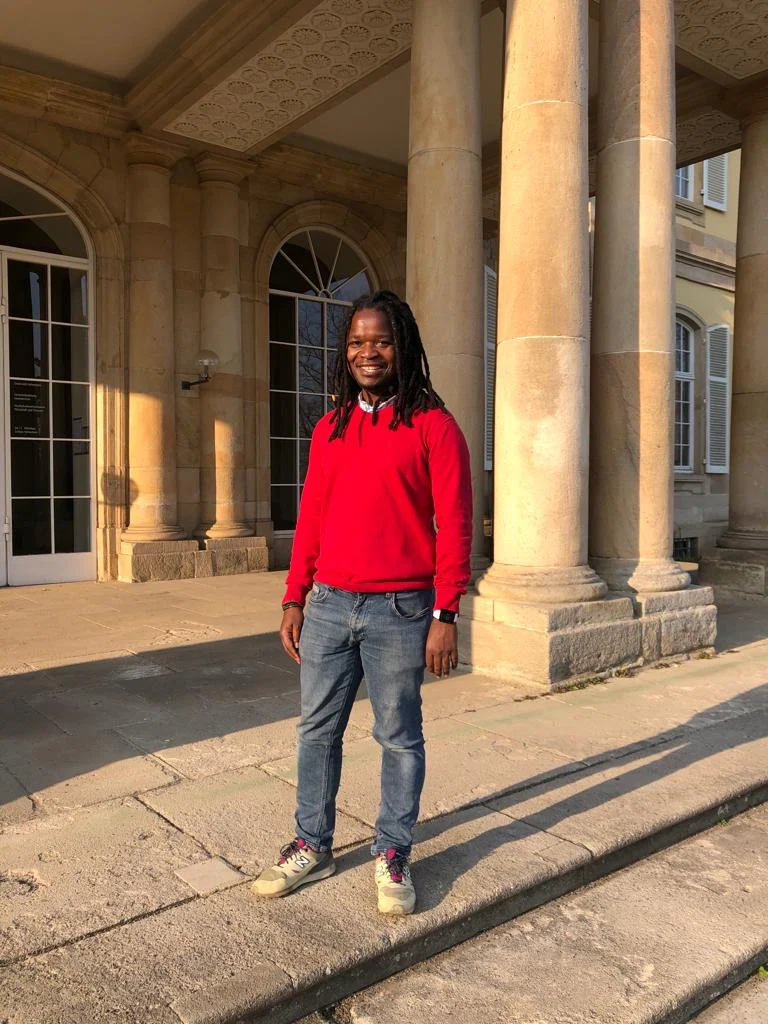
Rita, welcome to GeoTalk! Can you tell us a bit about what initially drew you to the field of coastal geomorphology and wetland ecosystems? Thanks for inviting me! My academic background is in environmental engineering, with a lifelong passion for coastal areas and geomorphology. The real inspiration comes from a constant desire to contribute to the conservation of natural ecosystems. Thus, at som ...[Read More]
Looking for answers towards the stars: stone tools and nuclides unveil the earliest solid evidence of humans in Europe
When stars explode, supernova-style, the explosion sets off streams of high energy particles across the universe, mainly protons and alpha particles, that after millions of years reach us here on Earth. Secondary cosmic rays pass through our bodies and almost everything around us, and they penetrate a few meters into the ground where they interact with atoms in soil and rock. This produces new iso ...[Read More]
GeoPolicy: Fluvial geomorphology and its potential for policy impact
In this month’s GeoPolicy blog post, Dr Grace Skirrow outlines how researchers can share their expertise with environmental regulators to have policy impact and the role that fluvial geomorphology can play in policy decisions. Fluvial Geomorphology and why it is relevant for policymakers Fluvial Geomorphology (“fluvial”, derived from the Latin “fluvialis”, meaning “of the river”) is the study of l ...[Read More]
Far over the Misty Mountains cold, to dungeons deep and caverns old: the geology of the Lord of the Rings.
“He loved mountains, or he had loved the thought of them marching on the edge of stories brought from far away; but now he was borne down by the insupportable weight of Middle-earth.” J.R.R. Tolkien (1955) Return of the King ‘The Lord of the Rings‘ by J.R.R. Tolkien is one of the most famous english-language fantasy book series’ ever written. It set the blueprint for ...[Read More]