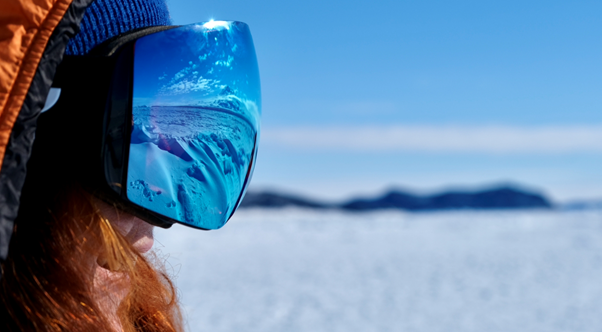
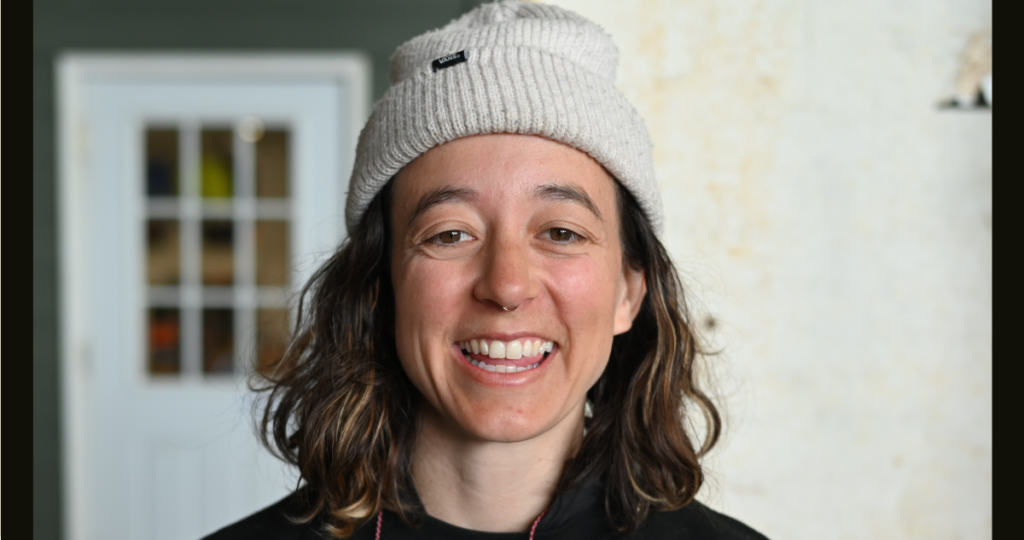
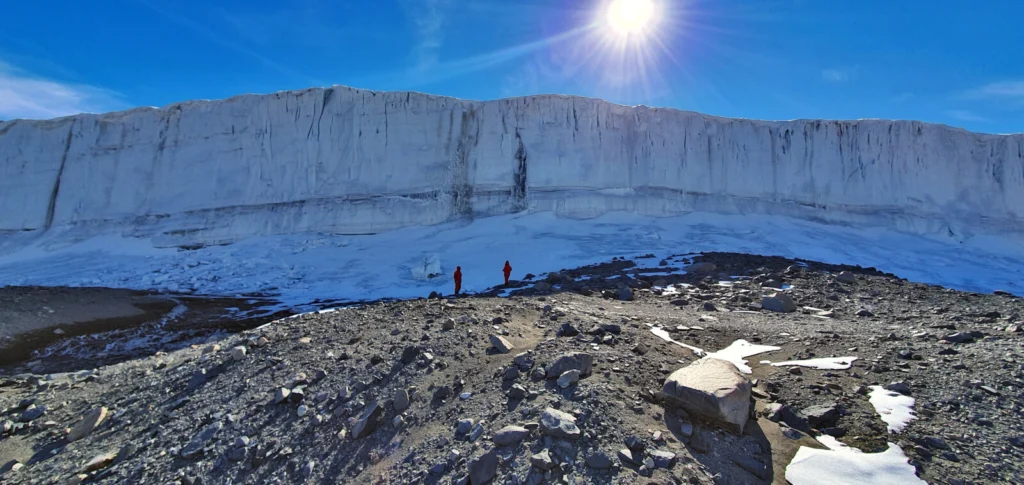
Welcome, Marie! Could you please introduce yourself to our readers? Hi, my name is Marie Cavitte. I’m a glaciologist and climatologist with a passion for the polar regions. I spent 10 years studying Antarctica. I started off during my Masters, then PhD, looking at the oldest ice on Earth, hunting for THE region of the ice sheet that might contain million-year-old ice. An ice core has been drilled ...[Read More]
Cryospheric Sciences
McMurdo Sound’s 70th anniversary: An expedition journal by Julia Martin
It was October 28, 2022 around 3 p.m. Fascinated by the majestic white snow-covered mountain caps, deep-blue sea ice cracks and light-blue pressure ridges, I gently press my nose against the cold double-glassed window of the Royal New Zealand 757. The tires smoothly touch the ground, and the warm voice of the flight attendant fills the dry air in the aircraft: “Ladies and Gentlemen, welcome to Ant ...[Read More]
GeoTalk: Meet glacial hauntologist, Elizabeth Case (you read that right, a glacial hauntologist!)
Welcome to GeoTalk, Elizabeth! Could you introduce yourself and your background? I’m a genderfluid glaciologist living between previously glaciated, currently glaciated, and flood-prone landscapes. I am a postdoctoral researcher at Utrecht University in the Netherlands. I did my bachelor’s in physics at the University of California, Los Angeles, and my Ph.D. in glacial geophysics at Co ...[Read More]
Raising the (melt)stakes! How robotic innovation reveals new findings on melting glaciers
In the age of climate change, glaciers across the Arctic are melting, consequently reducing regional freshwater supplies and contributing to the ongoing rise in global sea levels. But how fast do they melt? And is it possible to predict that? A new study on the Xeitl Sit’ (LeConte) glacier in Alaska aims to answer these questions. The research group from Oregon State University, Harvard University ...[Read More]
How can scientists see ice underground? Recent study reveals how!
When it comes to peering beneath the Earth’s surface, geophysicists have an arsenal of high-tech tools at their disposal. But what happens when you need to track something as elusive as underground ice forming and melting in real time? Enter borehole Ground-Penetrating Radar (GPR), the underground detective that helped Peter Jung and his colleagues image frozen subsurface volumes in an experimenta ...[Read More]
A 12-meter sediment core reveals secrets of the Arctic’s past climate
Extracted from a depth of 2,500 meters, a giant 12-meter long marine sediment core from the Fram Strait, between Svalbard and Greenland, preserves a climate record spanning up to 400,000 years. Its sediment layers offer crucial insights into the Arctic’s past, helping Dr Jochen Knies and his research team answer two important question: Was the Arctic ever ice-free during past warm periods? W ...[Read More]
GeoTalk: meet Alessandro Silvano, winner of the 2024 Ocean Sciences Division Outstanding ECS Award!
Hello Alessandro. Thank you for joining me for this edition GeoTalk! Could you tell our readers about your background before we dive in? I am an oceanographer based at the University of Southampton (UK). I am interested in polar oceanography and ice-ocean interactions. The focus of my work is to understand the processes that control ocean heat transport toward rapidly-melting Antarctic glaciers. ...[Read More]
Past ice and future predictions – scanning and drilling the changing Antarctic ice
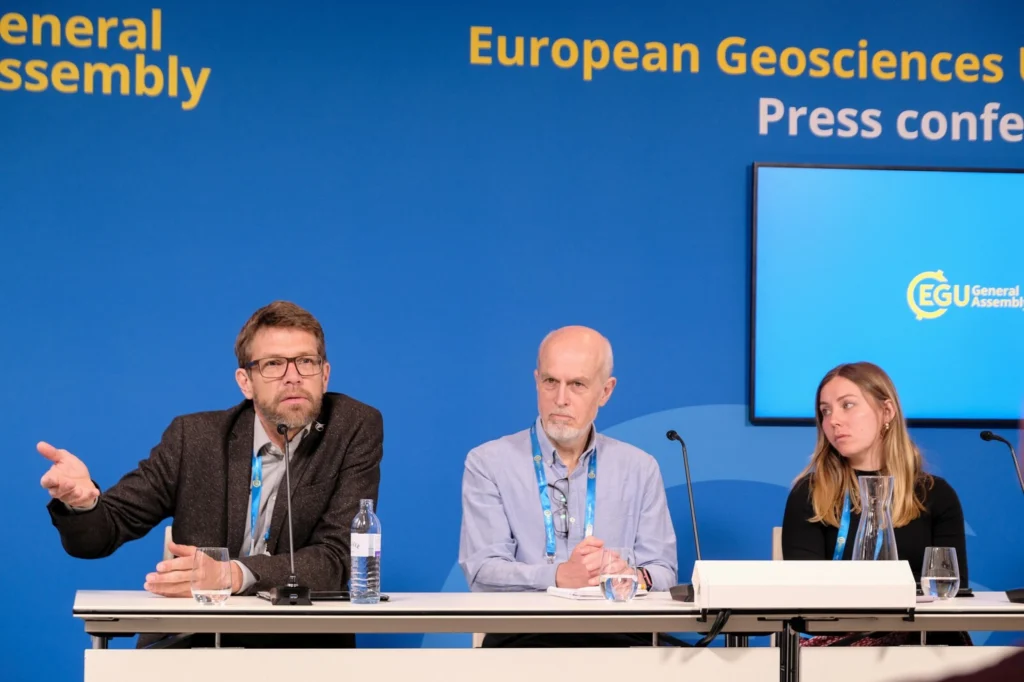
Did you know that some of the scientists of each General Assembly get invited to a press conference to face a group of curious journalists? I did not – but as press assistant for the #EGU24, I had the unique chance to attend the press conference “Unveiling Antarctica’s secrets: new research brings us one step closer to predicting the future of the icy continent”. Prominent scientists (Fig.1) ...[Read More]
Researchers share insights from first-of-its-kind ice loss study of Antarctic Ice Sheet
Hi Ronja and Emily, thank you for agreeing to doing this interview. Could you tell us briefly about your background and how you came to research your field? Emily: I have an environmental science/physical geography background and I have been working with an ice sheet model during and after my PhD to understand how glaciers and ice streams in Greenland and Antarctica may respond to climatic changes ...[Read More]
GeoTalk: Meet Ann-Sofie Zinck, researcher of Antarctic ice shelves and Cryosphere ECS Representative!
Hi Ann-Sofie. Thank you for joining this GeoTalk! To break the ice, could you tell us a bit about yourself and what got you interested in the Antarctic? Hi Simon, thanks for inviting me! That’s easy! As a child I always used to be ice cold… No, just kidding! I guess I have always been fascinated about nature, geoscience, weather, climate, and ice (creams). I preferred atlases, weather, and g ...[Read More]