Hello Beatrice! Thank you for agreeing to this GeoTalk interview. Could you briefly introduce yourself and your background to our readers?
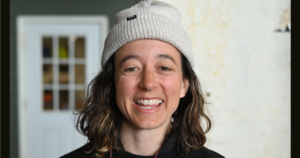
Hi Simon, thank you for having me! I’m Beatrice, an Associate Professor of Agricultural Chemistry at the University of Foggia, Italy. My background is in agricultural and environmental sciences. Soil organic matter is my main focus of my work: how it changes, how it interacts with minerals, and why some of its carbon remains in soil for much longer than we might expect.
I study these processes under changing temperature and water availability in agricultural soils, particularly on how this affects on iron minerals and their impact on neighbouring carbon. I also work with Martian regolith simulants, which has given me a different perspective on processes I study here on Earth.
What is soil? When in discussion soil system scientists, how we characterise of soil is often challenged, sometimes in relation to other elements of regolith, such as sediment, or in regard to soil’s components, such as humis.
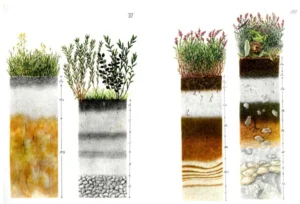
For me, soil is the foundation of life on land, although we take it for granted. We depend on it for our food and water, but most of what happens there remains out of sight. I find it difficult to fit into one definition because it brings together so many things: minerals, organisms, organic matter, water, air, and the history of their interactions. Following how materials change and interact is often more useful than drawing a fixed boundary between them.
Different disciplines emphasise different parts. Working with Martian regolith simulants has made me think more carefully about where soil begins: how much transformation does mineral material need, and must life be involved?
We found evidence suggesting that some processes important in Earth’s soils can also develop in these Martian simulant substrates.
Soil constitutes a complex biogeochemical system; How do researchers, such as yourself, explore and describe its chemistry?
Chemistry is where I start. It helps us understand how a soil develops, from the alteration of minerals to the transformation of organic residues, and how it continues to change afterwards. I’m interested in putting these observations together: if a soil loses carbon after warming or flooding, what changed chemically? Did the minerals change, did organic matter become more accessible to microorganisms, or did several processes occur together? Those are the questions that guide the measurements.
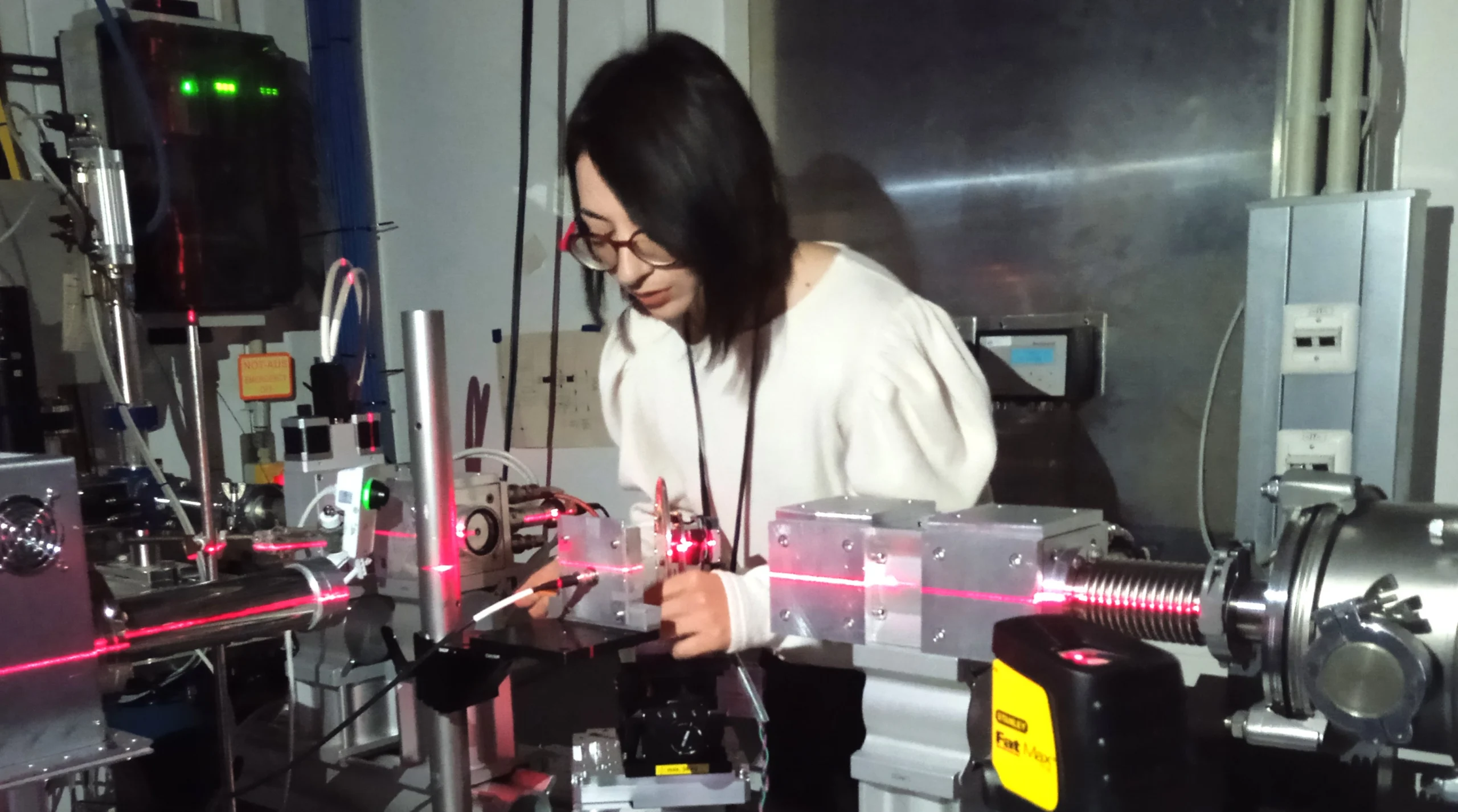
Beatrice Giannetta
How is our understanding of soil development changing alongside climate change?
Soils store approximately 2,500 billion tonnes of carbon, roughly three times the amount in the atmosphere. This large stock does not automatically make soil a carbon sink: that depends on whether carbon inputs exceed losses over time.
Climate has always shaped soil development, but warming, droughts and floods are changing the conditions under which soils function. Flooding can reduce oxygen availability and transform iron minerals, affecting their associations with organic matter; drying changes the conditions again.
We still need to understand what repeated events mean over longer periods, and whether carbon that has persisted under one set of conditions will remain there when those conditions change. This also affects how we can expect soils to store carbon.
Fertile soil is common on Earth and yet rare in our solar system; is there potential for extra-terrestrial regolith, such as that on Mars, to be transformed into something suitable for plant substrate?
Yes, there is potential. We mixed an Earth-made, Martian regolith simulant with compost and followed changes during successive crop cycles. I wanted to understand what happened to the added organic matter: whether it accumulated, how it was transformed, and whether it became associated with minerals.
We found evidence suggesting that some processes important in Earth’s soils can also develop in these Martian simulant substrates. The next question is how to maintain a functioning substrate over repeated crop cycles, with limited inputs and as much resource recycling as possible.
Following how materials change and interact is often more useful than drawing a fixed boundary between them.
You are also the Early Career Scientist (ECS) representative for the Soil System Sciences division; how can people engage with your community?
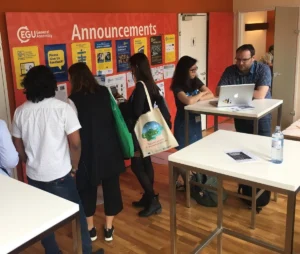
Send an email to ecs-sss@egu.eu and tell us what you work on, what you’re interested in, and we can find a way to contribute together! Perhaps you’d like to help organise an ECS activity, discuss a particular method, contribute to the division blog, or help convene a scientific session at the EGU General Assembly.
You can also join our ECS team! Together, alongside my co-representative, Perrine Florent, we keep early career scientists involved by organising networking events at the General Assembly, sharing opportunities through our mailing list and social media, and bringing ECS questions and suggestions into division discussions.
The division meeting and ECS networking events at the General Assembly are also good places to meet us. For me, the most rewarding part is when an initial conversation becomes an ongoing exchange, about research, a career decision, or a difficulty someone thought they were facing alone. We want to make room for those conversations alongside the scientific programme, and so welcome people to bringing their own questions and interests!