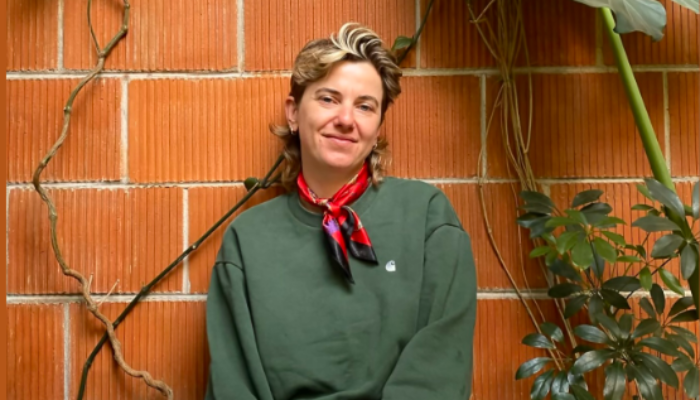
Welcome to GeoTalk, Trevelayne! Could you introduce yourself to our readers?
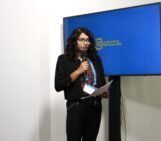
I hold a Bachelor’s degree in Psychology and a Master’s degree in Cognitive Neuroscience. Throughout my career, I’ve developed and implemented communication strategies that translate scientific knowledge into clear and engaging narratives. Currently, I’m the Project Communications Officer for the MOSMIN (Multiscale Observation Services for Mining-related Deposits) project.
MOSMIN is an EU-funded research project coordinated by the Helmholtz-Zentrum Dresden-Rossendorf (HZDR). The project aims to develop innovative solutions to monitor the environmental impacts of mine waste while assessing its potential as a source of secondary raw materials. My role is to communicate the project’s research and impact to a wider audience
Please tell us a bit about the European Critical Raw Materials Act signed in 2024. Why should geoscientists be paying attention?
The European Critical Raw Materials Act is a key piece of legislation supporting the green and digital transitions, while aiming to reduce Europe’s dependence on external suppliers. The Act identifies the critical and strategic raw materials that are of importance for the EU’s economy. It also sets out strategies to strengthen Europe’s supply of these resources.
Achieving the ambitions set out in the European Critical Raw Materials Act is a challenge for EU. The geology of the continent is incredibly diverse, and so is its policy landscape. While some approaches can be applied across borders, many need to be adapted to local circumstances. At the same time, much of Europe’s mineral potential remains underexplored, meaning there are still gaps in our understanding of available resources.
This is where geoscientists have an important role to play. Their expertise is essential for leveraging modern technology, identifying resource opportunities, understanding geological potential, assessing environmental impacts, and providing the scientific evidence needed to support sustainable resource management.
Your team produced a policy brief about the European Critical Raw Materials Act, which was funded by the EU. What impact do you hope it will achieve?
Together with five other projects in the European Sustainable Mining and Innovation Network , MOSMIN contributed to a joint policy brief exploring how Earth Observation and Machine Learning can support the ambitions of the European Critical Raw Materials Act. The brief highlights how these technologies can contribute to areas such as increasing domestic resource knowledge, improving circularity, strengthening monitoring, and supporting innovation.
MOSMIN’s contribution focuses on the monitoring solutions being developed within the project to improve tailings dam safety, track mining-related contamination, support land rehabilitation, and assess the potential to recover valuable materials from mine waste. Together with innovations from across the European Sustainable Mining and Innovation Network , the brief demonstrates how Earth Observation and Machine Learning can provide valuable information to support more informed decisions across the raw materials sector.
Beyond highlighting technological opportunities, we hope the brief encourages greater awareness of both the potential and the challenges associated with wider adoption of these technologies, including fragmented regulations, limited access to high-quality data, and knowledge gaps. Ultimately, we hope it strengthens collaboration between researchers, policymakers, industry, and other stakeholders to help translate innovation into practical, evidence-based solutions.
How do Earth Observation and Machine Learning support access to and management of critical raw materials?
As Europe works towards greater autonomy in its critical raw materials supply, one challenge it faces is finding ways to secure resources without placing unnecessary pressure on ecosystems and local communities. This is where Earth Observation and Machine Learning are becoming increasingly valuable tools.
Earth Observation technologies capture vast amounts of data continuously, and often more cost-effectively, than traditional field-based methods, while Machine Learning helps make sense of these datasets by identifying patterns and relationships that might otherwise go unnoticed. Together, they provide a clearer picture of where critical raw materials can be sourced, how mining activities are changing over time, and what impacts they may have on the surrounding environment.
One of the major challenges in this area is managing the large volumes of waste generated by mining. In MOSMIN, we’re combining Machine Learning with integrated Earth Observation data from satellites, drones, and ground-based measurements to create a continuous, high-resolution view of mine waste deposits and their surrounding environments. This helps mining operators monitor the stability of waste storage facilities, track contamination, support land rehabilitation, and assess whether secondary raw materials can be recovered from existing mine waste.
Where do you see the biggest gap between scientific advances in these fields and their uptake in EU policy?
As highlighted in the joint policy brief, the biggest gap is not necessarily in the technology itself, but in translating scientific advances into solutions that are recognised, trusted, and routinely used by decision-makers. Many Earth Observation and Machine Learning technologies are already technically mature, but their wider adoption is limited by institutional, regulatory, and knowledge barriers.
For example, many permitting and monitoring frameworks still rely primarily on traditional field-based methods and do not yet formally recognise Earth observation-derived evidence. At the same time, many stakeholders lack the expertise or resources to interpret and integrate these new data sources into their workflows. Building awareness and making the technology more accessible to a wider range of stakeholders will therefore be key to increasing trust and adoption. Importantly, this does not mean replacing traditional monitoring approaches but rather using new technologies to complement and enhance existing methods where they provide additional value.
The policy brief also highlights the need for better integration between different data sources. Earth Observation, geophysical measurements, and ground-based observations each provide valuable insights, but common standards and improved interoperability are needed to combine these datasets into reliable, actionable information. This is also central to MOSMIN, where we’re integrating data from multiple sources into operational monitoring services that can support decision-making.
What can geoscientists do to close this gap and make an impact?
Geoscientists have an important role to play in closing the gap between scientific innovation and policy implementation. This starts with working more closely with policymakers, industry, and other stakeholders to ensure that new technologies address real-world needs and can be integrated into existing decision-making frameworks.
Geoscientists can assist in evaluating Earth Observation and Machine Learning approaches by implementing pilot projects to assess their technical viability and limitations, and by clearly communicating them. By combining scientific expertise with collaboration and knowledge exchange, they can help translate innovation into practical solutions that support a more sustainable and resilient critical raw materials sector.