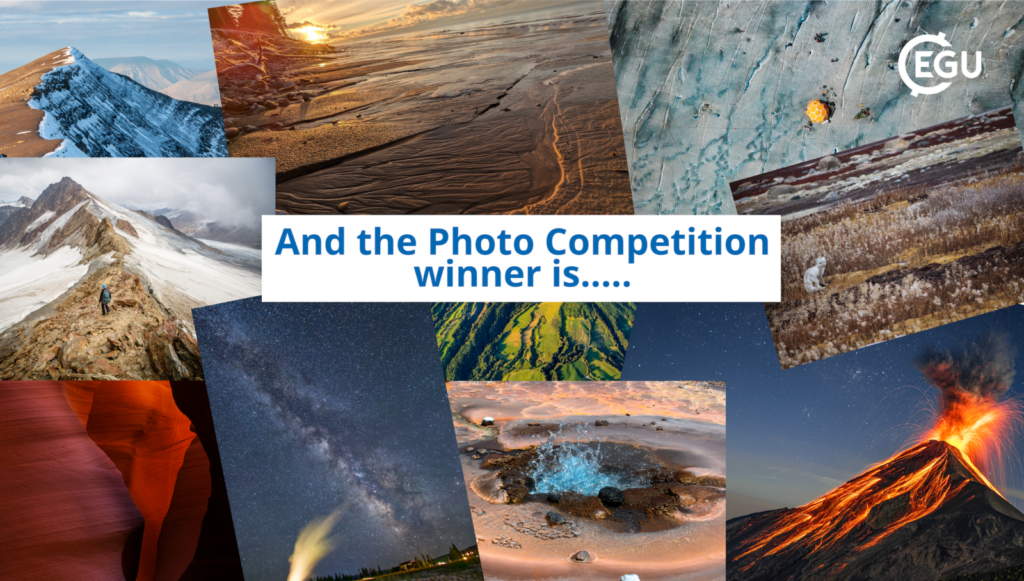
For this year’s Photo Contest, EGU received a number of amazing images capturing a broad spectrum of the geosciences. Since the selection committee whittled the field down to 10 finalists, you have been voting for your favourites throughout EGU26’s week-long conference, both on-site in Vienna at the EGU booth, and online. After an enthusiastic response from voters, we are now ready, and VERY excited, to announce the winners!
Congratulations to our EGU26 Photo Competition winners!
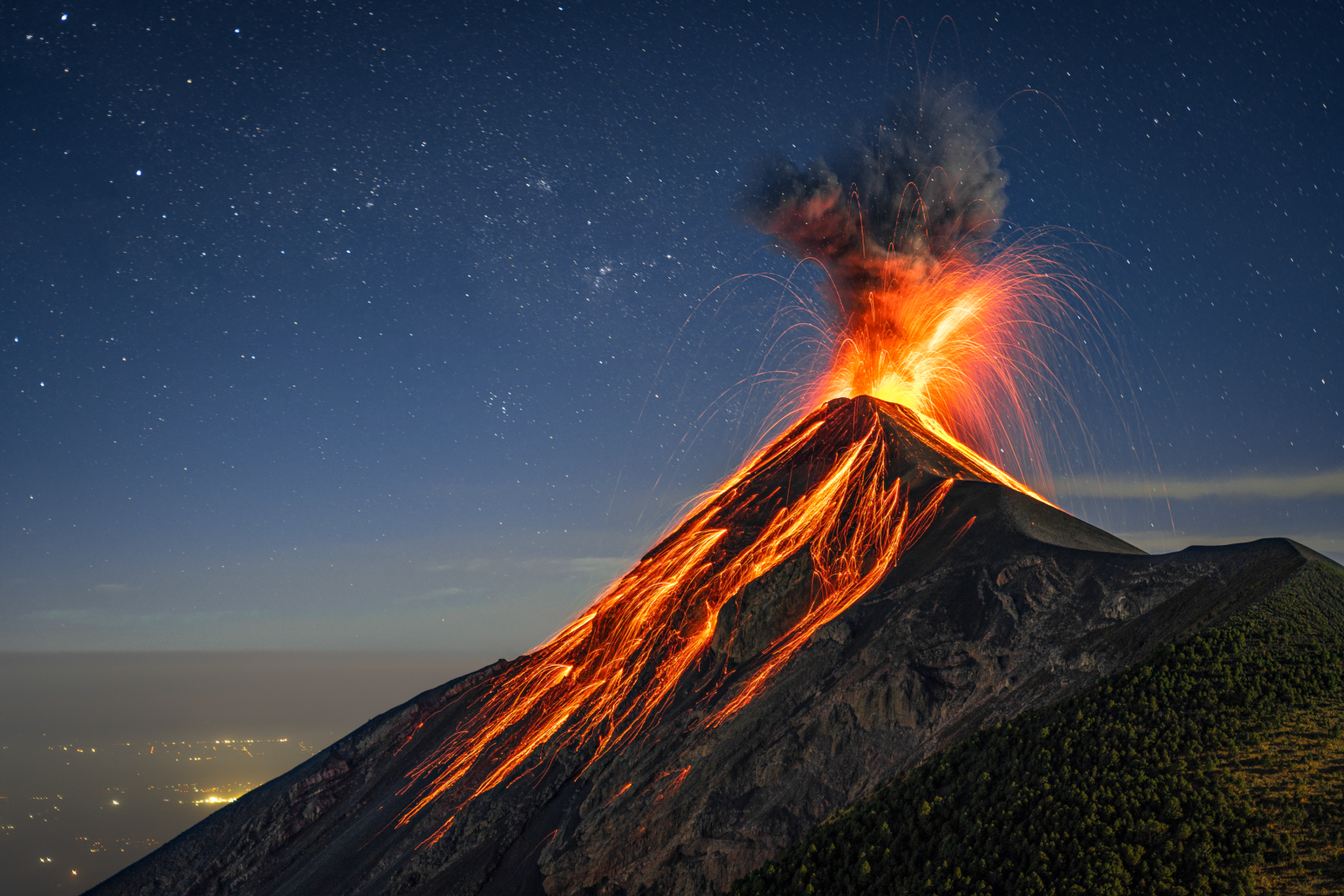
1st place: Chi Q’aq’ – A Trinity of Light by Bastian Steinke
Growing population numbers mean that our space of living is shifting, and that we are forced to live closer to destructive forces of nature. Volcán de Fuego in Guatemala displays constant fusion of destruction and regeneration – yet, the local population has mastered the challenge of melting into this natural rhythm. While from a scientific point of view we are inclined to identify volcanism as a threat to humanity, Chi Q’aq (Fuego’s indigenous name) also manifests as brother, shelter, playground, and constant companion to those living nearby. To recognise and respect this connection is an important task for those seeking to understand the relationship between humans and natural patterns. The photo shows an eruption of Chi Q’aq at 01:12am local time on a clear night in February, with some of the sleeping city lights down below.
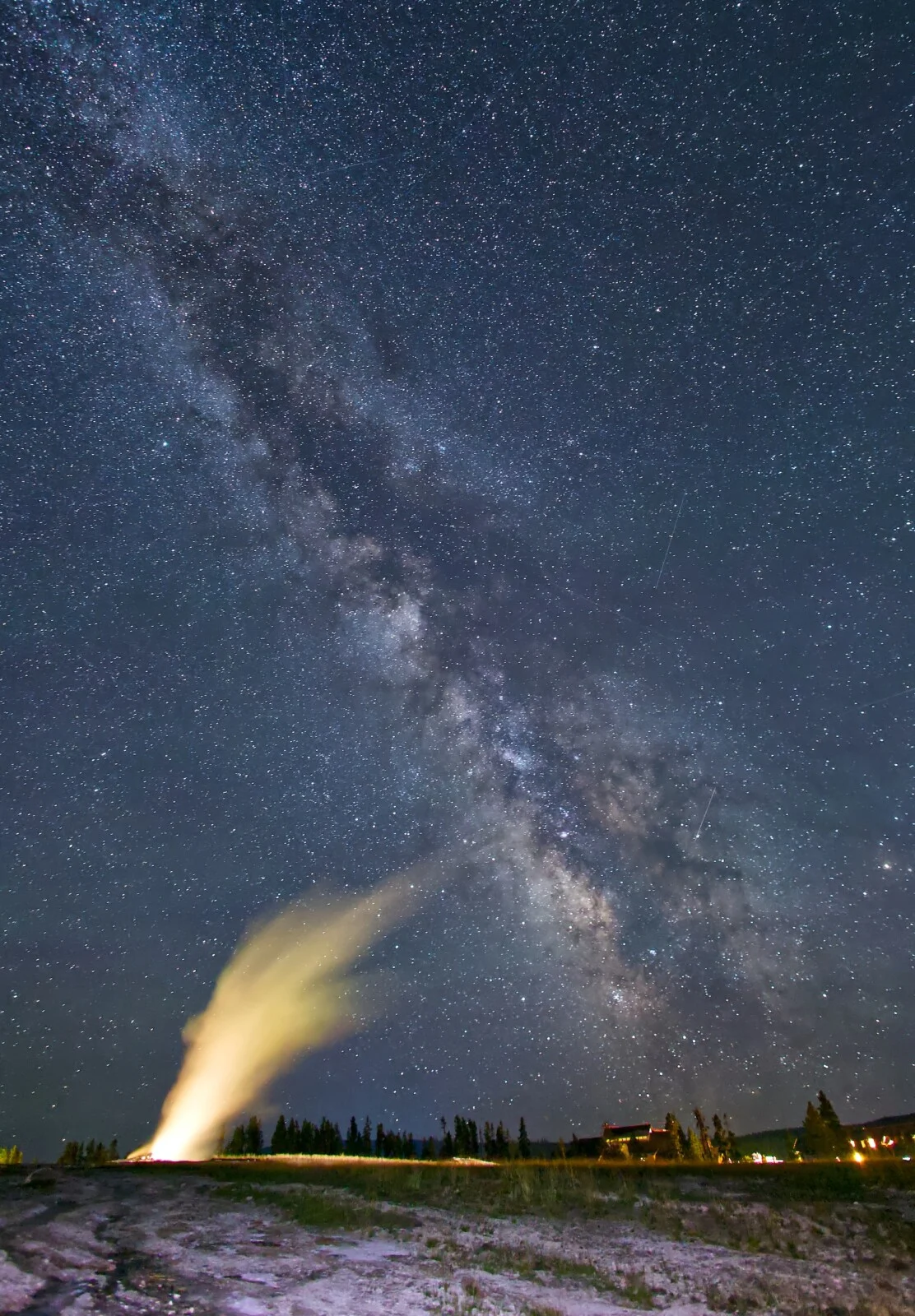
2nd place: Geyser Eruption Beneath the Milky Way by Chujie Liu
Old Faithful erupts under the Milky Way in Yellowstone National Park, illustrating active hydrothermal processes driven by Earth’s internal heat. Superheated groundwater periodically vents to the surface, linking subsurface geothermal dynamics with the broader planetary environment visible in the night sky.
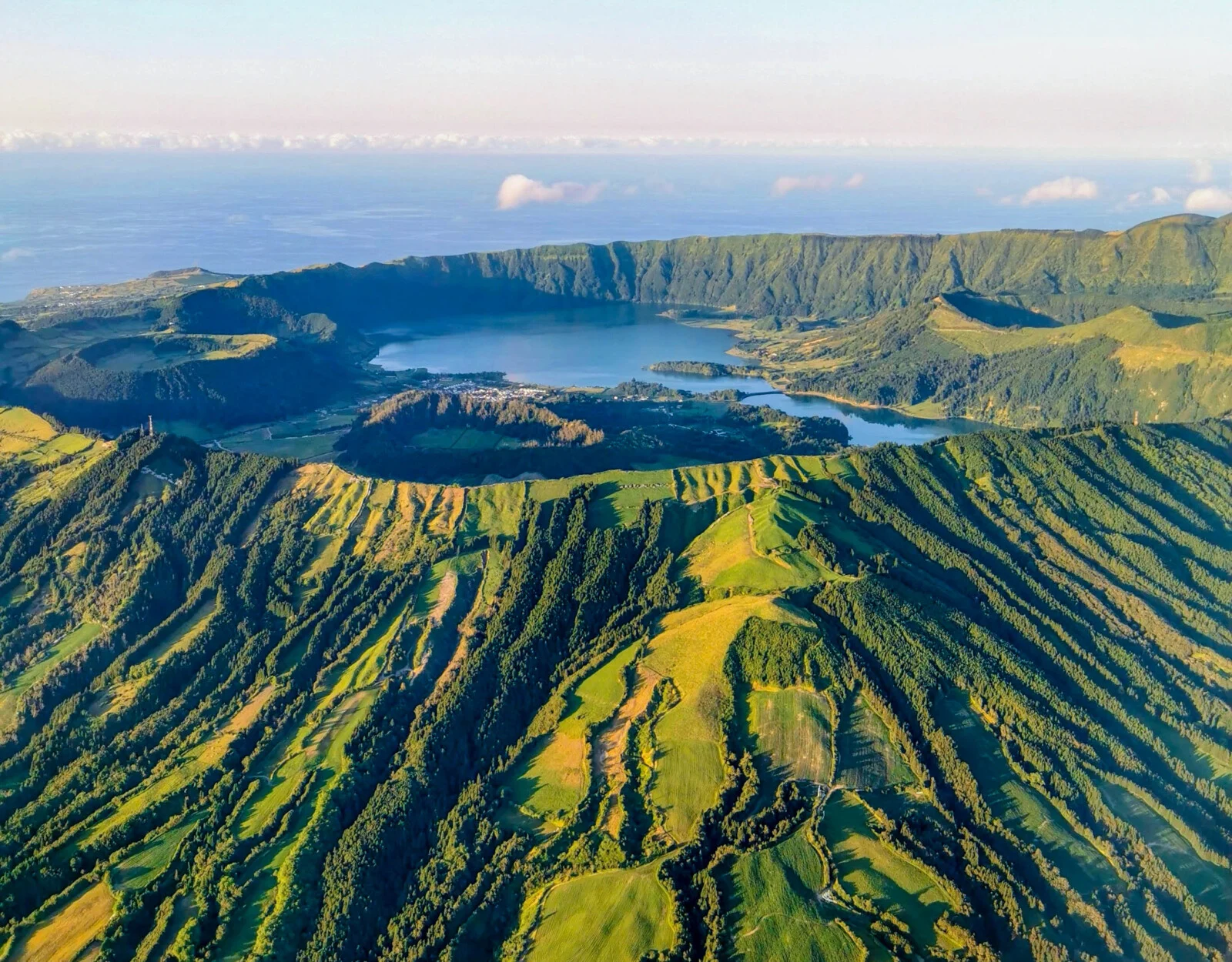
3rd place: Dual Lacustrine Systems within the Sete Cidades Volcanic Caldera by Rui Fagundes Silva
An aerial perspective of one of the most iconic polygenetic volcanoes in the Azores. The image shows the large caldera containing the distinctive dual lake system. From a geoscientific standpoint, it showcases the result of successive collapse events and the complex hydrological systems that develop within dormant volcanic structures.
Imaggeo is the EGU’s online open access geosciences image repository. All geoscientists (and others) can submit their photographs and videos to this repository and, since it is open access, these images can be used for free by scientists for their presentations or publications, by educators and the general public, and some images can even be used freely for commercial purposes. Photographers also retain full rights of use, as Imaggeo images are licensed and distributed by the EGU under a Creative Commons license. Submit your photos at http://imaggeo.egu.eu/upload/.