GeoLog

General Assembly

The myth of scientific neutrality: A vacuum we can no longer ignore
The myth of scientific neutrality: A vacuum we can no longer ignore
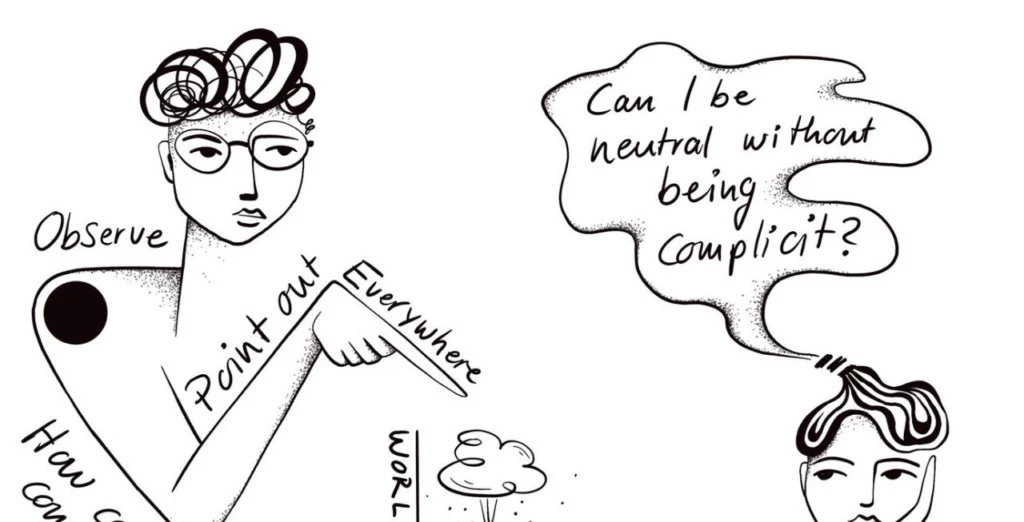
Another General Assembly has come to an end, and perhaps, many would agree on how inspiring and enriching the week was. Yet this year, being inside the EGU bubble felt particularly strange while the world outside is quite literally on fire. Wars, systemic violations of international laws and the acceleration of environmental crises continue to unfold across the globe In this context, geoscientists ...[Read More]

What can EGU do for you? A guide to funding, waivers and assistance

What can EGU do for you? A guide to funding, waivers and assistance

The European Geosciences Union (EGU) is Europe’s leading organisation supporting Earth, planetary, and space science researchers. As a non-profit, we help over 20,000 researchers connect, discuss and share their work through meetings, publications and events, but do you know all the ways EGU has funding and opportunities that can support you? Travel support! EGU has many foms of travel support to ...[Read More]

Revisiting the key Science for Policy conversations at EGU26

Revisiting the key Science for Policy conversations at EGU26

As we left EGU26 behind with record participation, it was amazing to see increased interest in science-policy sessions from the scientific community. Thanks to all panellists who contributed to the stimulating discussions, and to all participants for igniting them! Below is a look into some of the key themes emerged from the #science4policy sessions at EGU26. Innovation and emerging technologies A ...[Read More]

A mosaic beneath our feet? Connecting soil science and policy at EGU26

A mosaic beneath our feet? Connecting soil science and policy at EGU26

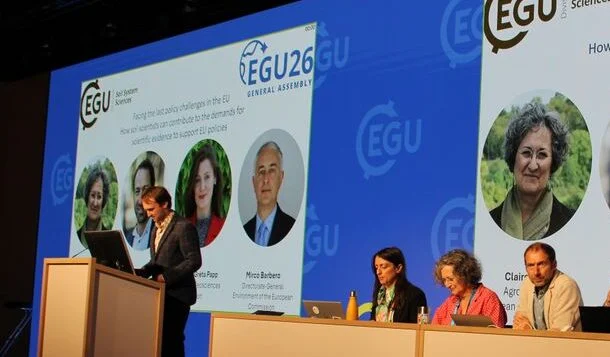
On Friday, May 8, 2026, the final day of the EGU26, I attended a Special Programme Group session of the Soil System Sciences (SSS) division on Facing the last policy challenges in the EU: How soil scientists can contribute to the demands for scientific evidence to support EU policies. The session brought together scientists, policymakers, and representatives from European institutions, including m ...[Read More]

More than mere three letters: My first EGU and the importance of EDI

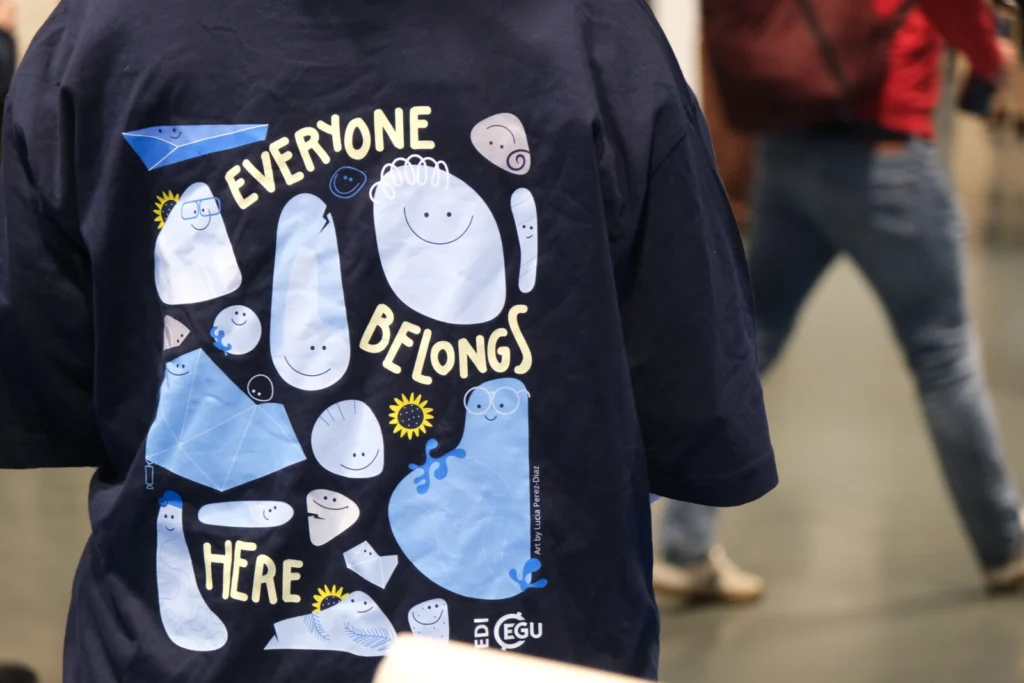
The image shows a t-shirt with a colorful design, signifying EDI at EGU.

No matter who you are or what your background is, if you attended EGU26, it is very likely that the EGU EDI Committee did something that you found valuable or helpful.The Equality, Diversity and Inclusion Committee was formed in 2018, and has since then been working with EGU to promote its core values. Let’s break down how EDI shaped the experience of the latest General Assembly and what we can ex ...[Read More]

AI in science: the ethical experiment we didn’t design

AI in science: the ethical experiment we didn’t design

Artificial Intelligence, and its rapid incursion into the (geo)sciences, was already impossible to ignore at last year’s EGU General Assembly. (you can read my reflections then in this blog post) This year, unsurprisingly, it felt equally present. On Thursday, I attended the Great Debate on “The ethics of using AI in Geosciences: opportunities and risks”, a discussion spanning everything from scie ...[Read More]

The post-EGU comedown: An incomplete guide for the geosciences junkies

The post-EGU comedown: An incomplete guide for the geosciences junkies

EGU26 is almost over. The question is: Now what? It is busy during the conference. Finding the way around the convention center, presenting work, learning what others are doing, back-to-back sessions, browsing eye-catching exhibits, not to forget the 20,000+ people to network with! It can feel exhausting, making me crave a still moment to chill from all that thrill. But when I finally walk out of ...[Read More]

Connecting worlds of influences? Between art and education at EGU26

Connecting worlds of influences? Between art and education at EGU26

Talking to people about their work is always an EGU highlight for me. Being able to nerd out about rivers, rocks, big research vessels crossing the Arctic, maps, mountains anywhere in the solar system, or even beyond? Yes, please! However, while those topics are the things of dreams for me (and I dare to say many other EGU-goers), that enthusiasm isn’t always a given once we leave the confer ...[Read More]

More than meets the eye: What can we learn from non-visual science

More than meets the eye: What can we learn from non-visual science

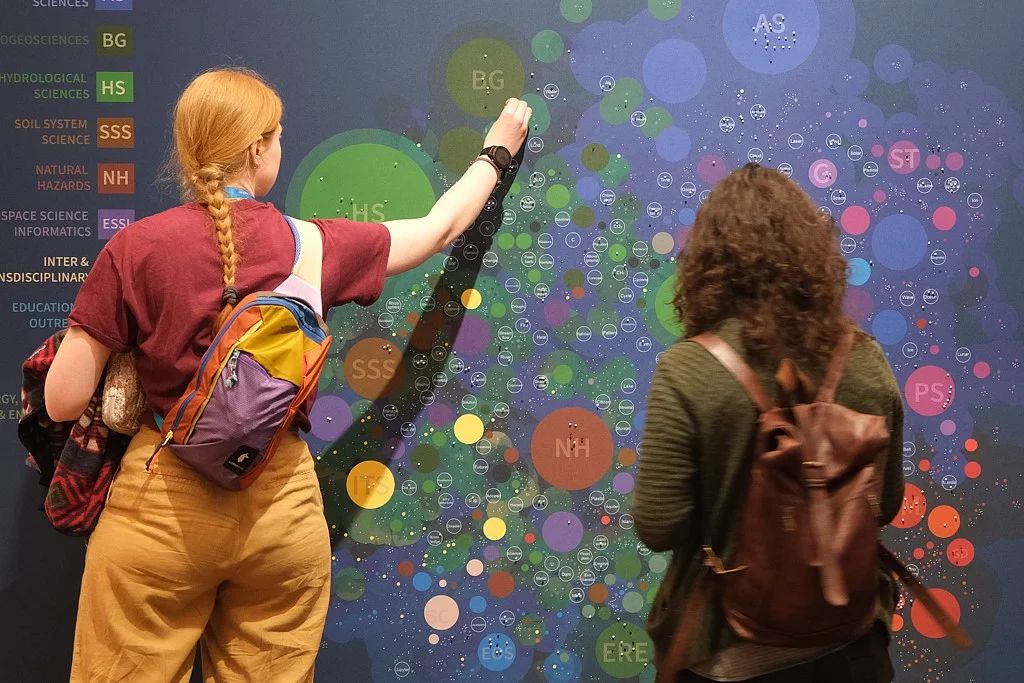
Many people exhibit a strong visual orientation, as a significant portion of human neurobiology is dedicated to processing light; however, this reliance is usually as much a product of our visually-centered environments as it is our biology. Science, however, reminds us that important information can come from different senses as well: sound, smell and tactile information all have something to say ...[Read More]