Each year, the EGU General Assembly offers a diverse programme of scientific and skills-focused sessions where participants can explore new research, grow their network, broaden their expertise, and build new skills. Among these are sessions that focus on science for policy, showcasing how researchers can start engaging in policymaking, connect with decision-makers, and create policy impact. This post highlights some of these sessions and how to engage with policymakers throughout the week. EGU26 participants can also find all of the science for policy sessions grouped together in the programme!
Keynote sessions: Exploring key themes
Union-wide keynote sessions, including both Union Symposium and Great Debates, provide a platform for topics that are cutting-edge, current, and of interest to a broad range of the Earth, environmental, planetary and space sciences. Here are the union-wide sessions of EGU26 on science for policy related topics!
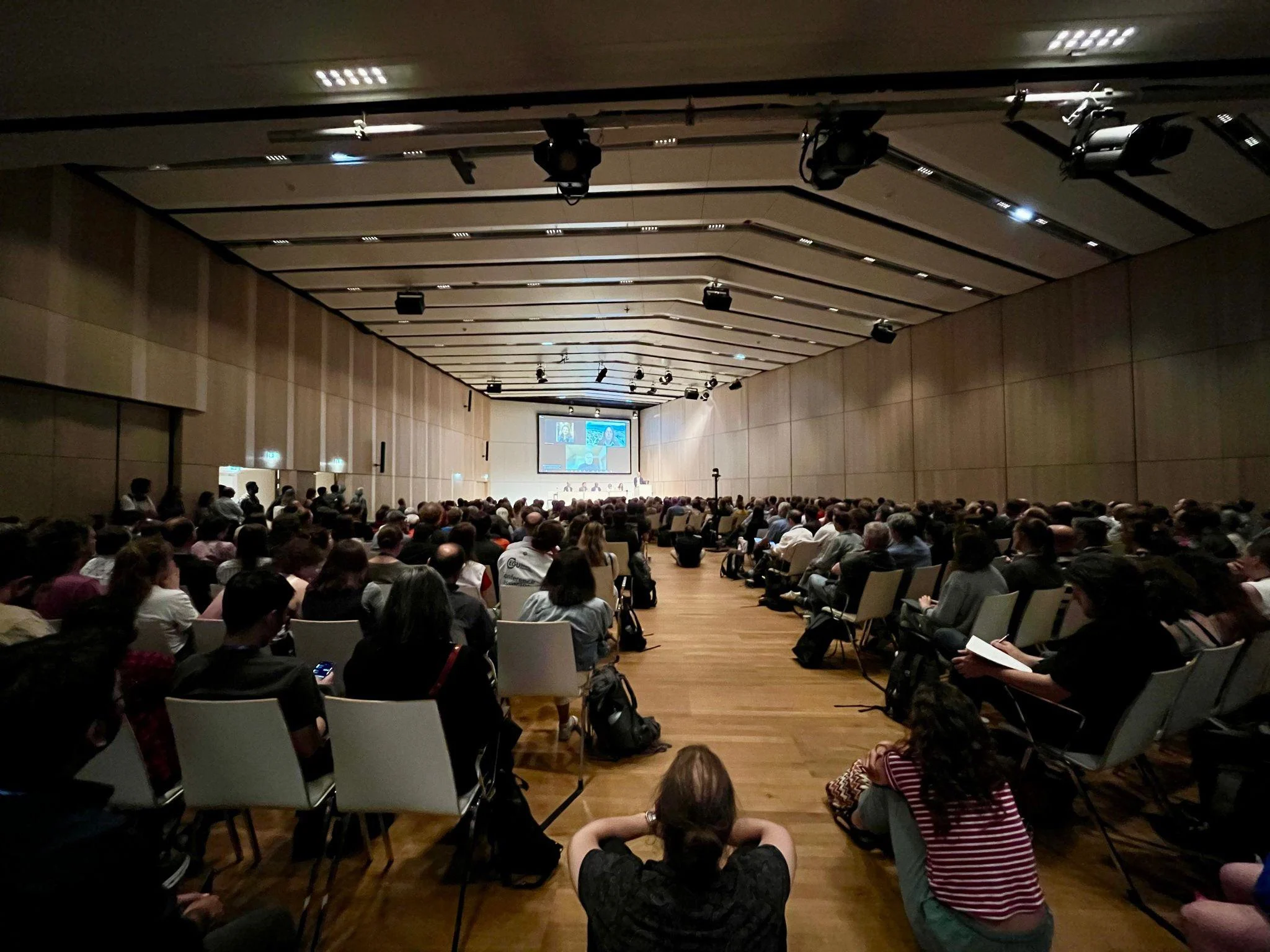
EGU25: Late-Breaking Great Debate How should the global geoscience community respond to attacks on science
From Honest Brokers to Lobbyists: What Could Be the Role of Scientists in Different Contexts and Countries?
Monday 04 May, 16:15–18:00 (CEST) in Room E1
This session will explore how scientists navigate their responsibilities and opportunities at the science-policy interface. It pays attention to the influence of political cultures, institutional structures, and public expectations on the mandates scientists take on.
EGU Science for Policy Award Lecture by the Finnish Academy of Science and Letters
Monday 04 May, 19:00 – 20:00 (CEST) in Room G2
As the winner of EGU’s first ever Science for Policy Award, Linda Lammensalo will present on behalf of the Science for Policy Team of the Finnish Academy of Science and Letters, sharing concrete methods and tools that can be adapted to diverse policy contexts internationally.
“Greennovation”: how can scientists support the green transition
Tuesday 05 May, 08:30–10:15 (CEST) in Room E1
Achieving the goals of the European Green Deal and 2040 Climate Target requires substantial investment in innovation, clean technology, and green infrastructure, while ensuring a just transition for affected communities. This Union Symposium will explore programmes, challenges, and opportunities for scientists to engage in the innovation process, and how a just transition can be ensured.
Climate change, morals, values and policies
Wednesday 06 May, 08:30–10:15 in Room E1
In this Union Symposium, speakers will examine the moral, psychological, cultural, and social dimensions that shape public engagement with climate change. The panel will discuss how climate communication and policy can become more inclusive, trustworthy, and impactful.
Geoengineering – Overarching Great Debate
Thursday 07 May, 16:15–18:00 (CEST) in Room E1
Are geoengineering concepts (such as solar radiation management, sea curtains and ocean biomass dumping) a distraction from our urgent need for adaptation and mitigation? Is it appropriate to advocate for geoengineering without adequate research on its impacts? This session’s panellists will debate these questions and more
Short Courses: Developing your science for policy skills
Instead of focusing on a specific research area or scientific theme, Short Courses are designed to equip participants with practical information, skills, and capabilities that support their work as researchers. These sessions are typically more interactive and flexible, offering greater opportunities for engagement and discussion. This year, several courses will help EGU26 participants develop the knowledge and skills needed to begin engaging in policymaking.
Science Diplomacy: What is it and how to engage
Tuesday 05 May, 14:00–15:45 (CEST) in Room -2.41/42
Science diplomacy is a broad term used both to describe the various roles that science and researchers play in bridging geopolitical gaps and finding solutions to international issues.. During this Short Course, science diplomacy experts will introduce key science diplomacy concepts and outline the skills that are required to effectively engage in science diplomacy.
Meet the Austrian Parliament Science for Policy Staff
Wednesday 06 May, 12:45–13:45 (CEST) in Room -2.41/42
In this session, speakers from Austrian government institutions will offer insights into how their organisation applies scientific knowledge in their day-to-day work, and what kinds of research collaborations they are looking for.
Instruments and Initiatives for Policy Engagement
Thursday 07 May, 08:30–10:15 (CEST) in Room -2.41/42
Are you keen to see your research results integrated into decision-making but don’t know where to start? This session is a basic introduction that provides some tips for engagement. A panel of experts will highlight different opportunities and skills for policy engagement. It will also include teasers for different existing toolkits and training opportunities!
New Toolkits – the destabilisation of science and what we can do about it
Thursday 07 May, 10:45–12:30 (CEST) in Room -2.41/42
Science is increasingly under pressure from political polarisation, misinformation, and declining public trust. This short course will provide participants with insights into practical approaches to safeguard the integrity of science while making it more accessible and actionable.
Splinter Meetings: Engaging in the discussion
Splinter are hosted in a more intimate setting with space for up to 30 participants. They often take the form of a round table with the opportunities for all participants to participate actively.
Shaping Your Science-Policy Career: Pathways and Opportunities
Monday 04 May, 14:00–15:45 in Room 2.43
This session will convene a panel of experts working across the science-policy spectrum, who will share how they developed the necessary skills, as well as tips for those who want to take the next step in their own career!
Pitch your research to a policymaker
Tuesday 05 May, 10:45–12:30 in Room 2.42
This session will give some participants the opportunity to present the key aspects of their research to a panel of policymakers and those working on the science-policy interface! Both those presenting and those in the audience will hear a wide range of tips on how they can effectively pitch to policymakers in the future.
How to submit evidence to help inform policy decisions
Tuesday 05 May, 14:00–15:45 in Room 2.83
This Splinter meeting will highlight processes that the scientific community can engage with to submit evidence and inform policy decisions. National and EU examples will be presented, providing participants key insights as well as tips on how to frame evidence to make it actionable.
How to write a policy brief
Friday 08 May, 14:00–15:45 in Room 2.61
As an interactive workshop, this Splinter Meeting will provide participants be with tips and tools to create their own policy brief. Participants are requested to bring along one a publication to use during the workshop, ideally authored by them.
Measuring and valuing science for policy and engagement impact
Friday 08 May, 10:45–12:30 in Room 2.43
This session explores emerging frameworks, methodologies, and alternative metrics that assess the societal impact of scientific research beyond traditional academic metrics. It will also examine the tensions and opportunities in aligning research evaluation systems with goals for real-world impact.
Scientific sessions: Finding a thematic focus
There are also a few scientific sessions that build bridges between science and policy and teach researchers how to engage with policymaking processes \within a particular scientific area. Some of these sessions are listed below:
Atmospheric Science for Action: Connecting Atmospheric Responses to Emissions, Air Quality, Climate, Health, and Environmental Justice to Motivate Policy
Oral session: Tuesday 05 May, 14:00–17:55 in Room 1.85/86, Posters session: Tuesday 05 May, 10:45–12:30 in Hall X5
This session calls for research that explores how mitigation and adaptation strategies for air pollution and climate change may influence atmospheric composition and dynamics in the present and future.
Wildfire risk, vulnerability, resilience and disaster risk reduction in the Wildland-Urban Interface (WUI): making academic findings policy- and action- relevant
Tuesday 05 May, 10:45–12:30 in PICO spot 1a
By sharing experiences across diverse geographical and socio-environmental contexts, this session aims to foster dialogue on wildfire risk management and support the development of practical solutions for reducing wildfire impacts in the wildland-urban interface worldwide.
Nature-based solutions for climate-resilient landscapes: bridging science, practice, and policy
Oral session: Thursday 07 May, 14:00–18:00 in Room D3, Posters session: Thursday 07 May, 10:45–12:30 in Hall A
This session aims to foster interdisciplinary and transdisciplinary exchange to advance both the scientific basis and the practical governance of nature-based solutions for resilience planning, land and water management, and climate adaptation across landscapes.
Facing the last policy challenges in the EU: How soil scientists can contribute to the demands for scientific evidence to support EU policies
Friday 08 May, 10:45–12:30 (CEST) in Room D1
This session will feature an opening address from Member of the European Parliament Martin Hojsík followed be a panel discussion with experts from the European Commission, EU agencies, FAO, and ESA. It aims aims to advance cooperation between the research and policy communities to safeguard soils for future generations.
In addition to these division specific sessions, Some Divisions also have sub-programmes that gather several sessions under specific policy- or policy and society-relevant scientific themes. These include BG8: Biogeosciences, Policy and Society and SSS12: Soil Policy and Legislation.
EGU Science for Policy Help Desk
12:00 – 13:00 every day at the EGU Booth
Throughout EGU26, in-person participants are welcome to drop by the EGU’s Science for Policy Help Desk at the EGU Booth every day from 12:00-13:00 to discuss their questions and how they can share their expertise more effectively!
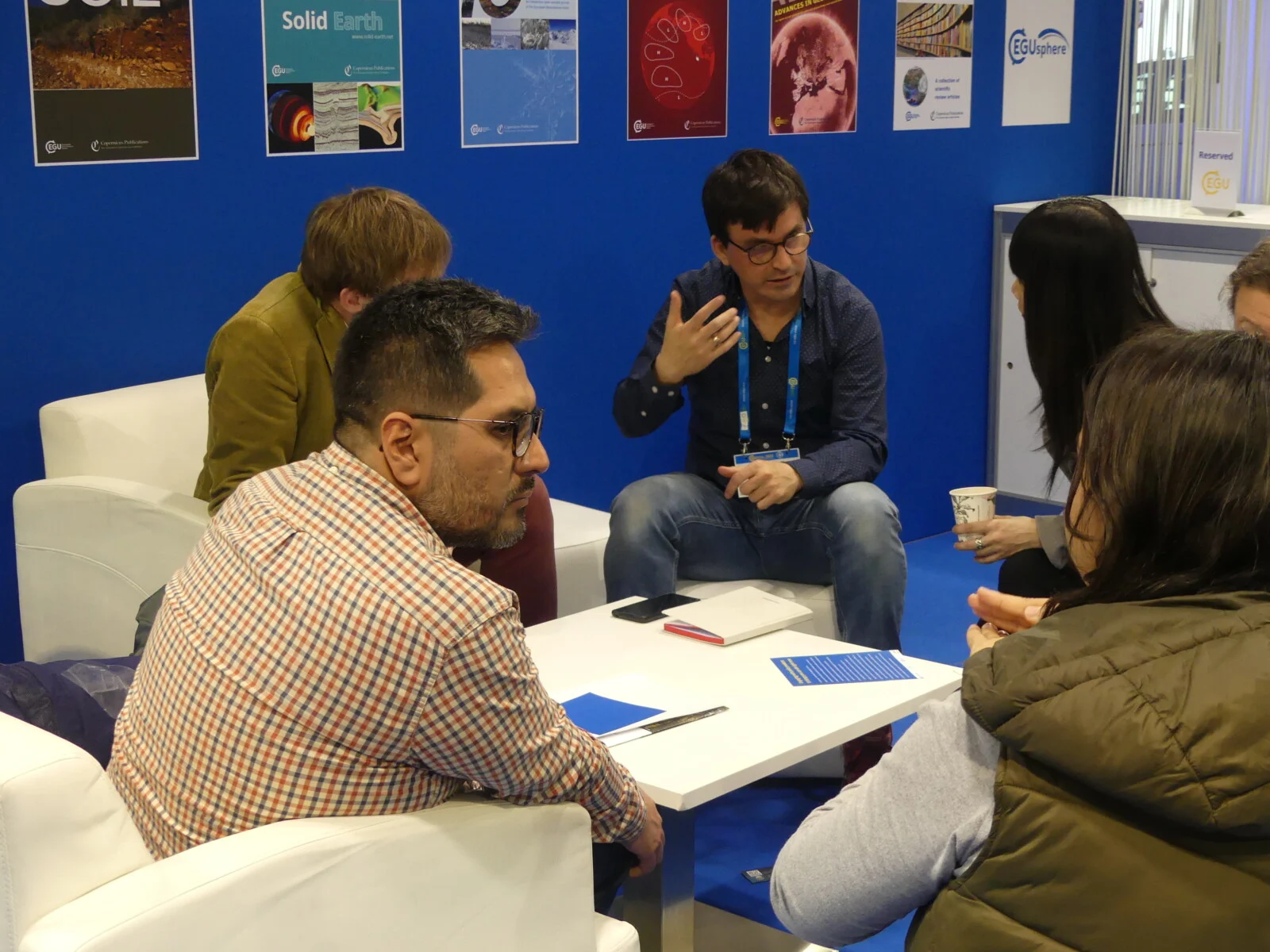
EGU23 Science for Policy Help Desk
General Assembly is always an exciting week with plenty to explore! If you are interested in policy and sharing your expertise more widely, include some policy-focused sessions in your personal programme. Looking forward to seeing you there!