NH
Natural Hazards

Science communication

Natural Hazards 101 – What is a – natural – hazard?
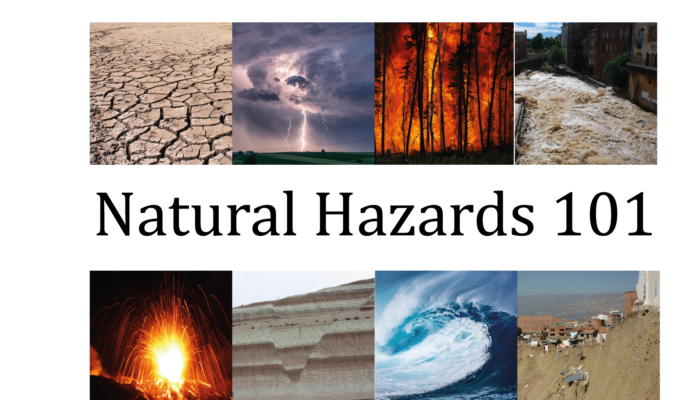
Natural Hazards 101 – What is a – natural – hazard?
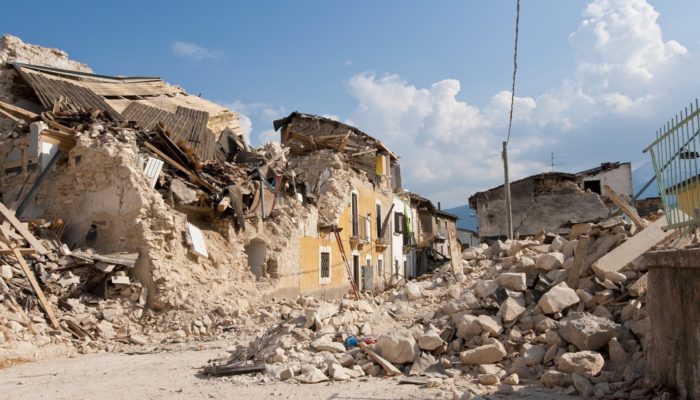
We often talk about different natural hazards, how researchers investigate them and solutions to mitigate their effects on society, infrastructures and the environment. However, we have never really stopped for a moment to define a hazard, a natural hazard and much of the terminology in the field that can sometimes be evasive and not so straightforward to understand. Thus, we start this series of ...[Read More]

To be or not to be a ‘natural’ disaster: that is the question

To be or not to be a ‘natural’ disaster: that is the question

The story of science is replete with theories that only become accepted by the scientific community after long and protracted uphill battles, said Howard Wolinsky in his commentary in Science and Society in 2008. Sometimes they are rejected, ridiculed, or they take time to be validated, digested, and likely accepted. However, in my opinion, the scientific discussion over new hypotheses is at the h ...[Read More]

Faults and earthquakes as friends and not foes

Faults and earthquakes as friends and not foes

The earthquakes’ occurrence on the planet Earth is largely considered synonymous with disasters and people generally perceive geological faults as a threat to life and belongings. However, there are exceptions since a small community of earthquake researchers relate the occurrence of earthquakes with the lithospheric plate interactions where movement on faults causes earthquakes. Therefore, ...[Read More]

Vitor Silva: 2020 Natural Hazards division medallist story

Vitor Silva: 2020 Natural Hazards division medallist story

In today’s interview, we talk with Dr Vitor Silva, who was awarded the 2020 Natural Hazard Division Outstanding Early Career Scientist Award for his fundamental contributions to the research on earthquake risk assessment. Seismic risk is the probable building damage and the number of people that are expected to be hurt or killed if a likely earthquake on a particular fault occurs. Disaster risk ca ...[Read More]

Blog column – PICTURE YOUR RESEARCH!

Blog column – PICTURE YOUR RESEARCH!

Working on natural hazards brings you to places (physically and virtually) you might never have discovered otherwise. You look at the world while asking questions about places, situations, relationships, and interactions of the natural processes surrounding you, inspiring your scientific potential. The Natural hazard Early Career Scientists Team is interested in your natural hazard research and wo ...[Read More]

Behind the scene: knowing the President of the EGU Natural Hazard Division – Ira Didenkulova!

Behind the scene: knowing the President of the EGU Natural Hazard Division – Ira Didenkulova!

In this last post of 2019, I have the pleasure to ask some questions to Ira Didenkulova, the President of the EGU Natural Hazards division who has been recently elected for a second mandate.   Ira, can you introduce yourself and tell what led you the position of EGU Natural Hazard (NH) Division president? What are the main challenges you had and what’s next for the NH division? It seems this ...[Read More]

Hot topic for a hot summer: extreme weather and climate events in the ANYWHERE project – A Pan-European Platform for Multi-Hazard Early Warning and associated Impacts

Hot topic for a hot summer: extreme weather and climate events in the ANYWHERE project – A Pan-European Platform for Multi-Hazard Early Warning and associated Impacts

In this post, I have the pleasure to interview Dr.ir. Henny A.J. van Lanen. He is Associate Professor in the Hydrology & Quantitative Water Management Group of Wageningen University and he has been involved in several EU projects. Further, he is involved in many international groups or networks: Coordinator of the European FRIEND programme (EURO-FRIEND Water, Flow Regimes from International Ex ...[Read More]

Our audience on stage: new NhET blog column

Our audience on stage: new NhET blog column

The diffusion of social media such as Facebook, Twitter, etc. in addition to traditional blogging led to a diversification in the impact of science communication. However, as Eryn Brown and Chris Woolston wrote in Nature last January, blogs continue to be effective platforms for disseminating research into the world and increase the discovery of science. This is the reason why we believe our natur ...[Read More]

#EGU19 program is ready! Are you ready for it?

#EGU19 program is ready! Are you ready for it?

#EGU19 program is ready! Are you ready for it?   The next EGU’s General Assembly is taking place in one week! We bet you already started planning your program for the week, that Natural Hazard (NH) sessions are included, and, especially if you are an Early Career Scientist (ECS), you have found many sessions and courses targeting your specific needs and interests.   What fits more to you ...[Read More]

The CRED presents the bill: the socio-economic cost of natural hazards.

The CRED presents the bill: the socio-economic cost of natural hazards.

Which type of natural hazard is the most frequent? And which one causes the largest economic losses? Which populations are mainly affected? What are the necessary steps to reduce natural hazards’ impact? If you have ever wondered about any of these questions, you’d be interested to know that there is an institute answering all of them with a series of reports and ad hoc publications. We are ...[Read More]