The first hybrid AGU meeting has everything one expects from the AGU – a long line to the registration desk and, a mile walk between the two ends of the conference hall, a large exhibit hall with NASA and their most-desirable calendars at the nexus, and our favorite poster hall to “network” with others – …[Read More]
Geodynamics
The Sassy Scientist – Including Inclusivity
In a previous post I gave a cristal-clear explanation on what to write in a “teaching statement”, an essential document in your tenure-track application package. In this post I shall offer invaluable insight on an even more obscure document required for academic job hunters, by answering Inessa’s question: What should you include in your “diversity, …[Read More]
Navigating the Increasingly Computational Science World – Tools and Ideas to Help!
This week Dunyu Liu a computational scientist at the Institute of Geophysics at the University of Texas at Austin, shares his tips, tricks, and best practices for painless code development. The scientific world is becoming more and more computational, with numerical methods and models being critical to many disciplines such as geodynamics, earthquake dynamics and …[Read More]
The Sassy Scientist – The Real Pander-mic
It’s the first time Stella is organizing a session at the upcoming, 2022 EGU general assembly. Tantalized yet nervous due to the possibility of a forced merger with another, uninspiring session, she exclaims: How do I get people to submit abstracts to my session? Dear Stella, Why don’t you write a post on this very …[Read More]
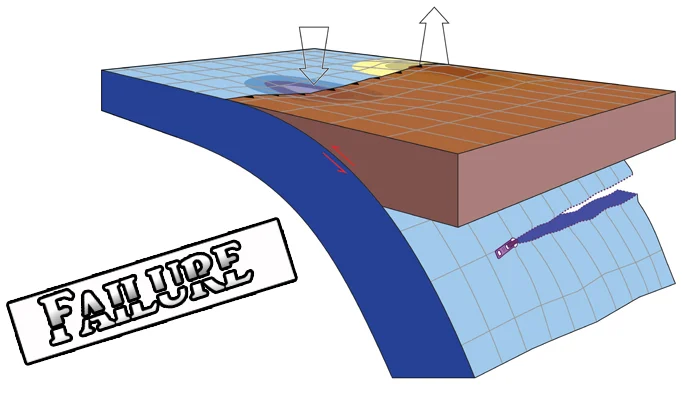
Lithospheric failure at subduction zones
Observing the Earth’s changing surface is the only thing solid Earth scientists can do; we simply cannot drill deep enough into the Earth and look at the processes that occur at very high temperatures and pressures. We must combine surface measurements from various disciplines to infer that specific surface imprints are caused by specific processes …[Read More]
The Sassy Scientist – On The Other Side Of The Trench
Long (mostly self-inflicted) working hours, low pay, one short-time contract after another and no long-term guarantee whatsoever. That is academic life for you, in case you haven’t noticed. Sooner or later all academics start to ask themselves the same thing that Gabby asks: What are the nicest alternatives to academia? Dear Gabby, My personal favourites …[Read More]
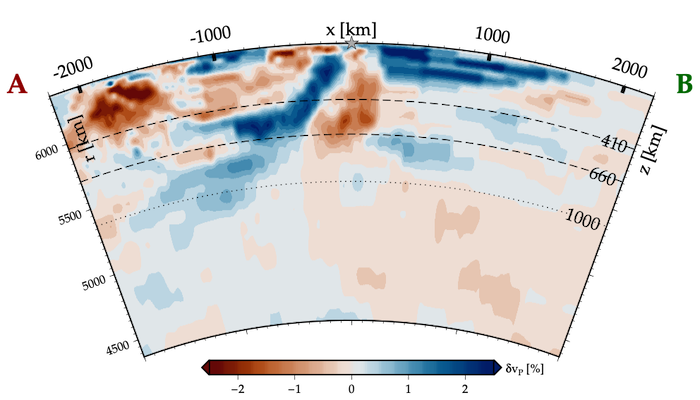
Orphaning: Discovering New Subduction Processes
Science is all about discovering new things. But how do we make these discoveries, adding to the ever growing pantheon of knowledge? This week, we sit with one of our editors Antoniette Greta Grima, a Postdoctoral Fellow from the University of Texas at Austin, to understand what it takes to discover a new slab process. …[Read More]
The Sassy Scientist – To A Galaxy Far Far Away
Jesper has a lot of green on his mind. No not money, you capitalists. Nature. The environment. Basil and chives. With the recent advent of billionaires finding new ways to caress their egos, and in a totally-not-aiming-to-start-mining-other-celestial-bodies kinda way, Jesper has some troubled thoughts: Should we really colonize other planets? We are already destroying this …[Read More]
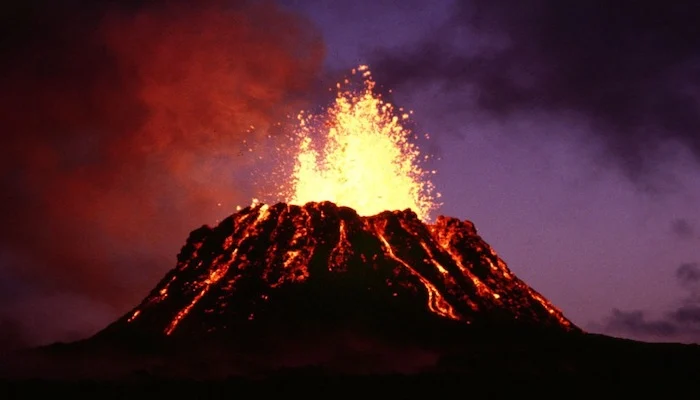
Magma-Assisted Flexure in Hawaiian Lithosphere?
This week Daniel Douglas, who is now a PhD student at New Mexico Tech, discusses his master thesis research while at the university of Hawaii. He investigated the role of magma in the flexure of the Hawaiian lithosphere. When a topographic load is applied to the lithosphere, the lithosphere accommodates the load by flexing. The …[Read More]
The Sassy Scientist – Stating The (not so) Obvious
Applying for tenure-track (or something close to that) positions is the very reason for many brilliant scientists to eventually run away from academia as fast as they can. Finding an opening, preparing your application and bracing yourself for the n-th `no thank you, but you should really try again!’ is a tedious, time-consuming, numbing, soul-destroying, …[Read More]