GD
Geodynamics

Archives / 2021 / February

The Sassy Scientist – Out of Orbit

The Sassy Scientist – Out of Orbit

After reading last week’s post Ilona asks how to switch research topics to something more impactful during their lifetime: How do I transition from a PhD in mantle convection to a postdoc in satellite geodesy? Dear Ilona, What a moon-shot you are aiming for! But, have no fear, nothing is impossible. Undoubtedly, space is cool. And looking from a distance at our lovely rock spinning and float ...[Read More]

The Indian Ocean Geoid Low at a plume-slab overpass

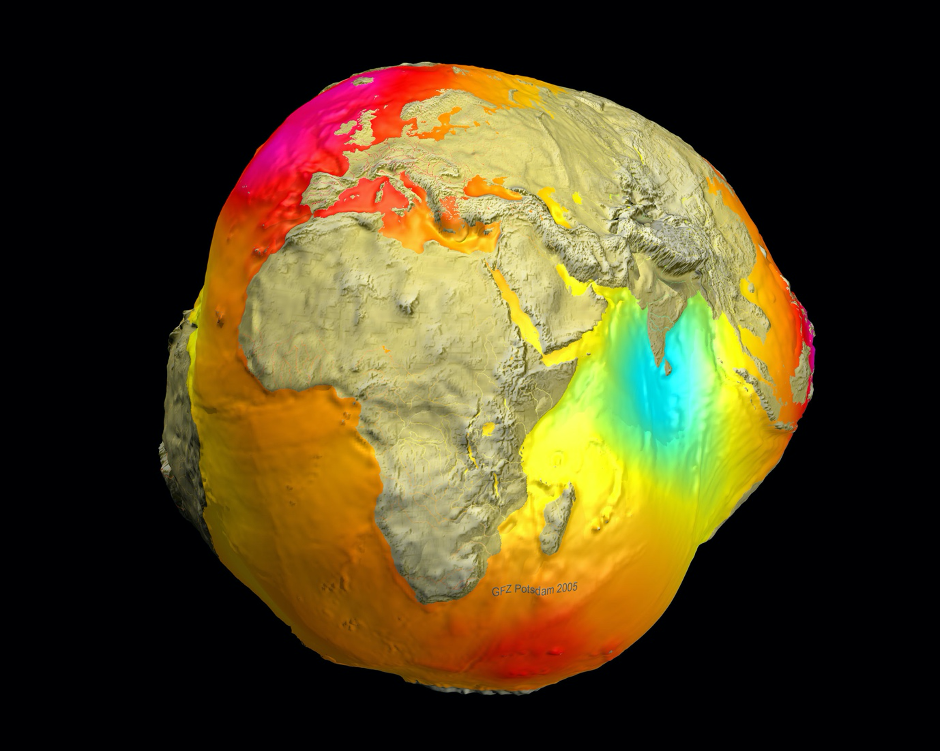
The Potsdam gravity potato

In this week’s News & Views, Postdoc Elodie Kendall from GFZ Potsdam shares with us recent work on the mantle structures that could explain the Indian Ocean Geoid Low.           What is the geoid, what does it look like and what can it tell us about mantle structure? The geoid is a model of the shape of the oceans’ surface if only gravity and Earth’s rotation act ...[Read More]

The Sassy Scientist – #WriteProperly #NoMoreAcronyms

The Sassy Scientist – #WriteProperly #NoMoreAcronyms

Nerea cannot get enough of writing papers, reports and proposals. However, actually reading scribbles, especially those jotted down by (under)grad students, leaves her a histrionic gasp. She thus ejaculates: LLSVP or LLVP or LL(S)VP – why must we prolong the acronym wars? Aupa Nerea, The Americans. No doubt. It has got to be them. Just like so many things, they’ve ruined that beloved English ...[Read More]

Rayleigh-Taylor instability in geodynamics

Rayleigh-Taylor instability in geodynamics

Flow against gravity is a common feature in the geodynamic phenomenon. In this week’s Geodynamics 101, Dip Ghosh from Jadavpur University Geodynamics Lab will explain the fundamentals of Rayleigh-Taylor instability: A key to understanding the anti-gravity flow. It has long been realized that most of the geodynamic processes can be described in terms of slow viscous flow. Thus, like many othe ...[Read More]

The Sassy Scientist – You Don’t Have To Be Mad To Work Here…

The Sassy Scientist – You Don’t Have To Be Mad To Work Here…

…but it helps. Everyone has one colleague with that pinned above their desk. Sometimes with pictures of kittens. Lucile doesn’t want to be that interview candidate, so she asks: How can I prepare for an academic interview? Dear Lucile, Tips on how to appear to be a sane, motivated, enthusiastic, friendly, people-loving, positive, high-achieving, committed scientist? You’ve come t ...[Read More]

Carbon in the cloud

Carbon in the cloud

If I asked you about what your carbon footprint is, your mind might jump to the food choices you make when at the supermarket, or how many conferences you fly to when you could get a train (well, not now, but you know, back in ye olden days). In this week’s post, Eoghan Totten, a PhD student at the University of Oxford, discusses the potential “hidden” impacts on your contributio ...[Read More]

The Sassy Scientist – Choose Your Mantle Game

The Sassy Scientist – Choose Your Mantle Game

Lockdown rumination resulted in new research ideas for Amélie. Her quests at the intersection of multiple subfields left her wondering: How to write an interdisciplinary proposal? Dear Amélie, I salute your efforts at bringing together multiple disciplines to tackle some of humanity’s most urgent questions regarding planetary interiors. I am myself an interdisciplinary scientist and a polyma ...[Read More]

Should I… do a coding PhD when I don’t have much experience coding?

Should I… do a coding PhD when I don’t have much experience coding?

“The ideal applicant will have a strong background in coding.” I’m not sure if those were the exact words that advertised my PhD project, but a requirement of coding ability was certainly heavily implied. We’re used to hearing stories about job requirements in the professional world, but in my experience at least, we think much less about this in the academic sphere. I nearly didn’t apply to ...[Read More]