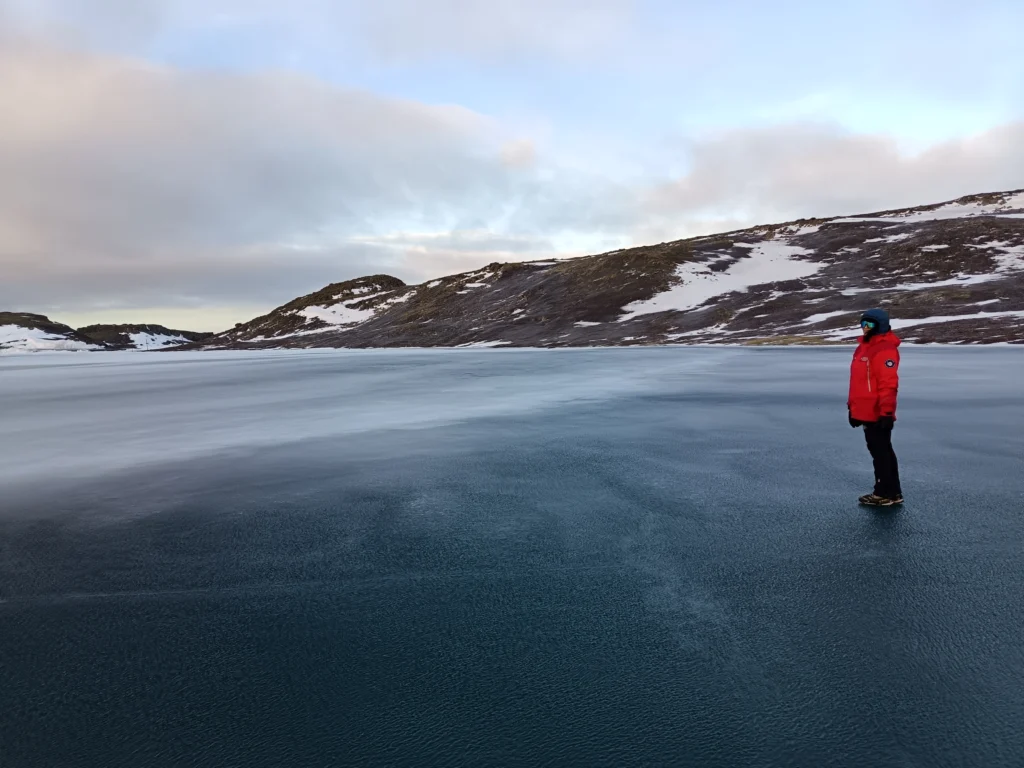
A frozen lake can be more than a layer of ice. It can become a road, a fishing ground, a place of spiritual significance, or a window into a changing climate. From the ice-covered waters of the Northern Hemisphere to Patagonia, lake ice shapes ecosystems and influences communities. But as temperatures rise, lake ice is …[Read More]
Cryospheric Sciences
An Interview on the importance of simplification – modeling the weathering crust and microbial activity on ice sheets
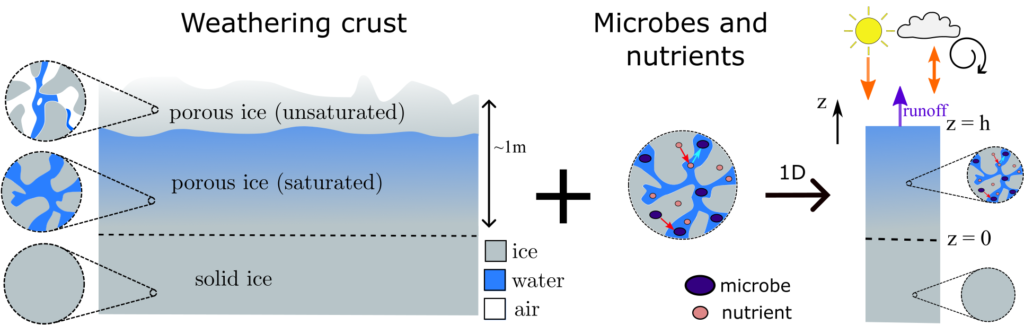
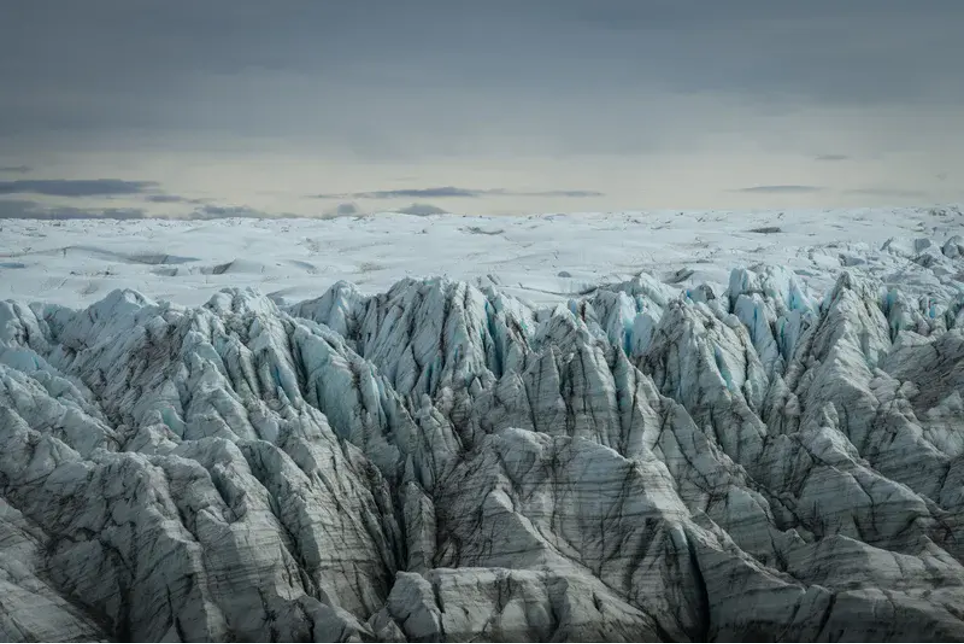
The weathering crust of ice sheets or glaciers is a layer of porous ice, bordering on impermeable ice below and influencing the meltwater storage and production. This physically complex environment harbors a wide range of microorganisms that themselves affect the weathering crust and contribute to darkening of ice surfaces. The two factors – microbial community …[Read More]
Robots in the Arctic: An autonomous adventure to Greenland’s outlet glaciers
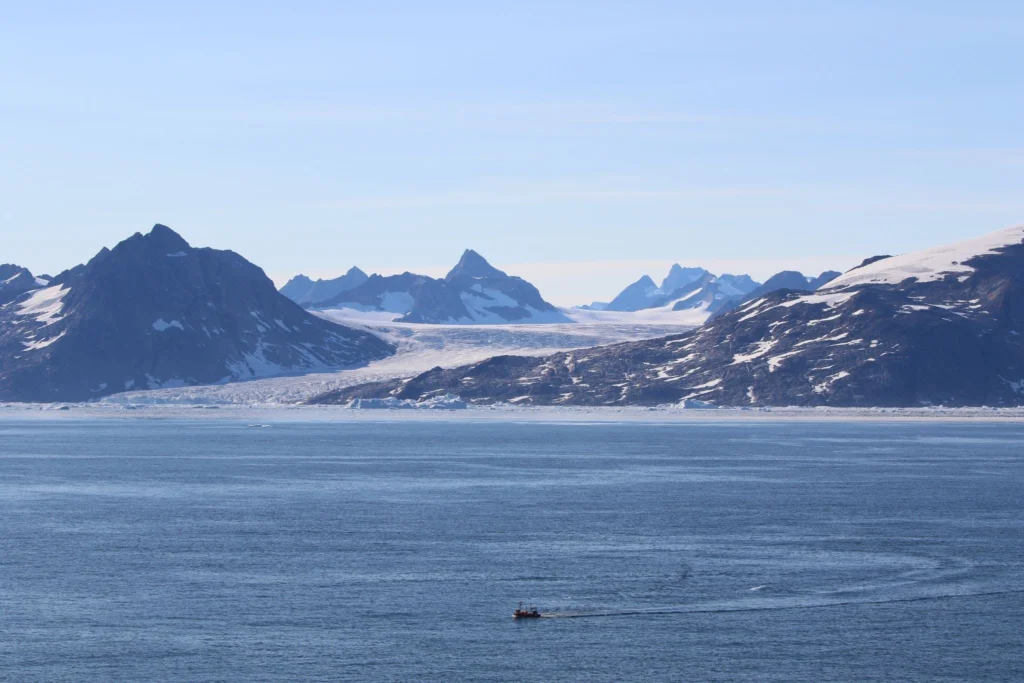
Research cruises are a fundamental part of the cryospheric sciences. As the Arctic warms, the systems that shape our world look much different from one season to the next, making it more critical than ever to measure the changes of our icy world. Here, three early-career researchers share insights from a cruise they took part …[Read More]
Will Antarctic ice shelves embark on their last journey soon?
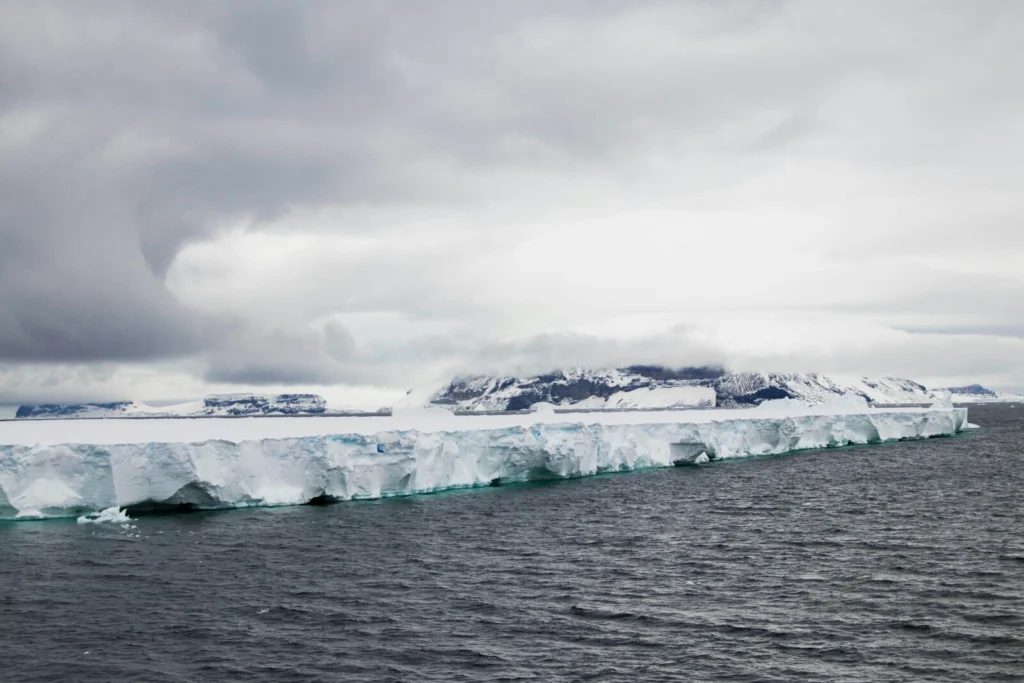
Ice shelves, the floating margins of the Antarctic ice sheet, play an important role in the estimation of future sea-level rise. By their presence, they act as a brake on the flow from the grounded ice sheet to the ocean and therefore modulate how much of this ice is added to the ocean. As the …[Read More]
Chasing glacial lakes in the shadow of Everest
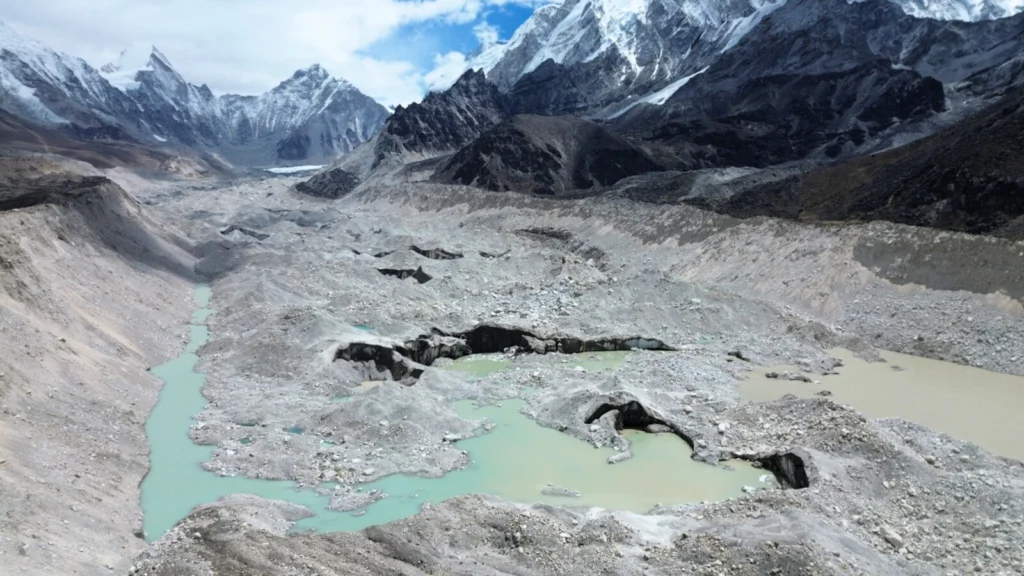
Turquoise lakes. Towering Himalayan peaks. A maze of rock, ice and meltwater. At first glance, this hardly looks like a glacier at all (Figure 1)… Yet as glaciers thin and retreat across the Himalayas, networks of meltwater ponds and glacial lakes are forming both on glacier surfaces and at their margins: one of the most …[Read More]
Using Generative Modelling to Downscale Climate Data for Ice Sheets
Greenland’s ice sheet holds enough water to raise global sea levels by over 7 meters, but predicting how much it will actually shrink remains challenging due to the massive computational cost of traditional models. Our latest research introduces machine learning-based downscaling that generates high-resolution climate fields orders of magnitude faster than conventional regional climate models. …[Read More]
Melting ice shelves in ocean models: an idealised model intercomparison project
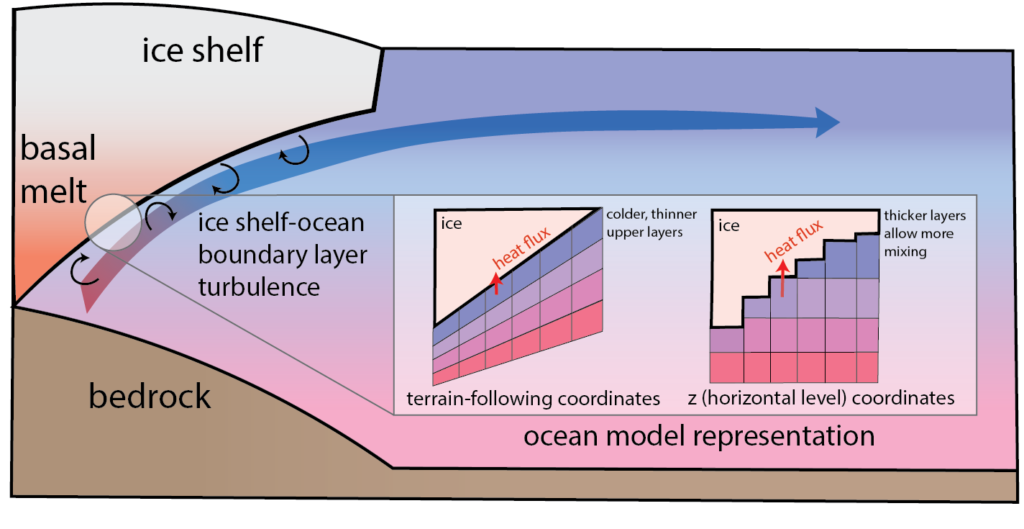
Antarctic ice shelves melt from beneath where they contact the ocean, but how well do ocean models simulate this process? Building on several decades of model development, a recent model intercomparison study compared ice shelf-ocean models from modelling groups around the world with the same, idealised benchmark configuration. From this effort, we can learn how …[Read More]
The Arctic’s Blind Spot: Why Satellites Struggle Where Ice Meets the Coast
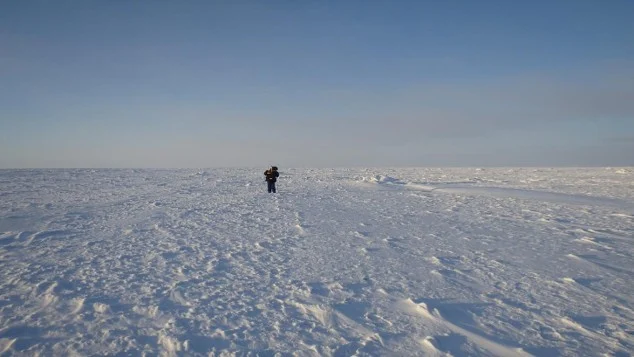
The first time I stood on sea ice, I could not tell which direction the coast was. A community member named Bryan could. That gap in situational awareness, between what a trained remote sensing scientist could read from the landscape and what a local hunter understood instinctively, turned out to mirror almost exactly the gap …[Read More]
What Lies Beneath an Ice Shelf
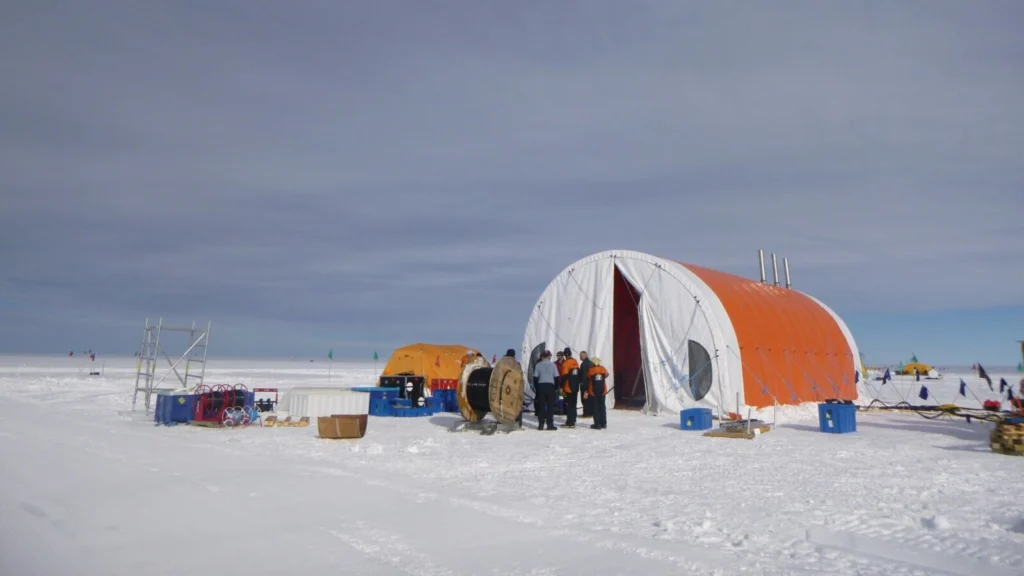
Beneath Antarctica’s largest ice shelf lies a hidden ocean—dark, cold, and almost impossible to reach. Scientists drilled through hundreds of metres of ice to access it, revealing a world that plays a crucial role in how ice shelves melt. Years later, we had the chance to explore this unseen environment—not in the field, but through …[Read More]
Dialogues between glaciers and humans
At the edge of the world, a voice tries to make itself heard, a whisper slipping between the threads of an unstable reality. In the remote lands of Svalbard, a few hundred miles from the North Pole, lie millennia-old entities, relics of a disappearing species. They murmur in a language that humans today no longer …[Read More]