
CL
Climate: Past, Present & Future
Avatar photo

EGU Guest blogger

This guest post was contributed by a scientist, student or a professional in the Earth, planetary or space sciences. The EGU blogs welcome guest contributions, so if you've got a great idea for a post or fancy trying your hand at science communication, please contact the blog editor or the EGU Communications Officer to pitch your idea.

How earthworms can help us understand past climates?
How earthworms can help us understand past climates?
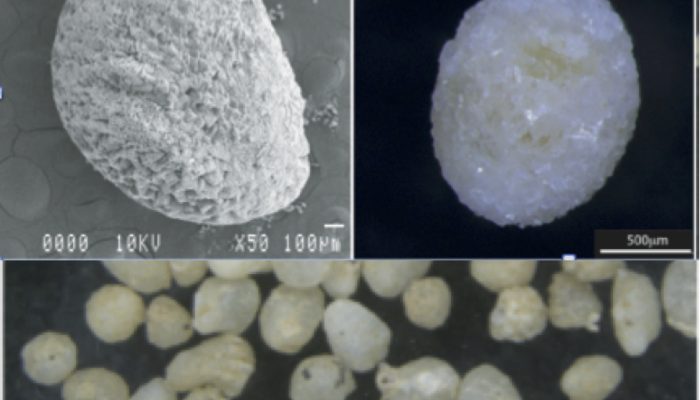
Name of proxy Earthworm calcite granules (ECG) Type of record Paleotemperature and paleoprecipitation reconstruction; radiocarbon dating Paleoenvironment Continental environments – loess/paleosol sequences Period of time investigated Mostly Last full Glacial cycle – from 112,000-15,000 years Before Present (BP) (or older depending on the preservation of the granules). How does it work? Earth ...[Read More]

God does not play DICE – but Bill Nordhaus does! What can models tell us about the economics of climate change?

Climate change has been described as “the biggest market failure in human history”[1]. Although fuel is costly, emitting the by-product CO2 is for free; yet it causes damages to society. In other words, those who benefit, by using the atmosphere as waste dump, do not pay the full costs, i.e. the adverse effects climate change has on societies on a global scale. Can this market failure be cured? Sh ...[Read More]

What can artificial intelligence do for climate science?

What can artificial intelligence do for climate science?

What is machine learning? Artificial Intelligence, and its subfield of machine learning, is a very trending topic as it plays an increasing role in our daily life. Examples are: translation programs, speech recognition software in mobile phones and automatic completion of search queries. However, what value do these new techniques have for climate science? And how complicated is it to use them? Th ...[Read More]

How glowing sediment can help to decipher the Earth’s past climate !

How glowing sediment can help to decipher the Earth’s past climate !

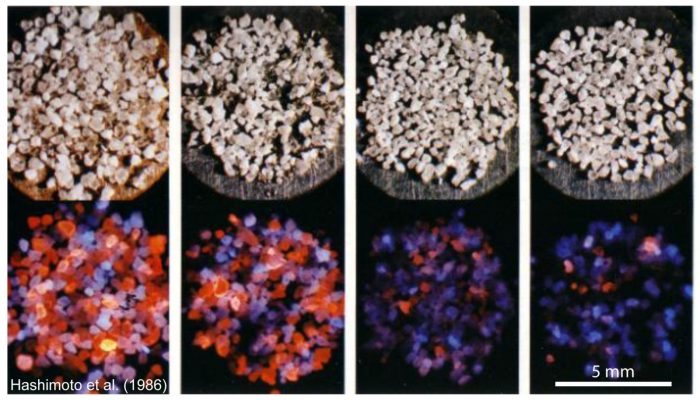
The last 2.5 Million years of the Earth’s history (termed Quaternary) are characterised by climatic cycles oscillating between warm (interglacial) and cold (glacial) periods. To be able to fully understand and interpret past climate variations the development of accurate and precise chronological techniques is crucial. Optically stimulated luminescence (OSL) dating is a strong geochronological too ...[Read More]

What can the Cretaceous tell us about our climate?

What can the Cretaceous tell us about our climate?

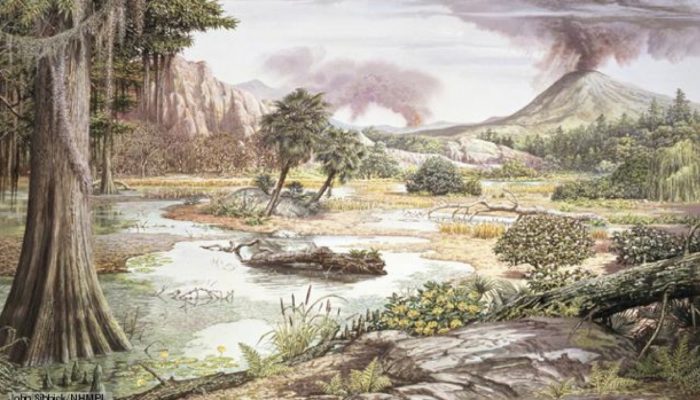
The Cretaceous The Cretaceous period features a particularly interesting climatic episode in the Earth’s geological history. It follows the Jurassic Period, better known as the time the dinosaurs inhabited Earth and spanned the period between 145.5 and 65.5 million years ago. The Cretaceous is the last period of the Mesozoic Era, which ends with a well-known mass extinction event. At the end of th ...[Read More]

Levoglucosan, the witness of past fires

Levoglucosan, the witness of past fires

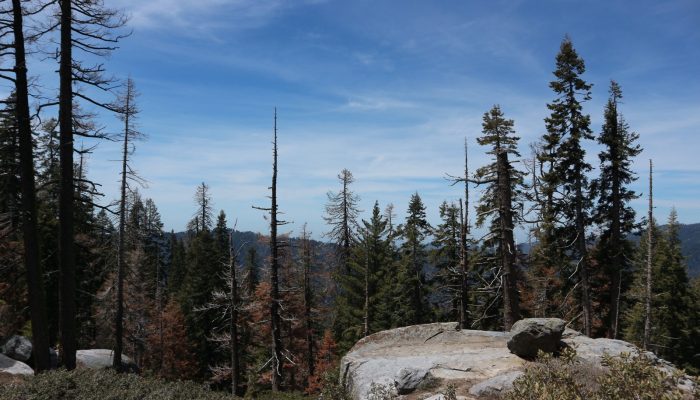
Name of proxy Levoglucosan Type of record Biomass burning Paleoenvironment Lake and marine sediments and ice cores Period of time investigated Present to approximately 130,000 years ago How does it work? Levoglucosan is a molecule that is exclusively formed during the combustion of vegetation at low-temperature. It is therefore considered to be a source-specific tracer for biomass burning. During ...[Read More]

Pollen, more than forests’ story-tellers

Pollen, more than forests’ story-tellers

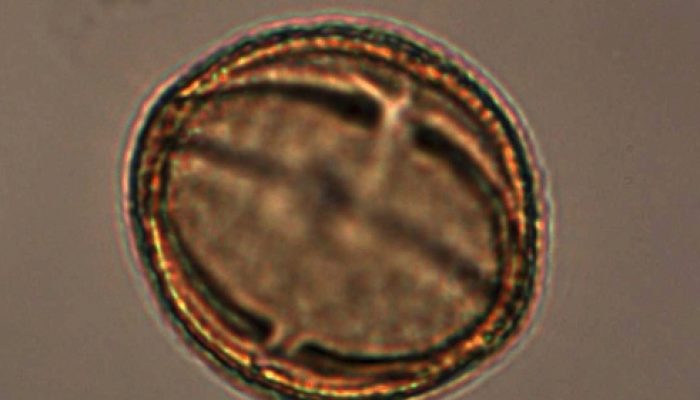
Name of proxy Sporomorphs (pollen grains and fern spores) Type of record Biostratigraphy and Geochronology markers, Vegetation dynamics Paleoenvironment Terrestrial environment Period of time investigated Present to 360 million years How does it work? The sporomorphs (pollen grains and fern spores) are cells produced by plants involved in the reproduction. They are microscopic (less than a fifth o ...[Read More]

How to reconstruct past climates from water stable isotopes in Polar ice cores ?

How to reconstruct past climates from water stable isotopes in Polar ice cores ?

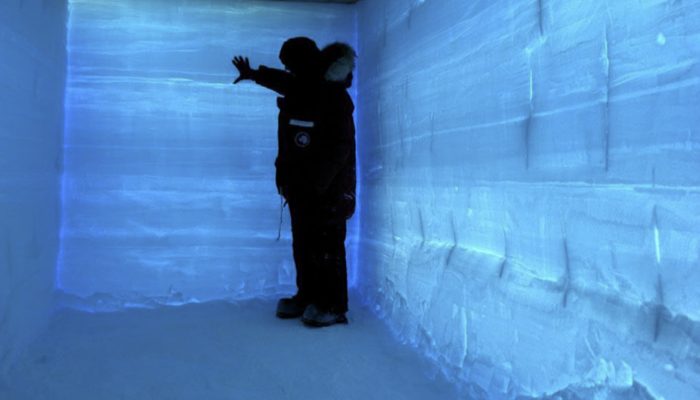
Ice cores are a favored archive to study past climates, because they provide a number of indications on the history of the climate and of the atmospheric composition. Among these, water stable isotopes are considered as a very reliable temperature proxy. Yet, their interpretation is sometimes more complicated than a simple one-to-one correspondence with local temperature and requires intercomparis ...[Read More]

Mountain glacier variations: natural thermometers and rainfall gauges

Mountain glacier variations: natural thermometers and rainfall gauges

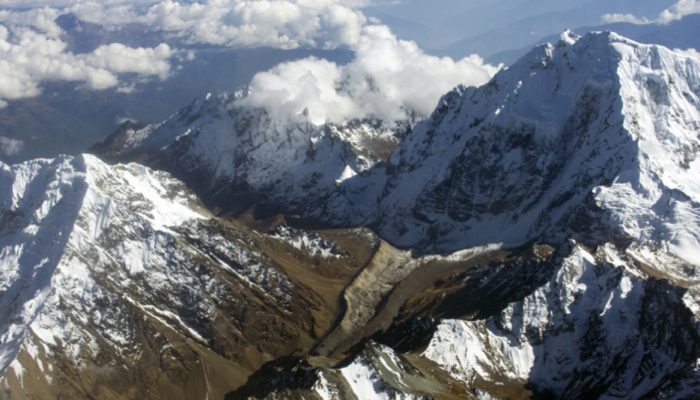
Name of proxy Fluctuations of mountain glaciers Type of record Geomorphological features Paleoenvironment Continent – High mountain areas Period of time investigated From historical periods (c.a. 300 years ago) to the end of the Pleistocene (up to 200 000 years back in time) How does it work? Mountain – or “alpine” – glaciers are small ice bodies (from 1 to 10 000 km2). Alt ...[Read More]

Varves – Revealing the past layer by layer

Varves – Revealing the past layer by layer

Name of proxy Varved glacial lake sediments Type of record Sedimentological structures Paleoenvironment Ice marginal lake environments Period of time investigated Last Glacial Termination (LGT, c.21-14 thousands of years (ka)) to present times How do varves work? Proglacial lakes form in front of glaciers and act as sinks for water and sediment flowing from melting ice. Analyses of proglacial lake ...[Read More]