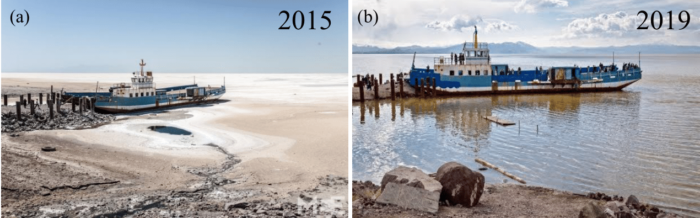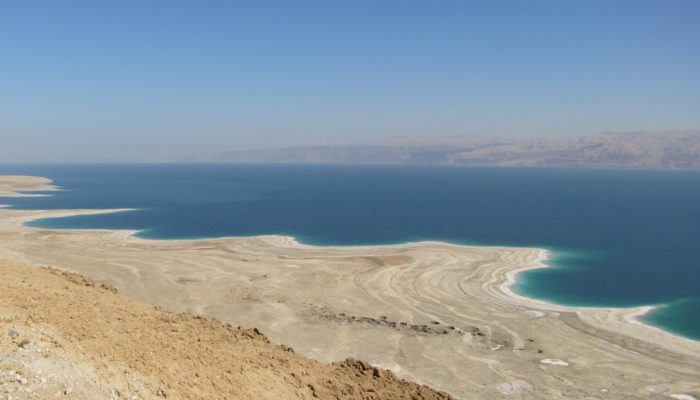

Lake Urmia, in Northwest Iran, was once the most extensive and permanent hypersaline lake (salinity >> of ocean) in the world. Since 1995, the lake water level has dropped about 8 m, shrinking to less than 30% of its original surface area and losing more than 90% of its water volume over two decades [1]. Unsustainable water management in response to increasing demand together with climatic e ...[Read More]
Glacier retreat and music
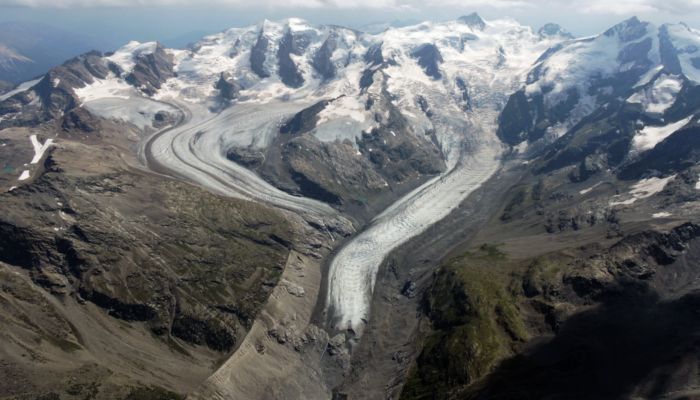
In virtually all parts of the world glaciers are retreating, and this is often considered to be one of the clearest signs of global warming (e.g. Leclercq and J Oerlemans, 2011). Glaciers started to shrink in the second half of the 19th century and, apart from some minor interruptions, this development has continued until today. Over the past hundred years glacier melt has made a significant contr ...[Read More]
Hurricane COVID-19: What can COVID-19 tell us about tackling climate change?
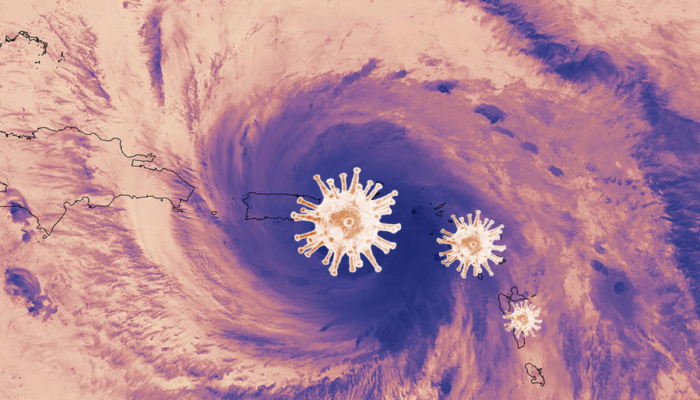
Note by the editors: In the unique period our world is currently facing, we have decided to open our blog to hear the voices of our young climate scientists from around the globe. This is an opinion piece provided by two early career climatologists from Argentina and the Netherlands. I just arrived at home with a bunch of groceries from the supermarket after encountering some very empty shelves. I ...[Read More]
Weather hidden within dusty parchments and weighty tomes—historical climatology and its contribution to our understanding of the past climate
What is historical climatology? Historical climatology is an interdisciplinary research field between paleoclimatology and the historical sciences, that explores the archives of societies to examine the climate of the past. Archives of society mean all man-made remains of the past in contrast to archives of nature. The latter represent physical remains of natural processes such as tree rings and s ...[Read More]
Are the risks of zoonotic diseases rising in the Anthropocene due to climate change?
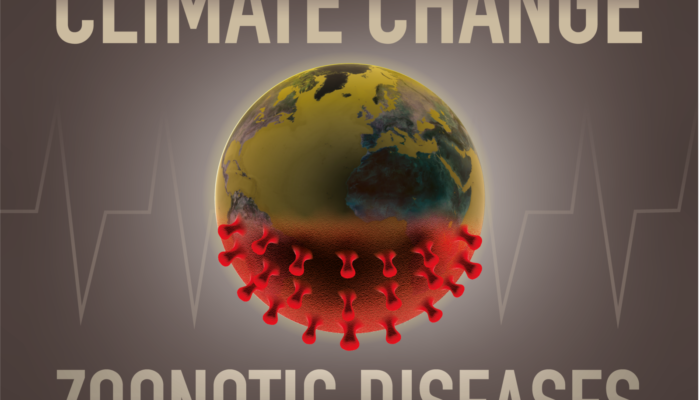
The recent coronavirus outbreak (i.e., nCovID-19; Fig. 1) has caused global panic, along with widespread travel bans, home quarantines and country-wide lockdowns. The World Health Organization (WHO) declared nCoVID-19 as a pandemic as of March 11th, 2020 (WHO, 2020). To tackle this global health crisis, scientists are attempting to synthesize a vaccine, while countries are trying to mitigate the n ...[Read More]
Dead Sea – lively stories of the past
The Dead Sea is dead. Nothing can live there except for specialized microbes. The water with a salinity multiple times higher than seawater prevents a colonization by higher life forms. However, it does not prevent the input of organic material that can tell us stories about the past. A unique sediment record The Dead Sea, located at the lowest elevation on Earth – currently about 430 m below sea ...[Read More]
Dear “climate sceptic”, do you have a fire insurance? – Climate policy under uncertainty
One often hears that ambitious climate policy might be premature while climate change is still “uncertain”. This sounds like a fair argument: The amount of global warming per doubling CO2 is not well constrained, and the amount of economic damage per degree of warming even less. But is this uncertainty a sound excuse to wait and see? Uncertainty, risk aversion, and insurance If you knew the ...[Read More]
Palaeoclimate Data Syntheses: Opportunities and Challenges
Reconstructing past climate states from geological records is crucial for understanding the causal mechanisms that originated them. These can occur at time-scales which are much longer than the periods for which humans have been measuring climate variables such as temperature in meteorological stations. Such climate reconstructions provide a long-term context to the magnitude of the current anthro ...[Read More]
Habits in numerical model construction
Numerical models are omnipresent in climate research. Constructed to understand the past, to forecast future climate and to gain new knowledge on natural processes and interactions, they enable the simulation of experiments at otherwise unreachable time and spatial scales. These instruments have long been considered to be fed – let even determined – by either theories or observations alone. ...[Read More]
Magnetic minerals: storytellers of environmental and climatic conditions
Name of proxy Environmental Magnetism (also known as enviromagnetics) Type of record Environment and climate proxy Paleoenvironment Sedimentary environments (for the most part) Period of time investigated Present times to millions of years (depending on the preservation conditions) How does it work? Magnetism is a physical property that results from the behaviour of elementary particles in any sub ...[Read More]