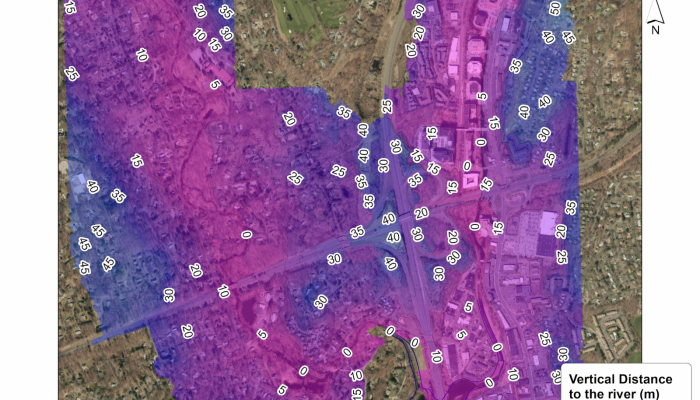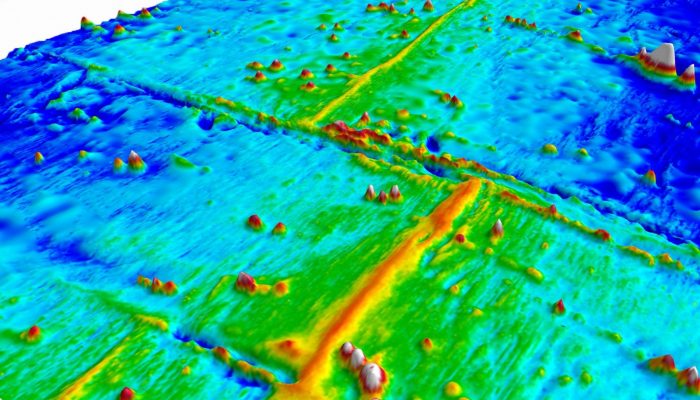
What is machine learning? Artificial Intelligence, and its subfield of machine learning, is a very trending topic as it plays an increasing role in our daily life. Examples are: translation programs, speech recognition software in mobile phones and automatic completion of search queries. However, what value do these new techniques have for climate science? And how complicated is it to use them? Th ...[Read More]
Geodynamics
Presentation skills – 1. Voice
Presenting: some people love it, some people hate it. I firmly place myself in the first category and apparently, this presentation joy translates itself into being a good – and confident – speaker. Over the years, quite a few people have asked me for my secrets to presenting (which – immediate full disclosure – I do not have) and this is the result: a running series on the ...[Read More]
GeoLog
GeoTalk: Nilay Dogulu, Early Career Scientist Representative
In addition to the usual GeoTalk interviews, where we highlight the work and achievements of early career researchers, this month we’ll also introduce one of the Division early career scientist representatives (ECS). They are responsible for ensuring that the voice of EGU ECS membership is heard. From organising short courses during the General Assembly, through to running and attending regular EC ...[Read More]
GeoLog
Imaggeo on Mondays: All seasons in one day
Storm fronts arrive on Britain’s west coast in waves throughout the winter (and very often the summer too!) It is not unusual to see rain falling on a beach with hail and snow lying, whilst a rainbow pierces the clouds. Description by Mary Gagen, as it first appeared on imaggeo.egu.eu. Imaggeo is the EGU’s online open access geosciences image repository. All geoscientists (and others) can su ...[Read More]
GeoLog
GeoPolicy: What does working at the European Environment Agency look like? An interview with Petra Fagerholm
This blog post features an interview with Petra Fagerholm who is currently leading the team on public relations and outreach in the communications department of the European Environment Agency (EEA). Petra gave a presentation about the EEA during the Science for Policy short course at the 2018 EGU General Assembly. In this interview, Petra describes her career path, what it is like to work at the ...[Read More]
Cryospheric Sciences
Image of the Week – The 2018 Arctic summer sea ice season (a.k.a. how bad was it this year?)
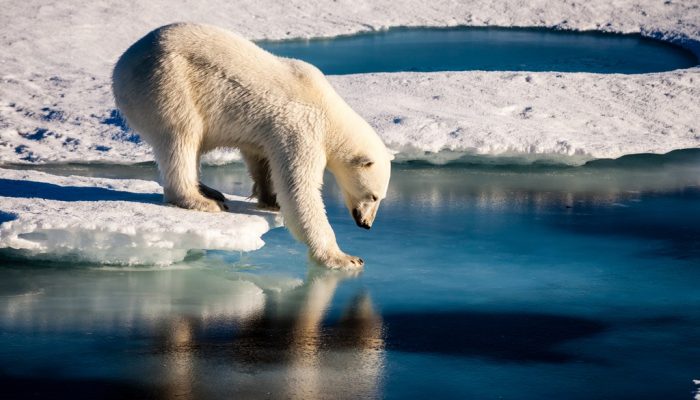
With the equinox this Sunday, it is officially the end of summer in the Northern hemisphere and in particular the end of the melt season in the Arctic. These last years, it has typically been the time to write bad news about record low sea ice and the continuation of the dramatic decreasing trend (see this post on this blog). So, how bad has the 2018 melt season been for the Arctic? Yes, the 201 ...[Read More]
Atmospheric Sciences
The puzzle of high Arctic aerosols
Current Position: 86°24’ N, 13°29’E (17th September 2018) The Arctic Ocean 2018 Expedition drifted for 33 days in the high Arctic and is now heading back south to Tromsø, Norway. With continuous aerosol observations, we hope to be able to add new pieces to the high Arctic aerosol puzzle to create a more complete picture that can help us to improve our understanding of the surface energy budget in ...[Read More]
GeoLog
How to forecast the future with climate models
Our climate is constantly changing, and with the help of simulation modelling, scientists are working hard to better understand just how these conditions will change and how it will affect society. Science journalist Conor Paul Purcell has worked on Earth System Models during his time as a PhD student and postdoctoral researcher; today he explains how scientists use these models as tools to foreca ...[Read More]
Geodynamics
Reproducible Computational Science
We’ve all been there – you’re reading through a great new paper, keen to get to the Data Availability only to find nothing listed, or the uninspiring “data provided on request”. This week Krister Karlsen, PhD student from the Centre for Earth Evolution and Dynamics (CEED), University of Oslo shares some context and tips for increasing the reproducibility of you ...[Read More]
Solar-Terrestrial Sciences
Cosmogenic Radionuclides – The quest of studying the solar activity of thousands of years
Thanks to the invention of the Neutron Monitor in 1948 and multiple spacecraft which monitor the cosmic ray environment since 1970’s we now have a constant record of the solar activity over almost 70 years. Information prior to this space era, however, are rare and take us back in time only to the late 1930s, when ionization chambers have been introduced. This of course allows us only a narr ...[Read More]