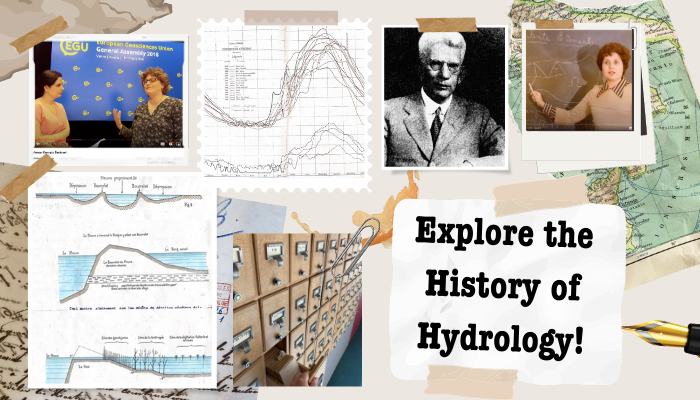
The history of hydrology stretches back millennia: from the engineers of ancient high cultures over scientific pioneers like Da Vinci and Pallisy to modern groundbreaking modellers. However, so far, few hydrologists have worked to systematically record the history of their discipline – especially in its more recent decades. That is a gap that the History …[Read More]
Latest posts
GeoRoundup: the highlights of EGU Journals published during July!
Each month we feature specific Divisions of EGU and during the monthly GeoRoundup we put the journals that publish science from those Divisions at the top of the Highlights roundup. For July, the Divisions we are featuring are: Earth Magnetism & Rock Physics (EMRP) and Seismology (SM). They are served by the journals: Solid Earth …[Read More]
Crowd solving comes to the rescue again at EGU23!
by Emma Lodes, PhD student, GFZ-Potsdam (Germany) Twitter: @LodesEmma | email: lodes@gfz-potsdam.de Research in Earth Science starts with the spark of an idea, and is then often challenged by issues with access, temporal or spatial scaling, lack of knowledge in specific domains, or simply road bumps in our lives. As Early Career Scientists …[Read More]
GeoPolicy: Science Activism vs. Science Advice – choosing your path to policy impact
Science is a vital part of the policymaking process. It enables decision-makers to better understand the policy options that they have and the potential consequences of any actions or inaction. While it is just one factor that policymakers should consider during their decision-making process, it is an important one! This month’s GeoPolicy blog post will …[Read More]
The Sassy Scientist – Cracking the social code
Navigating the challenge of making new friends in a new place -well, thanks to academia…- can be as complex as decoding the Earth’s geological history. This time Bob is demanding our knowledge for: New academic job. New town. New life. It was fairly easy to make friends when I was young but how do I …[Read More]
“State of the ECS”: EGU 23 and, our new members!
Hi everyone! We are now well into the summer, and I can look back at a year of being an ECS Seismology representative, and at the incredible EGU GA this year. It was great to have the posters back this year: I had a poster and no amount of water could have saved me from …[Read More]
Seismology Job Portal
On this page, we regularly update open positions in Seismology for early career scientists. Do you have a job on offer? Contact us at ecs-sm@egu.eu Please, note that other available research positions are displayed on the EGU Jobs Portal. Latest open positions: PhD Scholarship in Numerical Modelling of Earthquake and Tsunami Source Institute: University …[Read More]
Ending a Decade of Hydrological Research – The IAHS’ Final Panta Rhei Symposium
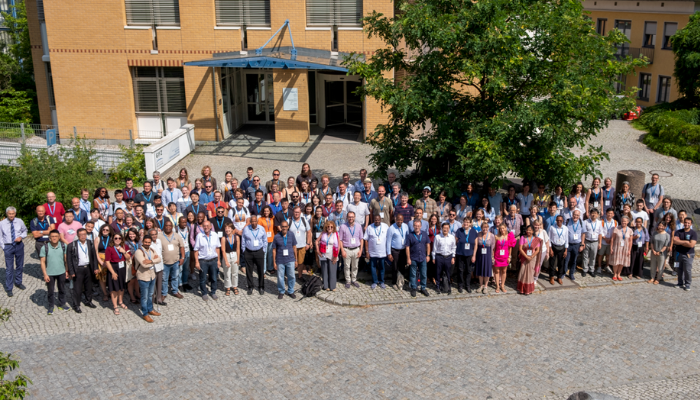
On the 10th and 11th of July 2023, the final symposium for the scientific decade “Panta Rhei – Everything Flows: Change in Hydrology and Society” of the International Association of Hydrological Sciences (IAHS) took place at the German Research Centre for Geosciences (GFZ) in Potsdam. During these two days, 150 hydrologists, engineers, social scientists and …[Read More]
On the usefulness of geodynamic numerical models
Within the vast realm of geoscience, the intricate mechanisms governing Earth’s internal processes continually pose challenges for researchers attempting to unveil its mysteries. This blog post acknowledges the inherent limitations of geological and geophysical data while highlighting the important role that geodynamic modeling plays in bridging these datasets. The motivations for this discussion arise from …[Read More]
Exploring Submap: Subduction Zones Data Mapping and Analysis in just a few clicks
Subduction zones are areas where one tectonic plate dives beneath another one and sinks into the Earth’s mantle, creating powerful earthquakes and volcanic eruptions. Understanding the intricate details of subduction zones can be a daunting task, and retrieving the necessary data often feels like an uphill battle. But fear not! The Geosciences Montpellier Laboratory in …[Read More]