Staining of thin sections and rock slabs is a method of identification that has long helped researchers to distinguish certain minerals which often otherwise appeared very similar. Modern studies have now largely replaced this method of identification with more analytical techniques that usually provide a higher degree of certainty, such as analysis with a microprobe or Scanning Electron Microscop ...[Read More]
If you didn't find what you was looking for try searching again.
Natural Hazards
Writing successful research proposal: tips and tricks
Have you arrived at that moment in your career when you have some potential ideas that you think would be relevant to science? Do you need financial support to advance your science career, and decided to apply for a grant? Today’s blog post brings you a good starting point with advice from three grant winners during the campfire organised by the NH ECS division team: “Writing successful research p ...[Read More]
GeoLog
Tectonics on Ice…. learning about Jupiter’s Icy Moons and the JUICE mission.
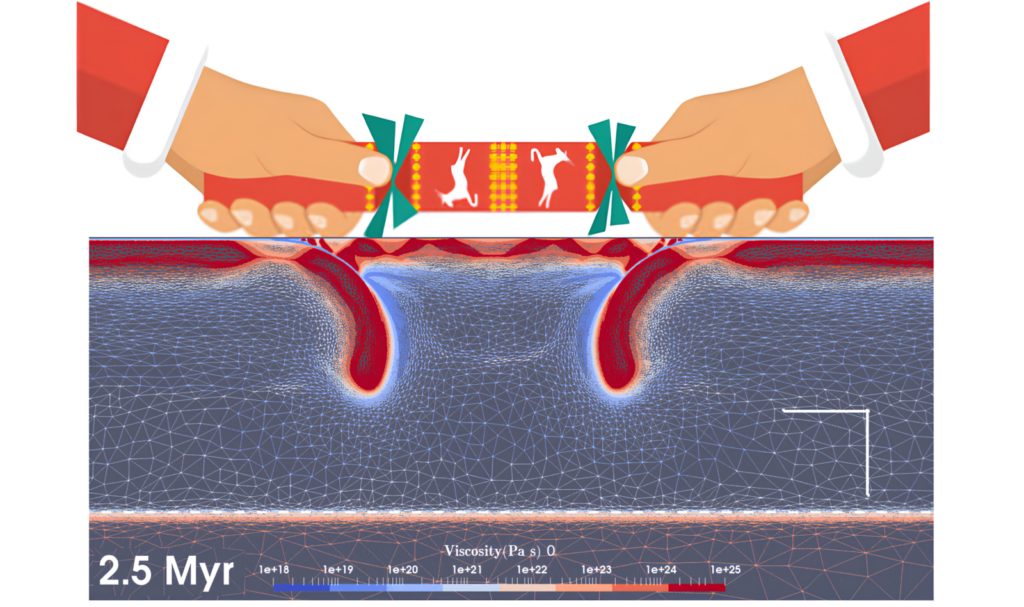
In April this year a new mission is being launched by the European Space Agency, called JUICE, which stands for the Jupiter Icy Moons Explorer. This mission aims to make detailed observations of the giant gas planet Jupiter and its three large ocean-bearing moons – Ganymede, Callisto and Europa – with a suite of remote sensing, geophysical and in situ instruments. But beyond the excitement of a ne ...[Read More]
Geochemistry, Mineralogy, Petrology & Volcanology
Become the next Early Career Scientist Representative for the GMPV Division!
The Geochemistry, Mineralogy, Petrology and Volcanology division of the European Geosciences Union is looking for a new Early Career Scientist representative (ECS rep)! The outgoing rep (Giulia Consuma) will be standing down officially at the EGU General Assembly 2023, so this is your opportunity to take this role! Why become an early career scientist representative? Being the ECS rep for an EGU d ...[Read More]
Seismology
Seismology Job Portal
On this page, we regularly update open positions in Seismology for early career scientists. Do you have a job on offer? Contact us at ecs-sm@egu.eu Please, note that other available research positions are displayed on the EGU Jobs Portal. Latest open positions: Envseis Early-Stage Researcher Projects Institute: Mixed Starting: — Duration: — Deadline: 01 March 2023 More Details P ...[Read More]
Solar-Terrestrial Sciences
Meet the Early Career Scientists team of our division!
Hi, this is your ST-ECS team. We are a group of Early Career Scientists (ECSs) of the Solar-Terrestrial (ST) division, and we enjoy organizing events and activities with and for ST-ECS, both during the EGU General Assembly and throughout the year. Our aim is to increase the visibility of ECSs and provide you with opportunities for networking. Currently the team is formed by: Dr. Maxime Grandin Max ...[Read More]
Cryospheric Sciences
Did you know that thawing permafrost is impacting Arctic livelihoods already today?
Would you like to join me on a little trip up North today? We will be visiting a small community in the Canadian high Arctic – a community built on permafrost ground. This sounds pretty cool in the first place, but brings along quite a few challenges that most of us probably do not have to think about. Let me introduce you to Tuktoyaktuk, the community that is endangered to fall into the sea ...[Read More]
Soil System Sciences
The importance of our SSS (…Soil Support Staff!) #10
We are looking forward to celebrating another excellent exhibition of soil science at this year’s EGU General Assembly. Of course, very little soils research could take place without the work carried out by technicians, laboratory assistants, and research support staff. This monthly blog post is our opportunity to thank these key individuals, and their tireless efforts to maintain our labora ...[Read More]
GeoLog
A touch of space weather! An EGU funded outreach project for blind and visually impaired students
We can all probably agree that the Northern Lights are one of the world’s most spectacular natural displays. But how do we share this beauty with children who are blind? How do we explain the processes behind the aurora creation to the visually impaired when all the illustrations of Earth’s magnetosphere are in 2D? The Northern Lights are just one of the consequences of ‘space weather’. Space weat ...[Read More]
Nonlinear Processes in Geosciences
Can Artificial Intelligence replace scientists to explain Climate Change? Find it out in our first interview to… ChatGPT!
Figure: DallE (the visual cousin of ChatGPT) has produced this image when I asked for “a cartoon showing a climatologist with research articles walking on a weather map” As a communication officer of the division of Nonlinear Processes I started to write posts for the EGU blog a few years ago and I found it a very difficult task: one has to find the right scientific sources about arguments ...[Read More]