EGU Blogs

5887 search results for "6"

Geology for Global Development

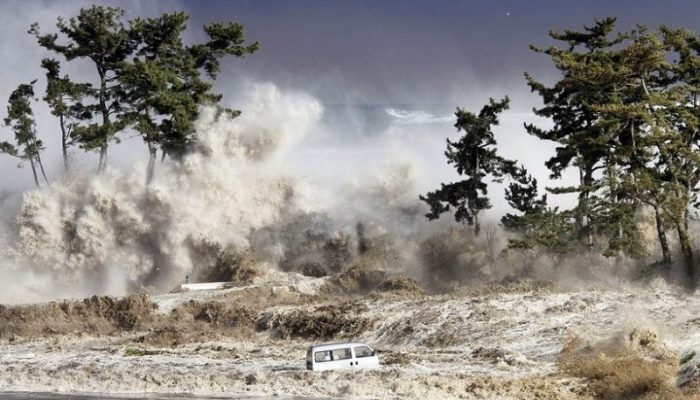
How deep-seated is bias against scientists in the Global South? Can we attribute individual disasters to climate change? Find out in Jesse Zondervan’s Dec 20  – Jan 24 2018 #GfGDpicks #SciComm
How deep-seated is bias against scientists in the Global South? Can we attribute individual disasters to climate change? Find out in Jesse Zondervan’s Dec 20  – Jan 24 2018 #GfGDpicks #SciComm
Each month, Jesse Zondervan picks his favourite posts from geoscience and development blogs/news which cover the geology for global development interest. Here’s a round-up of Jesse’s selections for the last four weeks: If we want to solve the world’s problems, we need all the world’s scientists. Social Entrepreneur Nina Dudnik speaks out against prejudice towards scientists in the developing world ...[Read More]

GeoLog

Imaggeo on Mondays: Snow folded by advancing lava

Imaggeo on Mondays: Snow folded by advancing lava

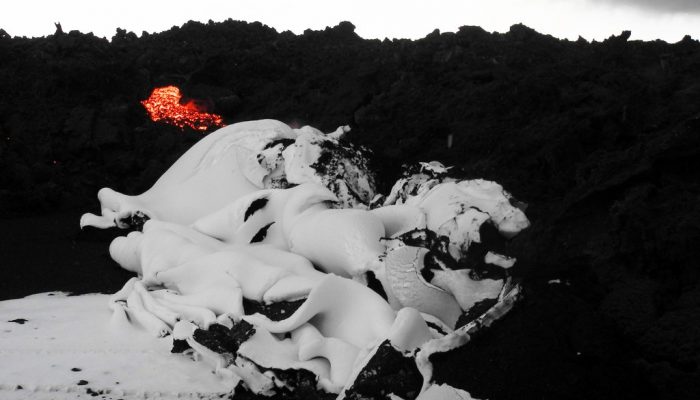
The photograph shows the interaction of the first snow and an active lava flow during the 2014 / 2015 Holuhraun eruption in Iceland. The first snow fell onto a ground covered by fine black ash on 26 September 2014. While the meter thick lava flow advanced a few meters per day, it neither melted the snow nor flowed on top of it. Instead, it pushed a layer of centimetre-thick snow and millimetre-thi ...[Read More]

CR
Cryospheric Sciences

Image of the Week – Microbes have a crush on glacier erosion

Image of the Week – Microbes have a crush on glacier erosion

Glacier erosion happens at the interface between ice and the ground beneath. Rocks are ground down to dust and landscapes shaped by the flowing ice. While these might be hotspots for erosion, the dark and nutrient-poor sites are unlikely environments for biological activity. However, experiments suggest there may be novel sources of energy powering subglacial microbial life… Where there is water, ...[Read More]

GD
Geodynamics

Work-life balance: insights from geodynamicists

Work-life balance: insights from geodynamicists

Maintaining a good work-life balance is essential for a steady career and happy life in academia. However, like with all good things, it is not easy. In this new Wit & Wisdom post, Jessica Munch, PhD student at ETH Zürich, explores how to achieve a good work-life balance. Research is a truly amazing occupation, especially in geodynamics (okay, that might be a bit biased…). However, disre ...[Read More]

GeoLog

Get involved: become an early career scientist representative

Get involved: become an early career scientist representative

Early career scientists (ECS) make up a significant proportion of the EGU membership and it’s important to us that your voices get heard. To make sure that happens, each division appoints an early career scientists representative: the vital link between the Union and the ECS membership. After tenure of two or four years, a few of the current ECS Representatives are stepping down from their post at ...[Read More]

NH
Natural Hazards

Ethics and Geosciences: discovering the International Association for Promoting Geoethics

Ethics and Geosciences: discovering the International Association for Promoting Geoethics

Geoscientists do not have to deal only with technical matters, but have to think also about the ethical implications related to their discipline. To increase the awareness of researchers on the ethical aspects of their activities, it has been created the International Association for Promoting Geoethics (IAPG). To better understand what geoethics and the IAPG are, we interviewed Silvia Peppoloni, ...[Read More]

GeoLog

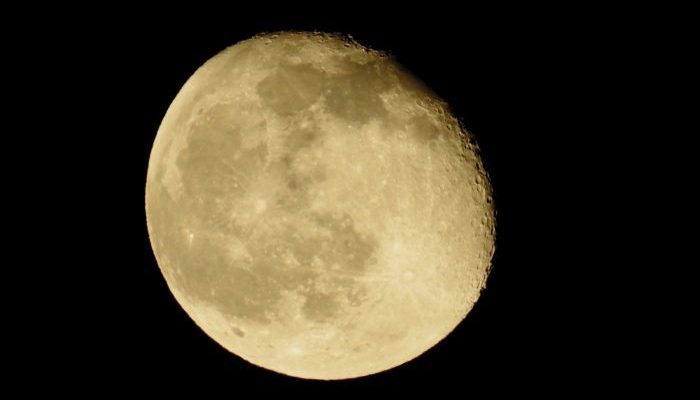
Imaggeo on Mondays: Decreasing Moon

Decreasing Moon Imaggeo

This picture shows the decreasing Moon on May 6, 2015, two days after the full Moon, as viewed from Hamburg, Germany. There are still 96.4% of the lunar front illuminated. The Moon does not glow on its own, but its surface reflects the sunlight. The Sun always illuminates a complete half of our natural satellite, which, in its orbit around our planet, always turns its face (which we see at full Mo ...[Read More]

SM
Seismology

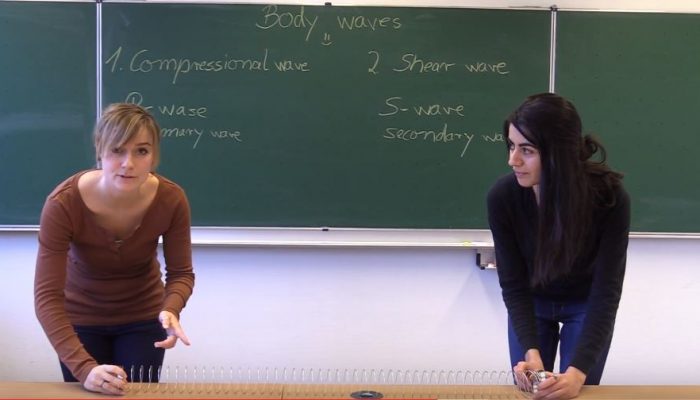
SeismoChat: How to disarm earthquakes

SeismoChat: How to disarm earthquakes

Solmaz Mohajder is a researcher at the Earth System Dynamics Research group of University of Tübingen in Germany. She has published an online database and an interactive map for active faults in Central Asia (Mohajder et al., 2016).  More recently, Solmaz and her colleagues have compiled fault slip rates to investigate whether deformation rates from GPS and from geologic observations provide consi ...[Read More]

CR
Cryospheric Sciences

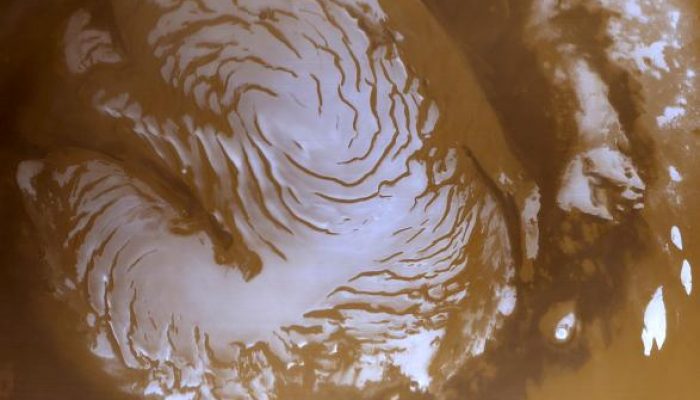
Image of the Week – Ice caps on Mars?!

Image of the Week – Ice caps on Mars?!

Much like our Planet Earth, Mars has polar ice caps too, one for each pole: the Martian North Polar Ice Cap (shown on our image of the week) and the Southern Polar Ice Cap. Yet, their composition and structure reveals these ice caps are quite different from those of Planet Earth… Mars refresher   As a refresher, here are some Mars facts: Mars is the 4th planet from the sun. Its equatorial dia ...[Read More]