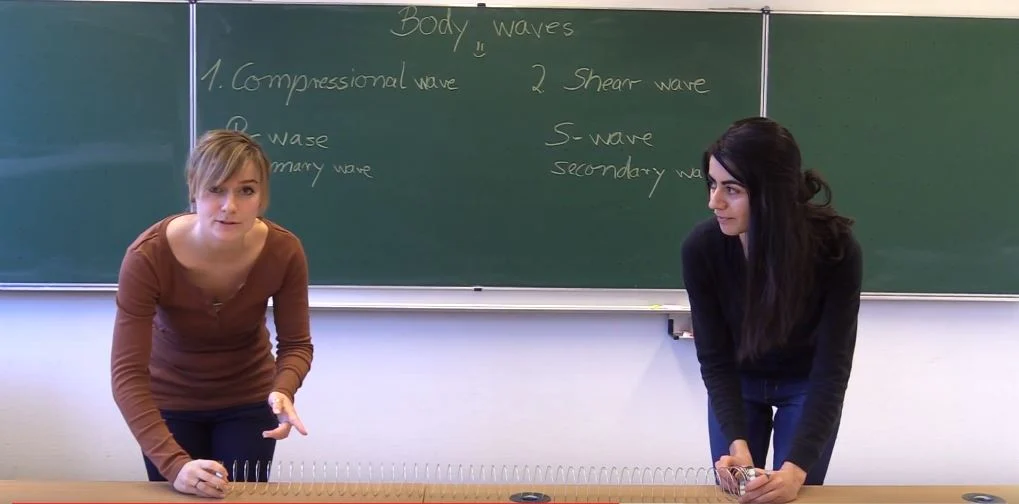

Solmaz Mohajder is a researcher at the Earth System Dynamics Research group of University of Tübingen in Germany. She has published an online database and an interactive map for active faults in Central Asia (Mohajder et al., 2016). More recently, Solmaz and her colleagues have compiled fault slip rates to investigate whether deformation rates from GPS and from geologic observations provide consi ...[Read More]
New Early Career Scientist representatives wanted
The EGU seismology division is looking to elect a new enthusiastic team of early career scientist (ECS) representatives from the beginning of May. If you are a PhD or Postdoc, why not consider taking up this role? Why should you consider becoming an ECS representative? Producing innovative science is the first and foremost task of any early career scientist. However, this work is embedded in the s ...[Read More]
Harsher than reviewer 2?
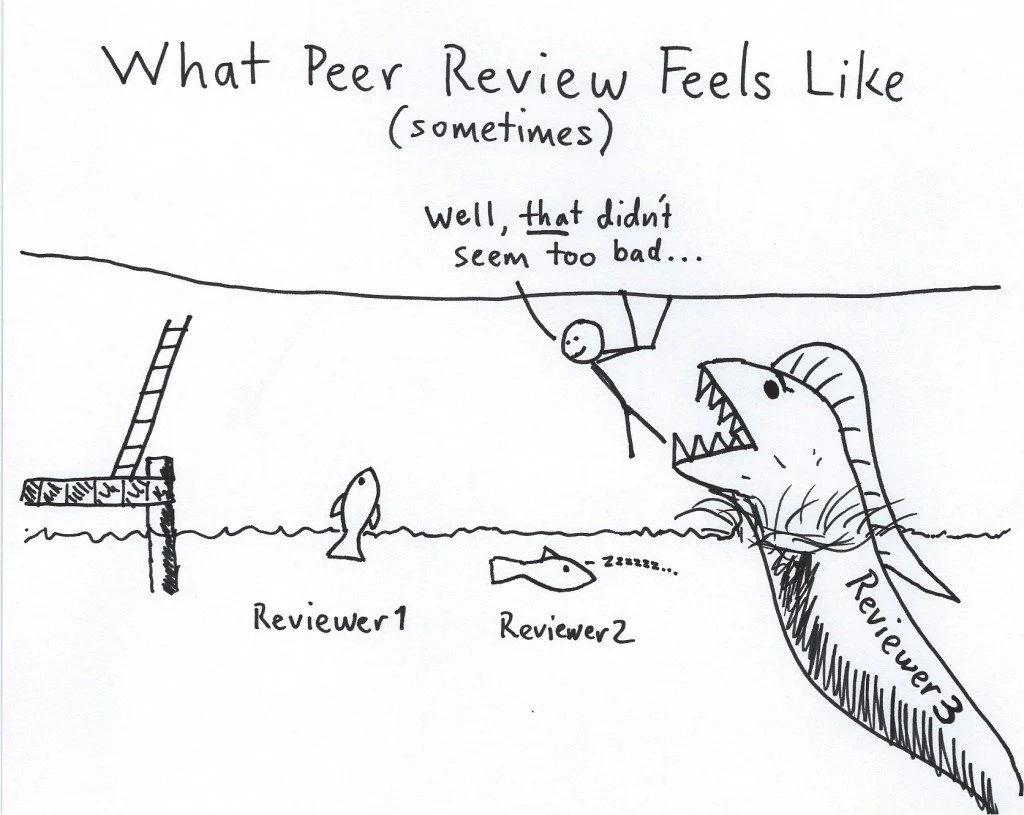
Have you ever wanted a reviewer who really tells it how it is? You should consider submitting a paper to the truly special publication ‘Frontiers for young minds’. Frontiers for young minds is a journal for students between ages 8 and 15 that are curious and passionate about science. However, what’s truly special about this journal is that it is also reviewed by students of the same age, assisted ...[Read More]
Paper of the month — Signal apparition for wavefield separation
Our paper of the month is “Signal apparition for simultaneous source wavefield separation” (J. Robertsson et al., 2016) commented by Andreas Fichtner. Andreas Fichtner is Assistant Professor for Computational Seismology at the Swiss Federal Institute of Technology (ETH) in Zurich. He received his PhD from the University of Munich for his work on Full Seismic Waveform Inversion for Str ...[Read More]
First Earthquakes, past and future
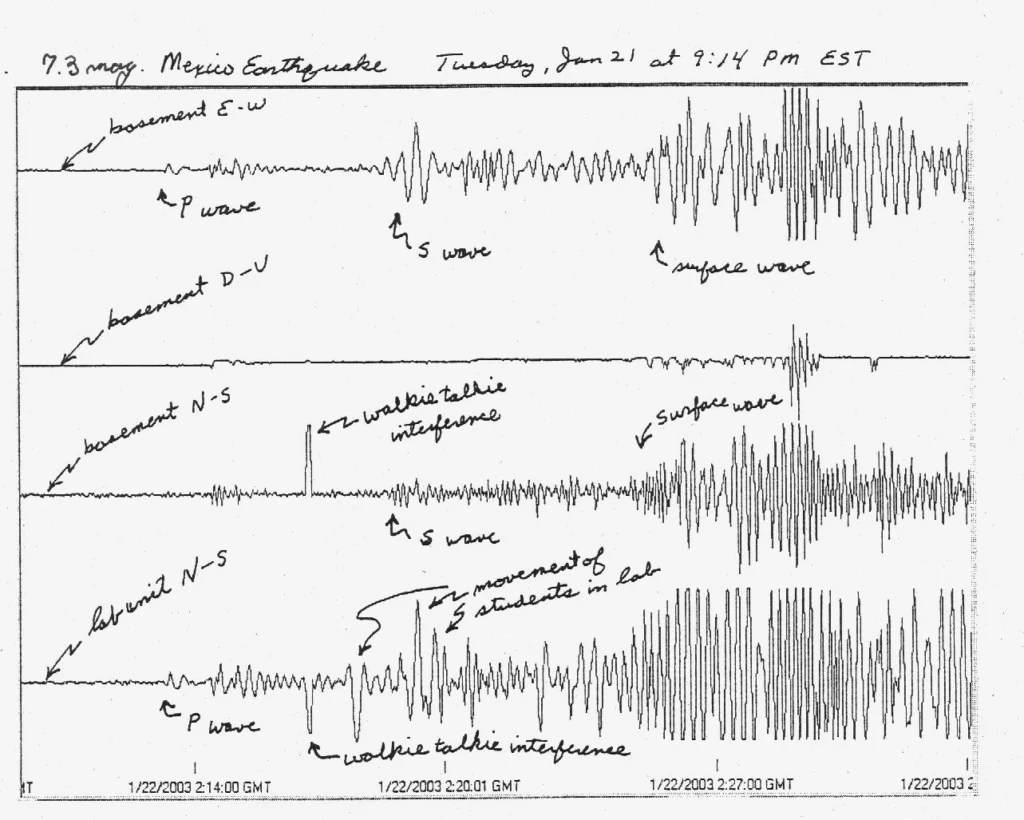
What was your first experience of an earthquake? Was it scary? Weird? Confusing? The first earthquake I have consciously noticed was a magnitude 4.something on a small fault zone not far from my home town. The wave that shook our terraced house felt like a short burst of pressure, making me briefly worry, but then laugh as it prompted my mother to shout “Stop jumping off the wardrobe!” ...[Read More]
MyShake – your phone as a seismic station
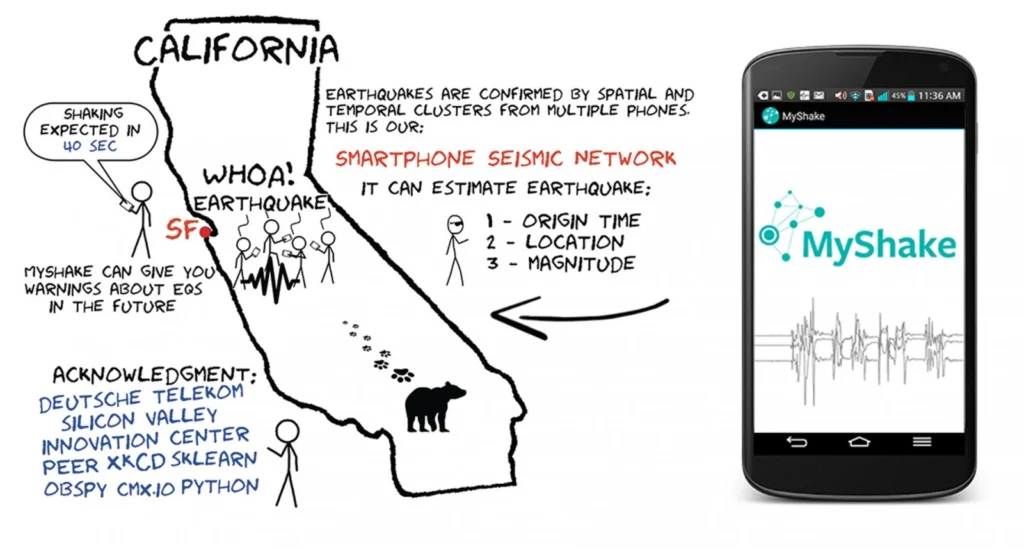
Are you on Facebook or Twitter? Do you use Whatsapp regularly to communicate with friends and loved ones scattered across the globe or even just across the city? I’d be surprised if you answer ‘no’ to all of these questions. In fact, why not admit that you are just as addicted to that smartphone of yours as I am to mine? Being a seismologist, you might have played with one of the ...[Read More]
Meet the new ECS Reps!
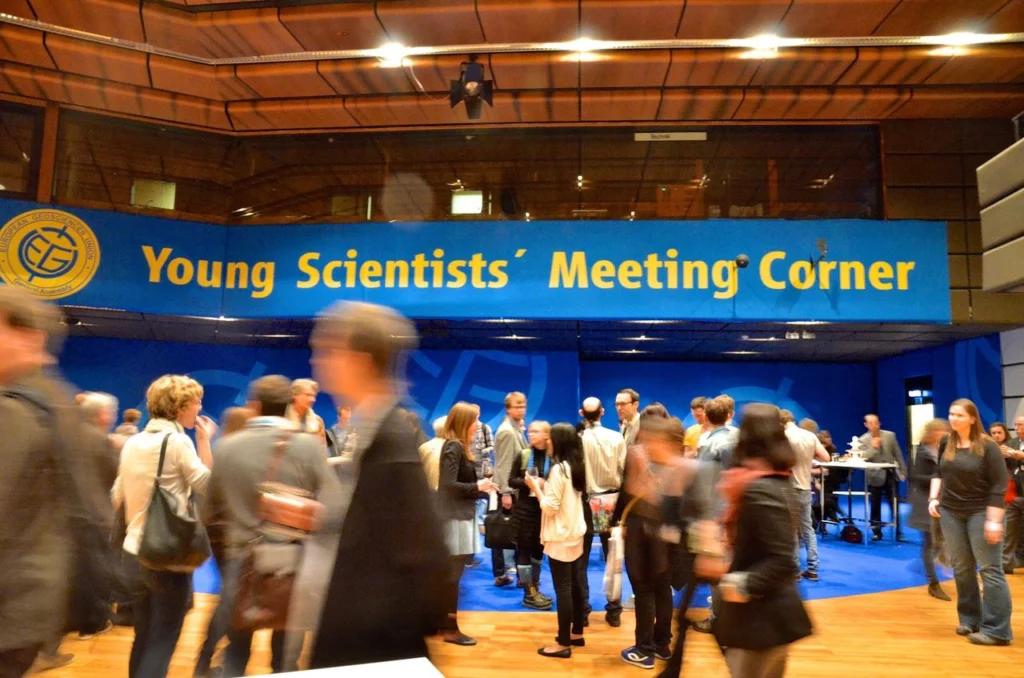
At the last EGU general assembly, Matthew Agius has stepped down as main early career scientist (ECS) representative and a new team assembled around Laura Parisi has taken over! Gender equality is not maintained, instead we are very proud to announce a 4/2 women/men distribution. Let us take the opportunity to briefly introduce ourselves. We would also like this opportunity to again acknowledge th ...[Read More]
4 ways to have your say
A couple of weeks ago, we promised a more detailed review of our experience at the General Assembly 2016. Here is something we deemed worthy to spread word about. EGU is dedicated to geoscience, so the first thing we are all looking for in the general assembly and EGU’s journals is…interesting science! Duh. But science doesn’t live in an isolated space of labs and computing centers. There is ample ...[Read More]
EGU GA 2016 – You don’t get older, you get better!
This years general assembly is over and its buzz still ringing in my ears. Here are a few spotlight impressions fresh off my mind. In the coming days and weeks, the complete brand new ECS representative team will present itself on the blog, and we will update you in more detail about highlights and low points of the conference. SCIENCE! Do we have to mention it was amazing? Yes, I’ve heard people ...[Read More]
Listen to the … massive black hole merger song!
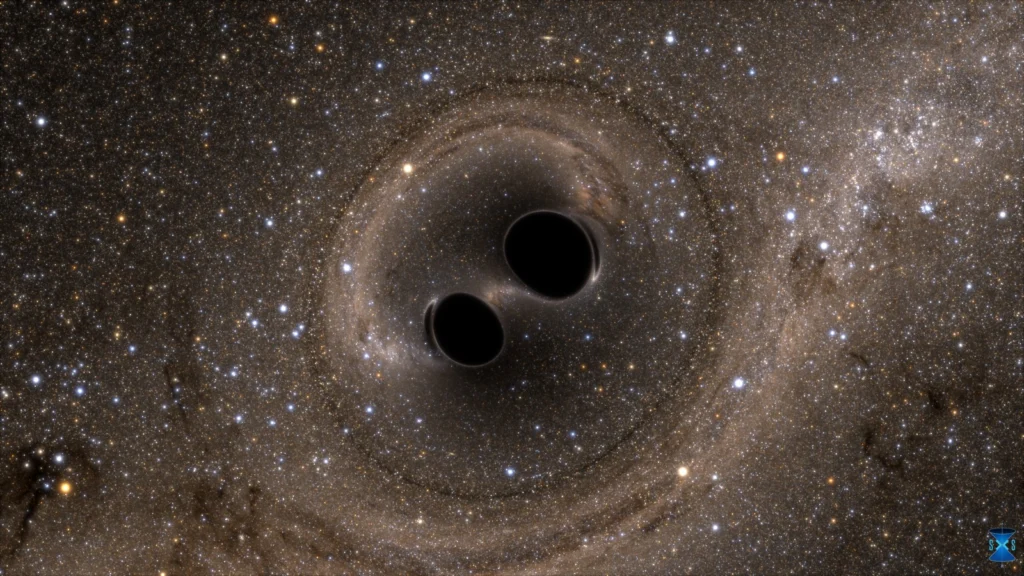
I bet you were every bit as excited as me about the recent announcement of the detection of gravitational waves at two locations of the Laser Interferometer Gravitational-Wave Observatory LIGO*. These waves were sent out to space-time by the merger of two black holes. Call me a nerd, but after reading the news I soon started wondering: What sort of periods do these waves have? In my imagination, s ...[Read More]