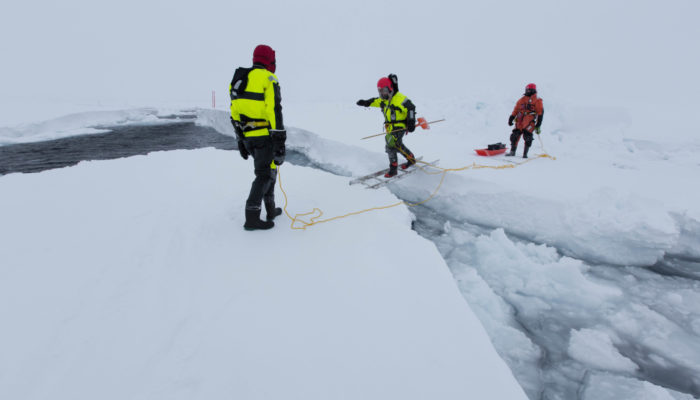
Over the last few decades, Antarctic ice shelves have been disintegrating at a rapid rate, likely due to warming atmospheric and ocean temperatures, according to scientists. New research reveals that one type of threat to ice shelf stability might be more widespread that previously thought. A study recently published in EGU’s open access journal The Cryosphere identified several regions in Antarct ...[Read More]
If you didn't find what you was looking for try searching again.
Tectonics and Structural Geology
Meeting Plate Tectonics – Roger Buck
These blogposts present interviews with outstanding scientists that bloomed and shape the theory that revolutionised Earth Sciences — Plate Tectonics. Get to know them, learn from their experience, discover the pieces of advice they share and find out where the newest challenges lie! Meeting Roger Buck Roger Buck is a Research Professor at the Lamont-Doherty Earth Observatory at Columbia Universit ...[Read More]
Natural Hazards
Job matchmaking in the water sector
Sooner or later in your career, you have turned lunch breaks, entire weekends or nights into a job search. Looking for a job can be like dating: it can either be an easy going match, quickly finding the right job position for you, or it might be a long and unsatisfying search over millions of websites. The climax arises if you want to use your past research expertise into something new, a multidis ...[Read More]
WaterUnderground
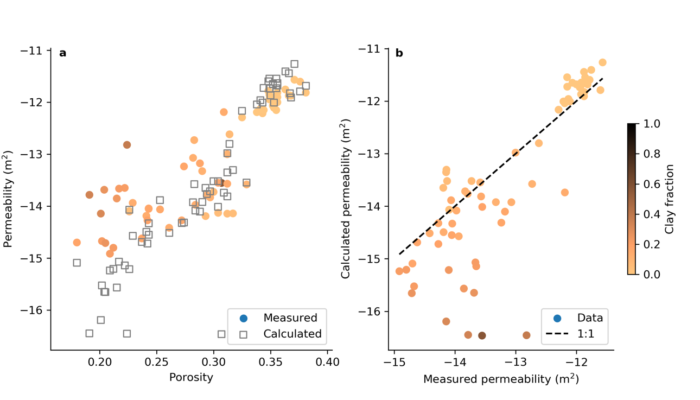
Water: underground source for billions could take more than a century to respond fully to climate change
WaterUnderground post by Mark O. Cuthbert, Cardiff University; Kevin M. Befus, University of Wyoming, and Tom Gleeson, University of Victoria Groundwater is the biggest store of accessible freshwater in the world, providing billions of people with water for drinking and crop irrigation. That’s all despite the fact that most will never see groundwater at its source – it’s stored naturally below gro ...[Read More]
Cryospheric Sciences
Image of the Week – Seven weeks in Antarctica [and how to study its surface mass balance]
After only two months of PhD at the Laboratoire de Glaciologie of the Université libre de Bruxelles (ULB, Belgium), I had the chance to participate in an ice core drilling campaign in the Princess Ragnhild coastal region, East Antarctica, during seven weeks in December 2018 – January 2019 for the Mass2Ant project. Our goal was to collect ice cores to better evaluate the evolution of the surf ...[Read More]
Solar-Terrestrial Sciences
New insights to the north-south asymmetries of auroral features
Recent research on the simultaneous displays of aurora in both hemispheres have lead to new knowledge of how large-scale asymmetries in the global magnetic field configuration can arise and be mitigated. This new understanding is contrary to what has been the consensus in the field, and was recently highlighted in a press release from the American Geophysical Union, followed by attention from nume ...[Read More]
GeoLog
Last chance to enter the EGU Photo Competition 2019!
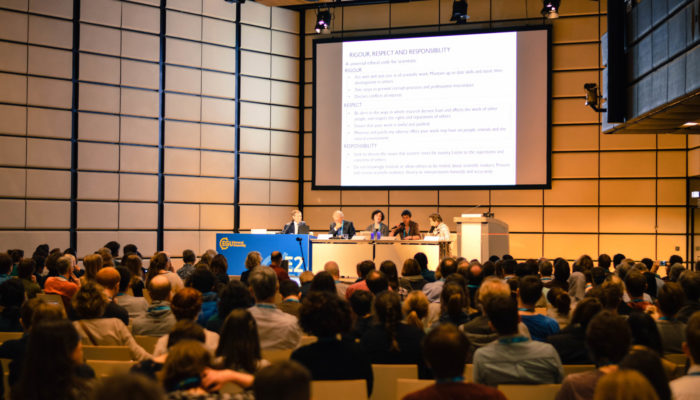
If you are pre-registered for the 2019 General Assembly (Vienna, 7-12 April), you can take part in our annual photo competition! Winners receive a free registration to next year’s General Assembly! But hurry, there are only a few days left to enter! Every year we hold a photo competition and exhibit in association with our open access image repository, Imaggeo, and our annual General Assembly. The ...[Read More]
Cryospheric Sciences
Image of the Week – We walked the Talk to Everest
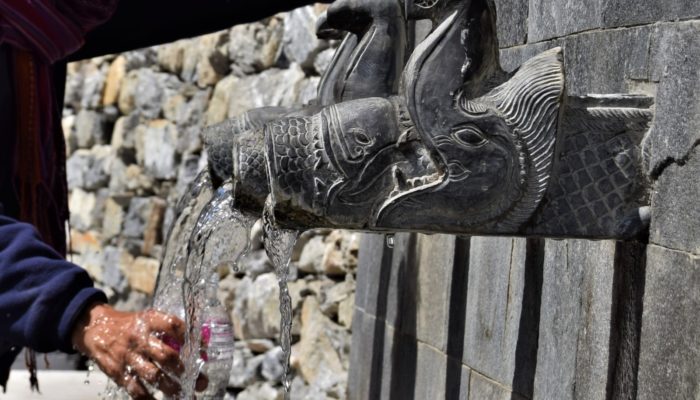
The 12 day “Walk the Talk” Field Conference and Community Consultation through Sagarmatha National Park, Nepal, discussed a wide range of research outputs with local communities, tourists, and officials. Topics covered glaciers, mountains, environmental and landscape change, Sherpa livelihoods, tourism, and natural hazards. The conference, organised by Himalayan Research Expeditions, was the first ...[Read More]
GeoLog
Iceland’s rootless volcanoes
Picture a volcano, like the one you learned about in primary school. Can you see it? Is it a big rocky mountain, perhaps with a bubbling pool of lava at the top? Is it perched above a chasm of subterranean molten rock? I bet you didn’t picture this: You’d be forgiven for mistaking these small volcanoes for a scene from the Lord of the Rings, or maybe a grassy version of the surface of Mars (in fac ...[Read More]
Geology for Global Development
The importance of wetlands
World Wetlands day is celebrated on 2nd February, marking the adoption of the Convention on Wetlands, also known as Ramsar Convention, in the Iranian city of Ramsar on 2nd February 1971. It “provides the framework for national action and international cooperation for the conservation and wise use of wetlands and their resources.” Today 170 countries have adopted it and 2,341 Ramsar sites covering ...[Read More]