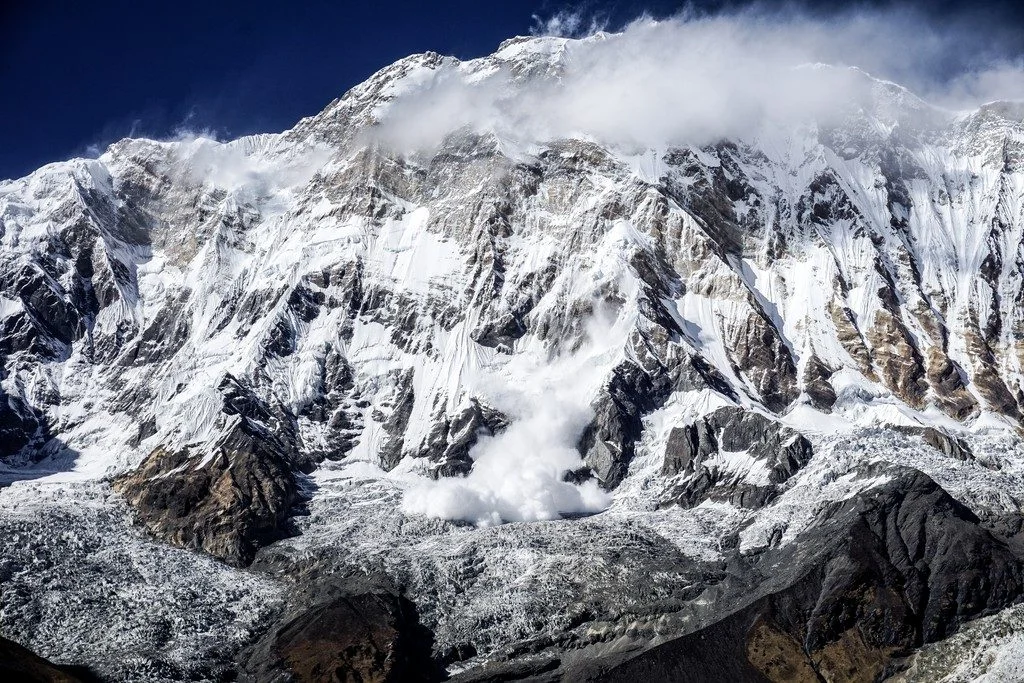
The Annapurna massif is located in an imposing 55 km long collection of peaks in the Himalayas, which behave as a single structural block. Composed of one peak (Annapurna I Main) in excess of 8000 m, a further thirteen peaks over 7000 m and sixteen more of over 6000 m, the massif forms a striking …[Read More]
Latest posts
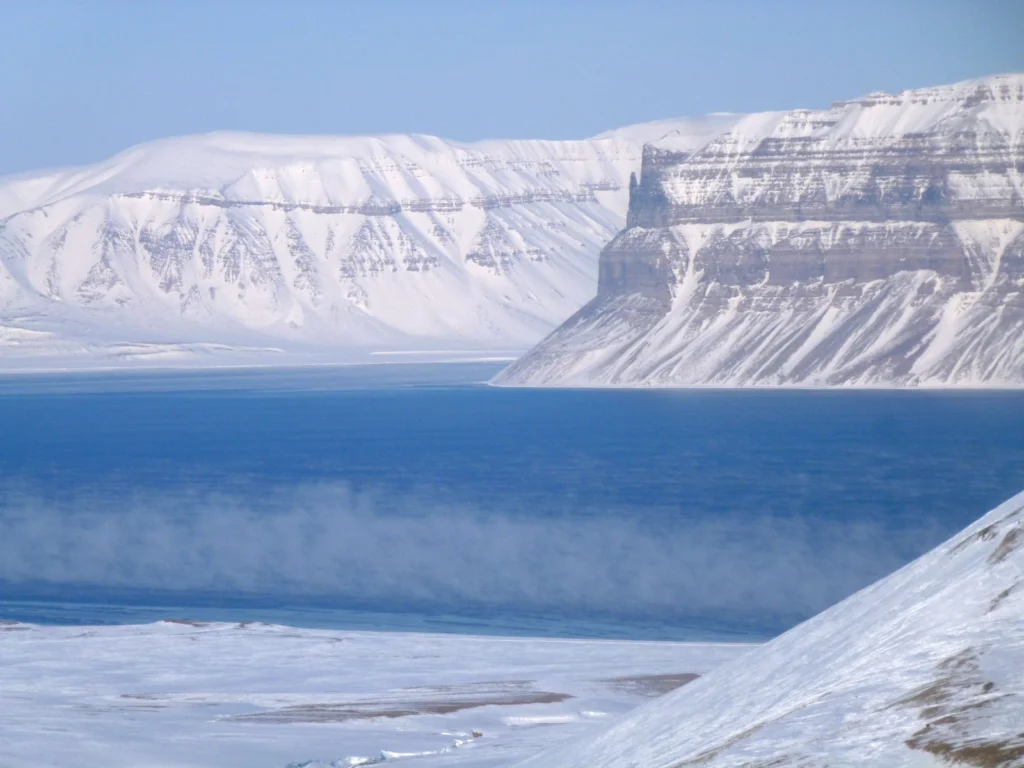
Volcanic ash layers in Svalbard hold clues to the formation of the North Atlantic
This guest post by Dr Morgan Jones (a Researcher in Volcanology at the Centre of Earth Evolution and Dynamics (CEED) at the University of Oslo, Norway) describes the latest findings of his multidisciplinary research into how the North Atlantic formed. His open access study, in collaboration with colleagues at CEED and the Massachusetts Institute of Technology …[Read More]
Image of the Week – A new way to compute ice dynamic changes
Up to now, ice sheet mass changes due to ice dynamics have been computed from satellite observations that suffer from sparse coverage in time and space. A new method allows us to compute these changes on much wider temporal and spatial scales. But how does this method work? Let us discover the different steps by …[Read More]
A Geodynamicist and an Early Career Scientist
This week Adina Pusok, postdoctoral fellow at the Institute of Geophysics and Planetary Physics (IGPP) at Scripps Institution of Oceanography, University of California San Diego, USA, discusses what it is like to be an Early Career Scientist within the EGU Geodynamics division. The terms “Early Career Scientist” (ECS) or “Young Scientist” (YS) are now so …[Read More]
Of butterflies and climate: how mathematics helps us to better understand the atmosphere
Applied mathematics is often seen as an obscure field, which the general public has no hope of ever understanding. In the context of climate science, this is far from the truth. In fact, many mathematical concepts and ideas applied to the study of the climate system stem from intuitive arguments. While their implementation can be …[Read More]
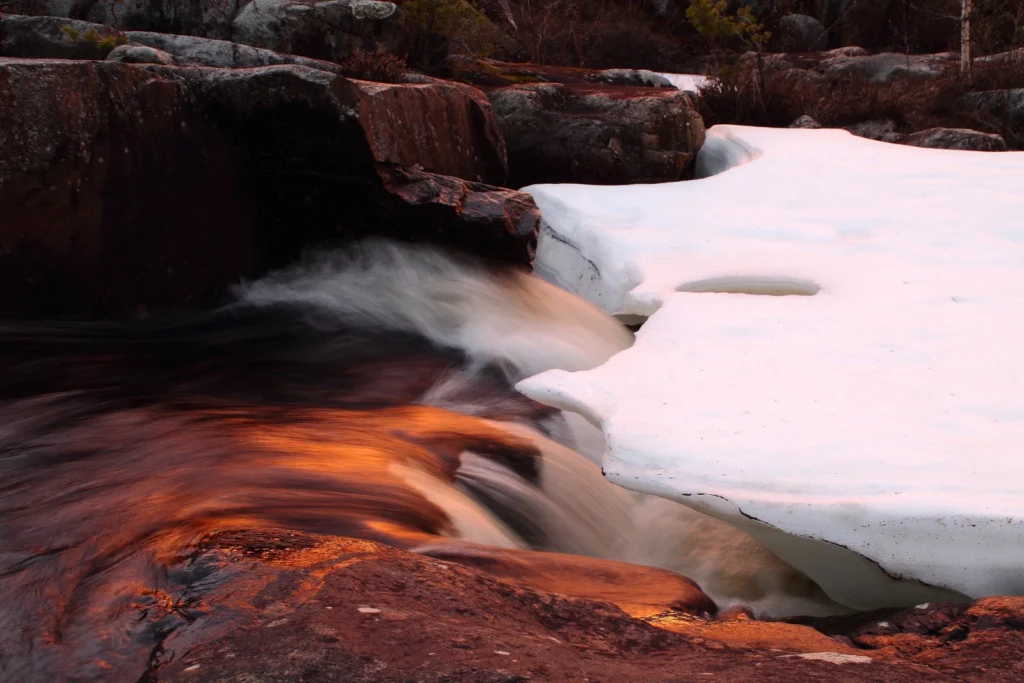
Imaggeo on Mondays: Symbiosis of ice and water
This mesmerising photograph is another of the fabulous finalists (and winner) of the 2017 imaggeo photo contest. Imaggeo is the EGU’s open access image repository. It’s a great place to showcase your photographs; so whether you are stuck in the lab this summer, frantically typing away at a paper, or are lucky enough to be …[Read More]
GeoPolicy: How can geoscientists make the most of the Horizon 2020 programme?
As a geoscientist, I’m sure that you have heard of Horizon 2020, an EU programme that is allocating almost €80 billion to research and innovation over 7 years (from 2014 to 2020). This money is distributed throughout various scientific divisions and provides a plethora of opportunities for scientists, not only within the EU but also …[Read More]
Image of the Week – Drilling into a Himalayan glacier
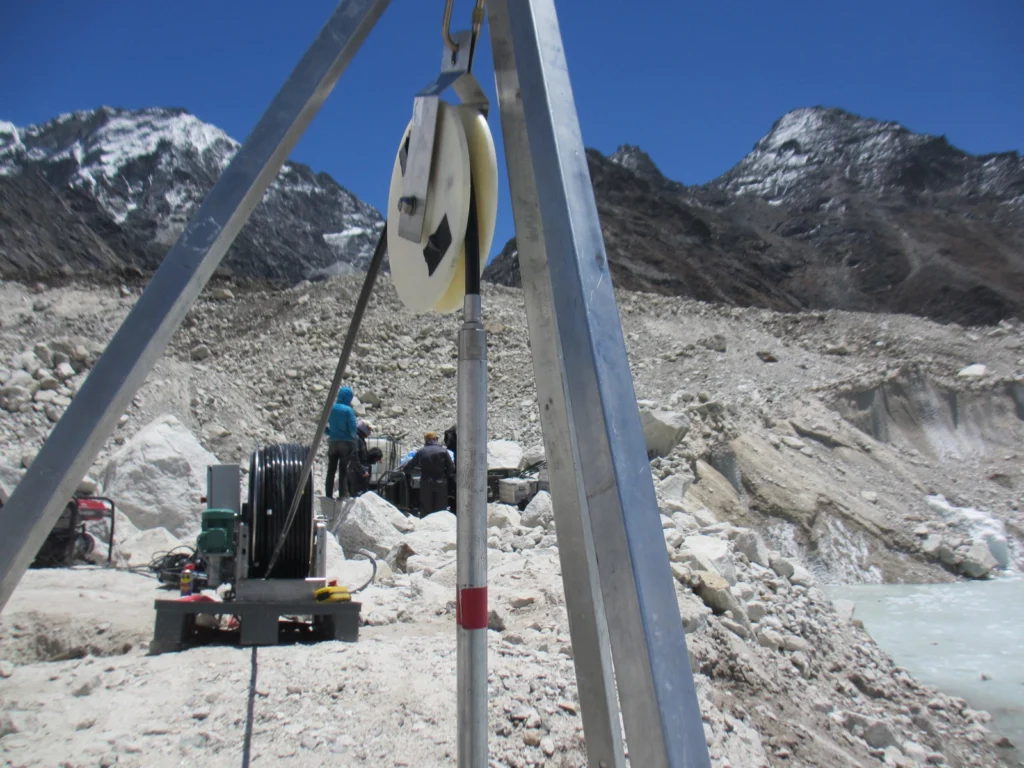
How water travels through and beneath the interior of debris-covered glaciers is poorly understood, partly because it can be difficult to access these glaciers at all, never mind explore their interiors. In this Image of the Week, find out how these aspects can be investigated by drilling holes all the way through the ice… Hydrological …[Read More]
PICO in the picture
Like everyone else, in the beginning I was skeptical of the newly introduced presentation format at the EGU – the PICO sessions. PICO stands for Presenting Interactive Content. Half talk, half poster – this is a new design that demands a completely new and unfamiliar preparation of the presenter, and yes admittedly at first this …[Read More]
Shape the EGU 2018 scientific programme: Call-for-sessions is open!
Do you enjoy the EGU’s annual General Assembly but wish you could play a more active role in shaping the scientific programme? Now is your chance! From today, until 8 Sep 2017, you can suggest: Sessions (with conveners and description), or; Modifications to the existing skeleton programme sessions NEW! Suggestions for Short courses (SC) will …[Read More]