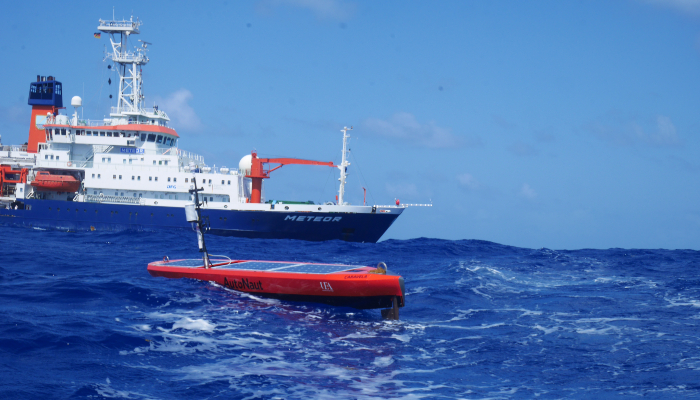
As many seagoing oceanographers find themselves on land for the foreseeable future, we’ve decided to share a tale of a research cruise to fill that ship-shaped void. Back in January 2020, four research vessels ventured out into the Tropical North Atlantic as part of the Eurec4a and ATOMIC campaigns. Eurec4a’s aim: to investigate the couplings between clouds, circulation and convection ...[Read More]
Seismology
From light to waveform: how fiber-optic cables can be repurposed as seismic arrays
What is Distributed Acoustic Sensing (DAS) and why is it exciting? Any observational seismologist would agree that our understanding of subsurface structure and dynamics is in great part limited by our ability to acquire data at the right locations, with the necessary spatial and temporal resolution. However, although our ultimate objective would be to cover the Earth with high-quality, broadband ...[Read More]
Geochemistry, Mineralogy, Petrology & Volcanology
‘Job’ alert! GMPV is looking for a (deputy) early career scientist rep!
The Geochemistry, Mineralogy, Petrology and Volcanology division of the European Geosciences Union is looking for a new Early Career Scientist representative! The current rep will stand down at the General Assembly in 2021, but we’d like some handover time between reps so we’re advertising now with the aim of the incoming rep starting in ~November 2020. They’ll officially be the ...[Read More]
GeoLog
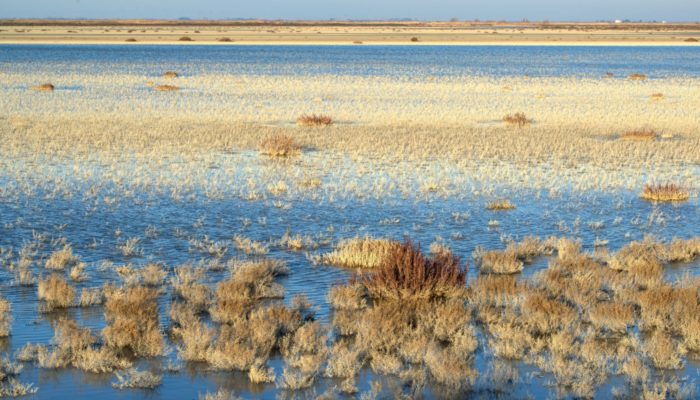
Imaggeo On Monday: The kidneys of the Planet
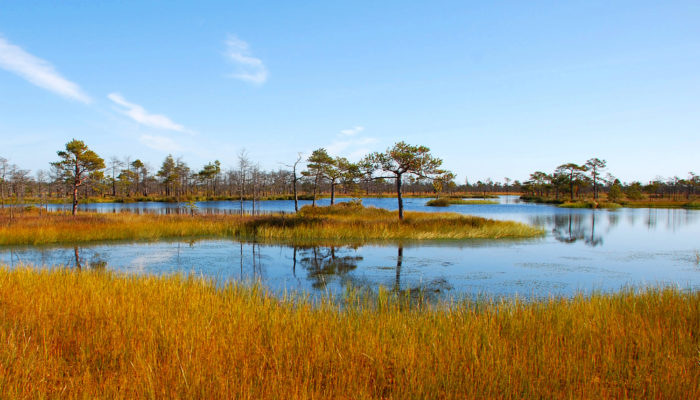
In the past, humans considered wetlands as morbid environments where it was difficult, if not impossible, to live. Wetlands, instead, are vital to the health of wildlife and humans, as the Ramsar convention stated in 1971. Wetlands regulate the water flow, buffering droughts as well as floods, and also contribute to the provision of clean water. In addition to water flow regulations and to the pro ...[Read More]
Natural Hazards
Pros & cons of an academic life
The life of an academic is supposed to be fulfilling. To study a specific topic, understand it and share the acquired knowledge with everyone is something of great societal value and should make anyone proud. But, everything in life comes with pros and cons. So, today we will try to talk about the beauty and the problems that come with being an academic. My name is Luigi Lombardo and today I will ...[Read More]
GeoLog
GeoRoundup: the highlights of EGU Journals published during August!
Each month we feature specific Divisions of EGU and during the monthly GeoRoundup we will be putting the journals that publish science from those Divisions at the top of the Highlights roundup. For August, the Divisions we are featuring are: Biogeosciences (BG) and Soil System Sciences (SSS). They are served by the journals: Biogeosciences (BG), SOIL, Advances in Geosciences (ADGEO), Earth Surface ...[Read More]
GeoLog
3 ways geoscientists can support the Biodiversity Strategy for the EU’s Green Deal
The European Union Green Deal outlines an ambitious plan for turning climate and environmental challenges into opportunities to make the EU’s economy sustainable and make Europe the first climate-neutral continent. This plan covers a wide range of topics such as preventing biodiversity loss, achieving net-zero pollution and making the agricultural industry more sustainable. These topics include sp ...[Read More]
Cryospheric Sciences
Climate Change & Cryosphere – Glacier retreat poses new challenges in the Central Andes
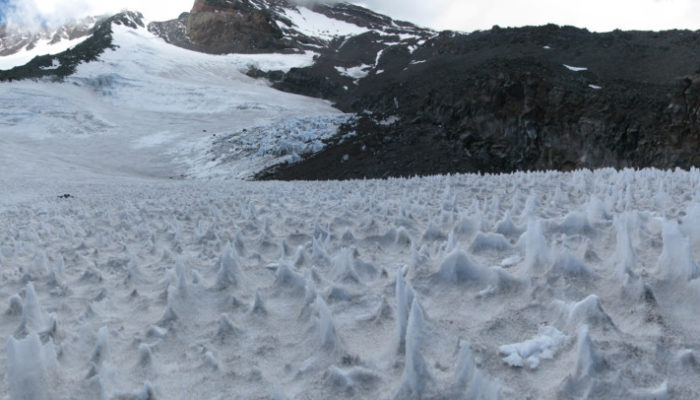
When you hear of Chilean glaciers, you probably think about the large glaciers of Patagonia. However, glaciers can be found further north in Chile as well (see this previous post). While the melting of the Patagonian glaciers mainly affects the global human population by contributing to sea level rise, the retreat of glaciers in central Chile affects the local human population directly in terms of ...[Read More]
Geodynamics
The Sassy Scientist – Flavours of mantle rheology
While drowning bacon in maple syrup, Eduardo has been wondering: Which rheology best describes the mantle? Dear Eduardo, You sound like a numerical modeller to me: someone who wants an equation (and one that actually works on top of it!) to describe the rheology of 84% of Earth’s total volume. You seem to seek one glove that fits all, and I am afraid to disappoint, but our planet does not wo ...[Read More]
GeoLog
Don’t leaf it to the trees: Amazonian soils also work to store carbon.
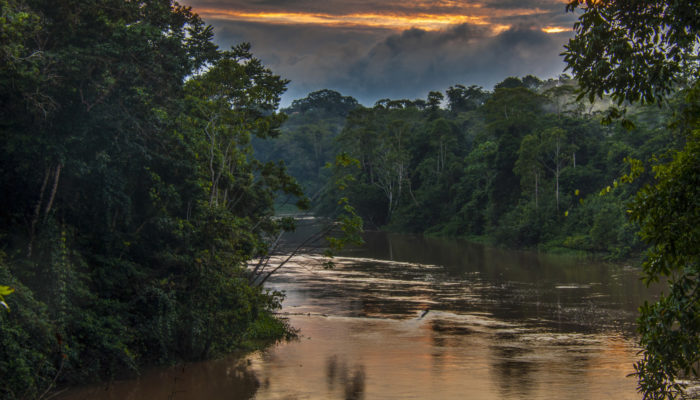
The Amazon rainforest covers an area of 5.5 million km² and is well known for being an invaluable global resource for carbon storage. But it’s not just the trees and vegetation of the Amazonian rainforest that lock in and store carbon – the very soil in these forests can do the same thing, according to research published in EGU’s journal SOIL earlier this year. In this study Carlos Alberto Quesada ...[Read More]