This interview is part of an ongoing series exploring the evolving role of interdisciplinarity across the geosciences. As environmental challenges grow more complex, addressing them requires not only disciplinary expertise but also meaningful collaboration and innovation across fields, methodologies, and communities. In each conversation, I ask Division Presidents to reflect on how cross-divisional work is …[Read More]
Latest posts
When multiple hazards interact and the data doesn’t: The multi-hazard modelling problem nobody wants to talk about
There is a quiet contradiction at the heart of natural hazard science. The regions most exposed to multi-hazard events are precisely the regions where we know the least. The Global South (comprising lower- and middle-income countries in Africa, Asia, Latin America and the Caribbean) is disproportionately affected by climate-related natural hazards, yet it is largely …[Read More]
Pride month in the era of DEI rollbacks: Reflections on resilience, and why pride was a riot after all
Pride month arrives this year against a backdrop of institutional irony. In the United States, federal research funding has been thoroughly weaponised and forced a massive scientific brain drain across the Atlantic. In Europe, a multi-million-euro effort to capture that exiled talent is underway, even as Europe’s own domestic politics fracture along the exact same …[Read More]
The Arctic’s Blind Spot: Why Satellites Struggle Where Ice Meets the Coast
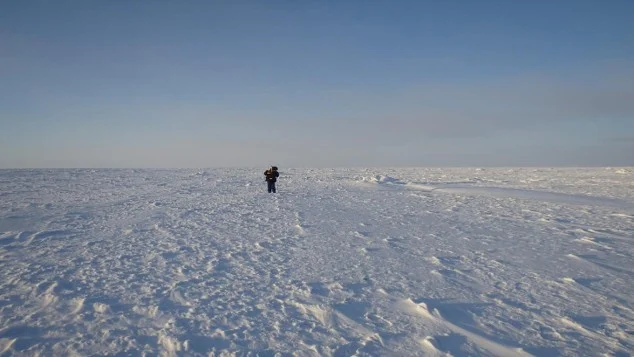
The first time I stood on sea ice, I could not tell which direction the coast was. A community member named Bryan could. That gap in situational awareness, between what a trained remote sensing scientist could read from the landscape and what a local hunter understood instinctively, turned out to mirror almost exactly the gap …[Read More]
Geodesy Cartoons – A Creative Tool for Outreach and Education
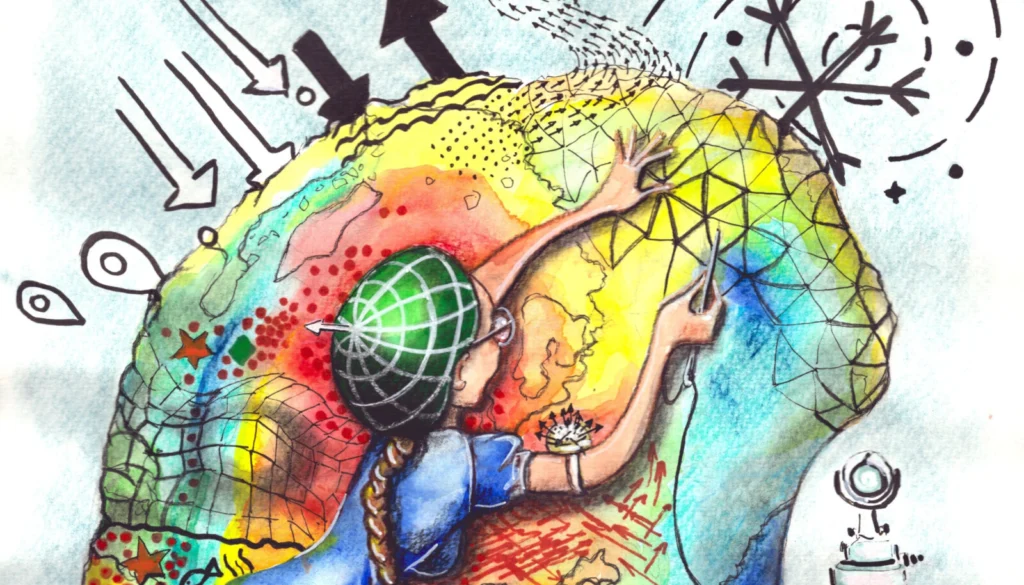
Geodesy is fundamental to understanding our dynamic planet. From monitoring sea-level rise and glacier melt to maintaining precise terrestrial reference frames for GNSS and Earth observation, geodesy provides the scientific backbone for many disciplines represented within the EGU and beyond. Despite its importance, geodesy often remains invisible outside the scientific community. Even within geosciences, many people …[Read More]
HydroTalks podcast: Introducing Ilias Pechlivanidis, the HS Division President-elect
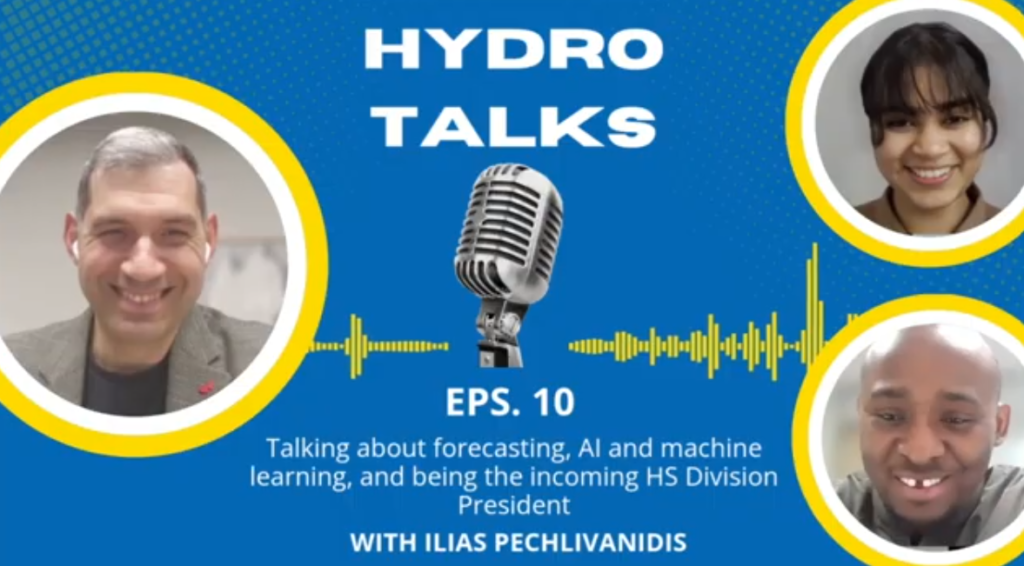
For this episode of HydroTalks, we’re thrilled to welcome Dr. Ilias Pechlivanidis, Senior Researcher and Associate Professor (Docent) in hydrology and water resources at the Swedish Meteorological and Hydrological Institute (SMHI), and Visiting Researcher at Uppsala University. He is currently the Vice President of the EGU Hydrological Sciences Division and will serve as Division President …[Read More]
(Almost) everything wrong with: Journey to the Centre of the Earth
Spoiler warning! Have you ever watched a science fiction movie and thought, huh, I wonder if that is actually possible? Now, I hope by the time the dinosaurs turned up during this film, that this transient thought had departed from your mind, but to satisfy the idle curiosity of those who wondered this during …[Read More]
EGU General Assembly 2026 – A Hydrological Wrap Up
The EGU General Assembly (GA) 2026 was an amazing success! Over the course of five sunny days in Vienna, 20,173 presentations were given across 1,014 sessions by the 20,027 on-site participants and 2,470 online attendees. There were plenty of events to choose from for the hydrologists attending. Across sessions, networking events, short courses, posters and medal …[Read More]
Melting Glaciers Move Lithospheric Plates and Fluctuate Mid-ocean Ridges’ Spreading
The rise and fall of massive ice sheets have shaped Earth’s surface for millions of years, but their influence may extend far deeper than previously recognized. This week in News & Views, Tao Yuan, a PhD student at the University of Colorado Boulder, explores how glacial cycles can alter lithospheric plate motions and even modulate …[Read More]
Join the EGU Ocean Sciences blog team 🌊
The EGU Ocean Sciences division blog is looking for new volunteer editors. So far, the team consists of two early career scientists, Jacqueline and Maurie — both working in ocean biogeochemistry — and we would love to grow. As an editor, you will keep an eye out for interesting new articles and datasets to write …[Read More]