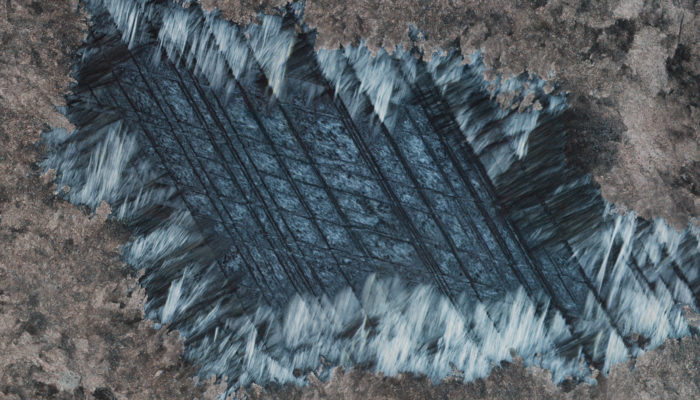
The structures in this photo might look three-dimensional, but they are completely flat. It is a photo of a polished thinsection of a rock, taken through a petrographic microscope under cross-polarized light. The width of the image is just 2 mm. The brownish mineral around the edges is carbonate, the white to grey mineral in the centre is serpentine, a water-bearing silicate mineral. The different ...[Read More]
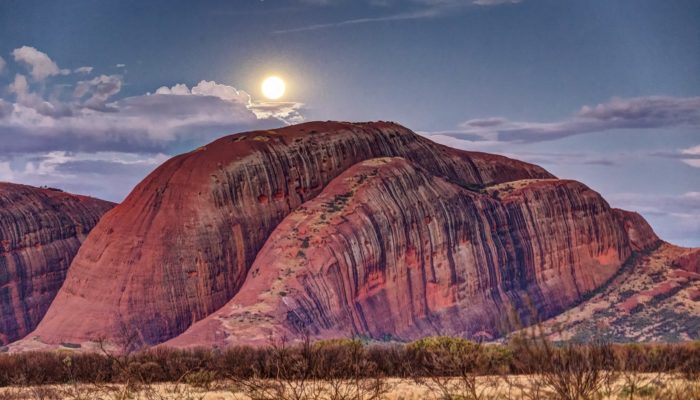
Imaggeo on Mondays: Moonrise at Kata Tjuta
This is a high-dynamic-range (HDR) photograph of moonrise over the hills of Kata Tjuta in central Australia. The HDR technique allows details to be seen in the deep shadows and well as in the brighter parts of the image. Kata Tjuta (formerly known as The Olgas) means ‘many heads’ in the Pitjantjatjara language, spoken by the local Anangu people. The location is approximately 360 km SW of the ...[Read More]
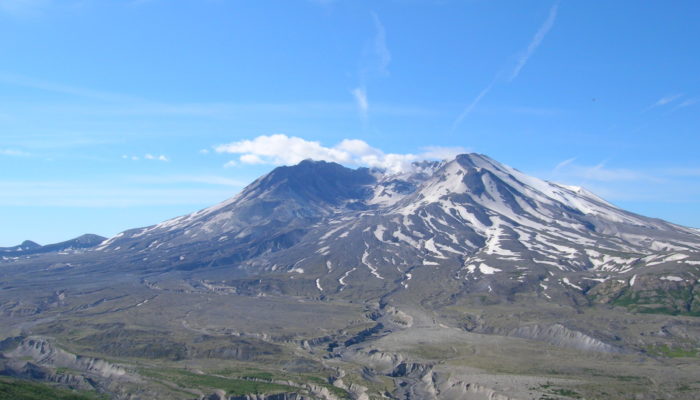
Imaggeo on Mondays: Loowit – the lady of fire.
Today marks the 40th anniversary of the explosive eruption of volcano Mount St Helens, in western Washington State in the USA. So we wanted to feature this iconic volcano in this week, in our weekly feature, Imaggeo On Mondays. If you would like your imaggeo image featured in our blog, please contact the EGU Communications Officer. Mt St Helens, in Washington State USA, is possibly one of t ...[Read More]
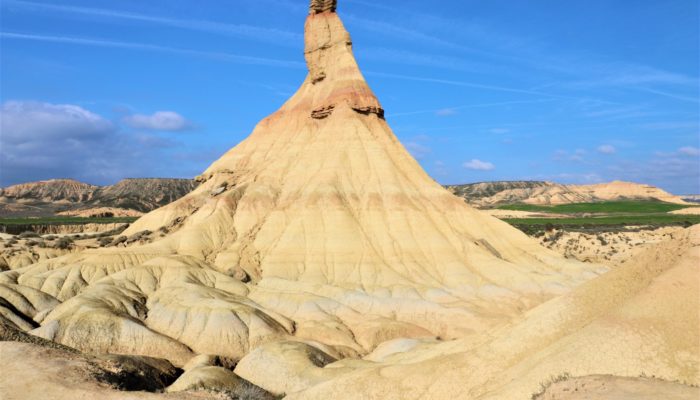
Imaggeo on Mondays: Striking erosion in the Bardenas Reales
The Castil de Tierra has become the symbol of the Bardenas Reales region which is geographically located in the south-eastern margin of the Navarra Province in northern Spain. The Bardenas Reales is a semi-desert natural region situated in the middle-western sector of the Ebro depression. The geology is made up of Tertiary and Quaternary sediments. Rainfall events, wind and high temperatures enhan ...[Read More]
Imaggeo on Mondays: A window to ice and fire
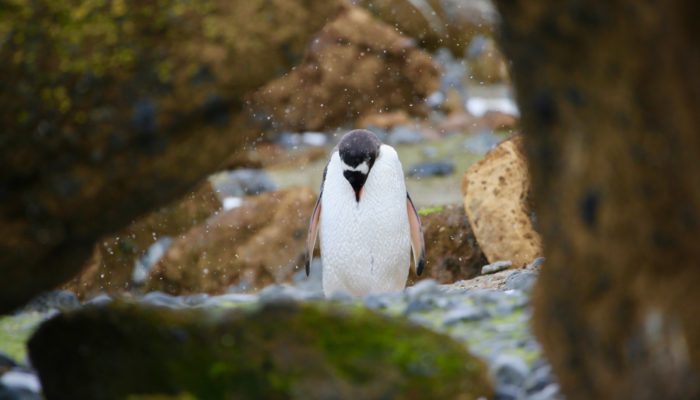
Brown Bluff is a basalt tuya located on the Tabarin Peninsula of northern Antarctica. This site supports a breeding colony of about 20,000 pairs of adelie penguins and about 550 pairs of gentoo penguins. Geologically speaking, Brown Bluff is simply fascinating. The towering bluffs were the result of an explosive volcanic eruption under ice. Large boulders have toppled from Brown Bluff to the beach ...[Read More]
Imaggeo on Mondays: Azerbaijan Mud Volcano
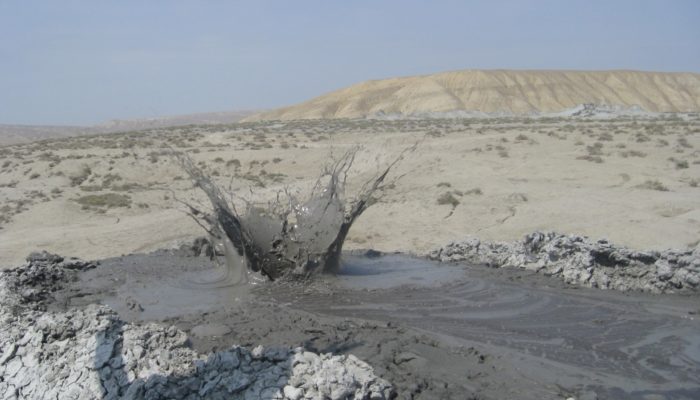
Azerbaijan one of the best places in the world to find mud volcanoes, because of the number that are in the country. Mud volcanoes are broadly spread across Azerbaijan. About 350 of approximate 800 mud volcanoes in the world are found in the Azerbaijani Republic. This includes both underground and submarine mud volcanoes, which also famed in Azerbaijan. There are more than 140 submarine mud ...[Read More]
Imaggeo on Mondays: Red triassic sandstone
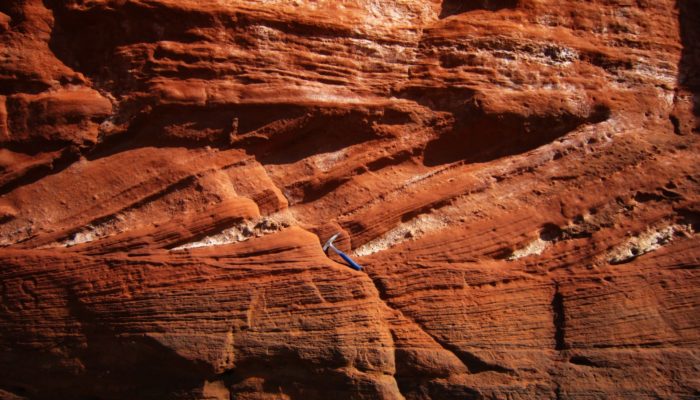
As child growing up on the south coast of Devon in the UK, I never really realised that our beaches were unusual. A glorious, glowing orange-red colour, the cliffs that you can see in this photograph by Sarah Weick produced similarly red sand beaches and warm ochre soils. The bright colour is the result of the sandstone and conglomerates of these rocks, collectively called the New Red Sandstones, ...[Read More]
Imaggeo On Mondays: Psychedelic Foraminifera
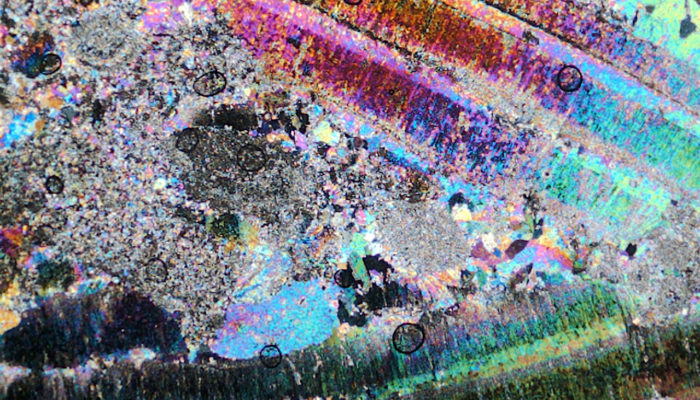
This is a transmitted light microscope image of a thin section – a 50-micron thick sliver of rock. This sample was collected from Jebel Hafit, a mountain which straddles the United Arab Emirates and Oman border. Jebel Hafit is approximately 900 m high and is made up of Eocene to Miocene age carbonate rocks which were mainly deposited in a shallow water, tropical setting. More specifically, this im ...[Read More]
Imaggeo On Mondays: Sulphur volcano
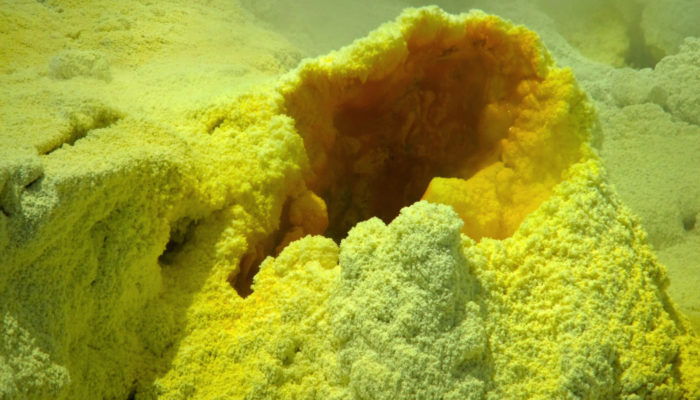
This photograph was taken in 2012 on a guided tour to Whakaari/White Island, an active volcano 50 km off the east coast of the North Island of New Zealand. The volcano lies on the northern end of the Taupo Volcanic zone and has possibly been active for the past 150,000 years. How dangerous this island is, was demonstrated by a number of explosive eruptions in recent history, the latest of which oc ...[Read More]
Imaggeo on Mondays: The mirror of the volcano
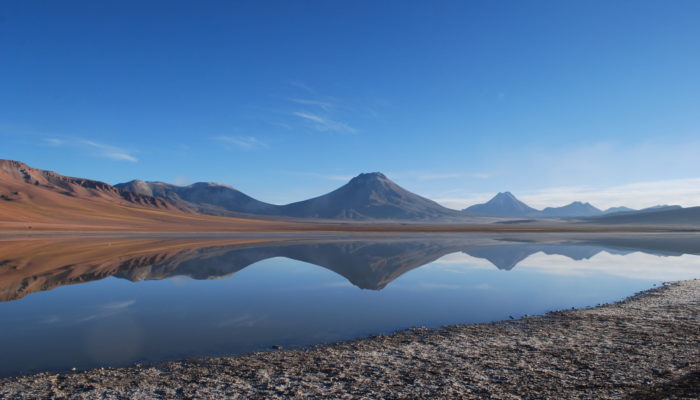
Lascar volcano is located in the Antofagasta Region of Chile. This stratovolcano (a conical volcano built up over time through successive eruptions of lava, tephra and ash) of the Central Volcanic Zone of the Andes is the most active volcano of the region, with a height of 5.592 m (18,34 ft). The last phase of eruptive activity before this photo was taken was on October 30, 2015, which produced an ...[Read More]