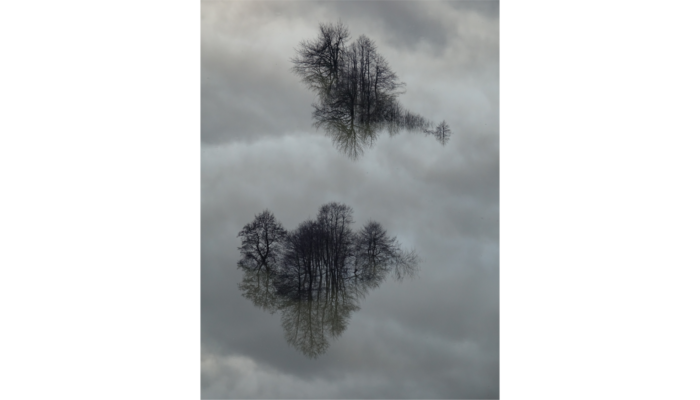
This picture shows several trees and the sky reflecting in floodwater during an event that occured in February 2019 in front of the famous Postojna cave (Slovenia). In Slovenian karst areas, floods are considered as a very common natural phenomenon that can occur several times per year. While most of them are not harmful for local people, the most severe events cause considerable damages and might ...[Read More]
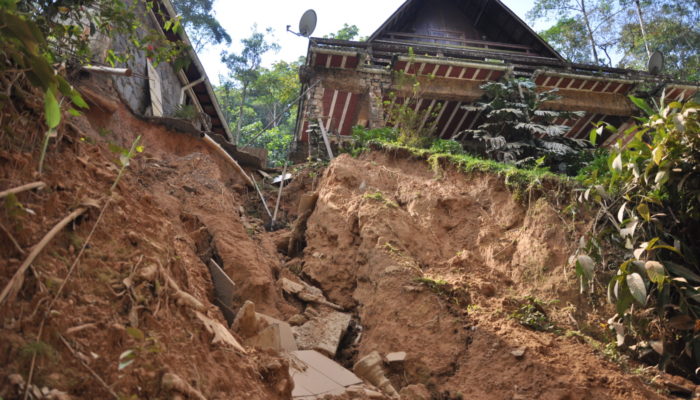
Imaggeo On Monday: Tragédia em Petropolis (Brazil)
A series of deadly landslides and debris flows occurred in March 2013 in Petropolis, a municipality in the Brazilian state of Rio de Janeiro. This photo has been shot a little more than a month later. It highlights the important “supporting role” played by sewer pipes in this disaster. Description by Michele Calvello, after the description on imaggeo.egu.eu. Imaggeo is the EGU’s ...[Read More]
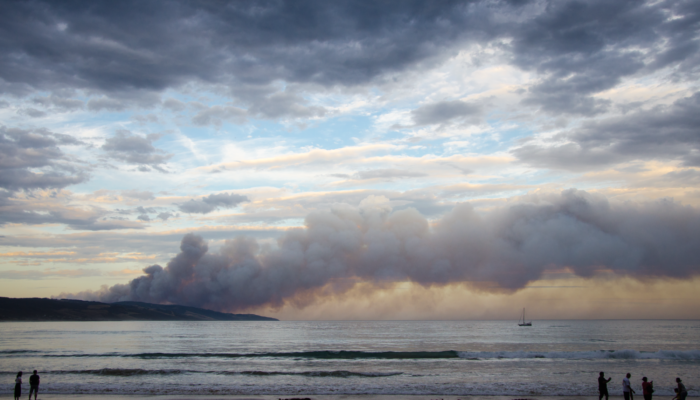
Imaggeo On Monday: The many sides of Australia’s bushfires
Bushfires in Australia are frequent in the hot and dry months characteristic of its climate. Their severity and seasonality is affected by climate change, and they impact extensive areas every year. At first sight, they might look harmful and dangerous, since they can cause property damage and loss of human life. However, the natural ecosystem has developed different strategies to either re ...[Read More]
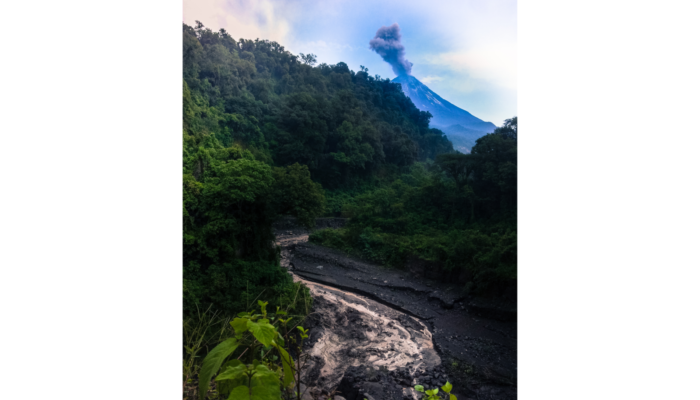
Imaggeo On Monday: Lahar in the jungle, Mexico
Volcán de Colima currently is the most active volcano in Mexico where many rain-induced lahars occur every year. La Lumbre ravine is the ephemeral channel that drains the west-southwestern slopes of the volcano. In 2016, while Volcán de Colima experienced a prolonged explosive phase, several lahars were documented in this channel. One of them is shown in his picture, taken on August 13, 2016, du ...[Read More]
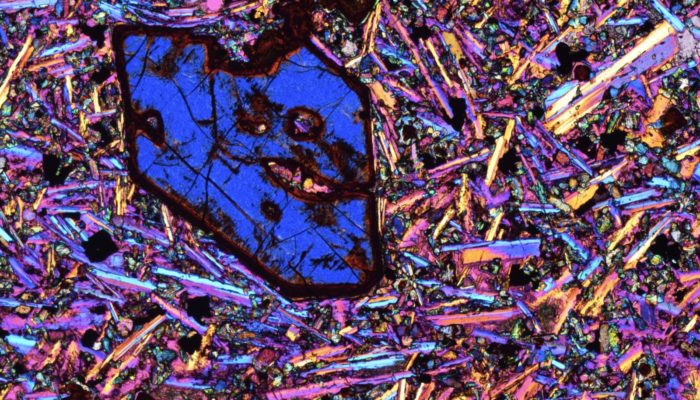
Imaggeo On Monday: Blue Olivine in an unusual basalt
Blue Olivine set in a matrix of pyroxene, magnetite and plagioclase in a basalt collected by the photographer, Bernardo Cesare, on the shore of the Sea of Galilee, Israel. Polarized light photomicrograph. Crossed polarizers and red tint plate. Width c. 2.7 mm. Who may have been throwing this stone a couple millennia ago? Description by Bernardo Cesare, after the description on imaggeo.egu.e ...[Read More]
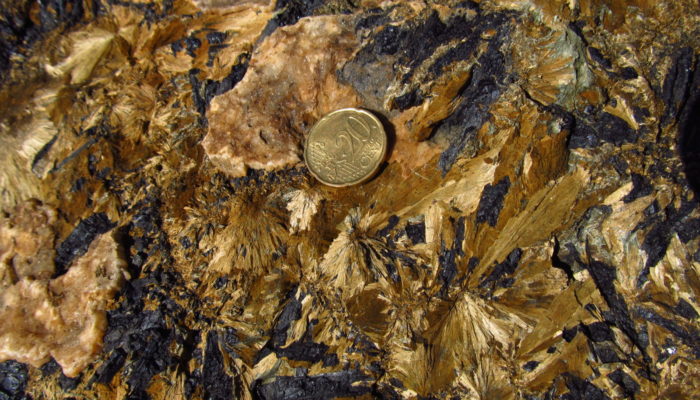
Imaggeo On Monday: Hedenbergite – Ilvaite skarn, Calamita, Island of Elba
In this photo taken on the Isle of Elba in Italy you can see several radiating crystals of greenish Hedenbergite, inter-grown with blackish coloured Ilvaite in skarn bodies. Skarn is an unique formation that formed as a result of the interaction between geothermal fluids and the host rock. In this case the geothermal fluids come from the Late Miocene Porto Azzurro monzogranite, and Mesozoic marble ...[Read More]
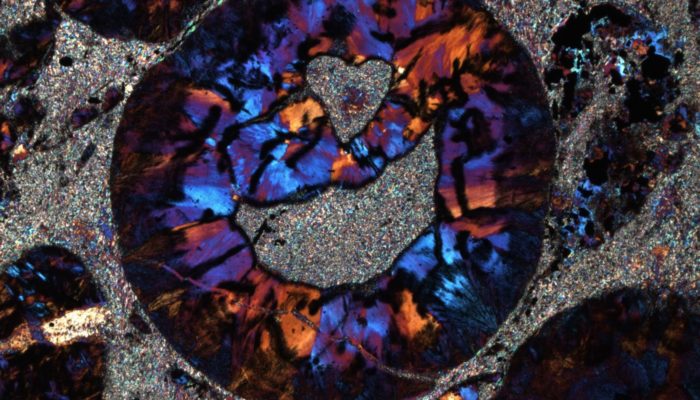
Imaggeo On Monday: Emoji from meteorites; impact spherule
This is a crossed polarized light photomicrograph of an impact spherule; a small mineralisation made when a meteorite hits the Earth and melts the rock at the point of impact, from Barberton Greenstone Belt, in South Africa. These spherules are the only remnants of Early Earth’s meteorite impact history, from between of 3.2 and 3.5 billion years ago. In this photo you can see the K-feldspar ...[Read More]
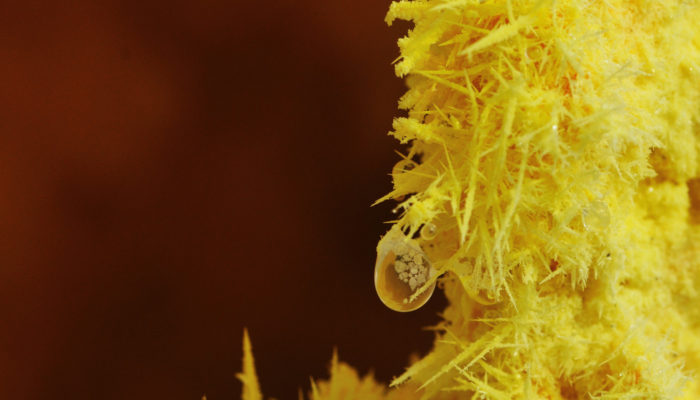
Imaggeo On Monday: Condensation drop on sulphur
Mineralogy, as a subject, often has a hard time. Despite it’s place at the core of the traditional geological sciences, and its importance in a huge variety of other subjects, mineralogy sometimes has a reputation of being complicated and inaccessible and, well, some people have even called it boring. This is also related to the way that minerals are often hugely misunderstood by non-geoscie ...[Read More]
Imaggeo On Monday: The kidneys of the Planet
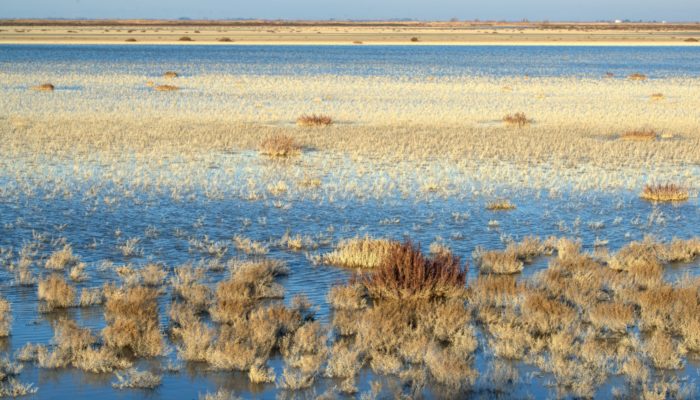
In the past, humans considered wetlands as morbid environments where it was difficult, if not impossible, to live. Wetlands, instead, are vital to the health of wildlife and humans, as the Ramsar convention stated in 1971. Wetlands regulate the water flow, buffering droughts as well as floods, and also contribute to the provision of clean water. In addition to water flow regulations and to the pro ...[Read More]
Imaggeo On Monday: The veins of the living planet
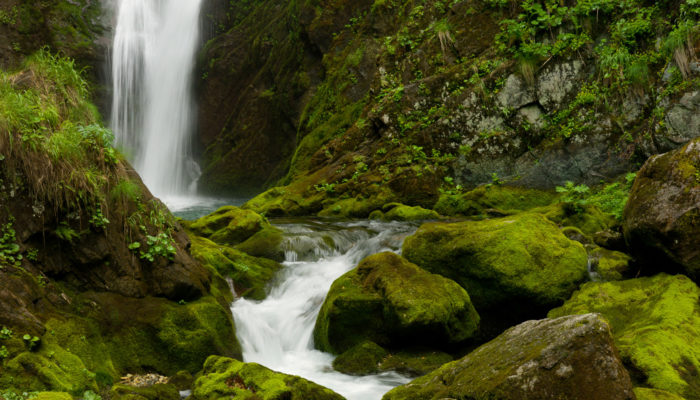
Today’s imaggeo on Monday provides us with a space to reflect on the interconnected nature of our planet’s systems. The photographer, Antonello Provenzale, wrote of this image: Earth is a living planet, where the water cycle plays an essential role. A waterfall in the mountains of Valle Pesio, Italy, in a landscape of vegetation and mosses, reminds us of the fluxes and cycles of water ...[Read More]