
GeoLog

General Assembly

Why choose a PICO session at EGU 2015?
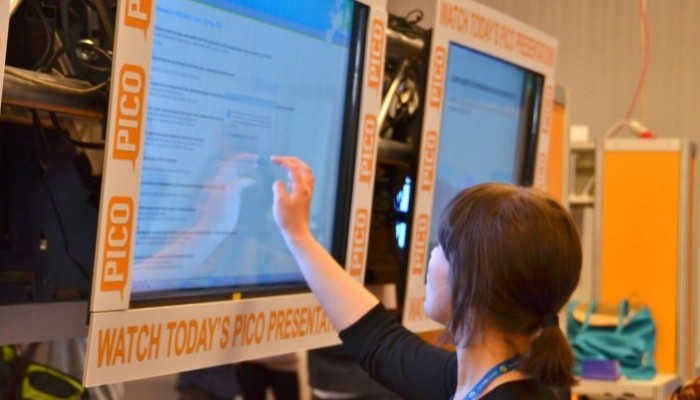
Why choose a PICO session at EGU 2015?

Some of the sessions scheduled for the upcoming EGU General Assembly are PICO only sessions. This means that, rather than being oral or poster format, they involve Presenting Interactive COntent (PICO). The aim of these presentations is to highlight the essence of a particular research area – just enough to get the audience excited about a topic without overloading them with information. PICO sess ...[Read More]

Imaggeo on Mondays: Layers of leg-like sandstone

John Clemens, a researcher from Stellenbosch University and one of the winners in the EGU Photo Contest 2014, opens our eyes to erosional processes in the Grand Canyon in this week’s Imaggeo on Mondays… The photo below was taken late in the afternoon while doing some geological tourism at the Grand Canyon in Arizona, USA. The light at this time of day is ideal for such locations as it has a ...[Read More]

GeoTalk: Want a record of historical floods? Ask the taxman

Extreme weather events, like catastrophic floods, are the malicious exclamation points of Earth’s chaotic and variable climate system; they arrive without warning and extract huge costs, both economic and humanitarian, from the communities they strike. Evidence suggests the frequency and severity of these events may be on the rise in a changing climate, but scientists struggle to place modern even ...[Read More]

Defining the age of humans

We are currently changing our planet like never before. But do these changes deserve a new name? The Anthropocene – a geological period marking the length of time for which humans have had a significant impact on the planet – was first proposed in the 1980s. But the word has gained significant attention in recent years thanks to the popularising work of Nobel prize-winning chemist Paul Crutzen. Hu ...[Read More]

Imaggeo on Mondays: A marvellous moving image

Every year, in association with our annual General Assembly, we run a photo contest to feature and celebrate fantastic geoscience images. Last year we introduced a moving image component to the competition, giving photographers the chance to submit short clips of great geoscience footage. Here’s this year’s highly commended entry by Matthias Buschmann… Svalbard’s stunning scenery (Credit: Matthias ...[Read More]

Announcing the winners of the EGU Photo Contest 2014!

The selection committee received over 200 photos for this year’s EGU Photo Contest, covering fields across the geosciences. Participants have been voting for their favourites throughout the week  and there are three clear winners. Congratulations to Trent Marwick, Velio Coviello and John Clemens – 2014’s fantastic photographers! Imaggeo is the EGU’s open access geosciences image repository. Photos ...[Read More]

Communicate Your Science Competition Winner Announced!

Congratulations to Louise Crochemore, the winner of the first ever Communicate Your Science Video Competition. Louise is a PhD student at the National Research Institute of Science and Technology for Environment and Agriculture France, and has  been investigating how to manage water resources effectively. Here’s her video, Hydrological Drought Predictions for Reservoir Management: What&#8217 ...[Read More]

GeoTalk: What can you learn from a human hair?

Jim Ehleringer is Director of the Stable Isotope Ratio Facility at the University of Utah in Salt Lake City in the US. In the past few years he has been developing a method for deducing people’s diets and travel history from a sample of their hair. Here, he talks to the EGU press office about his research. Thanks for agreeing to chat, Jim. Can you tell me a bit about how your project started? This ...[Read More]

At the Assembly: Friday highlights

The conference is coming to a close and there’s still an abundance of great sessions to attend! Here’s our guide to getting the most out of the conference on its final day. Boost this information with features from EGU Today, the daily newsletter of the General Assembly – pick up a paper copy at the ACV entrance or download it here. Be sure to attend today’s Alexander von Humboldt Medal Lecture by ...[Read More]

It’s not my fault

A line on a map is important. In the Beverly Hills region of Los Angeles a series of mapped fault lines are now the cause of a major controversy. Communities have been alarmed, money has been lost and legal proceedings are ongoing. It started in 1992. James Dolan and Kerry Sieh, two earthquake geologists at the California Institute of Technology, published a map in a field trip guidebook about the ...[Read More]