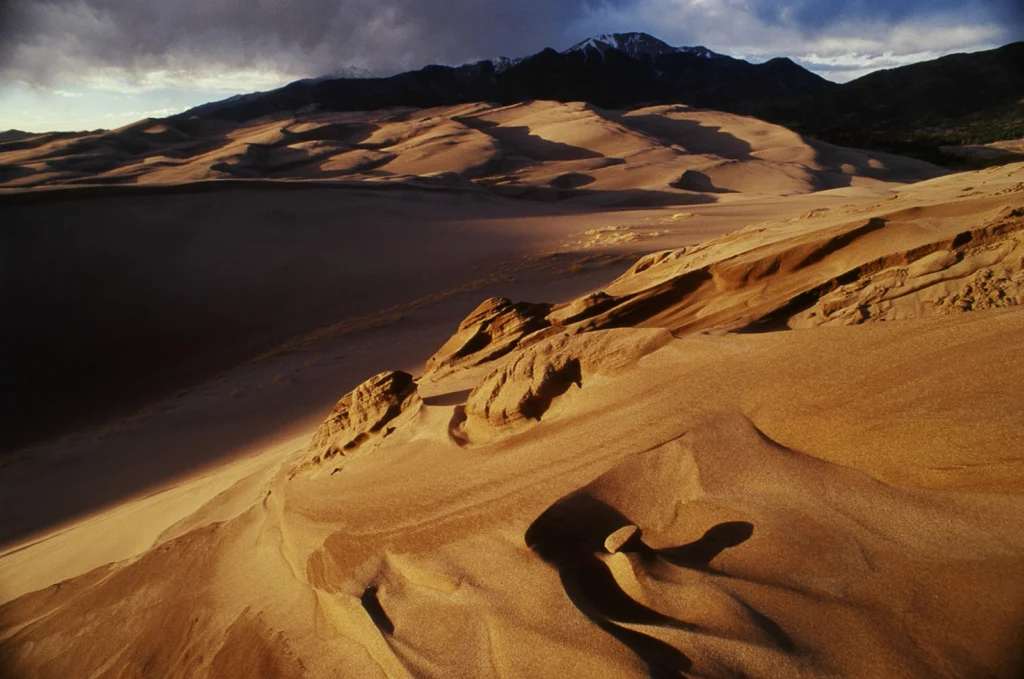
On a late afternoon in Colorado’s Great Sand Dunes, the sun came out from behind the clouds for a brief moment before it went behind the horizon, illuminating the stoss side of an eroding dune. Sand originated from lacustrine deposits in the San Luis Valley; the Sangre de Cristo mountains, which can be seen in the background, provided a source of some of the sand. This image therefore illust ...[Read More]
Imaggeo On Monday: Erosion and suspension
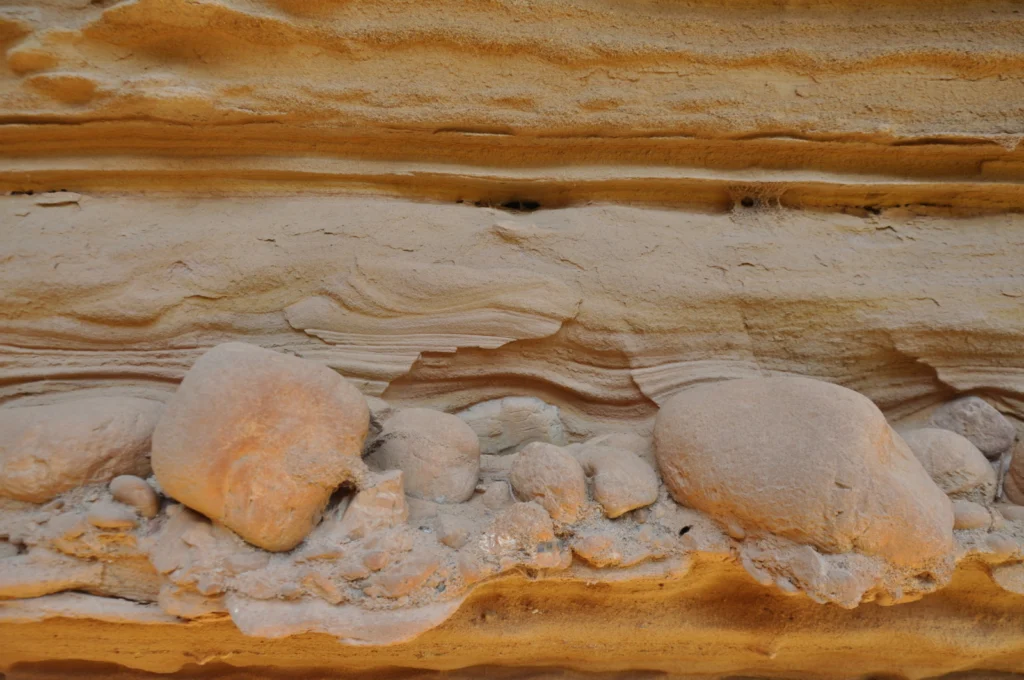
This image shows bottomset beds from the Kerinitis Gilbert-type delta. The Pleistocene delta uplifts along the active southern margin of the Corinth rift in Greece. A bottomset bed is one where layers of sedimentary material lying along the bottom of a body of water near the point of entry of a stream are subsequently covered by foreset and topset beds in the formation of a delta. Thus in this ima ...[Read More]
GeoPolicy: How geoscience can support the European Green Deal
Earlier this year, the EGU hosted the Integrating science into the EU Green Deal event in collaboration with the Intergroup on Climate Change, Biodiversity and Sustainable Development to outline how the geosciences can most effectively support the European Green Deal and ensure its ambitious biodiversity and zero-pollution targets are reached. The event provided policymakers, scientists and indust ...[Read More]
Imaggeo On Monday: Micro and Nano composition
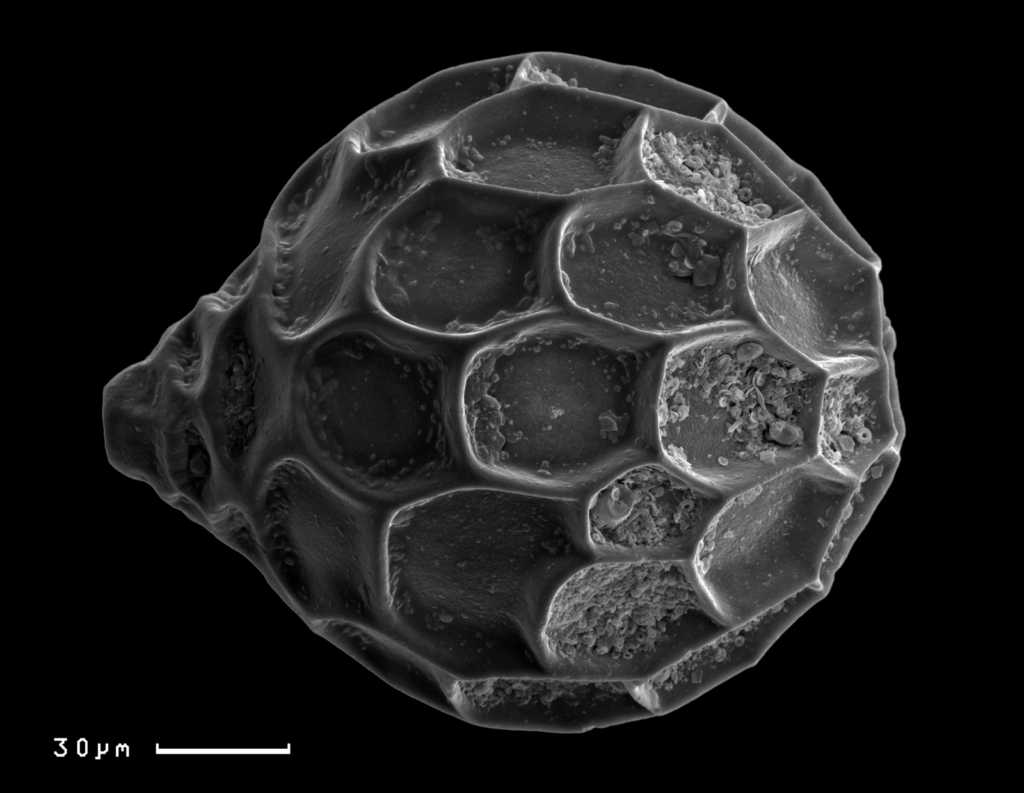
This image shows benthic foraminifera species of Favulina hexagona (Williamson, 1848) together with nanofossils enclosed inside the shell hexagons. This modern foraminifera species was found in the sediment core retrieved from the western slope of the Rio Grande Rise (western South Atlantic). Description by Liubov Kuleshova, after the description on imaggeo.egu.eu. Imaggeo is the EGU ...[Read More]
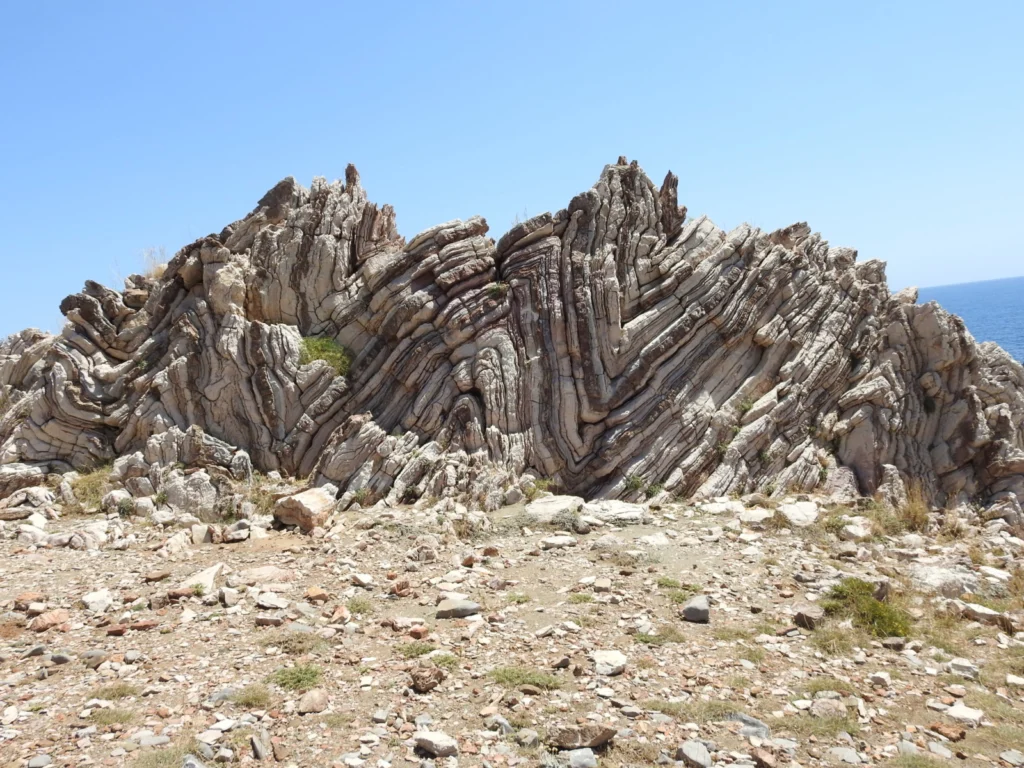
Imaggeo On Monday: Crete- Diplono Petris (Διπλόνο Πέτρις)
Diplono Petris near Agios Pavlos in the south of Crete island is one of Europe’s most impressive folded rock formations. The rock strata document an alternation of different limestone layers in the pindos top of the Cretan ceiling pile. These sediments, once deposited in a deeper ocean basin of the Pindos Ocean, were deformed in the course of Alpine fold tectonics, triggered by the Northern ...[Read More]
Geosciences Column: Spatial seismic hazard in western Indonesia – a new, adaptive, approach
A Natural Hazards Earth System Sciences (NHESS) paper proposes a new sampling method for reducing uncertainty in geographical location in seismic hazard risk analysis, with implications for the insurance industry and risk communication in general. Globally, rapid urbanisation is increasing the risk of exposure of human populations and infrastructure to natural hazards, including earthquakes ...[Read More]
GeoRoundup: the highlights of EGU Journals published during October!
Each month we feature specific Divisions of EGU and during the monthly GeoRoundup we will be putting the journals that publish science from those Divisions at the top of the Highlights roundup. For October, the Divisions we are featuring are: Natural Hazards (NH), Hydrological Sciences (HS) and Seismology (SM). They are served by the journals: Geoscientific Model Development (GMD), Hydrology and E ...[Read More]
Imaggeo On Monday: Reflections in floodwater
This picture shows several trees and the sky reflecting in floodwater during an event that occured in February 2019 in front of the famous Postojna cave (Slovenia). In Slovenian karst areas, floods are considered as a very common natural phenomenon that can occur several times per year. While most of them are not harmful for local people, the most severe events cause considerable damages and might ...[Read More]
GeoPolicy: Proposed cuts to EU science funding could slow future research and innovation
As a European scientific union with over 20,000 members, the EGU is well positioned to provide feedback on the current and future state of research and innovation funding in Europe. The recent cuts to the EU’s 2021-2027 research budget from European Parliament’s initial proposal of €120 billion to the current proposal of €81 billion (at 2018 prices), will not only affect researchers througho ...[Read More]
Imaggeo On Monday: Tragédia em Petropolis (Brazil)
A series of deadly landslides and debris flows occurred in March 2013 in Petropolis, a municipality in the Brazilian state of Rio de Janeiro. This photo has been shot a little more than a month later. It highlights the important “supporting role” played by sewer pipes in this disaster. Description by Michele Calvello, after the description on imaggeo.egu.eu. Imaggeo is the EGU’s ...[Read More]