Any journal editor will recognize this challenge: a new manuscript arrives for review. It’s great, and you’re enthusiastic about getting it into the system, but suddenly, there’s a problem. All the suggested reviewers are unavailable! What do you do now? Across publishing fields, it is becoming increasingly difficult to find suitable reviewers for scientific manuscripts. …[Read More]
Open Access
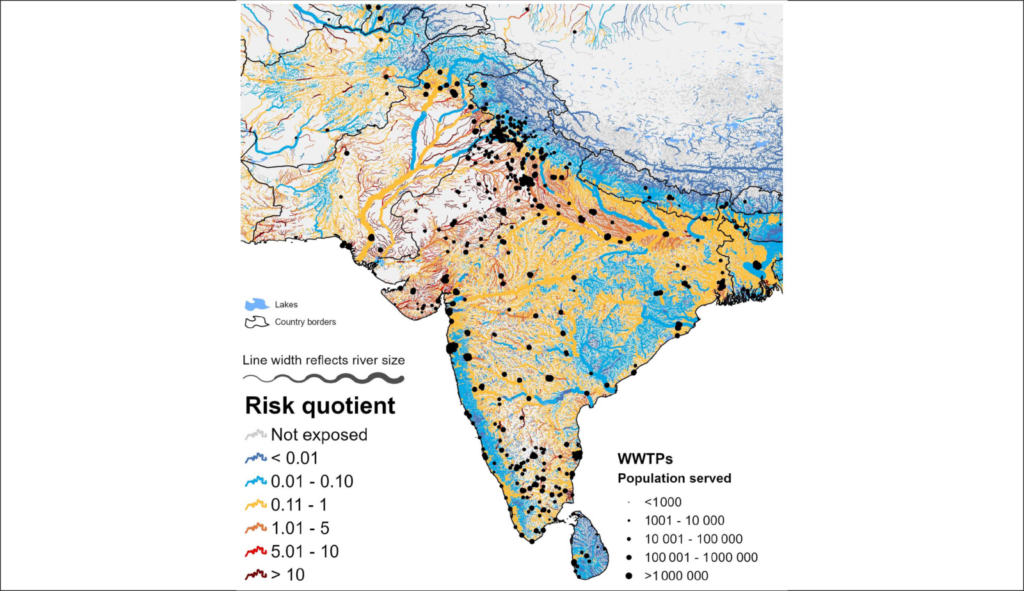
Here is how HydroFATE, a new high-resolution model, is predicting contaminant hotspots in global waterways
Ever wonder what happens to the chemicals and medications we use once they go down the drain? The fourth Sunday of September each year marks the World Rivers Day, and this post is dedicated to our global rivers and what humankind can do to preserve our waters. This is because pharmaceuticals and household products, even …[Read More]
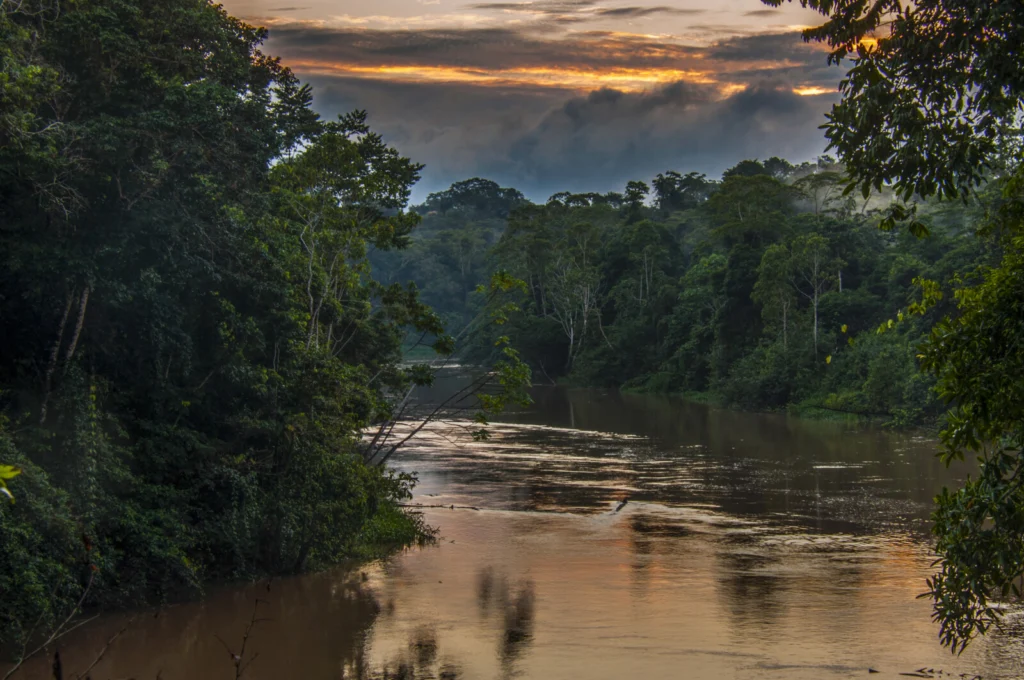
Tropical rainforest, the lungs of our planet, might be releasing more than just CO2!
When I was thirteen years old, my family and I almost lost our lives due to a carbon monoxide (CO) leak. I never stopped thinking about that incident even though it happened over twenty years ago. Not only because it was a premature realisation of my own mortality, but also because of how sneaky it …[Read More]
Dealing with data at EGU24? You need the Open Science and Data Help Desk!
Have you already encountered data questions such as: What data should I archive? What is FAIR? How do I write a good data management plan? or What does Open Science mean in practice? The Open Science & Data Help Desk is here for you at EGU24 in the Exhibition Hall X2 at #X212 and online! …[Read More]
An end to the ‘manel’? 3 things you can do to help reduce the existence of all-male-panels.
I am pretty sure that everyone has had this experience at one time or another. You attend a meeting or conference and, despite the diversity of people in the audience, the people on the podium invited to speak are uniformly men. If you come from the same part of the world as I do (Western …[Read More]
AI-based tools in scientific publishing: to what extent can we rely on them?
Academic publishing has considerably evolved in response to technological developments. Current discussions revolve around the rise of generative Artificial Intelligence (AI) tools or Large Language Models (LLM). They exceed the capabilities of simple spelling and grammar checkers or translation software and their use in the publication process has several implications that need to be considered. …[Read More]
GeoPolicy: Fluvial geomorphology and its potential for policy impact
In this month’s GeoPolicy blog post, Dr Grace Skirrow outlines how researchers can share their expertise with environmental regulators to have policy impact and the role that fluvial geomorphology can play in policy decisions. Fluvial Geomorphology and why it is relevant for policymakers Fluvial Geomorphology (“fluvial”, derived from the Latin “fluvialis”, meaning “of the river”) …[Read More]
GeoPolicy: Science-Policy Pairing Schemes in Europe – a regularly updated list
Pairing schemes are a great way for researchers to learn more about policymaking processes and how science is used in political decision-making! This month’s GeoPolicy Blog post highlights various European-based science-policy pairing scheme opportunities that researchers can apply for. Science-policy pairing schemes provide researchers with the opportunity to gain a better understanding about how policymakers …[Read More]
Learning from EGU’s first Peer Review Training: In conversation with Kifle Aregahegn
For the first time, EGU organized a Peer Review Training in September and October this year. It was attended by 50 participants, most of whom were early career scientists with little to no background in the peer review process. The training comprised three online sessions and an at-home exercise of reviewing real manuscripts. And of …[Read More]
What does open science mean in the real world? My experiences in becoming EGU’s editorial manager
For nearly 7 months now, I have held the position of EGU’s editorial manager. However, my interest in and passion for open access and open science in general goes back several years. Here, it is important to make the distinction: open science is a broad concept that encompasses transparency and accessibility in the entire research …[Read More]