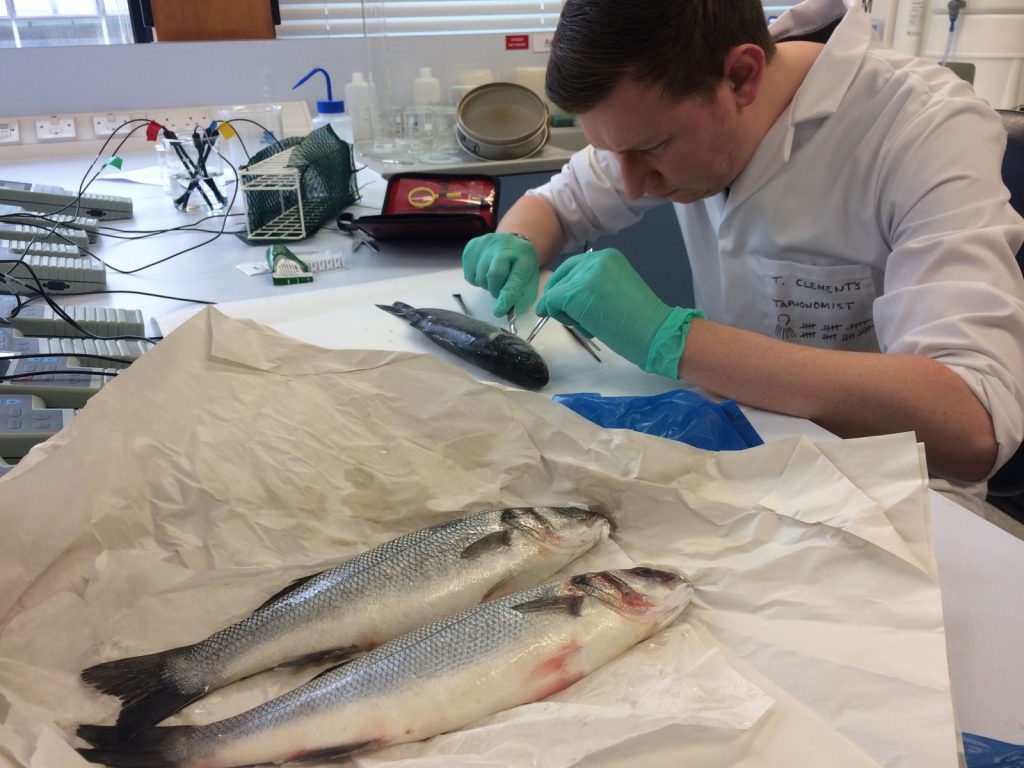
It’s 10am and Thomas Clements, a 3rd year palaeobiology PhD Student, is getting ready to check on his latest experiment. Full kited up in what can only be described as a space suit, Thomas carefully approaches the fume cupboard home to his latest specimen: a decaying seabass, balanced on a specially designed ‘hammock’ in a tank of salty water. Opening the lid to check on the rotting fish, Thomas i ...[Read More]
Sessions
Share the work you presented at EGU 2016: upload your presentations for online publication
This year it is, once again, possible to upload your oral presentations, PICO presentations and posters from EGU 2016 for online publication alongside your abstract, giving all participants a chance to revisit your contribution – hurrah for open science! Files can be in either PowerPoint or PDF format. Note that presentations will be distributed under the Creative Commons Attribution 3.0 Licence. ...[Read More]
Geo Talk: One of the youngest EGU 2016 General Assembly delegates sends sensor to space
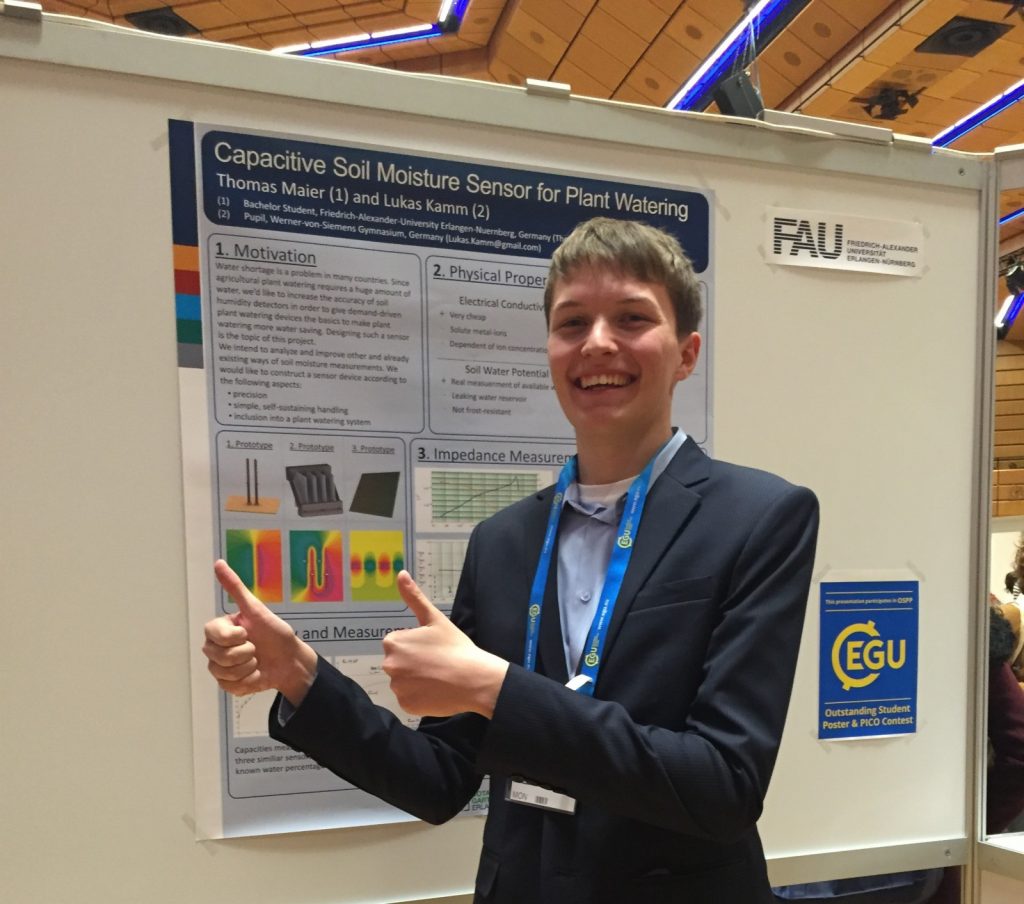
Presenting at an international conference is daunting, even for the most seasoned of scientists; not so for Thomas Maier (a second year university student) who took his research (co-authored by Lukas Kamm, a high-school student) to the EGU 2016 General Assembly! Not only was their work on developing a moisture sensor impressive, so was Thomas’ enthusiasm and confidence when presenting his r ...[Read More]
The final days of the mountain glaciers
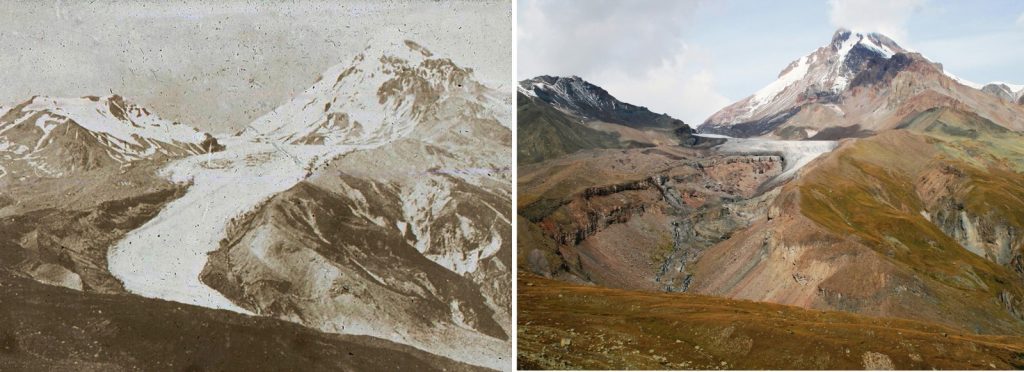
In 1896 British lawyer, mountaineer and author Douglas Freshfield climbed an obscure mountain in the Caucasus called Kasbek and in his book detailing his adventures he described the mountain: “From this point the view of Kasbek is superb: its whole north-eastern face is a sheet of snow and ice, broken by the steepness of the slope into magnificent towers, and seamed by enormous blue chasms.” D Fre ...[Read More]
GeoTalk: A smart way to map earthquake impact
Last week at the 2016 General Assembly Sara, one of the EGU’s press assistants, had the opportunity to speak to Koen Van Noten about his research into how crowdsourcing can be used to find out more about where earthquakes have the biggest impact at the surface. Firstly, can you tell me a little about yourself? I did a PhD in structural geology at KULeuven and, after I finished, I started to ...[Read More]
Imaggeo on Mondays: a big thank you from the EGU
Outside EGU General Assembly 2016. Credit: Kai Boggild/EGU (distributed via imaggeo.egu.eu) The past week in Vienna was a busy one! Hordes of Earth, ocean and planetary scientists came together to present, share and discuss their most recent scientific findings at the 2016 General Assembly. The conference was a great success, with over 4800 oral and 10300 poster presentations, as well as close to ...[Read More]
At the Assembly: Friday highlights
The conference is coming to a close and there’s still an abundance of great sessions to attend! Here’s our guide to getting the most out of the conference on its final day. Boost this information with features from EGU Today, the daily newsletter of the General Assembly – pick up a paper copy at the ACV entrance or download it here. The final day of the conference kicks off with the last Union Ses ...[Read More]
Counting the cost of natural disasters
Often, in the news, we are used to seeing disaster statistics reported as isolated figures, placed into context by the tragic human cost of floods, earthquakes and drought. The recent Ecuadorian earthquake that occurred on Saturday the 16th April, for example, was described as having an estimated economic cost of $820 million, which could rise as the scale of the disaster is revealed. But beyond t ...[Read More]
At the Assembly: Thursday highlights
Welcome to the fourth day of General Assembly excitement! Once again the day is packed with great events for you to attend and here are just some of the sessions on offer. You can find out more about what’s on in EGU Today, the daily newsletter of the General Assembly – grab a copy on your way in or download it here. The Union-wide session of the day focuses on deep geofluids as the bringers of ch ...[Read More]
Methane seeps – oases in the deep Arctic Ocean
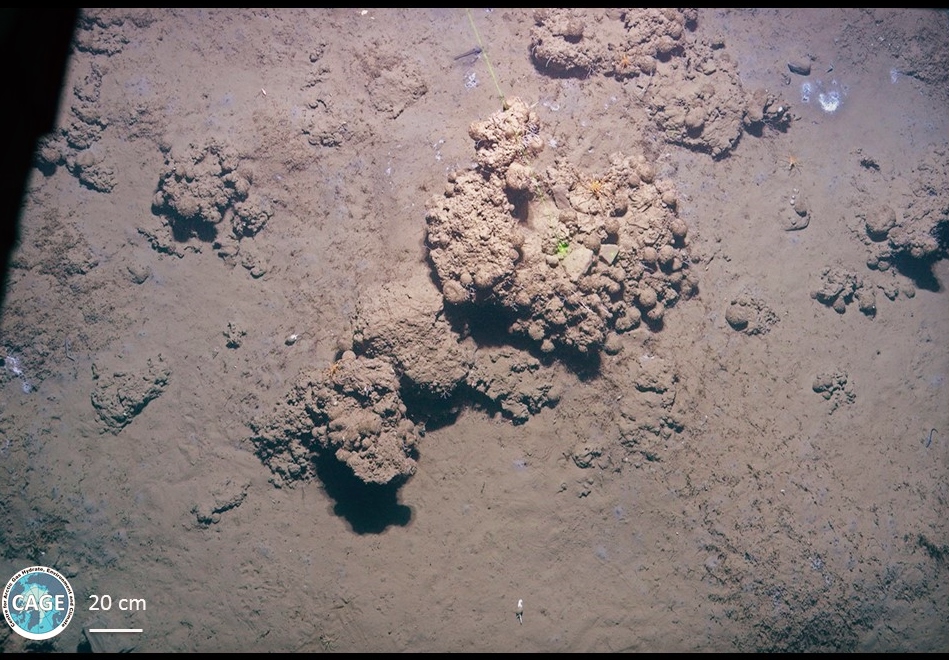
The deep Arctic Ocean is not known for its wildlife. 1200 metres from the surface, well beyond where light penetrates the water and at temperatures below zero, it it’s a desolate, hostile environment. There are, however, exceptions to this, most notably around seeps in the seafloor that leak methane into the water above. Here, methane is the fuel for life, not sunlight, creating oases in an otherw ...[Read More]