GeoLog

Sessions

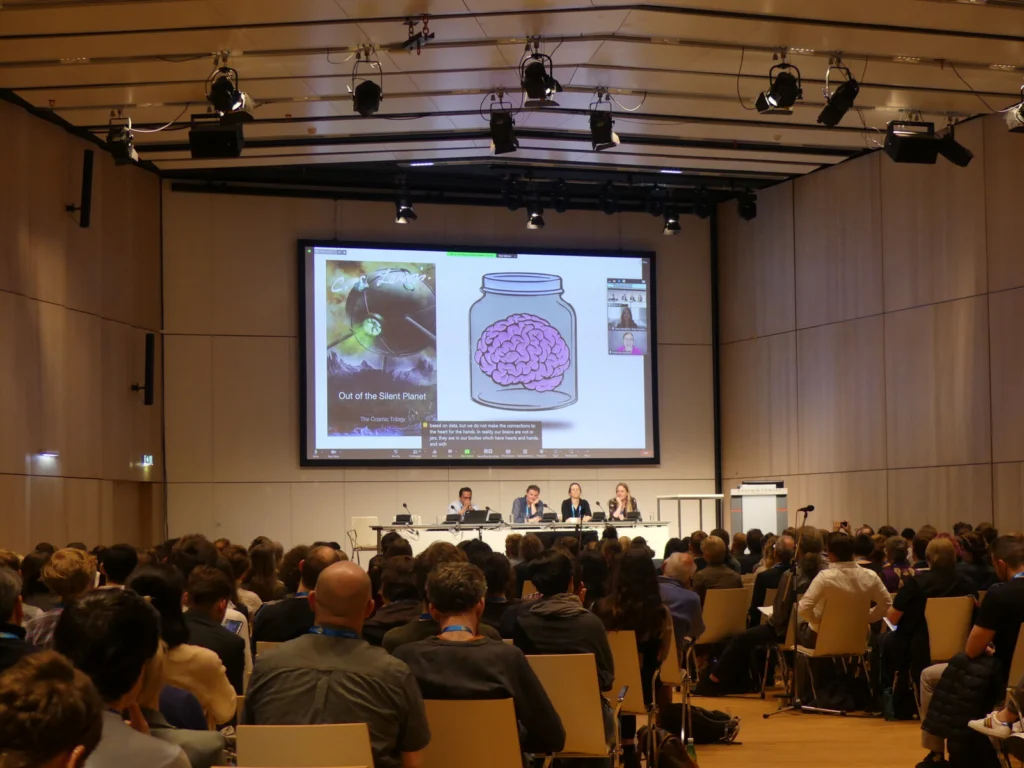
How to make your EGU26 presentation accessible!

How to make your EGU26 presentation accessible!

Most people spend a lot of time and effort making their presentation engaging and impactful, but how much time do you spend making sure it is accessible!? An accessible presentation takes into account the diverse backgrounds and abilities of the audience, to support a better understanding of the message and information you are trying to share. This is particularly important for scientific research ...[Read More]

EGU26’s Code of Conduct: standards of behaviour for all our participants

EGU26’s Code of Conduct: standards of behaviour for all our participants

Are you ready?! EGU26, Europe’s biggest meeting for Earth, planetary and space science research, is now just over a month away! But even sooner than that you only have two days left to grab your Early Bird rates for registration. If you have already booked your registration you will probably have noticed that by purchasing your registration to participate in EGU26 you will also have agreed t ...[Read More]

AI: the good, the bad, and the forgotten

AI: the good, the bad, and the forgotten

AI is here, and when I say here, I mean e-v-e-r-y-w-h-e-r-e. For all you know, this blog may have been written by an algorithm (it wasn’t — I’m not a robot, promise. Or am I?). In what feels like the blink of an eye, AI has gone from a curiosity to a fully-fledged co-pilot in science (and out of science). It’s generating satellite imagery, helping compute paleo-climate predictions, or writing your ...[Read More]

Raising the (melt)stakes! How robotic innovation reveals new findings on melting glaciers

Raising the (melt)stakes! How robotic innovation reveals new findings on melting glaciers

In the age of climate change, glaciers across the Arctic are melting, consequently reducing regional freshwater supplies and contributing to the ongoing rise in global sea levels. But how fast do they melt? And is it possible to predict that? A new study on the Xeitl Sit’ (LeConte) glacier in Alaska aims to answer these questions. The research group from Oregon State University, Harvard University ...[Read More]