One of the realities of studying the Earth, planetary or space sciences is that we are attempting to observe an experiment that has been in progress for billions of years, with variables that are most often far outside of our control. Many researchers try to understand these systems by recreating aspects of it, either in analogue experiments or by using simulations, where the variables can be adju ...[Read More]
Planetary and Solar System Sciences
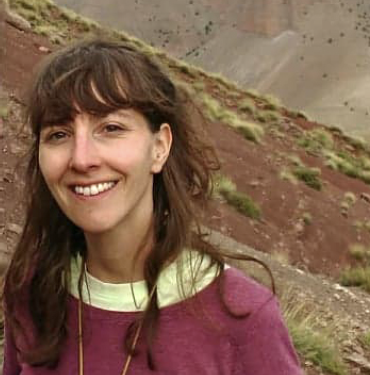
GeoTalk: Meet Liliana Macotela, researcher of radio waves at the Earth-Space boundary & Solar-Terrestrial ECS Representative!
Hi Liliana. Welcome to GeoTalk! Can you tell us a bit about yourself and your background? Hi, I was born in the highlands in Peru. This gave me the advantage of living more in contact with nature. Since I remember, I was fascinated about the shape of the clouds, the sounds of the wind in the mountains or trees, the sounds of the rain and what they do to our surrounding; the lightning flashes and t ...[Read More]
Winners announced: Here are the best EGU Blog Posts of 2022!
As future-focused as we like to be at EGU, we sometimes pause to look back at the year gone by – just a brief glimpse to appreciate all the good work of 2022! As always, we had so many inspiring and thought-provoking blog posts published this year across the EGU’s official blog GeoLog and division blogs. Thank you to each of you for your writing contribution! To continue our annual appreciation fo ...[Read More]
GeoTalk: meet Martin Archer, Space Physicist and Outreach expert!
Hi Martin. Thank you for joining me for this interview! To start, could you please tell our readers a bit about yourself and your research interests? I’m a space plasma physicist at Imperial College London, studying how the interaction between the solar wind and our magnetosphere leads to a huge amount of dynamics and waves that play a role in space weather. I’m also the Chair of EGU’s Outreach Co ...[Read More]
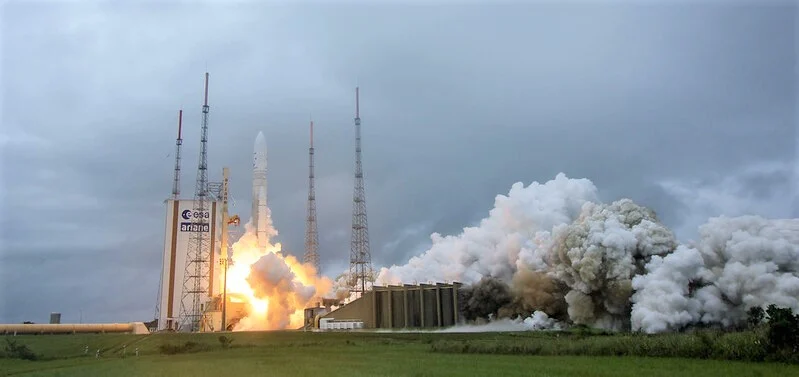
Tectonics on Ice…. learning about Jupiter’s Icy Moons and the JUICE mission.
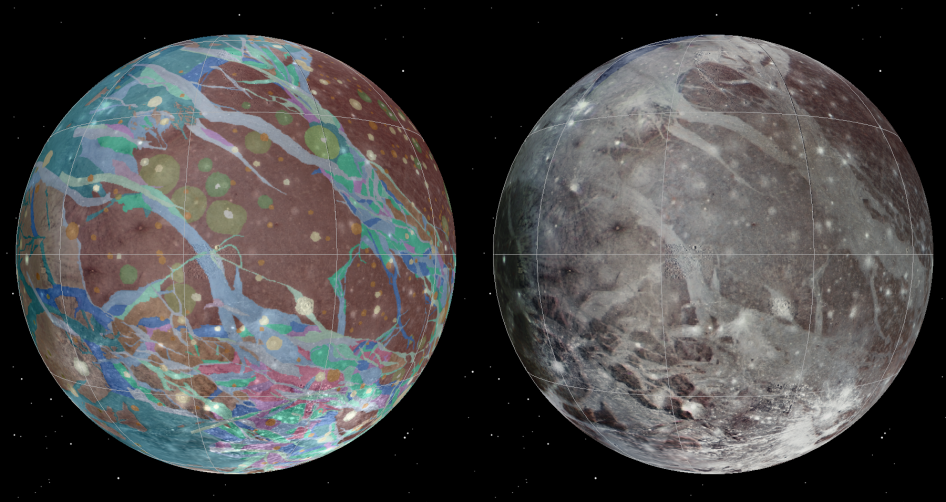
In April this year a new mission is being launched by the European Space Agency, called JUICE, which stands for the Jupiter Icy Moons Explorer. This mission aims to make detailed observations of the giant gas planet Jupiter and its three large ocean-bearing moons – Ganymede, Callisto and Europa – with a suite of remote sensing, geophysical and in situ instruments. But beyond the excitement of a ne ...[Read More]
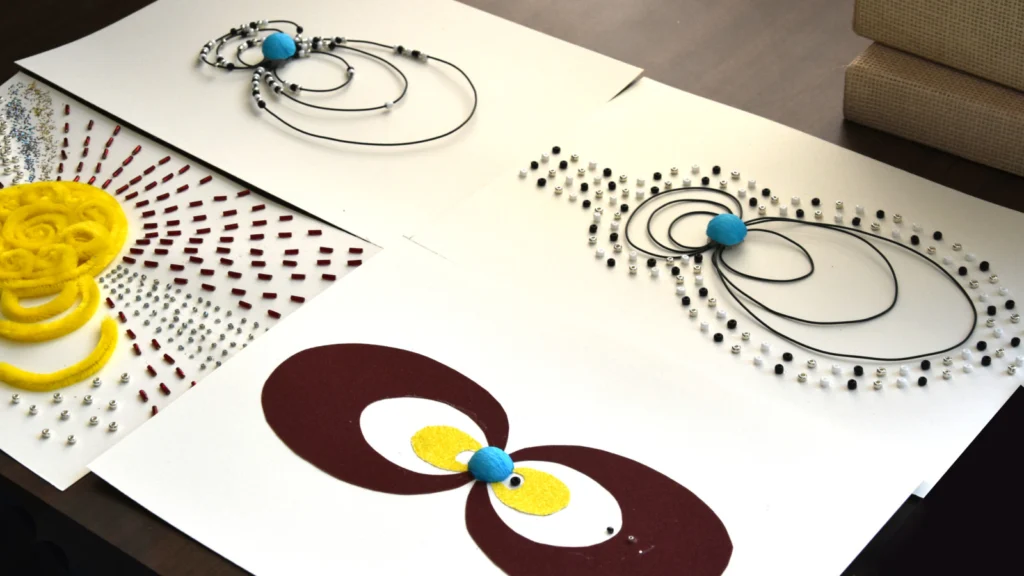
A touch of space weather! An EGU funded outreach project for blind and visually impaired students
We can all probably agree that the Northern Lights are one of the world’s most spectacular natural displays. But how do we share this beauty with children who are blind? How do we explain the processes behind the aurora creation to the visually impaired when all the illustrations of Earth’s magnetosphere are in 2D? The Northern Lights are just one of the consequences of ‘space weather’. Space weat ...[Read More]
GeoTalk: meet Alicia Fantasia, researcher in ancient Earth climates & ECS representative for SSP Division
Hello Alicia, thank you for agreeing to this interview! Before we dig in, could you tell us a little about yourself and your research? Hi Simon, many thanks for giving the nice opportunity to present my research activities. I am Alicia Fantasia and I was born in Switzerland. I have always been passionate about the Earth system, I am sensitive to current climate change issues, and … fascinated by d ...[Read More]
Congratulations to the winners of the EGU Best Blog Posts of 2021
At EGU, we like to believe that a new year is more meaningful when we pause to look back at the year gone by – just a brief glimpse to appreciate all our good work and progress! 2021 was certainly an excellent year for our blogging network at EGU. Across the EGU’s official blog, GeoLog and division blogs we had so many inspiring, thought-provoking and even entertaining posts this year. Thank you t ...[Read More]
The James Webb Telescope may forever alter our view of the universe
Where is Webb? This seemingly simple question is quickly making its way into everyday conversation, and not just in scientific and astronomy circles. After a long 32-year wait, NASA officially launched the James Webb Telescope a couple of weeks ago on 25 December 2021. More recently, the telescope deployed its final primary mirror segment on 8 January this year, a crucial milestone in its mission ...[Read More]
Imaggeo On Monday: C/2020 F3 (NEOWISE) – a memorable moment
Around 17th July 2020, the core of the Neowise comet starting giving off a greenish-glow. At first I thought this strange colour was due to some glitch in my camera sensor (I used an entry-level DSLR), but other photos online also started reporting this greenish glow. It has since been speculated to be because of the formation of a new vent on the surface of the comet, discharging gaseous ions whi ...[Read More]