GeoLog

Planetary and Solar System Sciences

Imaggeo On Monday: Space plasma in a jar
Imaggeo On Monday: Space plasma in a jar
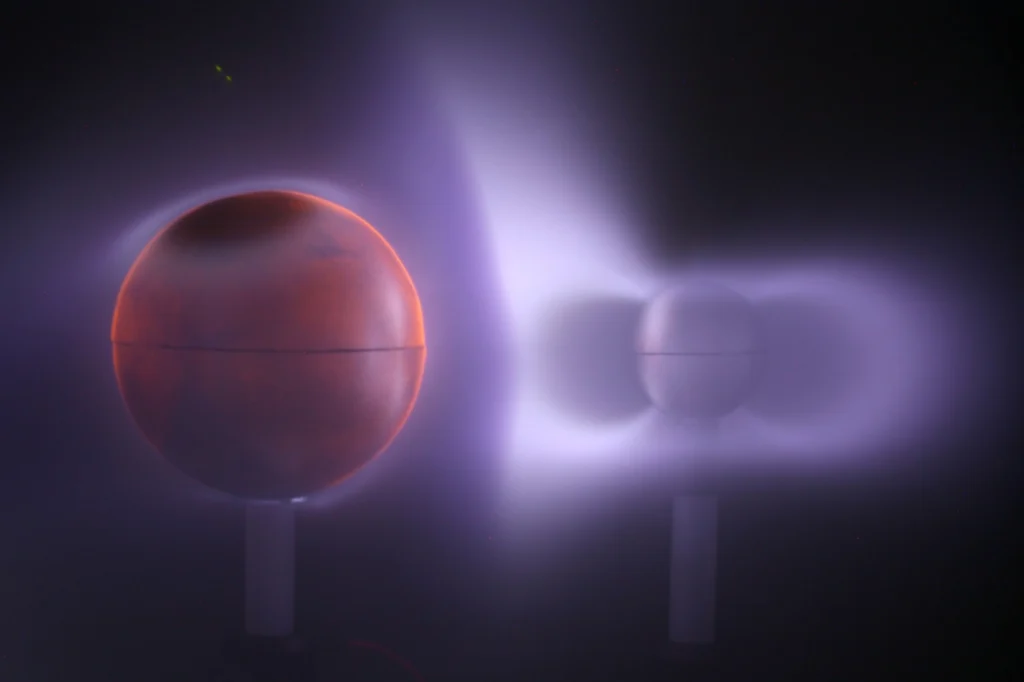
Laboratory visualisation of solar wind interaction with Earth’s magnetic field. The Van Allen radiation belt, Earth’s magnetosphere, “bow shock” and a solar coronal hole can all be seen, and are emphasized with the ‘Planeterrella experiment‘, a vacuum chamber in the shape of a bell jar with the ‘Sun’ on the left (in the form of …[Read More]

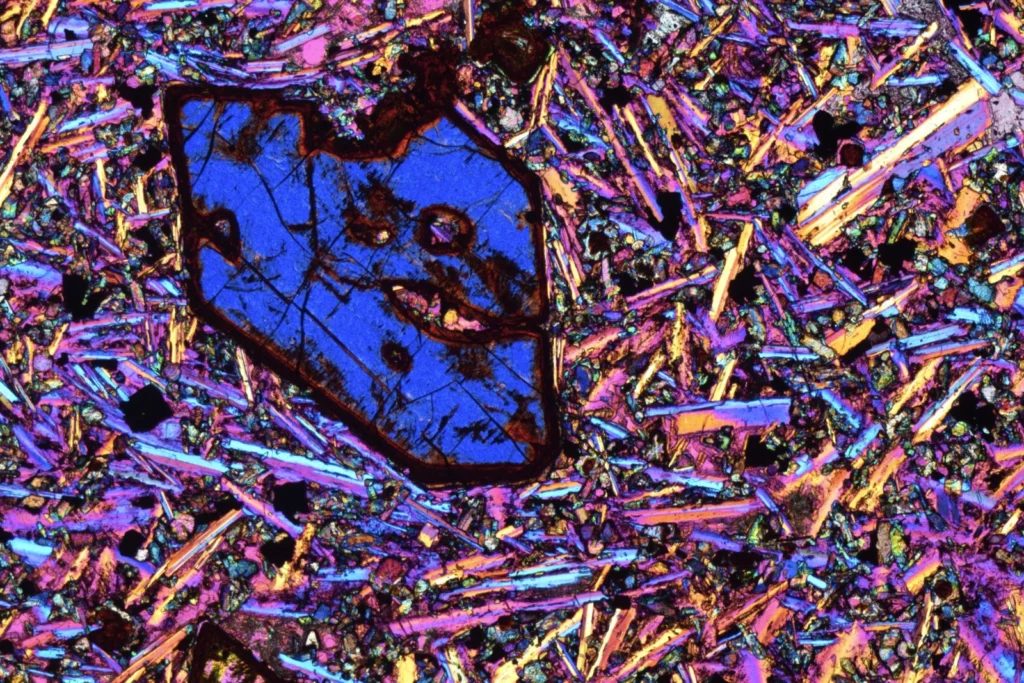
Imaggeo On Monday: Blue Olivine in an unusual basalt

Imaggeo On Monday: Blue Olivine in an unusual basalt

Blue Olivine set in a matrix of pyroxene, magnetite and plagioclase in a basalt collected by the photographer, Bernardo Cesare, on the shore of the Sea of Galilee, Israel. Polarized light photomicrograph. Crossed polarizers and red tint plate. Width c. 2.7 mm. Who may have been throwing this stone a couple millennia ago?   Description …[Read More]

Imaggeo On Monday: Emoji from meteorites; impact spherule

Imaggeo On Monday: Emoji from meteorites; impact spherule

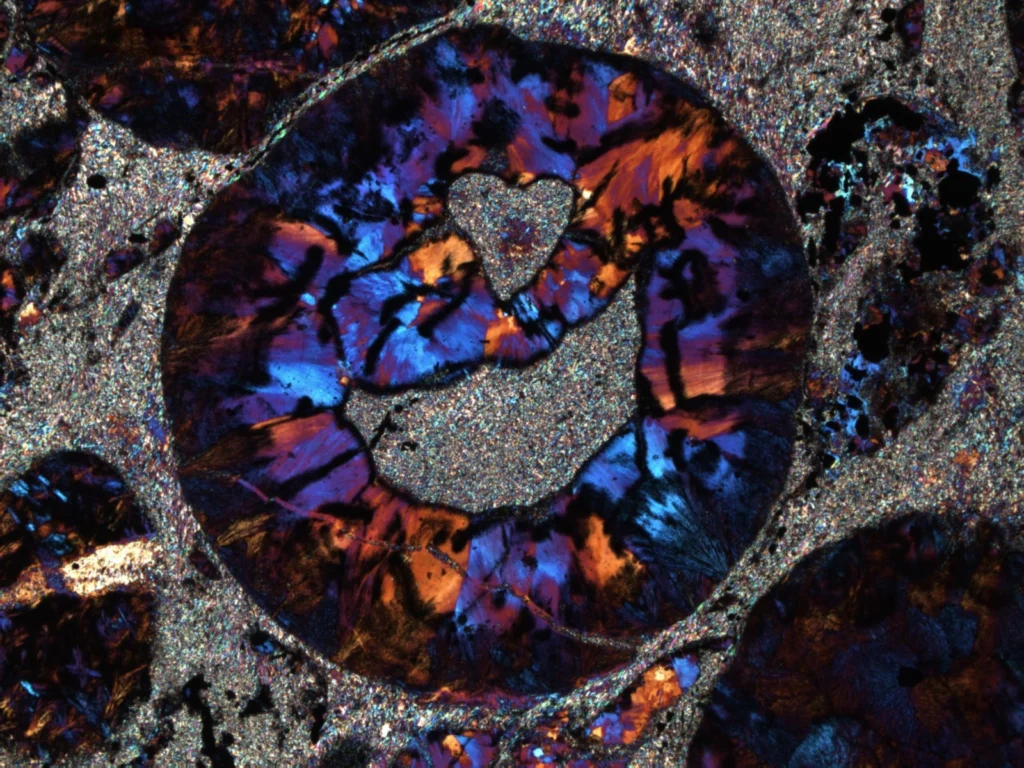
This is a crossed polarized light photomicrograph of an impact spherule; a small mineralisation made when a meteorite hits the Earth and melts the rock at the point of impact, from Barberton Greenstone Belt, in South Africa. These spherules are the only remnants of Early Earth’s meteorite impact history, from between of 3.2 and 3.5 …[Read More]

Winners of the EGU Best Blog Posts of 2019 Competition

Winners of the EGU Best Blog Posts of 2019 Competition

2019 was a brilliant year for our blogging network here at EGU. Across the EGU’s official blog, GeoLog, as well as the network and division blogs there were so many interesting, educational and just downright entertaining posts this year it was hard to get the blog editors to choose their favourites! Nevertheless in December, to celebrate the excellent …[Read More]

Conversations on a century of geoscience in Europe: Part 2

Conversations on a century of geoscience in Europe: Part 2

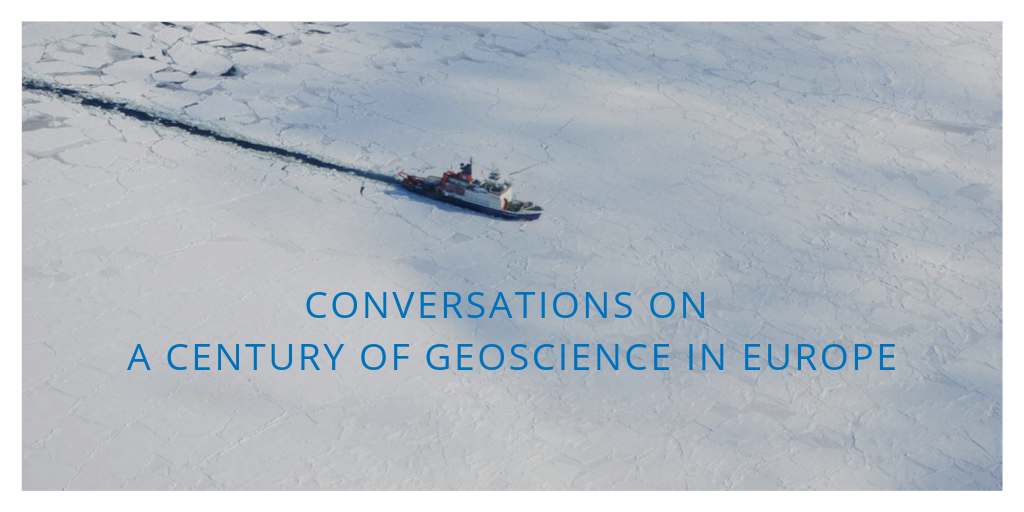
When you think about the last century of geoscience, what comes to mind? Perhaps Alfred Wegener’s theory of continental drift? Or Inge Lehmann’s discovery of Earth’s solid inner core? Over the last 100 years, geoscientists have made incredible contributions to our understanding of the Earth, the solar system, and beyond. The science community has explored …[Read More]

Imaggeo on Mondays: How do Earth’s Northern Lights form?

Imaggeo on Mondays: How do Earth’s Northern Lights form?

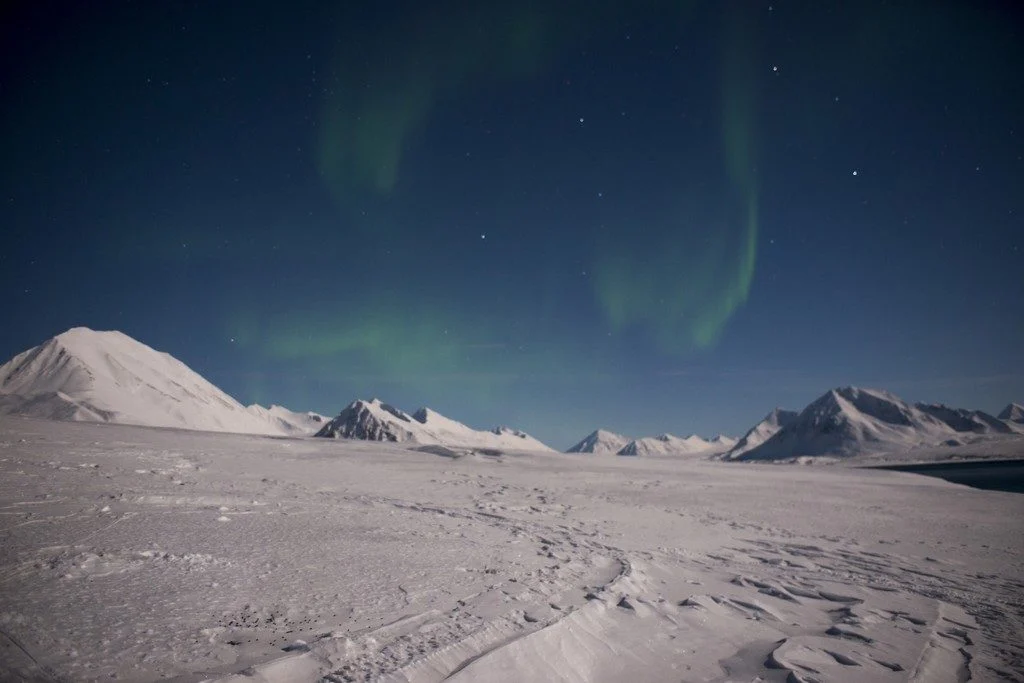
Aurora Borealis, which means Northern Lights are caused by electrically charged particles from the sun, which enter the Earth’s atmosphere and collide with gases such as oxygen and nitrogen. When the charged particles are blown towards the Earth by the solar wind, they are largely deflected by the Earth’s magnetic field. However, the Earth’s magnetic …[Read More]

Imaggeo on Mondays: Sunset and moonrise at Yosemite

Imaggeo on Mondays: Sunset and moonrise at Yosemite

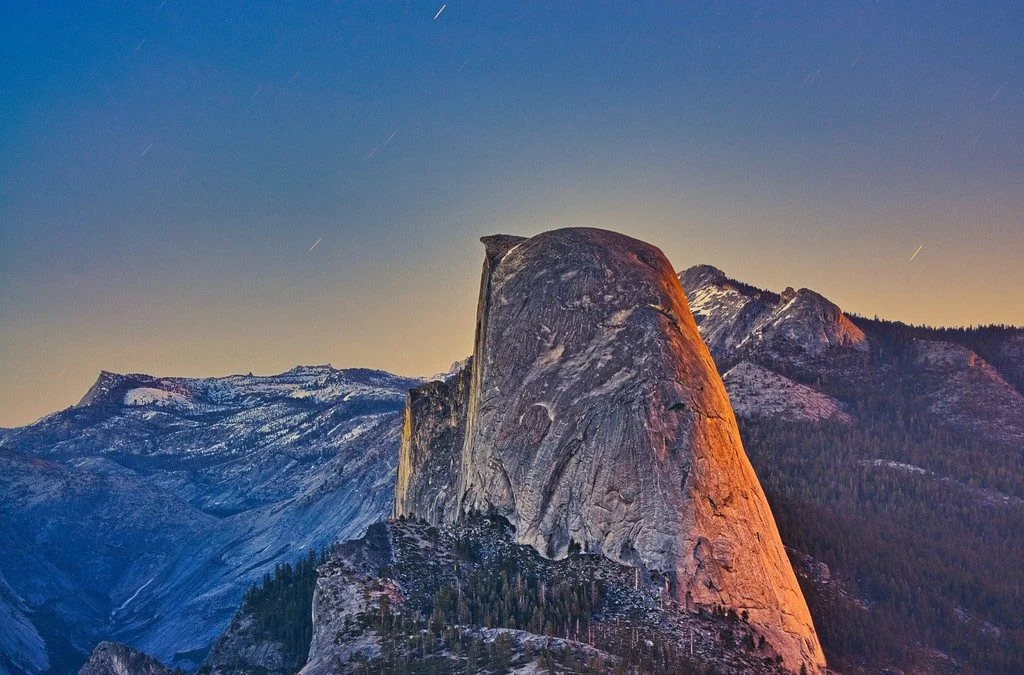
This side view of Half Dome at Yosemite National Park (California, USA) was taken from Washburn Point, a less frequented overlook a few hundred meters away from the popular Glacier Point outlook. The sun just on the right side behind the camera, which gave the orange tint to the back side of Half Dome. At …[Read More]